
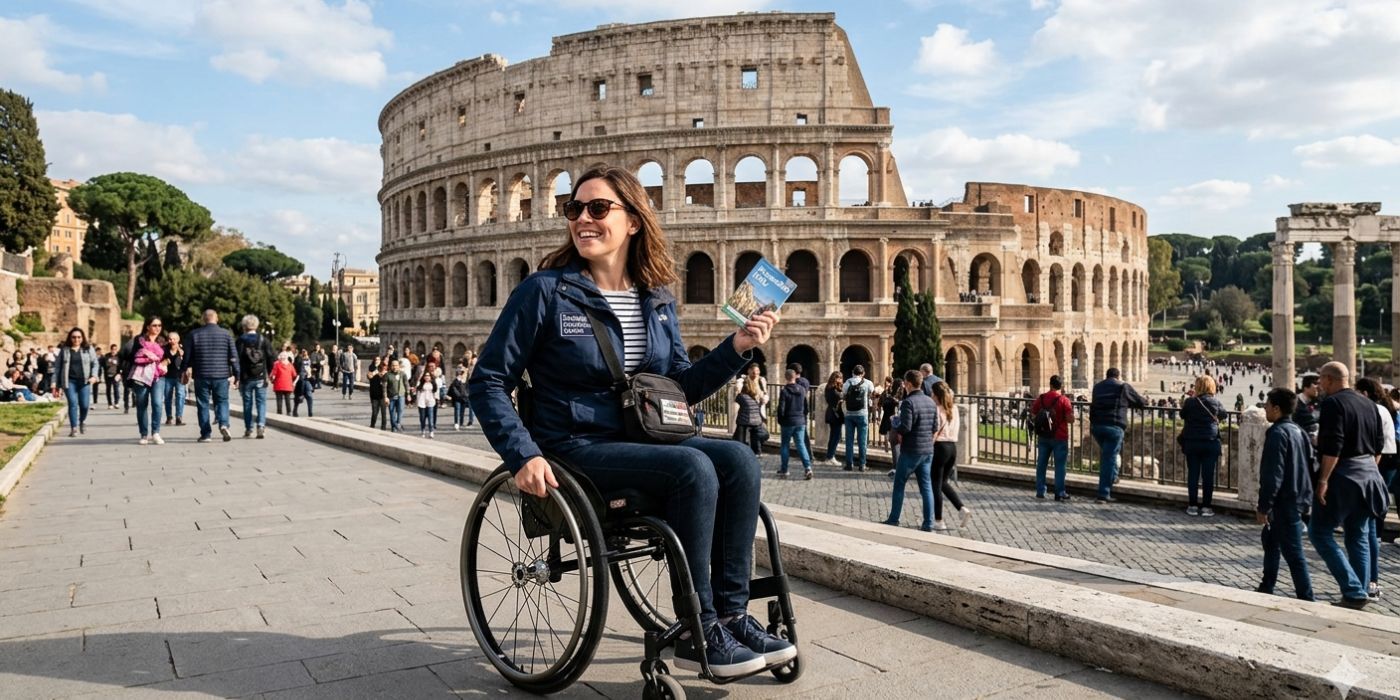

Italy is a treasure waiting to be discovered, and with the right planning, it becomes a destination accessible to everyone.
Organising an accessible trip to Italy can be challenging, but don’t be put off: it is entirely possible. The secret to a stress-free experience is planning.
We know that many ancient sites and monuments can present accessibility challenges. Finding out in advance about the obstacles disabled travellers might encounter and following a few practical tips will make all the difference and allow you to enjoy Italy’s beauty in complete freedom.
What are the accessible tourist attractions in Italy’s major cities of art? Is it possible to visit Venice in a wheelchair?
In this guide, you’ll find useful tips and information to help you organise a trip to Italy that is truly inclusive, accessible and unforgettable.

Beyond the barriers: the definitive guide to accessible travel in Italy
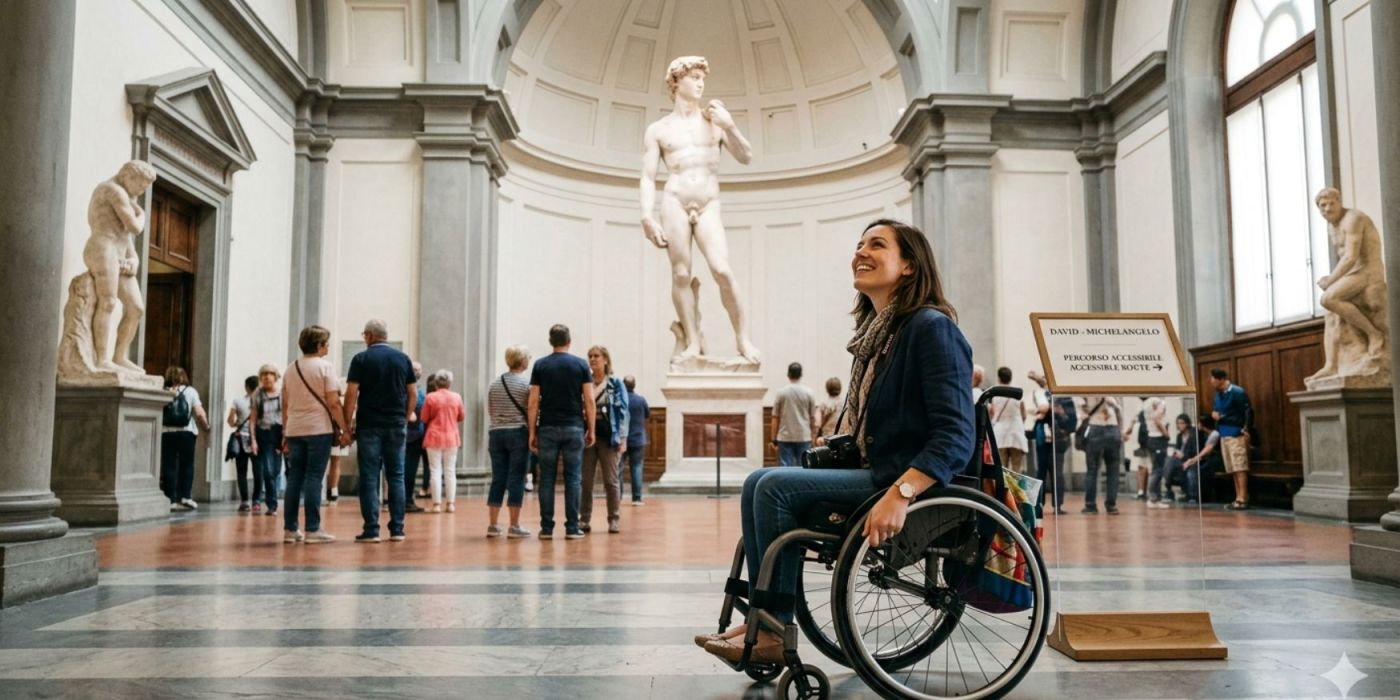
Do you dream of admiring the Colosseum or visiting Venice, but worry that architectural barriers might be an insurmountable obstacle? We have good news: Italy is a viable and surprising destination for every traveller.
Despite the challenges posed by Venice’s bridges or Rome’s cobbled streets, in this practical guide, we’ll reveal all the secrets to stress-free accessible travel in Italy. Together we’ll discover:
- Art cities and historic sites without worries: tips for getting around in a wheelchair over bridges and cobblestones.
- Accessible transport: how to get around in cities and between cities
- Tailor-made destinations: the best places for older people, travellers with reduced mobility or those with visual impairments.
Before you set off, however, we want to give you a few strategic tips that are the first step towards simplifying your trip. Are you ready to discover the most inclusive Italy?
Practical tips for disabled travellers in Italy
Here is a list of practical tips to help you organise your trips as effectively as possible, even before you set off.
1. Choose your hotel based on your disability
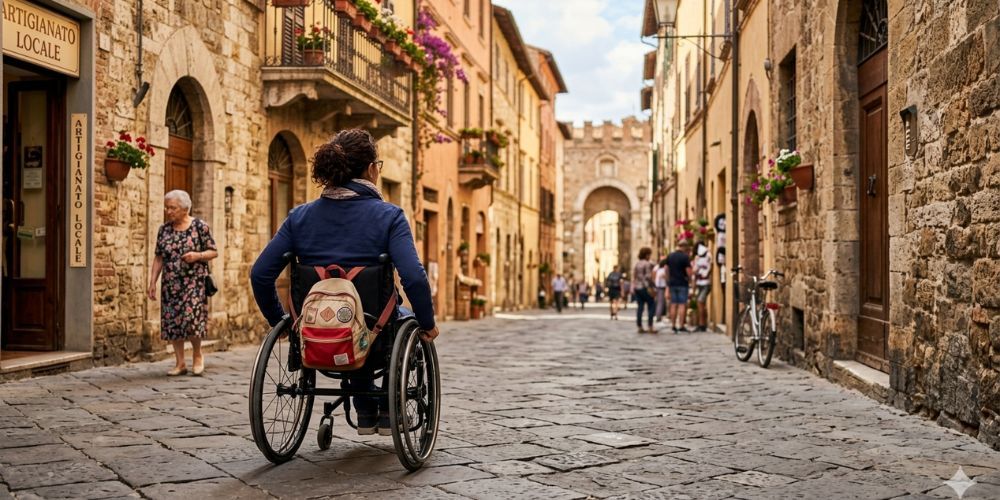
Historic cities, and Rome in particular, often have cobbled streets in their historic centres. In Rome, there are many cobbled streets right next to iconic monuments such as the Pantheon, the Spanish Steps, and the Trevi Fountain. We advise travellers using manual wheelchairs to choose accommodation in an area with few cobbled streets. For travellers using electric wheelchairs or electric scooters, navigating cobbled streets will be less tiring. For this reason, they may consider an accessible hotel even in very central areas.
2. Take your time choosing your accessible hotel
Don’t book the first accessible hotel you find. Carefully consider the features, location and facilities of the various hotels you come across during your search. Hotels with the best facilities for disabled travellers, such as wheelchair-accessible showers, are not always easy to find.
3. Check for discounted admission to museums and cultural attractions
Many Italian museums and cultural attractions offer discounts or free entry for travellers with disabilities. Often, accompanying persons are also eligible for reduced rates. Always check for accessible routes for wheelchair users or those with reduced mobility. At some monuments, private companies may organise accessible tours.
4. Book your museum tickets in advance
Many museums and cultural attractions are located in historic buildings in the city centre and are always busy. Booking your tickets in advance for the Vatican Museums or the Uffizi will allow you to skip the queue and save time. Bear in mind that some attractions, such as the Last Supper in Milan and the Borghese Gallery in Rome, require mandatory advance booking.
5. Always carry an accessible map with you
Before you set off, make sure you have an accessible map or an app to help you get around safely. Knowing in advance where bridges, steep streets or cobbled roads are located will make your stay in cities such as Rome, Florence, Siena and Assisi much easier. For barrier-free travel, take a look at kimap and wheelmap.
6. Find out about accessible entrances to churches and cultural attractions.
Many churches have a main entrance with numerous steps, and accessible side entrances are not always clearly signposted. We therefore recommend that you check in advance which accessible entrances are available at the cultural attractions you wish to visit. For churches, another detail to bear in mind is to avoid the ‘siesta’ hours (midday – 4 pm), especially in summer. During this time, smaller churches are often closed.
7. Go and discover lesser-known attractions and places
Major art cities have iconic cultural attractions, but are also very crowded. Many of our fondest memories are linked to places we didn’t even know existed. That’s why we recommend exploring Italy's lesser-known but more authentic side. Smaller cities such as Trieste, Pesaro and Ferrara will leave you just as speechless!
8. Check the location of accessible public toilets in advance.
It is not always easy to find accessible public toilets, and you may come across a café or restaurant without one. For this reason, it is advisable to check in advance where accessible public toilets are located. Cultural attractions such as museums and national monuments always have accessible toilets.
Accessible travel in Italy’s major art cities: Rome
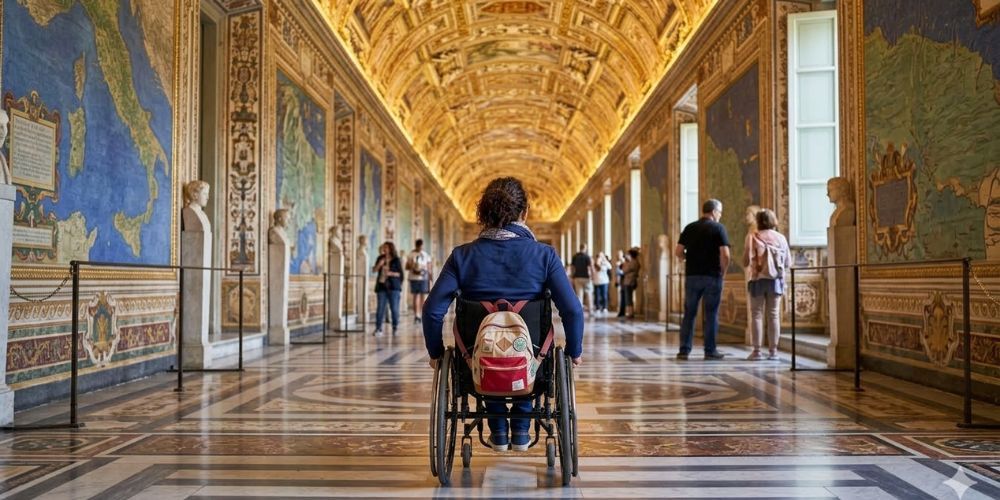
Due to certain characteristics, Rome can present some challenges for disabled travellers. Cobbled streets, narrow pavements, public transport that is not always fully accessible, and the long distances between some of the tourist attractions can make travelling there difficult.
By doing our research and planning our journeys carefully, we can enjoy the capital’s extraordinary artistic and cultural heritage whilst minimising obstacles.
Thanks to ongoing efforts, accessibility is improving day by day, and major monuments such as the Colosseum, the Vatican Museums and the Pantheon are accessible and offer dedicated routes for visitors with disabilities.
Detailed information on the accessibility of Rome’s most important tourist sites is available on the Rome Tourist Board’s website. This valuable information will help disabled travellers, older people, and families with children plan their trip and enjoy a wonderful experience.
To help you plan your travel arrangements, we recommend visiting the Rome transport authority’s website for the latest information on public transport accessibility.
You may also wish to check out this link for useful tips on getting around Rome in a wheelchair, using public transport, taxis and private transport.
One way to visit Rome’s most iconic sights safely and stress-free is to book an accessible tour. Travellers in wheelchairs or with other disabilities can choose from accessible group tours or private tours with a guide.
Accessible tours include:
- wheelchair-accessible routes with no steps
- visits to Rome’s most famous monuments and some hidden gems
- accessible transport (where necessary)
- tour guides with experience in assisting disabled travellers
Accessible travel in Florence
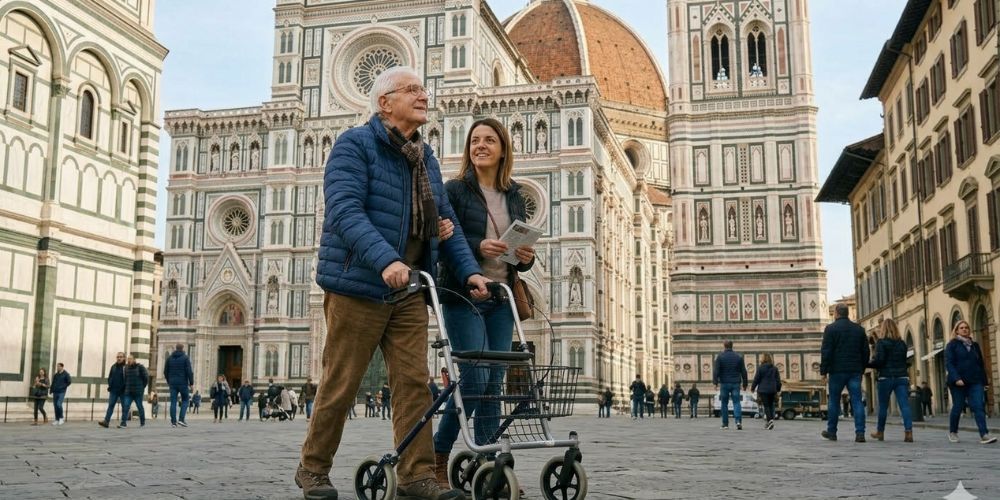
Florence is an excellent choice for travellers with disabilities. The historic centre is not as large as Rome’s and is flat. Most major monuments are in the historic centre and can be reached on foot or in a wheelchair.
When we talk about the historic centre, we refer to the areas around the Accademia, Ponte Vecchio, Santa Maria Novella railway station, and the area around the church of Santa Croce.
Florence’s most important monuments are located in these areas and are not too far apart. Given that accessing public transport is not always straightforward, it is essential to plan your visits and breaks carefully, as travellers with disabilities will need to navigate cobbled or paved streets on foot or in a wheelchair.
There are many wheelchair-accessible accommodation options in the historic centre. These properties are also close to the main tourist attractions.
To make the most of your days, always check the costs and accessibility of Florence’s cultural attractions, and take a look at the practical tips for accessible travel in Florence.
In Florence, too, you can choose an accessible guided tour to explore the city stress-free.
Visit Florence with Florence PassIs Venice accessible to disabled travellers?
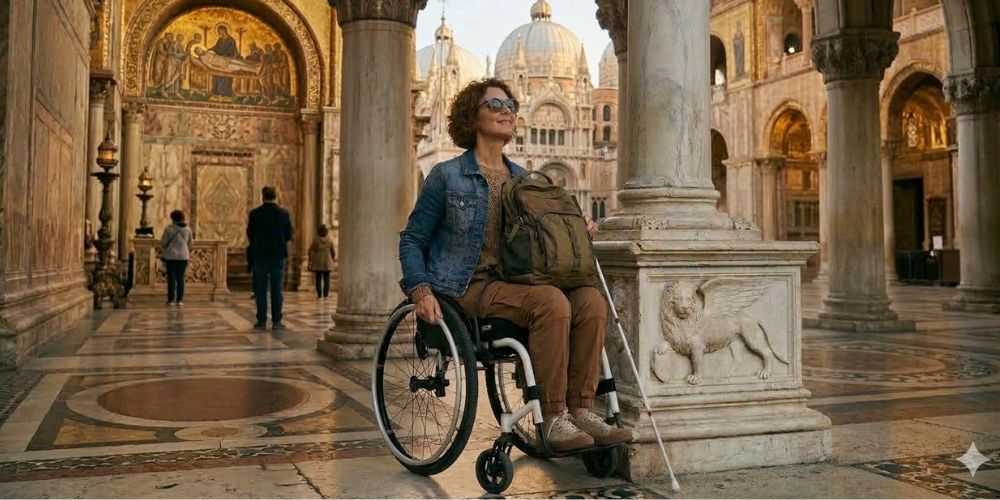
We can say that at least 50% of the city is accessible.
Venice is a city whose layout may cause concern for disabled travellers.
On an accessible trip to Italy, Venice is a must-see. In this guide, we will provide you with all the useful information you need to enjoy the beauty of La Serenissima.
Many people think that most of Venice consists of bridges and canals. This is true, but several neighbourhoods can also be visited without crossing bridges.
To date, 14 accessible itineraries have been mapped out for disabled travellers in wheelchairs, those with reduced mobility, and older people.
What information is useful for an accessible trip to Venice?
- Getting around by vaporetto
Vaporettos are generally accessible and a useful, convenient way to travel between neighbourhoods. Vaporettos serving the Grand Canal are often crowded, so it is important to plan your journeys carefully and avoid peak times where possible. Take a look at the handy map of accessible Venice.
Travellers with disabilities pay reduced fares on Venice’s public transport.
- No hills and no cobblestones
There are no hills in Venice; the terrain is flat and there are no cobblestones.
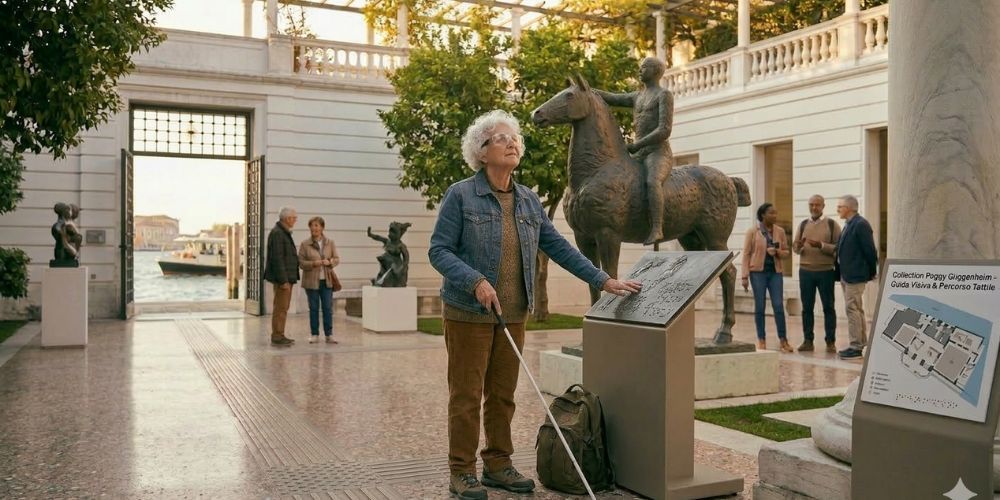
- Cultural attractions accessible to wheelchair users and visually impaired visitors.
St Mark’s Basilica and the Doge’s Palace, the city’s two most iconic monuments, are also wheelchair accessible. Check in advance where the accessible entrance is located.
Venice offers many attractions that are wheelchair accessible and feature tactile paving.
- Venice’s bridges are not accessible.
There are more than 400 bridges in Venice. Of these, very few are ‘moderately’ accessible and only with the help of specialist staff. It is important to carry a city map to locate the bridges and plan your route.
- 100% accessible hotels
When choosing your accessible hotel, as well as checking the hotel’s facilities, ensure that the route from the vaporetto stop to the hotel is accessible (no bridges).
- Accessible toilets
There are not many accessible public toilets. Given that only a few restaurants and bars have accessible toilets, it is advisable to locate them in advance. Generally, the toilets in state-run museums and monuments are accessible.
Read our other tips for a successful accessible trip to Venice.
Visit Venice Venice with Venice PassIs public transport accessible in Italy?
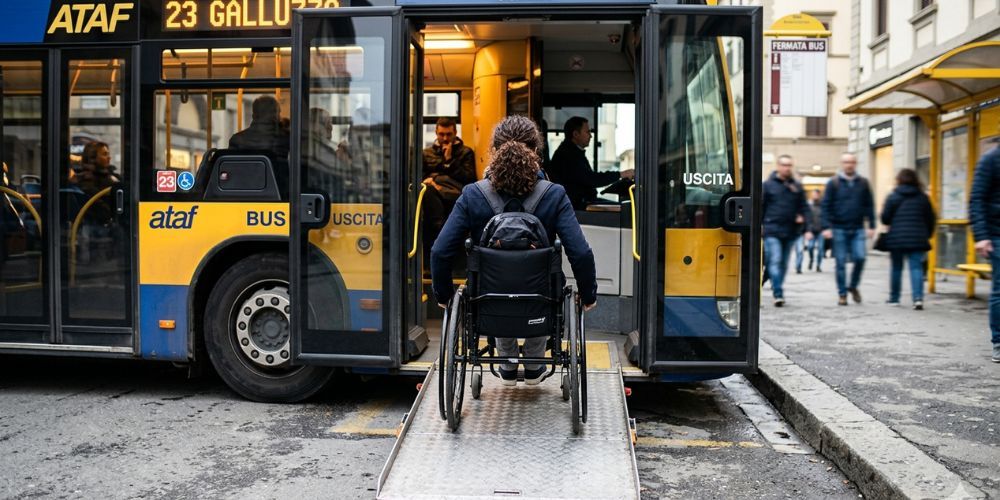
Yes, in accordance with national and EU legislation, public transport must be accessible to disabled travellers. We should point out that actual accessibility varies from city to city and also depends on the age of the vehicles. All new public transport vehicles are equipped with boarding ramps on buses and trams, and lifts in the underground.
For some time now, local authorities have been replacing older vehicles with new-generation ones, in accordance with the law on accessibility and sustainability.
It is important to check public transport accessibility in advance with local transport operators and to book assistance.
Important information on the accessibility of public transport:
- Surface transport: new urban vehicles (buses/trams) have reserved seats for passengers with disabilities, wheelchair ramps and low-floor access.
- Underground: new stations are accessible. Older stations are equipped with stairlifts or lifts. It is essential to check in advance that these facilities are working properly. In some historic cities (such as Rome), certain underground stations may not be accessible.
- Trains: Trenitalia offers an assistance service for passengers with disabilities, reduced mobility and the visually impaired, which can be booked 24–48 hours in advance for assistance on board and the use of boarding ramps.
- Assistance and concessions: passengers with disabilities are entitled to free assistance on long-distance buses (over 250 km). In many cities, passengers with disabilities are entitled to discounts or concessions on ticket prices.
As an alternative to public transport, several private companies organise short- and long-distance transfers and travel for passengers with disabilities.
Holidays for older adults in Italy
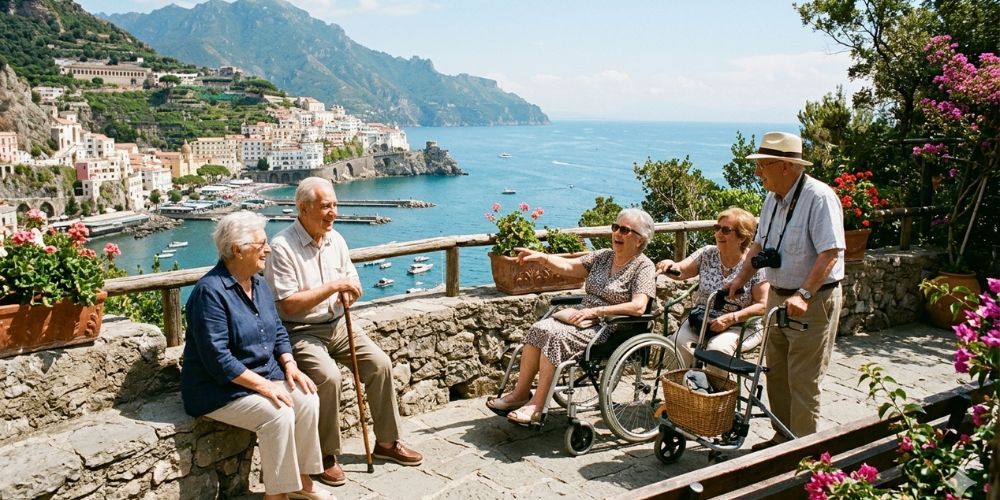
For older people, the best way to visit Italy is through organised tours or stays in seaside resorts, spa towns and mountain resorts, which offer comfort, peace and quiet, medical care and opportunities for socialising.
All-inclusive packages that include transport, guided activities and accessible hotels are ideal.
It is important to choose accessible accommodation with lifts and no architectural barriers, situated centrally or well-connected to places of tourist interest.
Contacting travel agencies or tour operators specialising in trips for independent older people or those with reduced mobility makes organising the trip easier.
Older travellers often prefer resorts or hotels offering low-key entertainment and communal areas that encourage new friendships.
The best times for "senior" travel in Italy are spring (April–June) and autumn (September–November). During these periods, you can avoid overcrowding and excessive heat.
Best destinations in Italy for independent older people and those with reduced mobility
- Major art cities: organised coach trips are an excellent way to visit the main art cities without any stress.
- Spa breaks: spa resorts such as Abano Montegrotto (Veneto), Chianciano (Tuscany), Fiuggi (Lazio), Comano Terme (Trentino) and Ischia (Campania) are perfect for a rejuvenating and healthy holiday. The spa facilities offer specific treatments and therapies for various conditions.
- Relaxation by the sea: the Romagna coast (from the Lidi Ferraresi to Cattolica), Versilia in Tuscany, Liguria (Sanremo, Lerici, Finale Ligure), the Marche (from Senigallia to San Benedetto del Tronto), Isola di Capo Rizzuto in Calabria, Otranto, Monopoli, Porto Cesareo, and Santa Cesarea Terme in Puglia, offer sandy beaches accessible by wheelchair, flat promenades, and accessible hotels that cater to the needs of older guests.
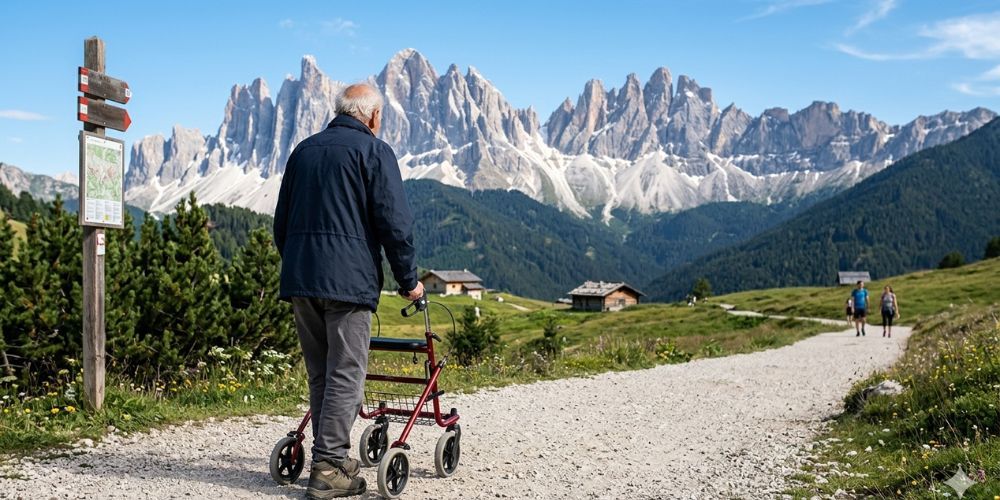
- Relaxation in the mountains: mountain resorts offer fresh air and tranquillity. Places such as Limone in Piedmont, Madonna di Campiglio, Val di Fassa and Merano in Trentino-Alto Adige, Cortina and Auronzo in Veneto, and Courmayeur in Valle d’Aosta, offer flat walks, accessible trails and electric bike hire.
Where is the best place to go in Italy for wheelchair users?
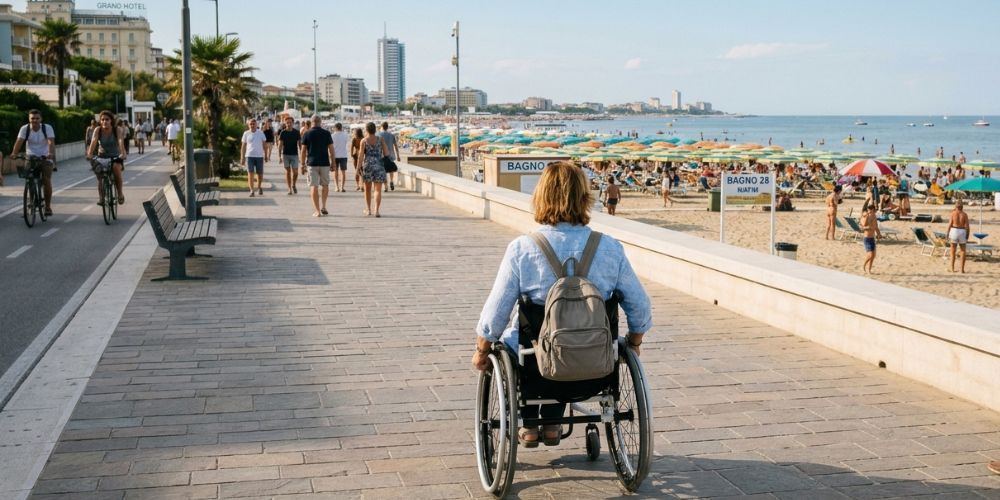
The best wheelchair-accessible destinations in Italy are those that offer equipped beaches, flat paths and accessible facilities.
Among the many seaside resorts, the following stand out for their accessibility and beach facilities:
- The Romagna Riviera
- Apulia, with the resorts of Gallipoli and San Foca
- Tuscany, particularly the Cecina area
- Abruzzo, with Montesilvano and the surrounding area
- Sardinia, with the Gulf of Orosei
Among the mountain and lakeside resorts in Northern Italy, we highlight:
- In the Dolomites, Cortina d’Ampezzo, which offers accessible trails and mountain huts
- Lake Garda, including Peschiera del Garda and the surrounding area
Discover the 10 best wheelchair-accessible destinations in Italy.
In fact, with the right information and careful planning, even places that seem out of reach can become at least partially accessible.
Take a look at the organised, accessible tours in Italy, and have a great trip!
About the author
Written on 30/03/2026
Ilaria Capatti
Ilaria Capatti, web editor. I'm an experienced travel agent and a teacher as well. Tourism and intercultural relations are my passions. I love studying languages and visiting new places by walking.

Ilaria Capatti
Is Italy truly accessible? The definitive inclusive guide for all travelers.