
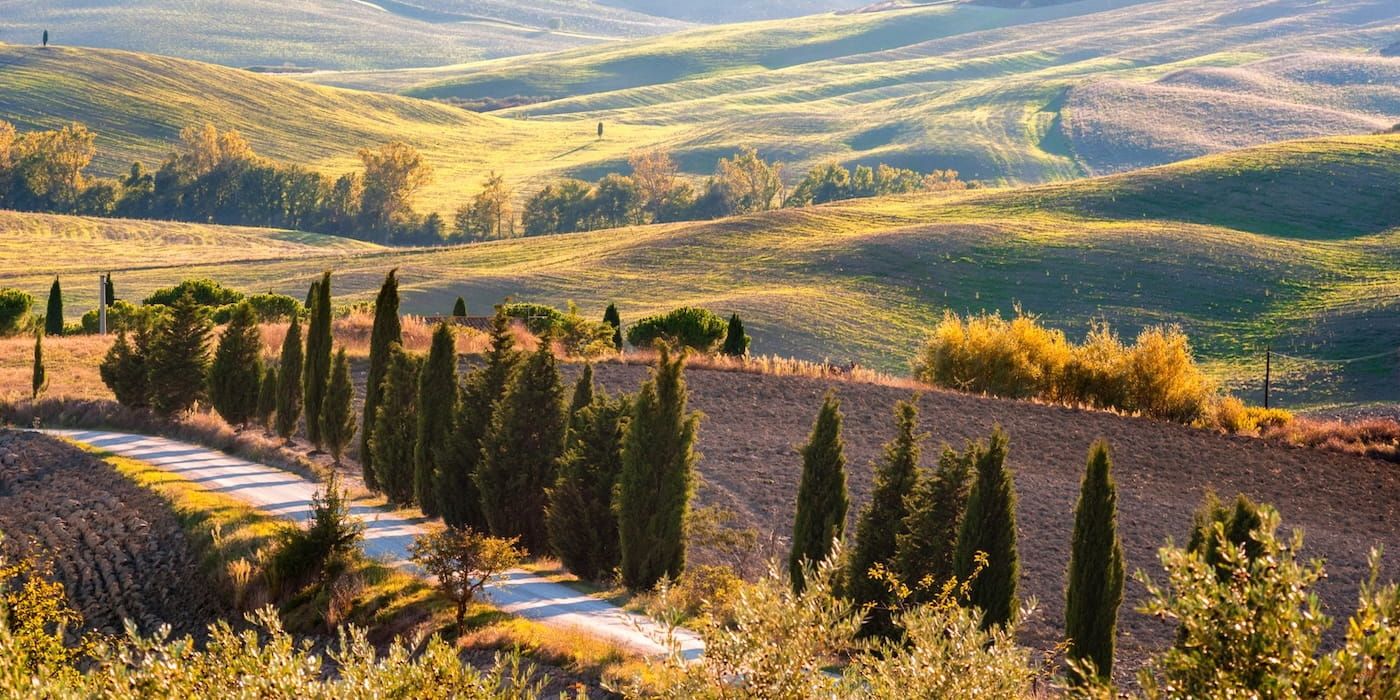

White roads crossing spectacular landscapes, ancient villages and vineyards that stretch across gentle green hills. This is exactly what Tuscany is: a constant balance between nature and history, and in autumn it transforms even further, filling with color and emptying of noise.
What better way to discover it at this time of year than by walking on Via Francigena, the historic European pilgrimage route that in Italy, and especially in Tuscany, reveals one of its most complete and remarkable sections?
That’s why we have designed a 12-stage itinerary from Pontremoli to San Quirico d’Orcia: a journey through some of the region’s most iconic areas, where you can experience the uniqueness of Via Francigena while discovering the territory at its most magical moment, filled with authentic atmospheres and autumn colors.
Via Francigena in Tuscany: our autumn itinerary
🥇 Visit Italy’s brand partnership
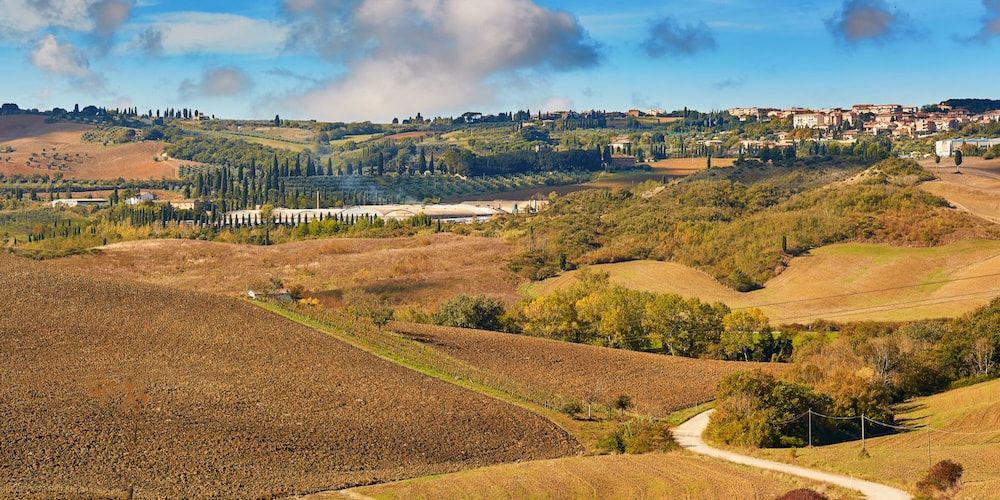
Along the Tuscan stretch of Via Francigena, from September to November, temperatures are mild, making it ideal for daily stages ranging from 17 to 36 km.
The starting point is Pontremoli, in the northern part of the region. The Via Francigena reaches here after crossing the Apennines and the Cisa Pass, one of the most spectacular points of the entire route.
From there, we’ll follow the path toward the Tyrrhenian Sea before turning inland through the rolling hills of the interior, the magnificent Val d’Elsa, and all the way to Val d’Orcia, equally remarkable for its iconic villages and landscapes.
Our journey is entirely on foot, with overnight stops in the many facilities used by pilgrims. In this way, we discover the true essence of the region and, step by step, admire the colors of the Tuscan countryside, which in autumn reveals its most varied and unforgettable character.
Here are the areas of Tuscany we will cross:
- Lunigiana;
- Versilia;
- Val d’Elsa;
- Crete senesi;
- Val d’Orcia.
Discover more about Via FrancigenaStage 1. Pontremoli → Aulla: Autumn in Lunigiana
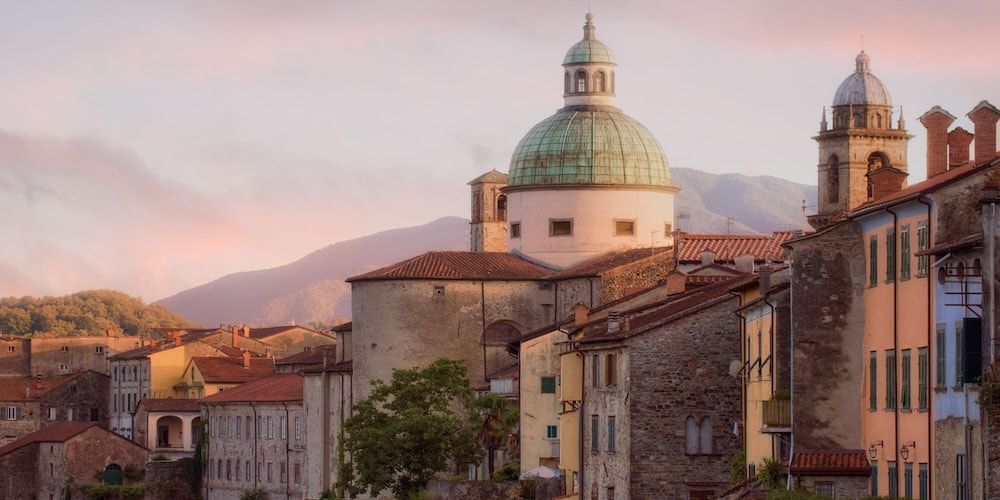
We are in Lunigiana, where Via Francigena enters Tuscany after crossing the Cisa Pass, one of the historic Apennine passes and a natural boundary between Northern and Central Italy. Pontremoli is the first major town after the pass, a small historic centre set along the banks of the Magra River, with its castle and a medieval atmosphere that perfectly sets the rhythm for our journey.
The first stage of our autumn itinerary along the Tuscan Via Francigena leads us towards Aulla. It's a route of about 32 km on secondary roads and unpaved trails, crossing a still-wild Lunigiana of deep valleys and dense forests.
In autumn, this landscape sets the ideal pace for this kind of journey: it invites a slower pace, deeper breaths of fresh air, and short stops in the villages along the way, which become an integral part of the experience.
What to see and do:
- Historic center of Pontremoli;
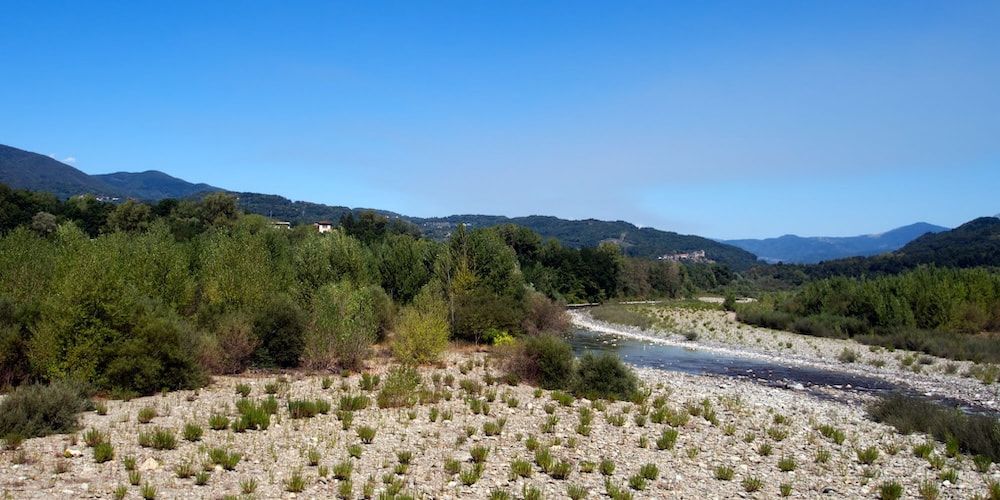
- Magra River and forests of Lunigiana.
Stage 2. Aulla → Sarzana: a short detour into Liguria
The second day is the shortest stage of the entire itinerary, covering about 17 km to reach Sarzana, in the province of La Spezia, with a brief crossing into Liguria.
Given the short distance and the mostly downhill profile, before leaving Aulla it’s worth a stop in the historic center to visit the San Caprasio complex, a symbolic site linked to the Via Francigena in Lunigiana. It is a medieval-origin church, now integrated into the urban fabric, preserving evidence of the passage of pilgrims and housing a small museum dedicated to the route.
Leaving the town, our path continues through woods and ancient stone villages such as Bibola, with its charming hillside houses perfectly set within the Apennine landscape.
The arrival in Sarzana changes the atmosphere completely, bringing us much closer to the sea, which lies only a few kilometers away. The Church of Santa Maria Assunta dominates the historic center, while the imposing Firmafede Fortress reflects the strategic importance of this ancient border area between Tuscany and Liguria.
In autumn, Sarzana comes alive with food and wine events like Sarzana Senza Tempo and Sarzana DOC, offering local wines and traditional flavors that make the end of this stage even more rewarding.
What to see and do:
- San Caprasio complex, Aulla;
- Short detour into Liguria;
- Historic center, seasonal events in Sarzana.
Stage 3. Sarzana → Massa: from the Magra Valley to the Apuan coast
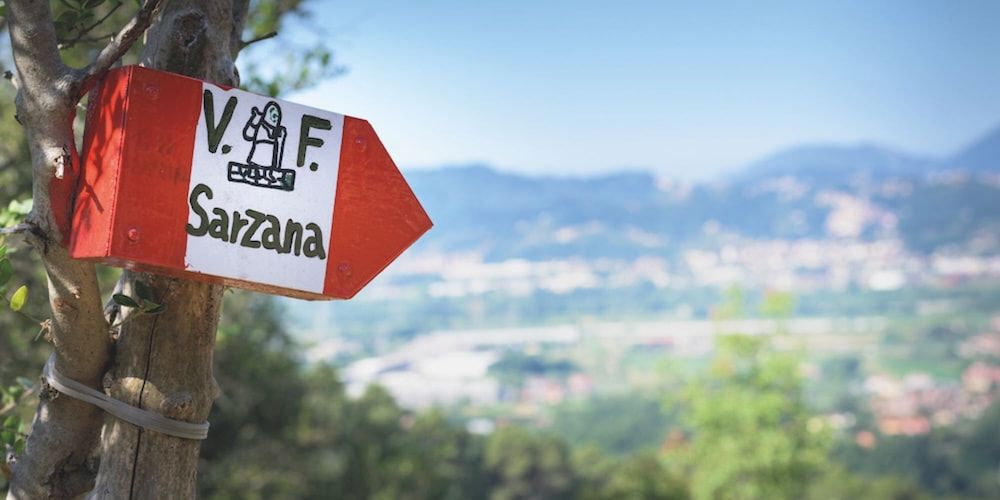
After the Ligurian detour, we set off again from Sarzana on a roughly 28 km stage that winds through agricultural areas and small settlements marking the gradual exit from the Magra Valley and our return to Tuscany.
It’s a transitional day: we are on a predominantly flat route, crossing cultivated fields, secondary roads, and inhabited countryside that becomes increasingly frequent as we move closer to the coast.
There are no dramatic landscapes like those of the Apennines or the hills we will encounter in the following stages, but this section is still meaningful as it marks the transition towards the Apuan coast, where the landscape becomes more open and urbanized. The sea is not a constant presence along the route, but the fresh, slightly salty air hints at its proximity.
Massa is a historic town linked to the Malaspina family, set between the sea and the inland areas, with a compact historic center and the Castle overlooking it from above. From here, the Via Francigena prepares to enter the Versilia section.
What to see and do:
- Flat countryside of the Magra Valley;
- Transition towards the Apuan coast;
- Historic center of Massa, Malaspina Castle.
Stage 4. Massa → Camaiore: along Versilia between the sea and the hills
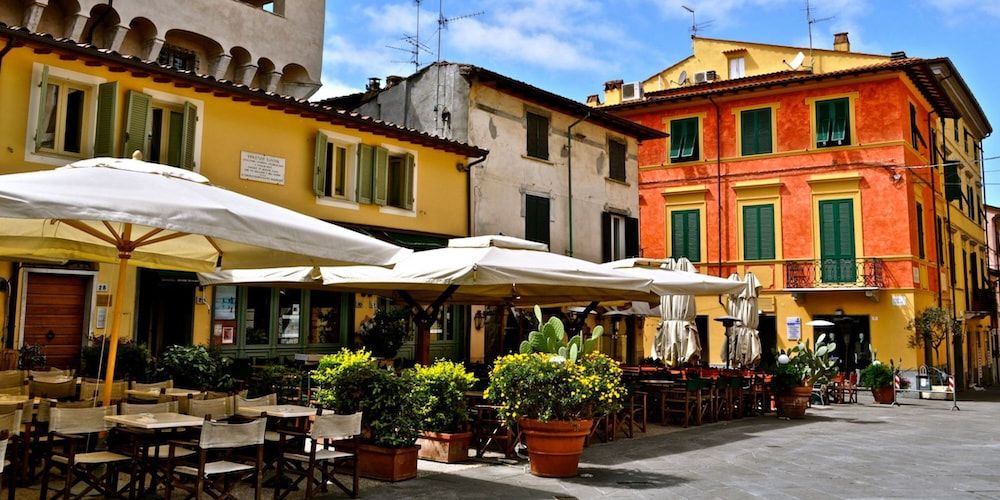
We leave Massa and follow the 25 km route leading to Camaiore, crossing Versilia through a mix of hills, historic villages, and glimpses of the sea. The trail stays close to the hillsides, with gentle ups and downs and views that feel far more like rural Tuscany than a classic summer beach destination.
Shortly after departure, we climb towards the Castello Aghinolfi in Montignoso, an ancient Malaspina fortress overlooking the valley and the gulf. In autumn, the view from here becomes especially clear, with the sea appearing between the hills.
Along the route, we also reach the beautiful village of Pietrasanta, often called “the little Athens of Italy,” known for its art workshops and marble craftsmanship traditions, and often chosen as a favorite destination for those looking for a day trip from Florence.
After summer, this section of the coast changes atmosphere completely: the beaches empty out, traffic decreases, and the coastline becomes quieter and more livable.
Arriving in Camaiore, we discover a town with an elegant historic center and a symbolic places of Via Francigena: the Badia di San Pietro, a 7th-century abbey that still serves as a place of rest and hospitality for pilgrims today. Next to the monastery stands the Pilgrim’s Hostel, ideal place to end our day with a warm coffee and the quiet atmosphere of the evening.
What to see and do:
- Castello Aghinolfi in Montignoso;
- Village of Pietrasanta;
- Badia di San Pietro and the Pilgrim’s Hostel in Camaiore.
Stage 5. Camaiore → Lucca: from the woods to the walled city
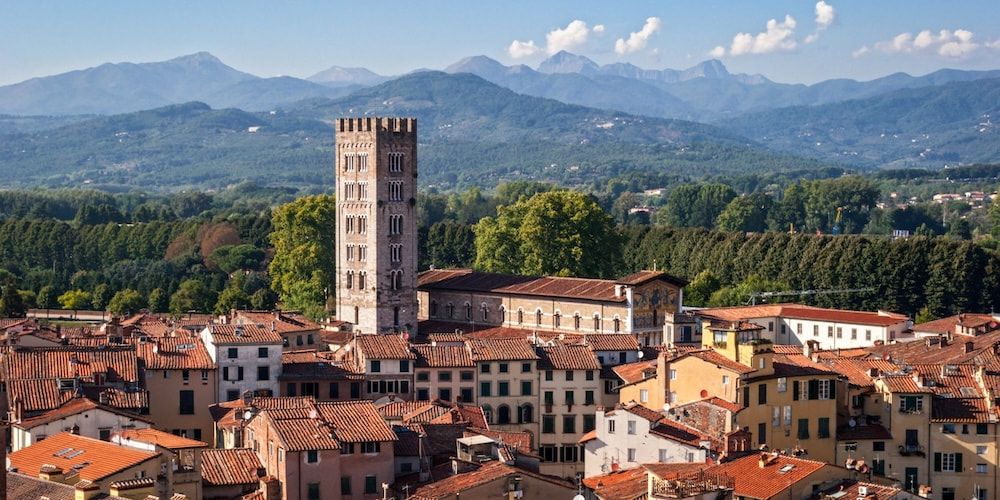
We leave Camaiore and take on one of the most varied stages of the Tuscan Via Francigena: around 26 km leading from inland Versilia to Lucca, crossing wooded hills, small villages, and the Serchio Valley.
The first part of the route is also the most demanding. The trail climbs toward Montemagno, a small hilltop village overlooking the Freddana Valley and home to the remains of the ancient Hospital of San Michele and a medieval castle.
In autumn, this section becomes especially atmospheric: the paths are covered with fallen leaves, the forests shift into warm colors, and the air grows cooler as we gain elevation.
After the climb, the route gradually descends toward the plain of Lucca, following broader valleys and crossing the Contesora stream before reaching the Serchio River and, shortly after, the magnificent city of Lucca.
Lucca welcomes pilgrims with its perfectly preserved Renaissance walls, a green ring enclosing a historic center filled with squares, medieval towers, Romanesque churches, and the Duomo di San Martino, home to the famous Volto Santo, a wooden crucifix venerated by pilgrims for centuries.
What to see and do:
- Village of Montemagno and views over the Freddana Valley;
- Lucca’s walls, historic center, and Duomo di San Martino.
Stage 6: Lucca → Altopascio: across the plain and ancient hospices
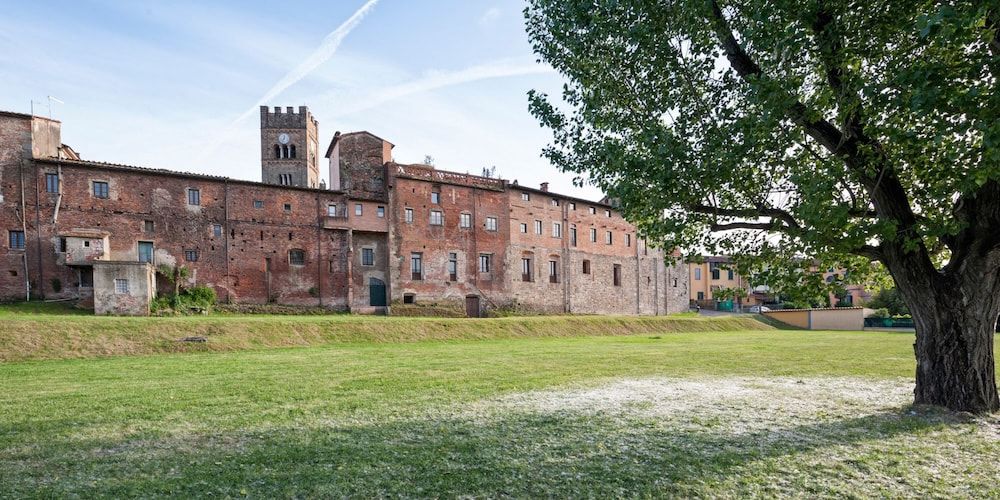
Leaving Lucca, we continue along the plain on roads stretching through cultivated fields, canals, and scattered farmsteads. It’s about a 18 km stage, almost entirely flat, passing through small hamlets, rural parish churches, and agricultural stretches.
Just before reaching Altopascio, in the middle of a Tuscan countryside that in autumn shows worked fields, thinning rows of vines, and warmer, earthier tones, stands the small and evocative Romanesque church of Badia Pozzeveri, an isolated complex and a historical landmark for pilgrims.
Inside, we can find traces of the site’s long history, linked to its role as a hospice along Via Francigena. Nearby, there is still today a simple pilgrim reception point, faithful to the original spirit of the path, where hospitality is basic and based on sharing.
We conclude our day in Altopascio, an ancient town with a historic center revolving around Piazza Ospitalieri, where the former medieval hospital run by the Knights of Tau once stood. Nearby rises the Church of San Jacopo Maggiore, whose 1280 bell tower housed the famous bell known as the “Smarrita,” which in the past guided travellers along their journey.
What to see and do:
- Countryside between Lucca and Altopascio;
- Romanesque complex at Badia Pozzeveri;
- Altopascio, Piazza Ospitalieri.
Stage 7. Altopascio → San Miniato: toward the truffle city
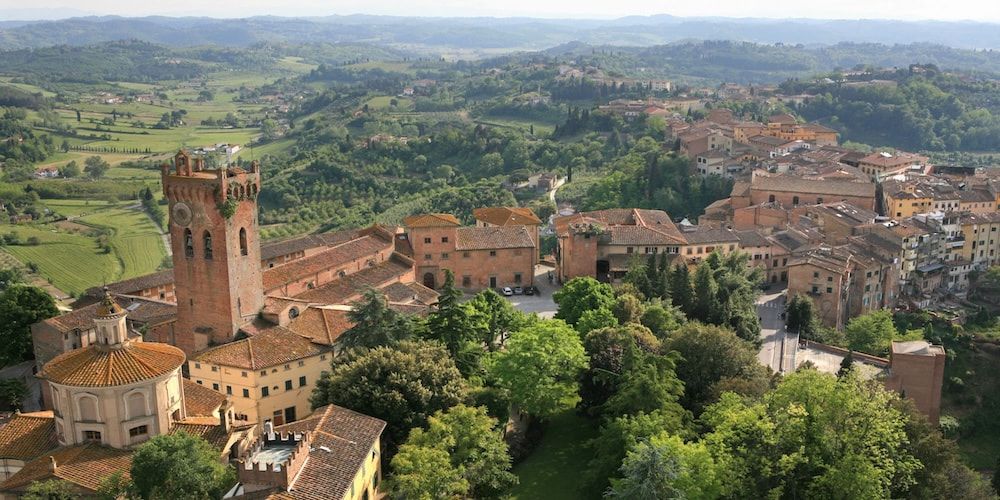
A roughly 29 km stage with a gentle elevation gain and a slow pace. Let's walk alternating dirt tracks and paved lanes through the Cerbaie nature area, among woods, olive groves, and fields that in early autumn still carry the scent of dry earth, light leaves, and sun-warmed wood.
We pass through the small village of Galleno and reach Ponte a Cappiano, where the old Medici bridge over the Canaletto di Laterina once served as a fortified crossing and now houses a hostel. In season, the water flows calmly, framed by trees that are slowly beginning to shed their leaves.
Then, we follow the edge of the Padule di Fucecchio and then the Arno river plain, as the hills draw closer until the silhouette of San Miniato appears. Set on top of a hill, the town is immediately recognizable for its strategic position and its historic landmarks: the Rocca di Federico II and the Torre di Matilde.
The historic center preserves a striking medieval layout, and in autumn it becomes one of the liveliest places in the area thanks to white truffle season and the National Truffle Market.
What to see and do:
- Cerbaie nature area and the Medici bridge at Ponte a Cappiano;
- San Miniato: Rocca di Federico II, Torre di Matilde, historic center and truffle market.
Stage 8. San Miniato → San Gimignano: the towers of Val d’Elsa
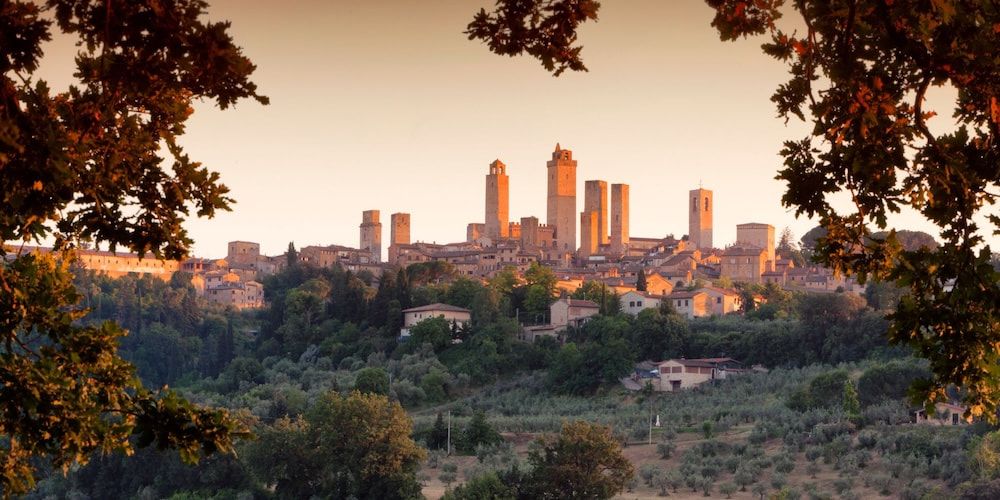
The longest day — and one of the most spectacular — of our autumn itinerary, created by combining two official stages of Via Francigena for a total of 37 km.
We leave San Miniato behind and descend toward Val d’Elsa, entering a landscape of vineyards, olive groves, and rolling hills, where white roads wind through the fields and the scenery seems made for the soft light of autumn.
After Gambassi Terme, the ridgelines become more defined and cultivated land alternates with small oak and downy oak woods, while autumn foliage turns the landscape into shades of red and brown.
In the second half of the stage, the landscape opens up and San Gimignano appears for the first time, its towers rising on the horizon like a jewel set among green hills. The sight of the towers — at first blurred in the distance and then sharper with every kilometer — becomes the reward for a long walk through the heart of a remarkable landscape.
We end today’s journey by entering the town, whose historic center has preserved its medieval character intact and remains one of the most iconic arrivals of Via Francigena.
What to see and do:
- 37 km stage combining two official sections of the route
- Autumn woods among the hills around Gambassi Terme
- San Gimignano.
Stage 9. San Gimignano → Monteriggioni: from towers to walls
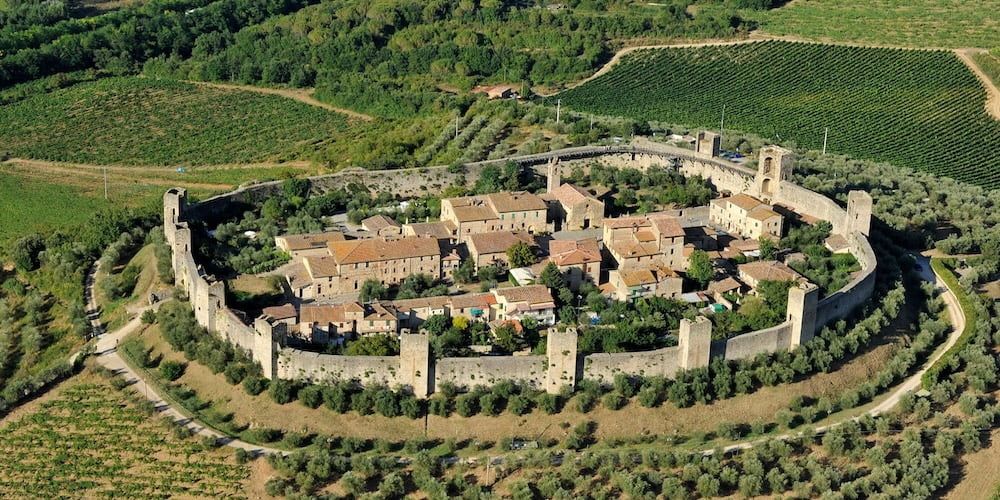
This stage of about 30 km connects two of the most recognizable villages along the Tuscan Via Francigena: the towers of San Gimignano and the fortified walls of Monteriggioni.
We follow a route through rolling countryside, alternating between open stretches and quieter sections, passing isolated farmhouses and small villages surrounded by the silence of the Tuscan landscape. In autumn, the fields take on warmer tones and leaves gather along the dirt paths.
This part of Tuscany is also known for its vineyards and olive oil. Along the route, there are wineries, olive mills, and small farm stays where we can stop to taste local wines and traditional Tuscan dishes.
As we arrive in Monteriggioni, the medieval walls immediately become the focal point of the landscape. Walking through the ancient gates and along the stone streets of the historic center feels like stepping back in time, into a place that remains compact, atmospheric, and remarkably well preserved.
What to see and do:
- Val d’Elsa countryside;
- Vineyards, olive mills, and farm stays along the route;
- Monteriggioni: medieval walls and historic center.
Stage 10. Monteriggioni → Siena: arrival in Piazza del Campo
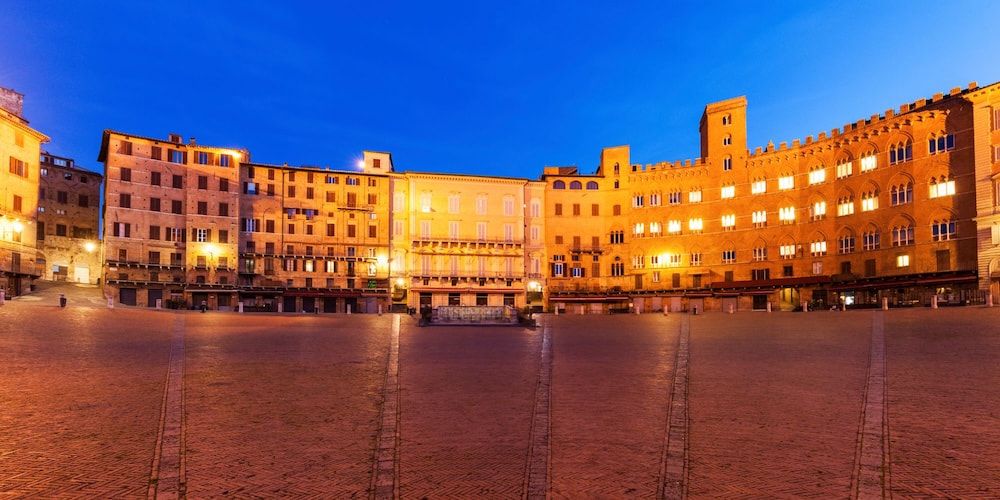
We descend from the fortress of Monteriggioni and cover about 20 km that gradually lead us toward Siena.
The arrival feels particularly special in autumn, when the days grow shorter and the late afternoon light warms the brick and stone of the historic center.
It also means returning to a fully equipped urban environment after days of stages across countryside villages. Accommodation, shops, and services become readily available again, allowing us to slow down and recover more comfortably.
And then there’s Piazza del Campo, the natural place to spend a wonderful evening, experiencing one of those moments that turn a simple stage into a lasting travel memory.
What to see and do:
- Arrival in Siena;
- Evening in Piazza del Campo.
Stage 11. Siena → Ponte d’Arbia: Crete Senesi
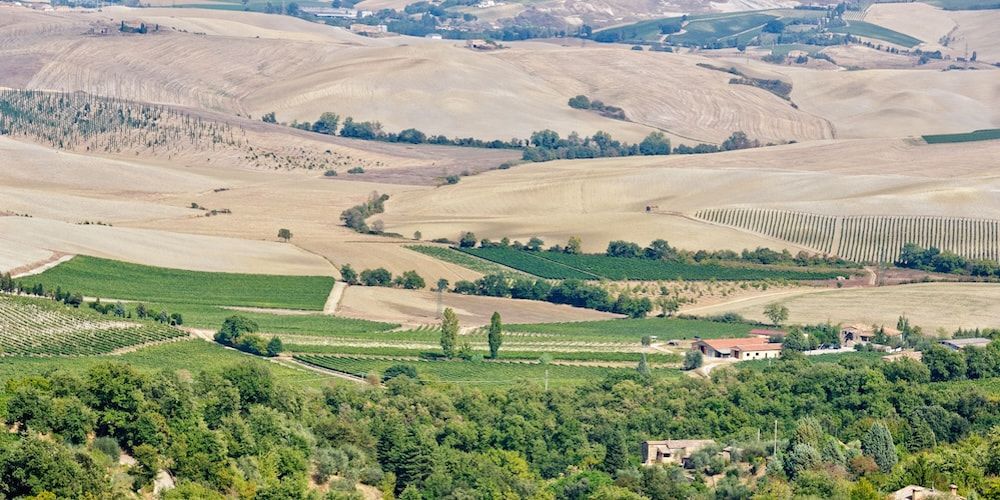
Let’s leave Siena through Porta Romana and, within a few kilometers, the streets and palaces of the historic center fade behind us as we enter a landscape of white roads, rolling hills, and wide open spaces in the heart of the Crete Senesi.
In autumn, this area becomes even more charming: cultivated fields shift between pale and earthy tones, vineyards turn shades of red and gold, and the afternoon sun highlights every curve of the hills.
We follow the route first to Isola d’Arbia, a small rural settlement with a church and stone houses rising like islands from a sea of worked earth, and then near Grancia di Cuna, an ancient fortified farm complex.
The stage ends after about 25 km in Ponte d’Arbia, a small village along the river of the same name, already mentioned by Sigeric in the year 990 itinerary. The river flowing under the old bridge and the surrounding hills create a quiet, almost idyllic atmosphere—a meeting point between past and present.
What to see and do:
- White roads and the Crete Senesi landscape;
- Isola d’Arbia, Grancia di Cuna;
- Arrival in the peaceful setting of Ponte d’Arbia.
Stage 12. Ponte d’Arbia → San Quirico d’Orcia: conclusion in Val d’Orcia
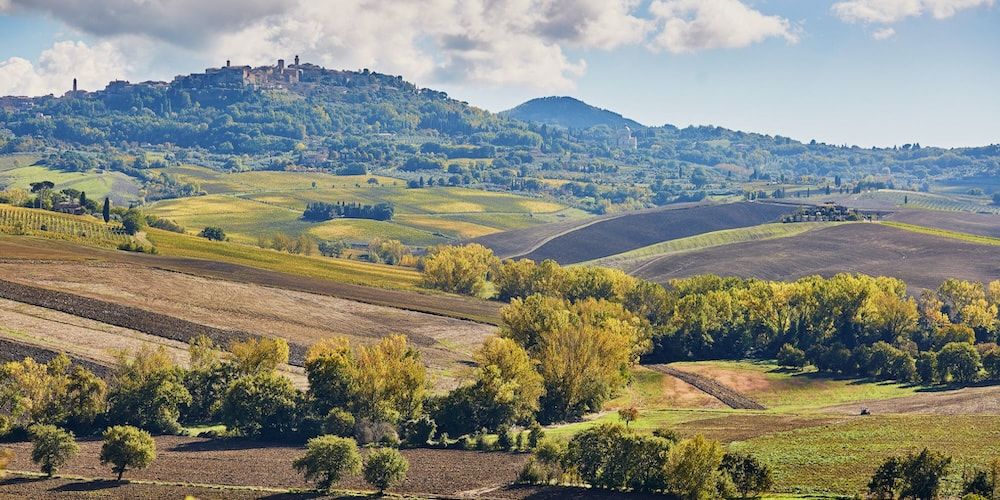
After Ponte d’Arbia, we enter Val d’Orcia near the small fortified village of Buonconvento. The landscape of this final stage (26 km to San Quirico d’Orcia) feels almost designed to bring our autumn journey along Via Francigena to a perfect close.
Everything in the Val d’Orcia seems to follow a unique, almost theatrical geometry. This is the iconic Tuscany seen in photographs and movies, and here we can experience it at a slow pace, without crowds, admiring vineyards and leaves turning gradually to red, and cypress trees lining the roads like fixed points in a striking, wide-open landscape.
San Quirico d’Orcia is the first true village in the heart of the valley, welcoming us with its walls, the collegiate church, the main square, and just outside the historic center, the Horti Leonini, a Renaissance garden opening onto the countryside.
It’s the ideal place to end both the day and our itinerary, offering a balance between journey and landscape, and the feeling of having reached the most recognizable and scenic heart of Via Francigena. The final image is San Quirico as a frame, with the rolling Tuscan hills stretching out behind us, a quiet and memorable closure to our journey.
What to see and do:
- Val d’Orcia landscapes;
- San Quirico d’Orcia.
Inside Via Francigena: from the official route to our own journey
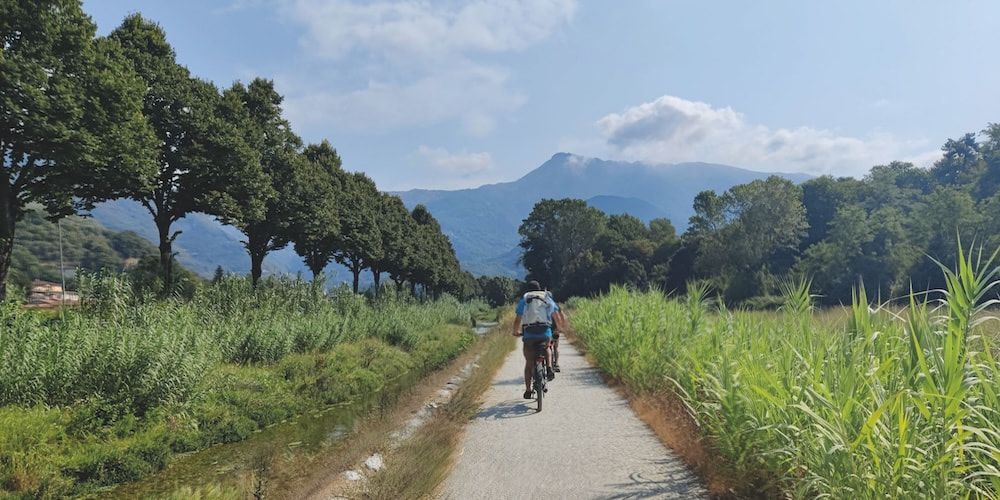
The official stages of Via Francigena between Pontremoli and San Quirico d’Orcia largely follow the same route as our itinerary.
We have kept the original structure of the trail, making only one adjustment where two relatively short stages were merged to create a more continuous travel experience: the stretch from San Miniato to Gambassi Terme (23.9 km) and the one from Gambassi Terme to San Gimignano (13.4 km), which in our narrative become a single, longer day.
Although San Quirico d’Orcia is a natural endpoint, there is one final stage in Tuscany before crossing into Lazio: the route from San Quirico to Radicofani. Below you can find the official itinerary of this section of Via Francigena:
STAGE → KM
1 Pontremoli → Aulla 32.3
2 Aulla → Sarzana 17.4
3 Sarzana → Massa 28.6
4 Massa → Camaiore 25.9
5 Camaiore → Lucca 26.1
6 Lucca → Altopascio 18.5
7 Altopascio → San Miniato 29.0
8 San Miniato → Gambassi Terme 23.9
9 Gambassi Terme → San Gimignano 13.4
10 San Gimignano → Monteriggioni 30.5
11 Monteriggioni → Siena 20.6
12 Siena → Ponte d’Arbia 25.7
13 Ponte d’Arbia → San Quirico d’Orcia 26.2
14 San Quirico d’Orcia → Radicofani 32.5

About the author
Written on 03/06/2026
Alessandro Savino
SEO Copywriter & web editor: I love transforming my passion for writing into engaging narratives, creatively and precisely exploring the beauty and complexity of our wonderful country.

Alessandro Savino
A magical autumn on Via Francigena: follow a 12-stage route from Pontremoli to San Quirico d’Orcia through Tuscany’s golden hills and unique scenery.