
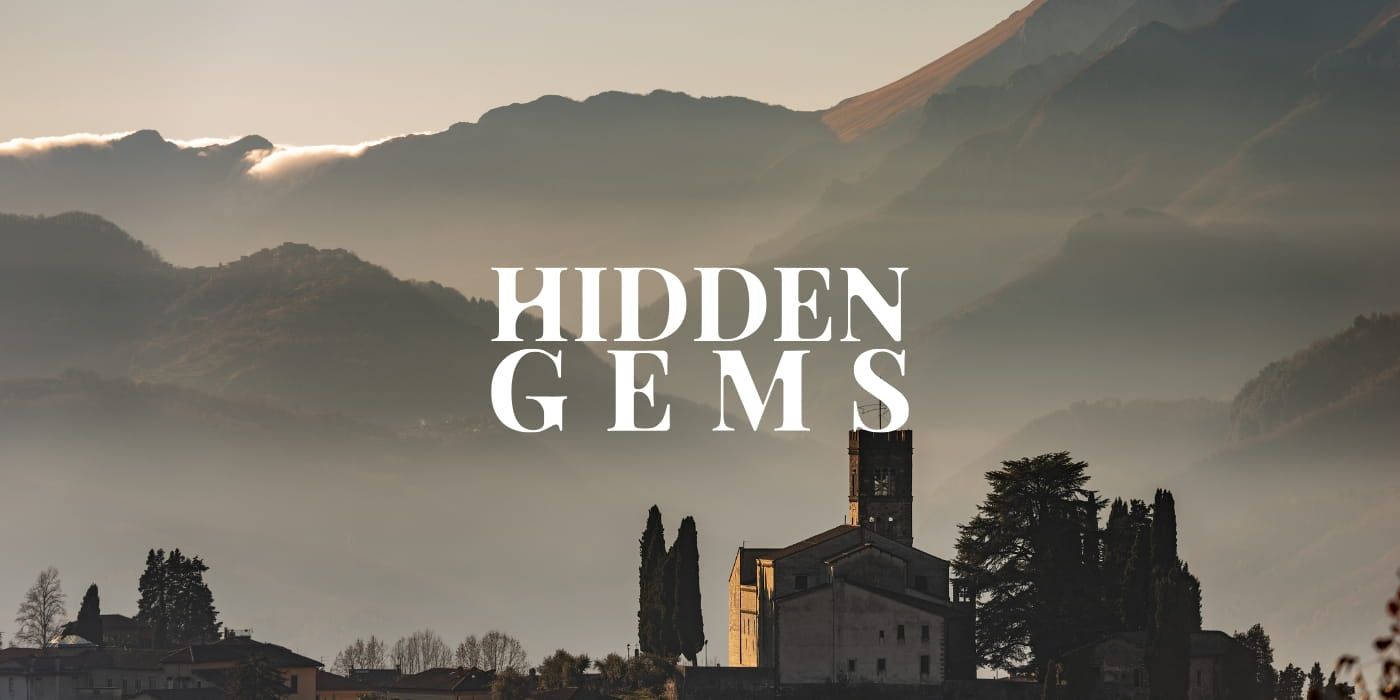
At first glance, Barga looks like any other Tuscan village, with its terracotta rooftops, a bell tower above the main square, and narrow lanes opening onto verdant hillsides. But in Barga something feels different.
The BBC has called it “the most Scottish village in Italy”. Listed among Italy’s Most Beautiful Villages (Borghi più Belli d’Italia) and awarded the Touring Club’s Orange Flag, Barga is a special cultural phenomenon. The blue and white flag of St Andrew flutters, tartan is a common sight, English signs abound – and yes, there’s even a fish & chips festival. But why is that?
Here’s what you need to know about this unconventional hidden gem in Tuscany where the sun sets twice.
Why Barga is Italy’s “most Scottish” town
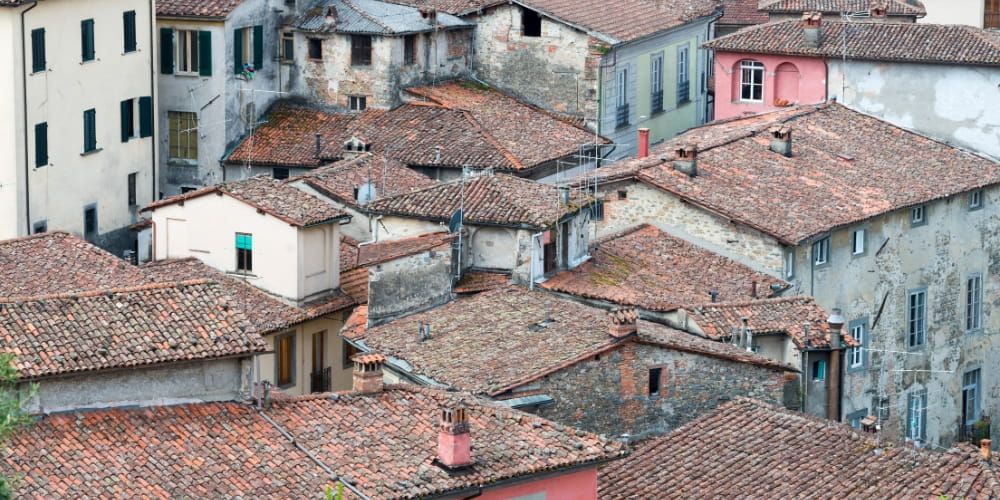
This unlikely bond began at the turn of the 20th century, when waves of Bargaini left in search of work and a better life, many of them finding jobs in Scotland’s shipyards and timber industry.
In time, some returned, bringing back not only savings but new customs, cultural references, and a sense of belonging to two places at once.
People here say that about 60% of the town has Scottish roots, which is a lot for a place with just over 9,000 residents.
Related story – 10 unmissable small towns in Tuscany
Red phone boxes, tartan and the sound of bagpipes
Barga's double identity is still very much clear. There’s a red telephone box in a narrow alleyway, the Barga tartan, white, red and green, on display in restaurants and shops, and the local football team’s kit is unmistakably modelled on that of Celtic FC. The town is even twinned with communities in East Lothian, just outside Edinburgh.
Some also celebrate Burns Night every 25 January, the festive evening of poetry readings, haggis, and whisky toasts in honour of Scotland’s national poet.
Nobody in Barga seems to feel the need to choose between Tuscany and Scotland.
Barga’s unlikely Fish & Chips Festival
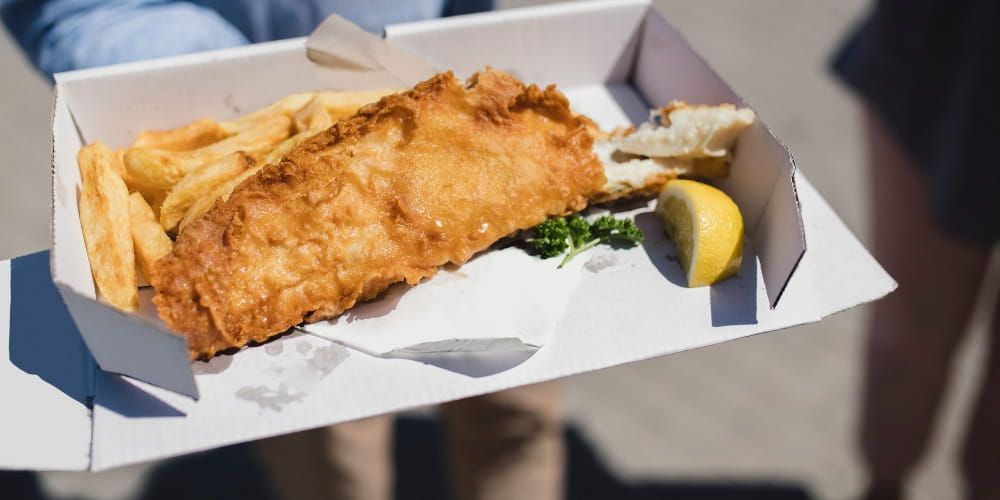
While Barga’s ties to Scotland are entwined with its history, they are perhaps most joyfully celebrated at the table. Every August, this hidden gem in Tuscany throws itself into a festival dedicated to that most British of dishes: fish and chips.
For two lively weeks, the medieval streets fill with the aroma of crisp, battered fish and freshly fried chips, as makeshift tables spill out onto cobbled lanes. Locals and visitors tuck into generous portions, washed down not with ale, but with local Chianti.
For 2026, Barga’s Fish & Chips Festival runs from 1 to 15 August.
Book a Chianti Wine Tour in TuscanyWhat to see in Barga, Tuscany
Barga’s history is engraved on its streets and stones, moulded by its strategic position on the ancient pilgrimage routes to Rome and centuries of rivalry between neighbouring powers. This rich layering of the past is tangible as you wander the old town.
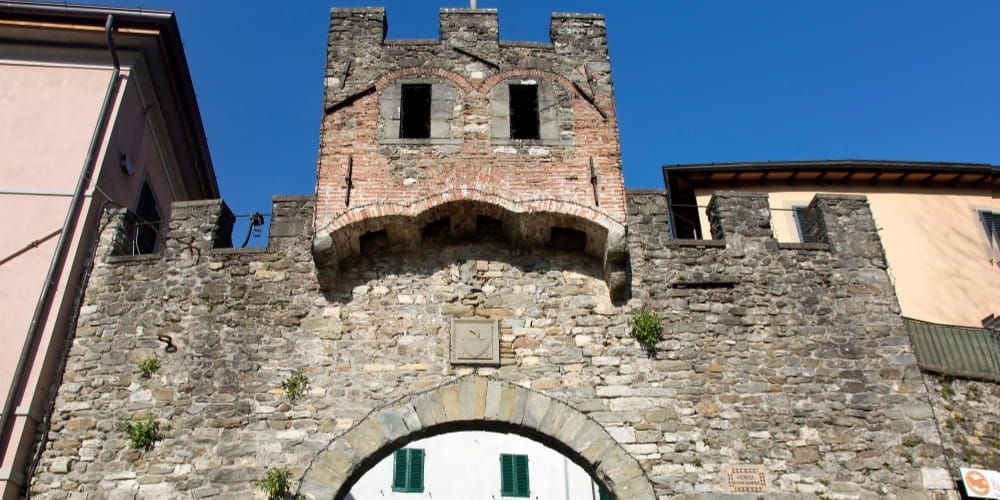
The medieval core is largely intact, with fortified walls enclosing the historic centre and three original gateways – Porta Reale, Porta Macchiaia and Porta di Borgo – still standing guard. Within these walls, Barga’s most evocative landmarks await revelation.
Foremost among them is the Duomo di San Cristoforo, perched scenically above the rooftops and framed on clear days by the jagged peaks of the Apuan Alps.
Only a short walk away sits the Conservatorio di Santa Elisabetta, a 15th-century convent later transformed into an educational institute by Pietro Leopoldo.
In the nearby hamlet of Castelvecchio, the Casa Museo Giovanni Pascoli preserves the memory of one of Italy’s great poets, who spent his final years in Barga writing memorable poems.
For a taste of wild beauty, nature lovers and cyclists are drawn to an extensive sports park with mountain bike trails for all abilities.
Highlights in Barga:
– The medieval castle and town walls, with the three historic gates (Porta Reale, Porta Macchiaia, Porta di Borgo)
– Duomo di San Cristoforo, the town’s crowning glory with sweeping views over the Garfagnana and Apuan Alps
– Conservatorio di Santa Elisabetta, a former 15th-century Clarissan convent
– Barga’s historic centre
– Teatro dei Differenti
– Giovanni Pascoli House Museum in Castelvecchio
– Subtle hints of Italo-Scottish culture throughout the town
– The sunset from the cathedral’s belvedere, especially between 29-31 January and 10-12 November, when the sun famously “sets twice”.
Duomo di San Cristoforo
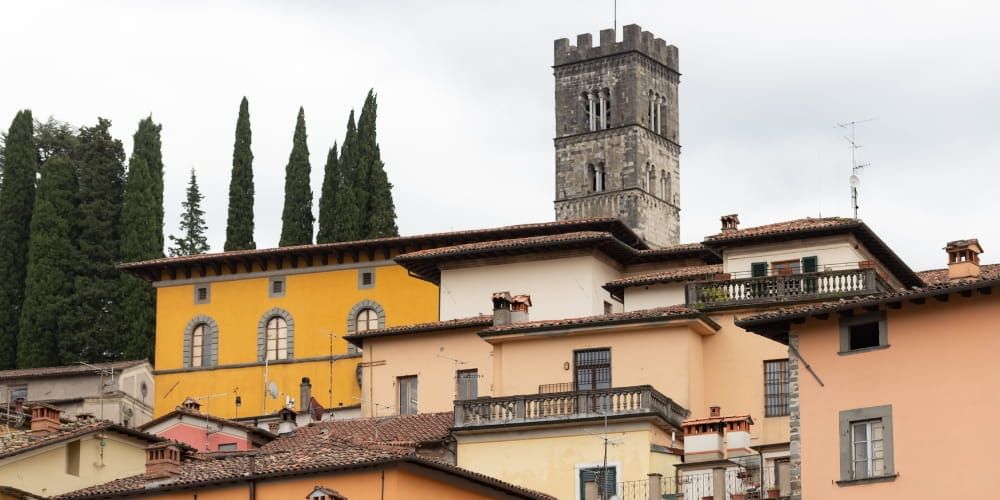
Crowning the town, the Duomo di San Cristoforo commands Barga from above with its graceful façade, crafted in luminous Alberese stone.
The details in its walls have triggered legends and questions for centuries: there are symbols linked to the Knights Templar and a mysterious inscription, still undeciphered, found at six other sites between Pisa and Pistoia.
Beauty goes beyond the building itself. From the Duomo’s belvedere, sweeping views extend across the Mediavalle del Serchio and the rugged Apuan Alps. In this place, Barghigiani witness an uncommon phenomenon.
Barga: the town where the sun sets twice
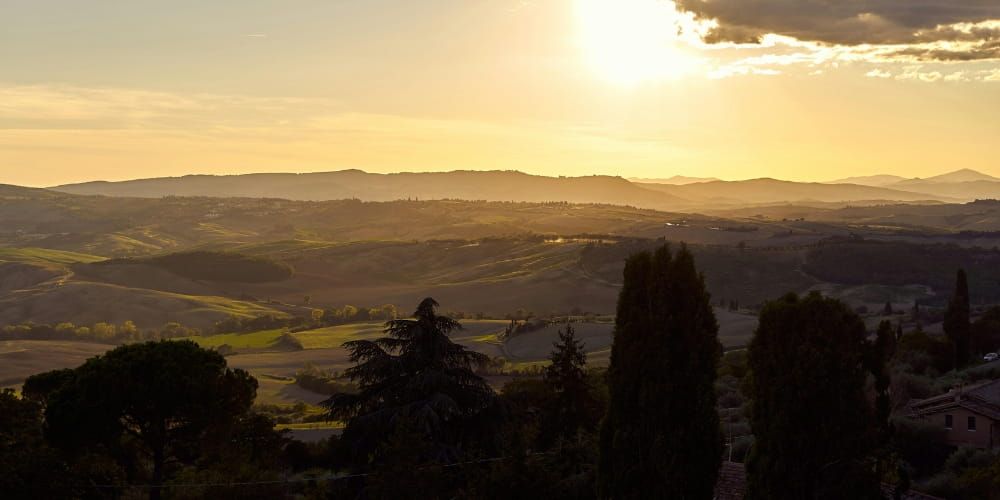
Among the many curiosities that set Barga apart from other Tuscan villages is a rare natural phenomenon: locals claim it’s the only place in the world to witness two sunsets in a single day.
This spectacle occurs just twice a year, in January and November, when the sun appears to hide behind the Apuan Alps before re-emerging moments later through the natural arch of Monte Forato.
The best vantage point for this exclusive show is the terrace outside the Duomo di San Cristoforo, on the highest point of the town.
The phenomenon has enchanted generations, including the poet Giovanni Pascoli, who lived for many years nearby in Castelvecchio and found inspiration in Barga’s distinctive light and landscape.
Related story – The best things to see and do in Tuscany
Giovanni Pascoli House Museum
In the hamlet of Castelvecchio Pascoli lies the house where Giovanni Pascoli, one of Italy’s most esteemed authors, lived from 1895 until his death in 1912.
The museum preserves much of the authentic atmosphere and furnishings, including the three desks where the poet composed his most famous works.
Situated within a garden and overlooking the rolling hills of the Serchio Valley, the home gives an insight into Pascoli’s daily world and reveals how this part of Tuscany was a source of inspiration.
Opening hours: 1 October–31 March, 9:30–13:00 and 14:30–17:15 (closed Monday–Thursday). 1 April–30 June, 10:30–13:00 and 15:00–18:45 (Friday–Sunday). 1 July–30 September, Tuesday 15:30–18:45; Wednesday–Sunday 10:30–13:00 and 15:30–18:45 (closed Monday).
When to visit Barga: Summer 2026 Events
Barga is a delight at any time of year, but it truly comes alive between July and September, when the town hosts a vivacious series of open-air festivals and cultural events. Summer brings music, food, and celebration to every corner of the historic centre.
Here are some of the unmissable highlights in Barga’s summer 2026 calendar:
– Festival delle Piazzette di Barga (16–26 July): Art, music and performances across the old town’s squares
– Cronoscalata Storica (26 July): Classic hillclimb race on a historic route
– Fish & Chips Festival (1–15 August): Celebrating Barga’s Scottish connection through food
– Cadono le Stelle (9 August): Night of San Lorenzo with stargazing and street performances
– Tribute to Giovanni Pascoli (10 August): Cultural events at the poet’s house
– Barga Jazz Festival (17–30 August): One of Tuscany’s longest-running jazz festivals
– Country Fest (25 August): Food and live music in San Pietro in Campo
– Barga Scottish Festival (4–6 September): A celebration of Scottish culture
– Sagra della Polenta e Uccelli (4–13 September): Food festival dedicated to Garfagnana’s rustic cuisine
Outdoor and slow experiences in Barga
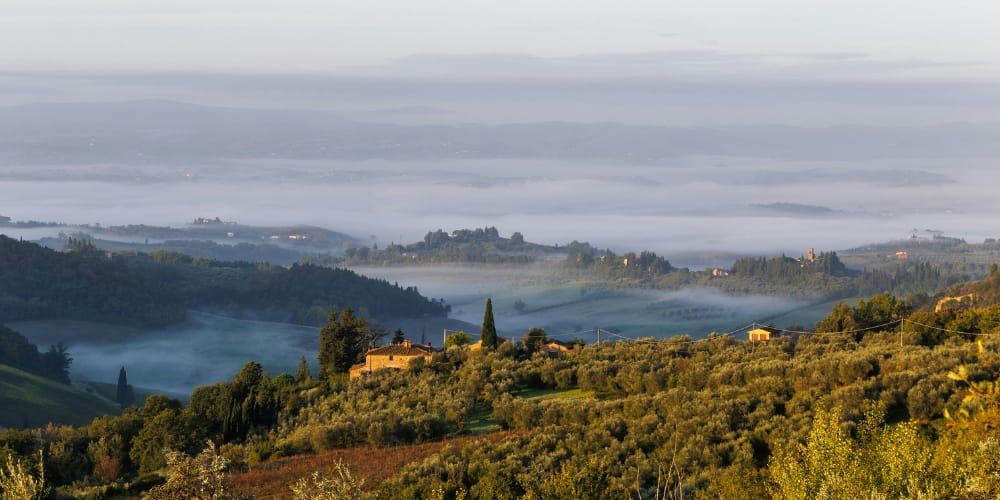
Barga is a good starting point for exploring this corner of Tuscany.
One of the best routes to follow is the Via Matildica, an ancient pilgrimage trail running from Mantua to Lucca, passing through the Garfagnana and Lucchese countryside, and culminating at the Duomo di San Martino in Lucca, home to the revered Volto Santo.
For local trekking, the Barga–Sommocolonia circular loop is a favourite. Setting off from the old town, the trail climbs along time-worn mule tracks through chestnut woods to the hilltop village of Sommocolonia.
Cyclists are well catered for at a 600-hectare park with trails for every level: enduro and cross-country tracks, routes for casual touring and families, and even a covered pump track for practice in any weather.
How to get to Barga in Tuscany
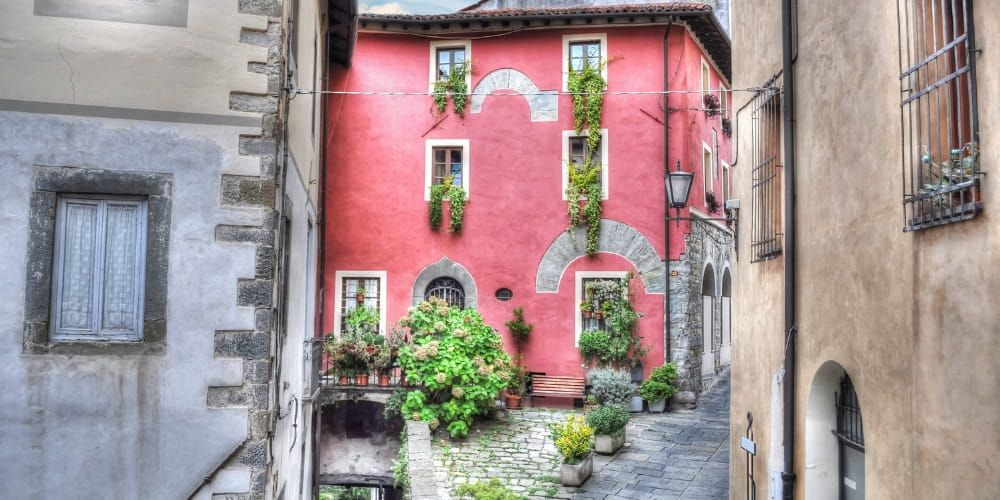
Barga is most easily reached by car. From Lucca, take SS12, then SS445 to Barga. The journey takes about an hour.
For those coming from further afield, the nearest airports are Pisa and Florence, both of which are connected to Lucca by train and the motorway. From Lucca, you can continue to Barga by car, taxi, or bus.
Alternatively, the Lucca–Aulla railway serves the Fornaci di Barga station. From there, local buses or taxis connect the historic centre.
Barga, the Scottish town in Italy - FAQs
Why is Barga linked to Scotland?
Barga is connected to Scotland due to considerable emigration from the late 19th to the early 20th centuries. Many families moved to Scotland for work, and some later returned to Tuscany, bringing back customs and culture. This bond is still evident in the town’s traditions, twinning arrangements, and local events.
What is Barga famous for?
Barga is famous for its well-preserved old town, its association with the poet Giovanni Pascoli, and its acclaimed Jazz Festival. It is also noted for its unique connection to Scotland. Furthermore, Barga is listed among the “Borghi più belli d’Italia”, is part of the Cittàslow network, and has been awarded the Orange Flag by the Italian Touring Club.
About the author
Written on 25/06/2026
Lorena Calise
I'm a content writer for magazines and websites. I also explore Italy through my writing for Visit Italy and Visit Naples.

Lorena Calise
A journey to the hidden gem in Tuscany where English is spoken, fish & chips is on the menu, and the sun sets twice.