

There are experiences measured in miles, and others you discover through flavor. In the stunning setting of Abruzzo at its most authentic, a different kind of itinerary awaits you, where cuisine and local traditions become the true map of your route.
You may start from L’Aquila, the ideal gateway to a land shaped by excellence and small-scale, high-quality producers. From here you’ll explore villages and mountains, to discover remarkable products that reflect the character and soul of a region where everyday life still follows the rhythm of the seasons and long-standing ways.
At the end of your gastronomic journey around L’Aquila and its surroundings, what remains is the allure of a region best understood through the dishes you taste along the way, and which continues to live on in the flavors you take home with you.
Is L’Aquila truly the gateway to an Abruzzo food road trip?
🥇 Visit Italy’s brand partnership
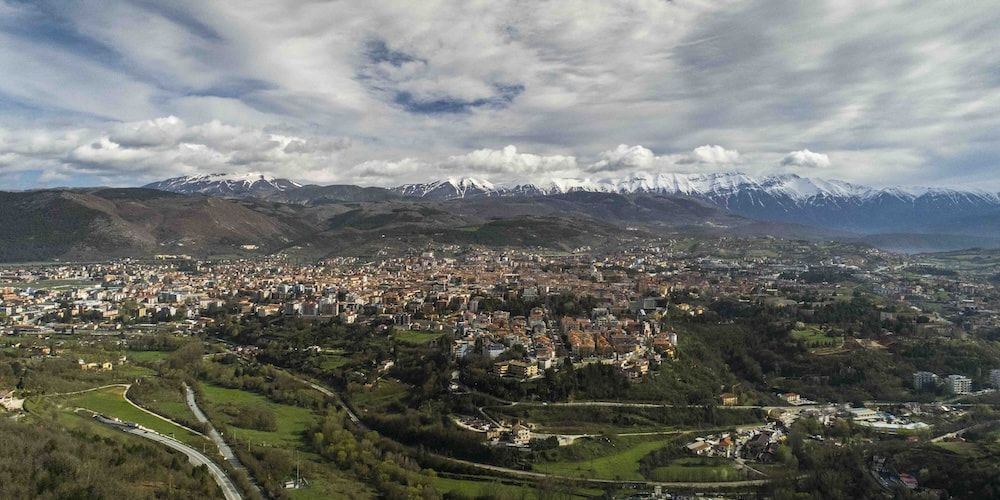
What makes L’Aquila the ideal starting point for a journey through the most typical and unmissable flavors of Abruzzo? Why is it precisely from here that you can uncover the secrets of the region’s gastronomic identity? And above all, what does it really mean to begin a journey that places at its core products, recipes, and territories still deeply tied to their origins?
It's in L’Aquila that Abruzzo’s cuisine is most clearly encountered in its most recognizable form. The city is a privileged place to approach a heritage made of delicious and emblematic dishes, such as spaghetti alla chitarra, and a natural starting point for moving in multiple directions, between mountains and small towns that preserve a traditional cuisine shaped by small producers and artisanal craftsmanship.
A mosaic that reveals itself step by step through essential flavours, striking landscapes, and a gastronomic culture that will surprise you, leaving you speechless (and delighting your palate).
- L’Aquila saffron PDO; - Iconic arrosticini;
- Cheeses and mountain cuisine;
- Road trip through villages, trattorias and small producers;
- Local wines;
- Dessert tradition;
- Food travel in Abruzzo.
Discover more about L'Aquila1st stop. Our food trip in Abruzzo starts with L’Aquila saffron DOP
In and around L’Aquila, food reveals itself as a tradition that gradually shifts as you move through the territory. Each area adds a different nuance, like chapters of a shared story shaped by the rhythms of local work and life.
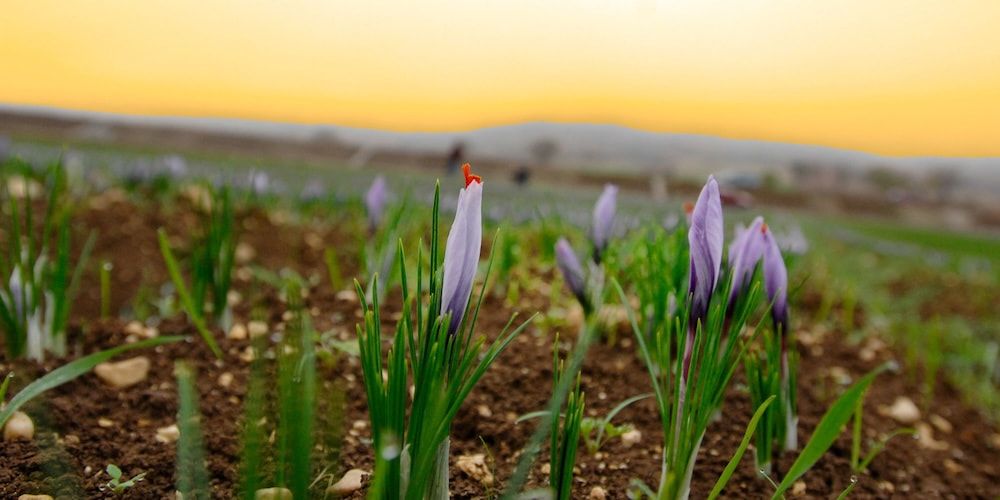
For example, you can head toward Navelli, a small town with an ancient and picturesque historic center located about 30 km southeast of L’Aquila, where the landscape opens into a patchwork of small fields cultivated with L’Aquila DOP saffron.
This spice is obtained from the stigmas of Crocus sativus and is grown in a limited area of the L’Aquila inland region, particularly the Navelli plateau. The entire process remains strictly manual: the crocus flower is harvested at the moment it blooms, and this very brief window determines the final quality of the saffron.
2nd stop. In the authentic heart of Abruzzo: arrosticini
Leave the Navelli plateau and continue toward the mountain areas of the inland L’Aquila region, following roads that connect small villages and rural landscapes. Distances between settlements grow wider, activity becomes more scattered, and food becomes increasingly tied to a tradition that has shaped this territory for centuries.
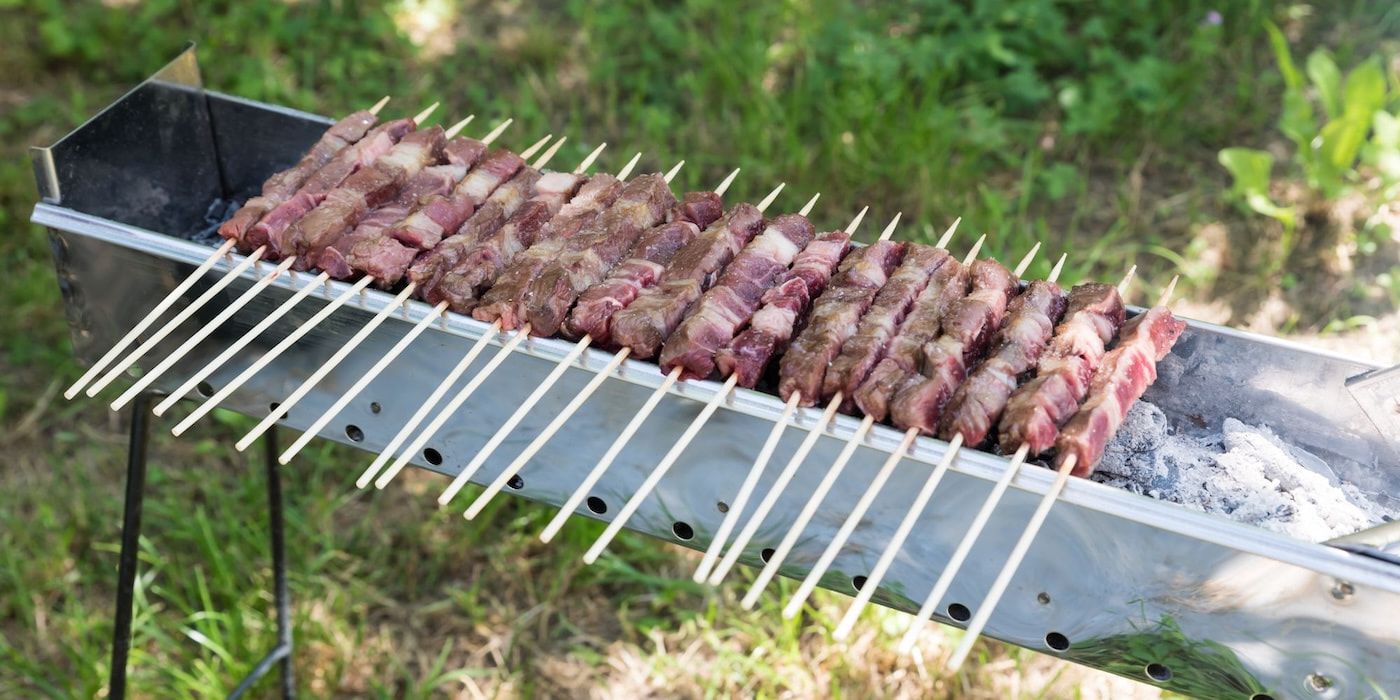
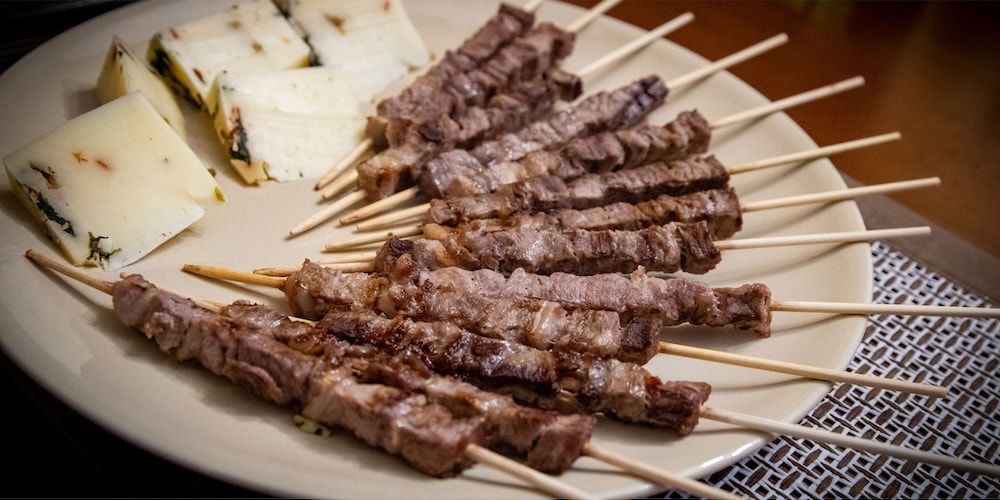
Here, you can smell the smoke of the grill before you even see who is cooking, and it's arrosticini that mark the shift toward a cuisine more closely linked to pastoral life.
This traditional Abruzzese street food comes from sheep meat, cut into small pieces and skewered for quick cooking over hot coals. It's often prepared outdoors, following a simple practice repeated over time, connected to the daily management of livestock and the immediate availability of the raw ingredients.
Tasting arrosticini is an essential part of any food journey in Abruzzo, as it lets you experience an everyday moment that has been repeated for generations, where flavor is directly tied to the surrounding landscape.
3rd stop. Mountain cheeses and the simplicity of local cooking
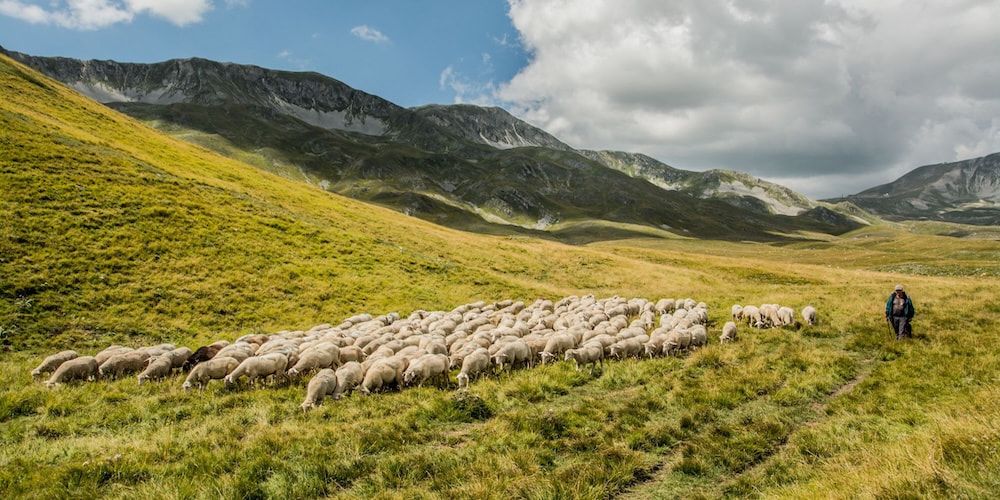
As you continue toward the higher areas of Gran Sasso, the landscape gradually opens up and becomes more expansive, while signs of pastoral life grow increasingly evident. From a culinary perspective, after meat, milk and everything derived from it become the main point of reference.
In this setting, you should absolutely try sheep’s milk cheeses, especially pecorino. There's no single, standardized profile, as each production depends on what the animals graze on and the time of year when the milk is processed. Wild herbs, altitude, and climate all influence the final result, giving rise to cheeses that can be fresh and delicate or more intense and structured.
The transformation from milk to cheese follows essential processes. It typically takes place on a small scale, within farms and local dairies, where you can closely observe methods that have remained unchanged over time.
Alongside cheeses, your food journey into mountain cuisine is completed by simple preparations and ingredients. Soups, polenta, local meats—what matters is the ability to make the most of what is available in each season.
4th stop. On the road: villages, stops, and encounters along your food journey in Abruzzo
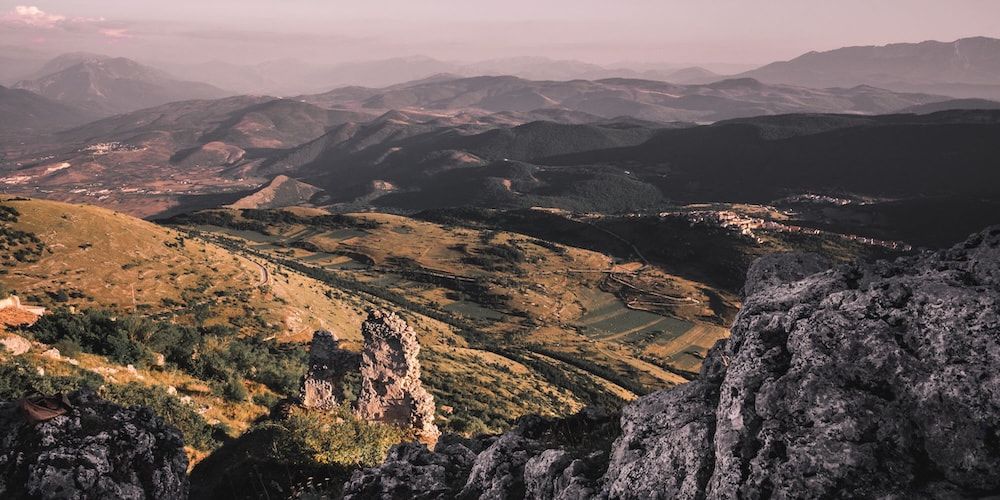
Continue your gastronomic journey along the roads that connect the villages of the area, such as Santo Stefano di Sessanio, Calascio, and Castel del Monte. Distances are short, but each detour sharply changes the scenery, taking you from ancient stone-built historic towns to small villages gathered around a handful of houses and a central square.
You don’t need to plan your stops in advance. In fact, the beauty lies in traveling on the road, stopping from time to time at a family-run trattoria, a local food shop, or a small farm, to discover and taste the distinct character of each kind of cuisine.
In most cases, ingredients are locally sourced. This makes every stop different from the previous one, not so much for the specialties you may try, but for the natural variation linked to where you stop and to what that specific area offers at that very moment.
5th stop. The landscape in your glass: wines of the region
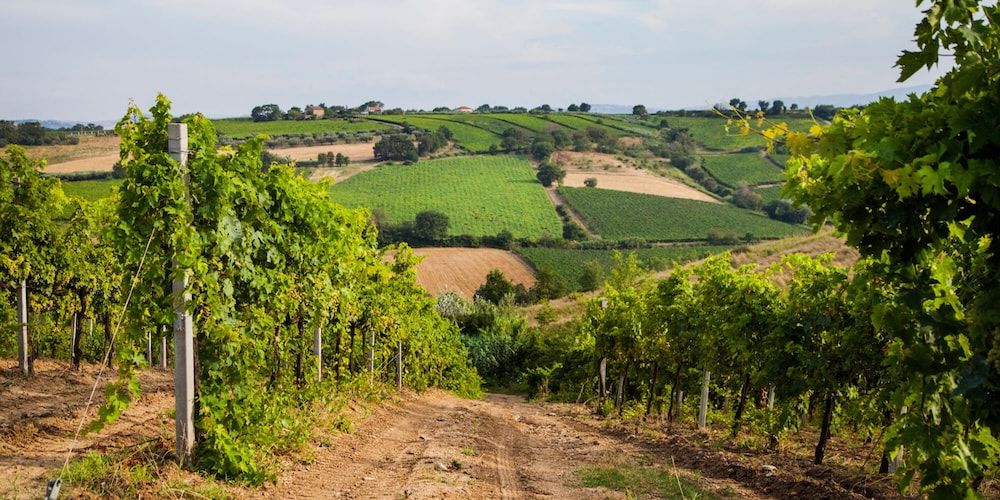
A chapter of its own should be devoted to Abruzzo’s wines, widely produced in the inland and hilly areas of the province of L’Aquila, between the Apennine valleys and the first slopes of the Gran Sasso.
Wine fits into the same balance you have followed throughout your food journey: small-scale production, short supply chains, and a direct relationship with the striking landscapes. It’s also a thread of continuity between the different stages of the route: it accompanies village cuisine, adapts to traditional dishes, and changes noticeably depending on altitude and vineyard exposure.
Among the most widespread varieties are Montepulciano d’Abruzzo and Trebbiano, often accompanied by local productions that reflect smaller micro-areas and very different climatic conditions, even just a few kilometers apart.
Alongside the main denominations, the area of L’Aquila is also home to more limited productions, often linked to individual municipalities or small vineyards, where exposure and altitude directly shape the final characteristics of the wine.
Stop 6. Back to L’Aquila: traditional sweets

After exploring villages, plateaus, and mountain landscapes, wrap up your culinary journey by returning to L’Aquila to discover the delights of its traditional sweets.
Among the local specialties you simply have to try are ferratelle, sweet wafer cookies with a distinctive pattern pressed into them by a traditional iron, found in various forms throughout Abruzzo.
Beyond their simple ingredients, these cookies tell a story that brings together food and family life. In the past, they were prepared for weddings and offered to visitors who came to see the bride’s dowry. Among the items that could be part of the dowry was the iron used to make ferratelle, often personalized with the bride-to-be’s initials.
Another must-try sweet is L’Aquila’s traditional soft torrone, a delicate, melt-in-your-mouth nougat that combines sweetness with the rich flavor of nuts. This local specialty is part of the region’s culinary heritage and is traditionally enjoyed on festive occasions, reflecting a food culture rooted in familiar flavors and shared moments.
One last taste of L’Aquila and its surrounding area brings your journey full circle, revealing, through traditional recipes, a more intimate and authentic side of Abruzzo’s cultural identity.
Why Abruzzo is Italy’s new frontier for food travel?
Abruzzo’s cuisine is deeply rooted in tradition, yet it remains a living heritage, continually evolving through the research and creativity of those who work with the region’s local ingredients and recipes today. This dialogue between tradition and contemporary interpretations makes Abruzzo one of Italy’s most compelling destinations for food and wine tourism.
At a time when many culinary experiences are becoming increasingly standardized, Abruzzo offers a glimpse into everyday life, shaped by the real lives of local communities rather than artificially designed around tourism.
The products and recipes you discover express the region’s traditions while inspiring new techniques and interpretations through creative exploration that celebrates local ingredients and preserves their connection to their origins. This continuity between the landscape and the table, combined with the ability to renew its culinary heritage, is becoming increasingly rare and difficult to find—and one of the qualities most sought after by travelers looking for authentic culinary experiences.
There's also another factor to consider: the concentration, within a relatively compact area, of very different gastronomic ecosystems. Within just a few kilometres, you move from agricultural plateaus to pastoral areas, from mountain villages to vineyards, without interruption. This makes it possible to experience a truly complete and varied food trip.
About the author
Written on 04/11/2026
Alessandro Savino
SEO Copywriter & web editor: I love transforming my passion for writing into engaging narratives, creatively and precisely exploring the beauty and complexity of our wonderful country.

Alessandro Savino
Begin your road trip from L’Aquila to discover Abruzzo’s unique flavors through local products and recipes revealing the traditions of a magical land.