
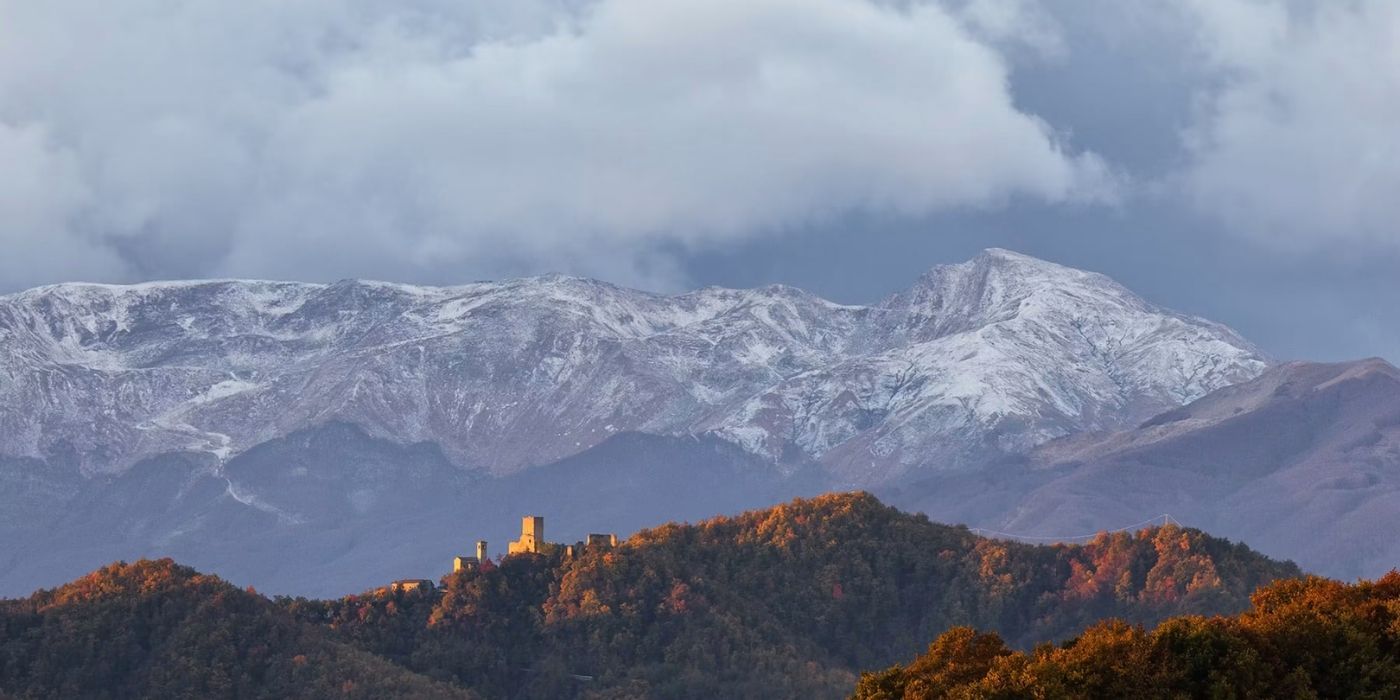

Some roads tempt you to change your plans. In the Appennino Reggiano, the journey unfolds one detour at a time, as the plains fall behind and the mountains take over the horizon.
In this part of Emilia-Romagna, you can walk through the ruins of a medieval fortress and, a few days later, find yourself following trails along a mountain ridge. In between lie tower houses, rural churches, lakes surrounded by beech trees, chestnut groves and trattorias where the landscape finds its way onto your plate: in the herbs filling a tortello, the mushrooms gathered in the woods and the milk transformed into Parmigiano Reggiano.
This Emilia-Romagna itinerary takes you on a Grand Tour through the region’s lesser-known mountains, with ten stops across the municipalities of the Reggio Emilia Apennines. From the hills once ruled by Matilda of Canossa to the peaks of the Tuscan-Emilian Apennines National Park, there is plenty to explore.
Start packing your backpack—and leave room for your hiking boots!
A Grand Tour of the Reggio Emilia Apennines: from Matilda’s lands to the mountain ridges
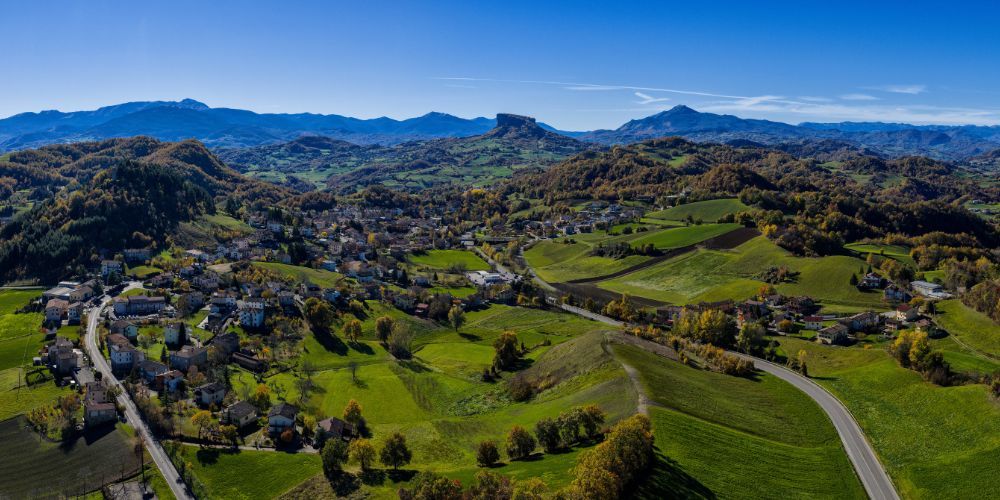
In early autumn, warm shades of foliage transform the woods, carpeting the ground with leaves and inviting you to explore the quieter trails. It is one of the most rewarding seasons to set off into the Emilia-Romagna mountains.
For our 10-stage itinerary through the municipalities of the Reggio Emilia Apennines, we recommend driving. It certainly offers greater freedom, allowing you to choose how long to stay and when to leave, changing plans along the way, and reaching even the most remote villages.
Alternatively, you can use local buses, but you will need to check current timetables and plan your connections carefully. If you choose public transport, focus on part of the route: journeys take longer, and some places cannot be reached by bus.
Reggio Emilia is your rail gateway, with onward bus connections into the mountains. Leaving the city behind, you enter the lands of Matilda of Canossa, where fortresses crown rocky outcrops and stone villages dot the hills. Stop for a walk among the clay badlands or a taste of local cooking before heading towards the woods and trails of Monte Cusna.
Higher in the Italian Apennines, you can alternate hikes with time beside Lake Calamone and a relaxing visit to Cervarezza’s thermal spa. Then comes the unmistakable outline of the Pietra di Bismantova, before you descend towards Vetto to finish among the villages of the Enza Valley.
How long you spend here depends largely on how much walking you want to do. We suggest allowing at least seven days, with a few extra if you would like to include longer hikes, cycling and a thermal spa visit. Think of this Northern Italy mountain itinerary as a starting point, with room to follow your interests.
Here are the ten stops on your route, with ideas for things to do in the Reggio Emilia Apennines:
• Canossa: the clifftop fortress and the story of Matilda.
• Casina: Sarzano Castle and stone villages.
• Viano: tower houses, truffles and mud volcanoes.
• Baiso: clay badlands to explore on foot or by mountain bike.
• Carpineti: a ridge-top fortress and Marola’s chestnut groves.
• Toano: a medieval parish church and the landscape behind Parmigiano Reggiano.
• Villa Minozzo: Monte Cusna and the tradition of Maggio folk theatre.
• Ventasso: lakes, woods and a thermal spa break.
• Castelnovo ne’ Monti: the Pietra di Bismantova.
• Vetto: villages and trails in the Enza, Tassaro and Tassobbio valleys.
Discover the Appennino Reggiano10. Canossa: begin on a rocky outcrop that tells a European story
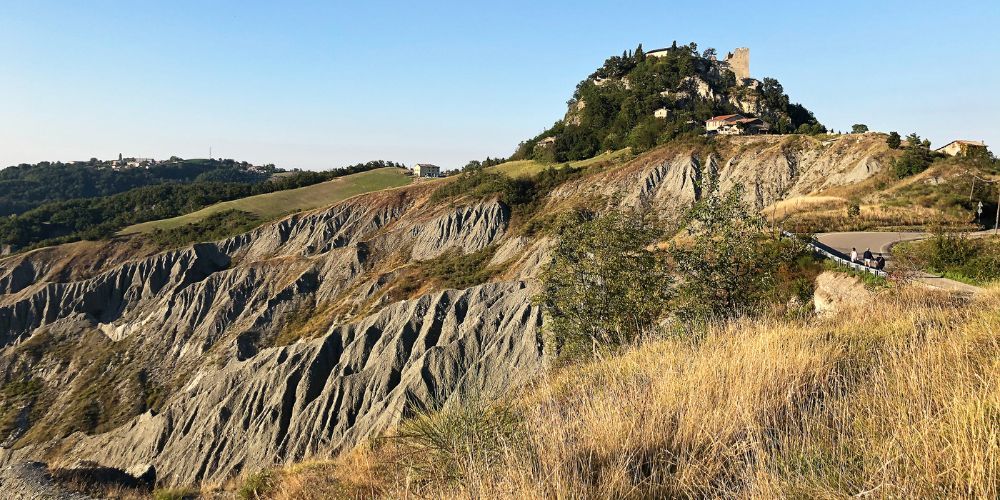
Before you notice the ruins, it is the setting that catches your eye: Canossa Castle stands on a pale rocky outcrop above the hills. Begin your day by walking up to the archaeological site, and picture this place in January 1077, when Henry IV came to Pope Gregory VII to seek the lifting of his excommunication, in Matilda’s domains.
Among the fortress ruins, the views across the valleys make it easy to understand the importance of controlling these heights. Before setting out, check the opening hours of the castle and the Naborre Campanini Museum, where finds from the site add detail to the story.
For lunch, stop at a local trattoria and explore the flavours of Matilda’s lands, from Parmigiano Reggiano to Culatello di Canossa. Give yourself time to enjoy them before continuing. In the afternoon, head to Rossena, around four kilometres away, where a well-preserved fortress rises above a reddish rock face. After Canossa’s ruins, its surviving walls help you picture the network of strongholds that protected Matilda’s territory.
If you would rather spend more time walking, choose a section of the Sentiero Matilde, or Matilda Trail, instead. Keep your hiking boots within reach: this is the first of many opportunities to leave the car behind and explore the hills on foot.
9. Casina: views from Sarzano and lanes through stone villages
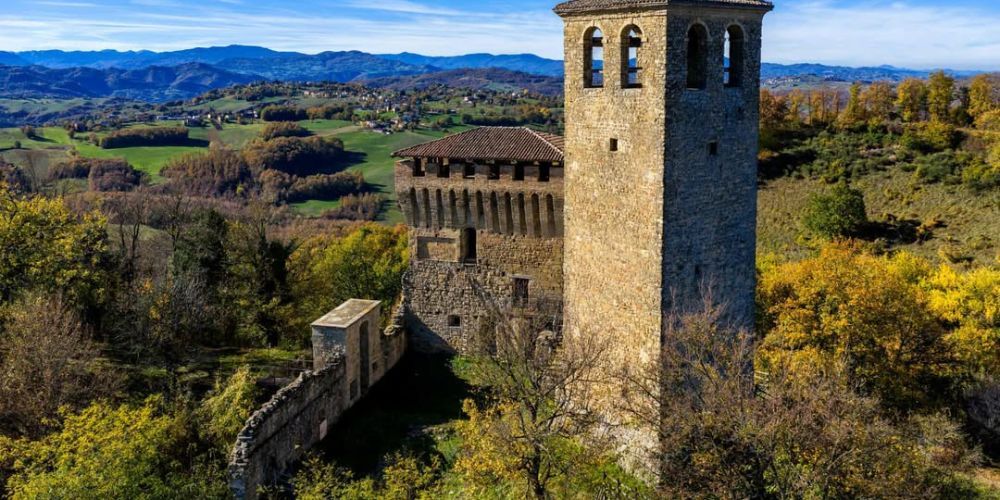
Continue by car towards Casina and Sarzano Castle, on a hill close to the town. From the village, walk up towards the keep. After Canossa, you will begin to recognise the landscape: fortified hilltops and roads linking small settlements. Check the opening schedule and guided tour dates before planning your visit to the castle’s historic buildings.
Next, head to Bergogno, one of the best-preserved villages in the Reggio Emilia area. Leave the car and wander among its stone houses, looking out for doorways, courtyards and narrow passages. If you feel like walking further, follow a section of the Via Matildica del Volto Santo, the historic pilgrimage route through this area, deciding on your distance and return route before setting off.
For a meal, make your way to Cortogno, where the village’s historic bar still doubles as a shop. Gnocco fritto—pillowy pieces of fried dough—cured meats and Parmigiano Reggiano make a lunch rooted in local flavors, and you can pick up something to take on your travels. If you prefer exploring on two wheels, there is also an e-bike rental point here. Arrange availability and a suitable route in advance, then spend a few hours discovering the roads and landscapes of the Tassobbio Valley.
8. Viano: follow the tower houses, then look beneath your feet
In Viano, begin with the hamlets of Cadonega, Corte and Minghetta. Leave the car and look up at the tower houses, reminders of a time when a home also needed to offer protection. Stone façades and narrow passages set the scene for the first part of your visit.
Then change surroundings and head to the Salsa di Casola Querciola, near Ca’ Bertacchi, around eight kilometres from Viano. Here, the surprise lies beneath your feet: salty water, clay and gas rise from underground to form small mud volcanoes. Follow the marked path and pause beside the vents. Activity varies, but you may spot bubbles and gentle movements on the grey surface. Information panels explain this phenomenon, which, despite its appearance, is not volcanic in origin.
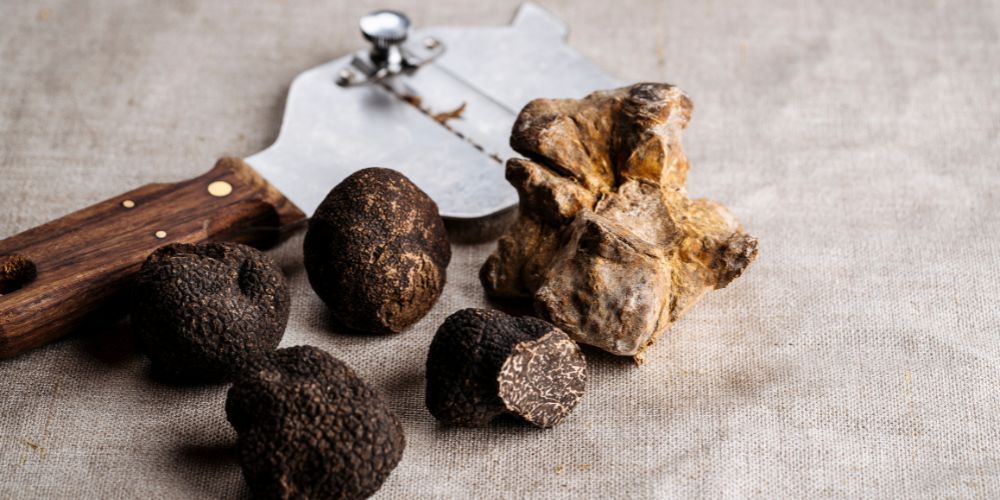
For lunch, find a trattoria serving truffles, one of Viano’s signature ingredients. Ask which varieties are available and let your host suggest a dish that brings out their aroma. If you prefer filled pasta, try pumpkin or leafy-green tortelli. Visiting in November? Check the Truffle Fair program: your stop could coincide with a gathering of producers, tastings and local cooking.
7. Baiso: walk along the edge of a landscape shaped in clay
Continue towards Baiso and watch the scenery change. Woodland gives way to slopes carved into clay ridges and gullies: these are the calanchi, or badlands, shaped by water and erosion. Near the village of Casale, look for shades ranging from yellow and pink to green and brown. Pause to see how the light picks out their folds—one of the quieter hidden gems in Emilia-Romagna.
To stretch your legs, start from Via Castello in central Baiso and follow CAI trail 632. Around 25 minutes later, you reach La Balota, the hill topped by a giant orange bench. Bring some water and take your time with the view, which stretches towards Monte Cimone, the mountain ridge and the Reggio Emilia plain. Wear shoes with a good grip, especially after rain, when clay-rich ground can become slippery.
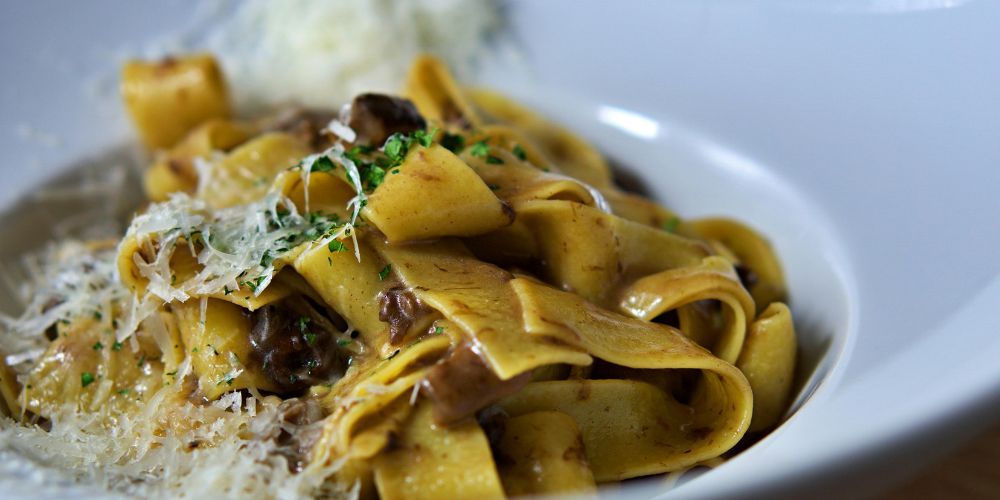
Back in town, stop for lunch at a trattoria and ask about sheep or mutton dishes, a distinctive feature of Baiso’s cooking. If you are travelling in autumn, look for dishes featuring mushrooms from the surrounding woods. After exploring the landscape, you can discover another side of it at the table before continuing towards Carpineti.
6. Carpineti: a fortress between two valleys and a pause among chestnut trees
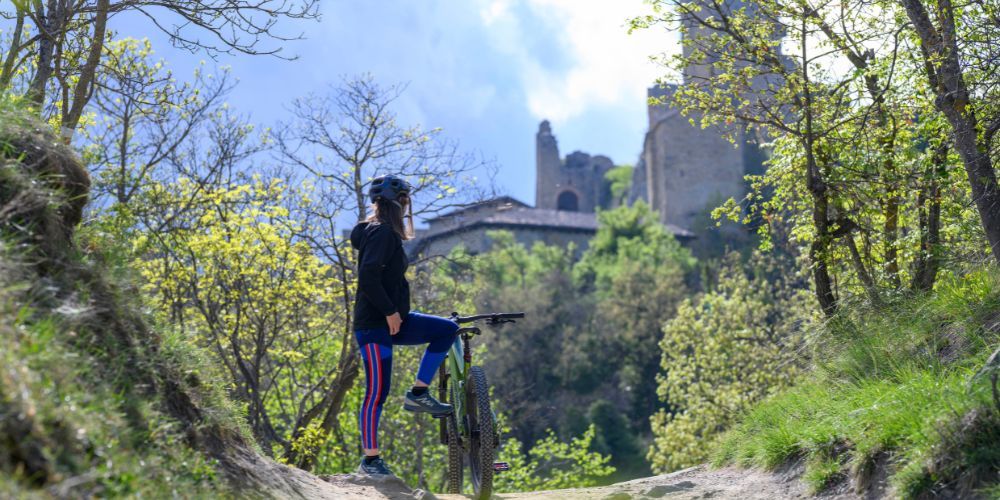
From Baiso, head to Carpineti and return to Matilda’s story. The Castello of Carpineti overlooks the Secchia and Tresinaro valleys. As you approach, you can appreciate how its position allowed the routes between the plains and mountains to be watched over. Check opening times before travelling, then give yourself time to explore the ruins and take in the view. If you want to continue on foot, the Sentiero Dorato, or Golden Trail, passes here, linking Monte Valestra with Monte Fosola. Choose a section to suit the time available, allowing for the return walk.
For lunch, seek out scarpazzone montanaro, a savoury pie whose filling combines rice, leafy greens and cheese. Enjoy a slice before getting back on the road, or take a portion for a break during your walk. It is an easy introduction to Carpineti’s cooking, and a local speciality with a festival of its own.
In the afternoon, head to Marola for a walk through its centuries-old chestnut grove. Autumn leaves line your way, but the woodland’s story is worth discovering in any season. At La Fredda, you will find the restored chestnut-drying house “La Casa del Pan d’Albero”, where chestnuts were once dried before being milled into flour. Ask about visiting arrangements: after walking among the trees, you can discover how much they once mattered to mountain life and food.
5. Toano: a hilltop church and the landscape behind Parmigiano Reggiano
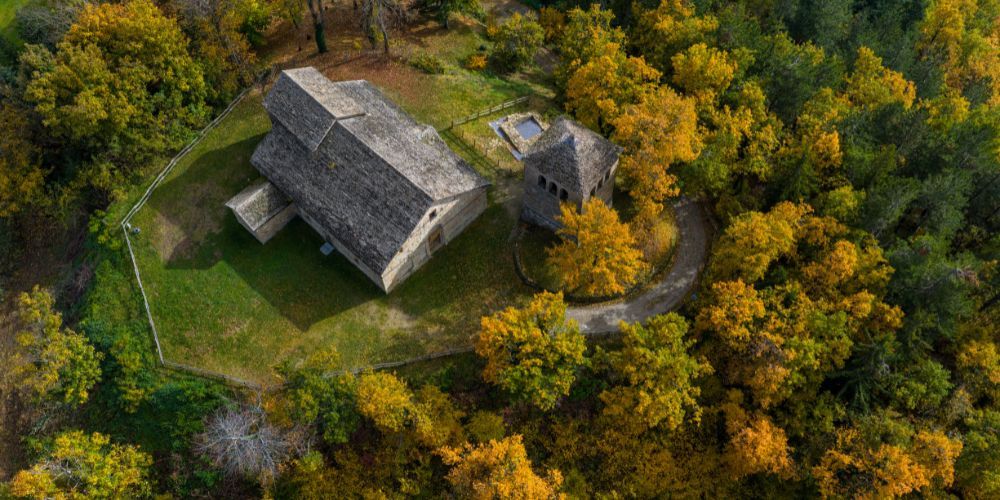
The road continues towards Toano, where the Parish Church of Santa Maria Assunta, on Monte Castello, deserves a stop. Its Romanesque architecture recalls the ancient routes linking the plains with Tuscany. To explore the interior, with its substantial columns and rounded arches, book at least 48 hours in advance. An audio guide available on site helps you take a closer look at the details.
Around you, fields of fodder crops reveal the connection between these hills and Parmigiano Reggiano. To follow its transformation from milk into a wheel of cheese, arrange a visit in advance with a dairy that welcomes the public, letting the production schedule shape your morning. For lunch, find a trattoria and try tortelli or, when available, pattona di castagne, a chestnut-flour polenta that preserves the memory of mountain farmhouse cooking.
In the afternoon, head to Castagnola, near Quara, to explore the Balze di Malpasso. Leave the car near the small chapel and take the marked path towards sandstone formations carved by water. You can follow the hiking route towards the waterfall without tackling the suspension bridges or via ferrata, which require specialist equipment and skills. Allow a few hours for this detour, wear hiking boots and leave enough time for the uphill return before dark.
4. Villa Minozzo: towards Monte Cusna, between hiking trails and folk theatre
At Villa Minozzo, you enter the higher Apennines. Valleys stretch further, villages grow more scattered, and Monte Cusna, rising to 2,121 metres, invites you to devote a full day to the mountains. Head towards Febbio and Monteorsaro to explore its slopes, or choose Civago, in the upper Dolo Valley, as your starting point for a walk through woods and between mountain refuges. The summit can wait: choose a route that leaves time to enjoy the stops along the way.
To combine a hike with lunch in the woods, start at Case di Civago and follow CAI trail 605 towards Rifugio Segheria dell’Abetina Reale, allowing around an hour each way. Before setting off, check trail conditions and whether the refuge is open. If you would like to eat there, book ahead and ask what the kitchen is serving. Make room in your backpack for water and a jacket, and in your day for the return walk.
Back in town, discover a tradition that brings knights, battles and mythical stories into these mountains: Maggio drammatico, a form of open-air folk theatre. Check the performance calendar before your trip; seeing a production could be a reason to stay an extra night. If the dates do not fit, enquire about opening times at the Museo del Maggio di Villa Minozzo, which preserves the history of this tradition and its theatre companies.
3. Ventasso: choose a lake, then unwind at the thermal spa
Continue towards Ventasso, a municipality bringing together Busana, Collagna, Ligonchio and Ramiseto. Allow at least two days to explore, without filling them with driving. Arriving from Villa Minozzo, stop in Ligonchio to admire the Art Nouveau hydroelectric power station. In these mountains, water has shaped architecture and community life as well as the landscape. Then decide whether to continue towards Cerreto or save the following day for Monte Ventasso.
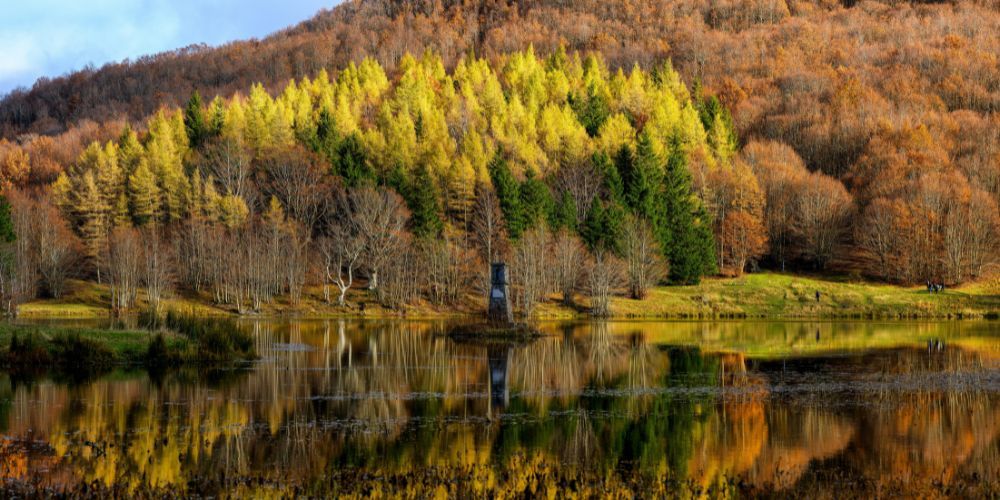
For a morning among woods and water, drive to Ventasso Laghi and leave the car behind. A short walk brings you to Lake Calamone, at the foot of the mountain. Follow the nature trail loop, which is less than three kilometres long, pausing to watch the trees reflected in the water. For lunch, Rifugio Venusta offers a chance to linger beside the lake. Check opening times and book if you would like to eat, particularly at weekends.
In the afternoon, drive towards Cervarezza and let walking give way to rest. At Cervarezza’s thermal spa, surrounded by pine and beech trees, you can enjoy thermal treatments or spend time in the wellness facilities. Check seasonal opening dates, services and availability in advance, giving yourself time to settle in. After days on the trails, an afternoon out of your hiking boots has its place in the journey too.
2. Castelnovo ne’ Monti: encounter the Pietra di Bismantova
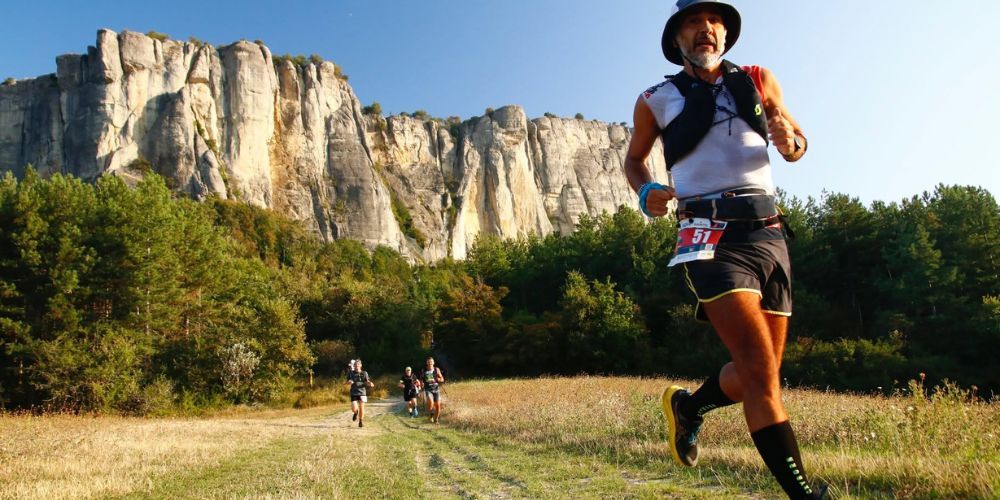
As you approach Castelnovo ne’ Monti, look towards the horizon for the Pietra di Bismantova. With its vertical walls and almost flat summit, it rises above the hills like an island of rock. This is the Bismantova mentioned by Dante in his Purgatorio. Before getting closer, pause to study its outline, which changes with every bend in the road.
From town, head to Piazzale Dante, the starting point for the Pietra di Bismantova Nature Trail, allowing around two hours for the walk. Put on your hiking boots and decide whether to explore around the rock formation or follow the signs towards the summit plateau. These are different experiences, so consult a map and check trail conditions before choosing. If you climb to the top, stay well back from exposed edges. To try rock climbing on the cliffs, hire a qualified mountain guide unless you already have the necessary skills and experience.
After your walk, head to Ginepreto, where the Church of Sant’Apollinare and fields beneath the Pietra offer a different perspective on the scenery. For lunch, stop at a trattoria or an agriturismo—a working farm offering meals or accommodation—around Castelnovo, checking opening times and availability first. Staying locally gives you more time to explore the rural villages and see Bismantova again in the morning light.
1. Vetto: a final stop among valleys and stone villages
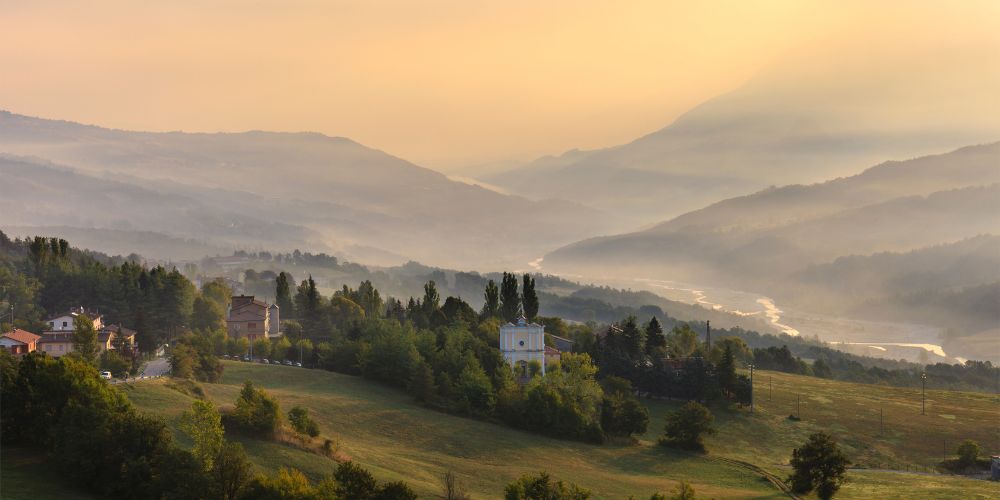
For your final stop, descend towards Vetto, overlooking the Enza Valley. After the high mountain views, turn your attention to smaller details: the carved doorways, vaulted passages and tower houses in Gottano, Legoreccio, Pineto and Spigone. Choose one or two villages and leave the car at the entrance. Walking through them gives you time to notice the stonework and the passages opening towards the countryside.
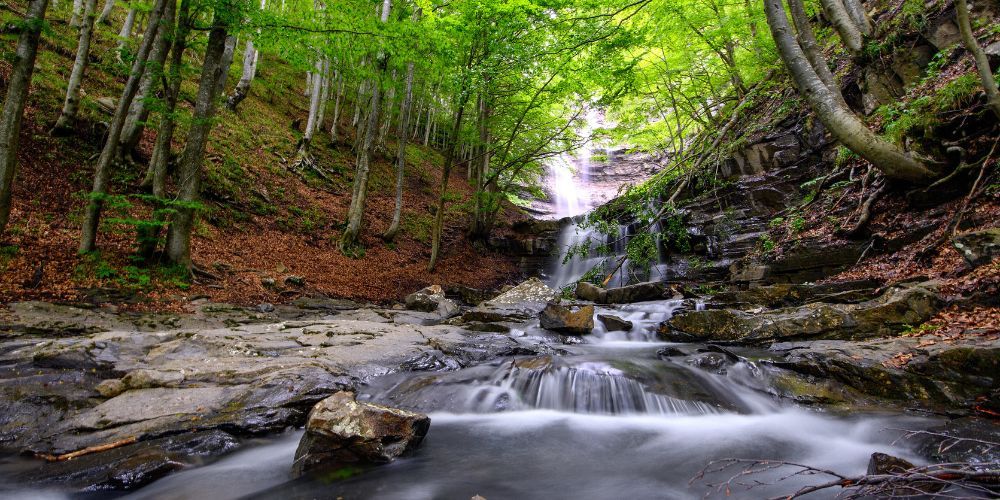
Then spend a few hours in the Tassaro and Tassobbio valleys. Near Scalucchia, you can reach the Rio Tassaro waterfall, tucked between sandstone walls. Before setting off, ask about access and trail conditions, and wear footwear suited to damp ground. If you prefer a longer walk, choose a section of the Sentiero dei Ducati, the historic walking route through Vetto’s territory, allowing enough time to return to your car.
Before heading back towards the plains, stop at a trattoria for one last mountain lunch: tortelli, local cheeses or a seasonal dish. By now, some flavours will feel familiar, and you can choose your favourite. Then open the map again. That village glimpsed through the car window, or the trail you saved for another day, could be the starting point for your next visit.
Now it is your turn: choose when to set off and let the roads of the Appennino Reggiano guide you, with time to stop wherever curiosity takes you.
About the author
Written on 04/11/2026
Chiarastella Campanelli
Dreamer, editor, beauty lover

Chiarastella Campanelli
From castle visits and woodland hikes to local food and thermal spas, there are plenty of things to do in the Reggio Emilia Apennines