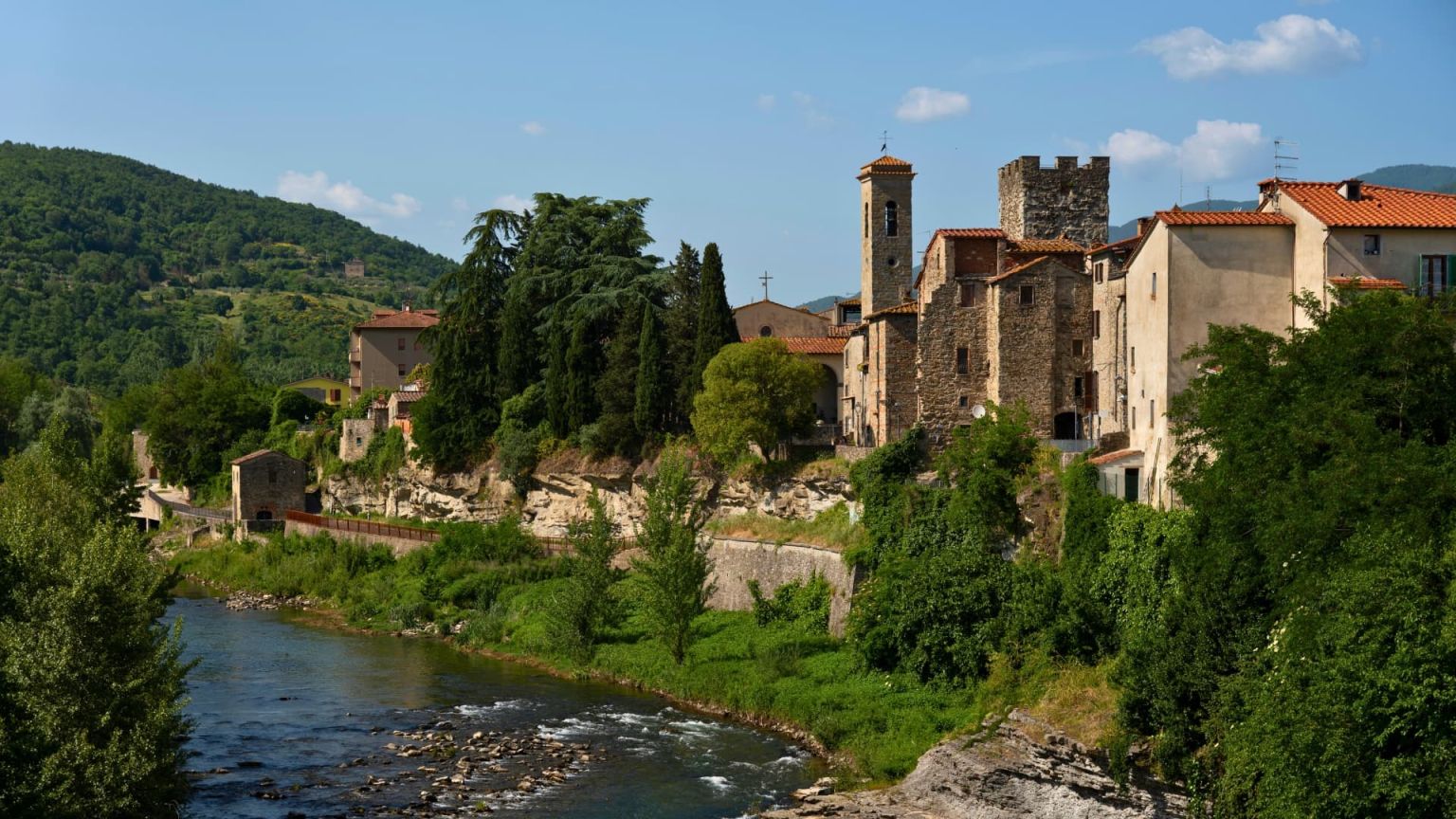
A village with a millennial history and a strong identity, this is Subbiano, the gateway to Casentino, not far from Arezzo. Bathed by the Arno River and surrounded by lush nature, among the many iconic destinations of Tuscany, this small town at the foot of Alpe di Catenaia is a treasure still waiting to be discovered.
Ancient traditions, a privileged location for exploring a territory that has managed to preserve its genuineness, and excellent local cuisine are just a few of the many great reasons to visit Subbiano. So, let’s set off on a journey different form the usual, to discover a place that is eager to reveal its secrets.
Where Subbiano is located
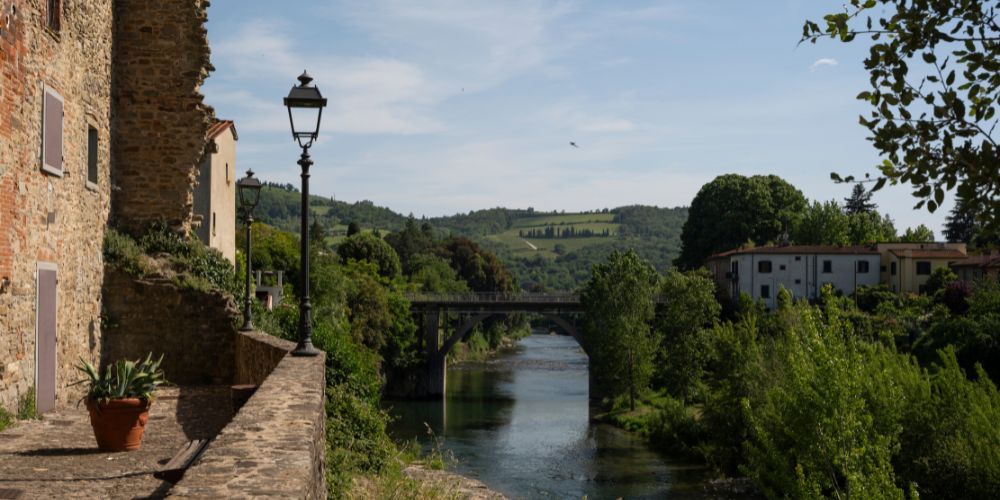
Leaving Arezzo behind, as you travel north toward Casentino and Alpe di Catenaia, you will soon come across a plain on the left bank of the Arno river. Here, right at the foot of the mountains, lies the village of Subbiano.
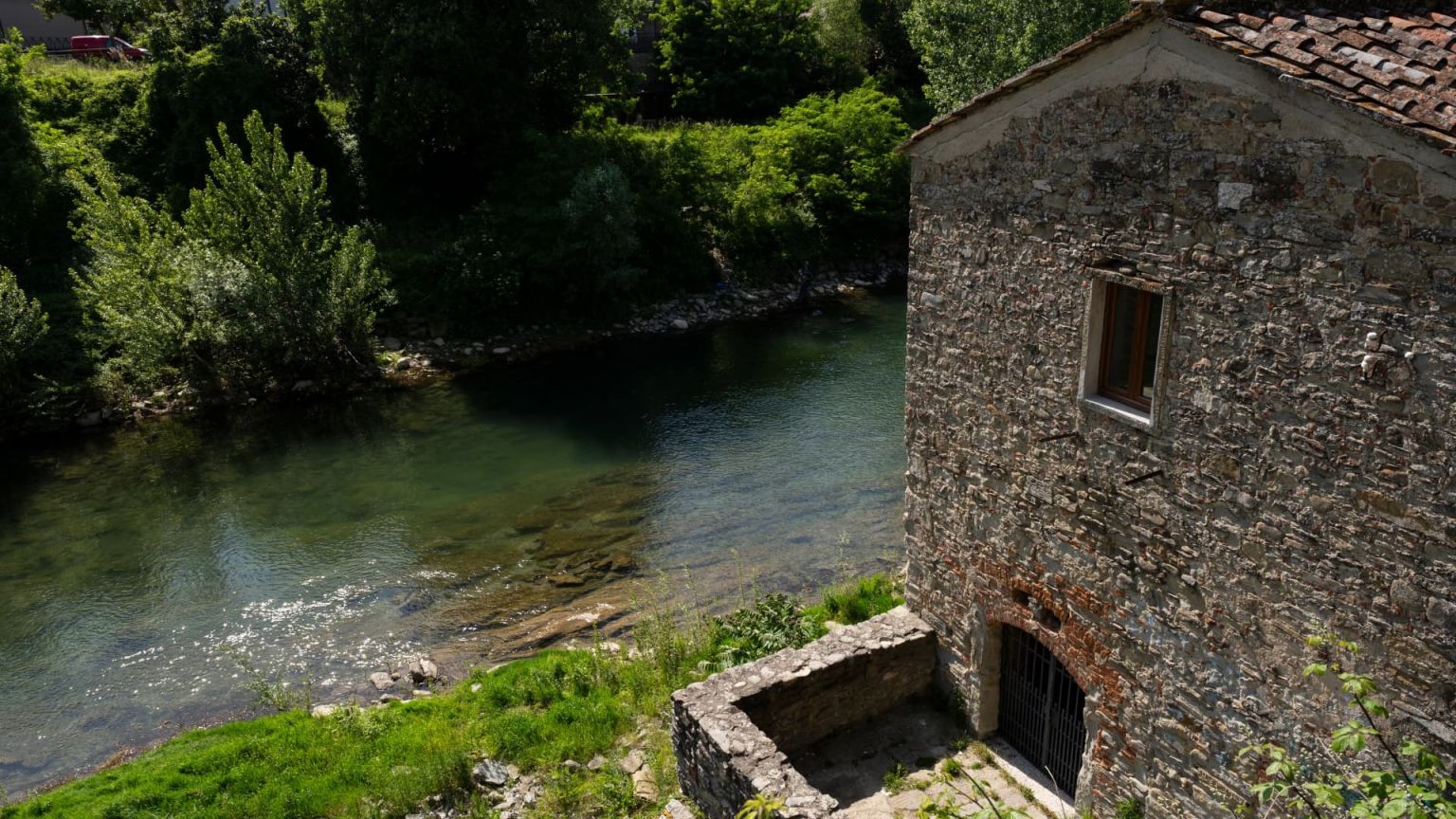
A hidden gem of Tuscany, Subbiano is immersed in almost untouched nature. The abundance of water keeps the surrounding oak, chestnut, and beech forests green and thriving. The traces of water mills still visible in the area testify to the strong connection between the inhabitants and their river.
The surrounding countryside is a place of silence and serenity, where olive trees grow and vineyards produce the delicious local wines.
Overlooking everything is the imposing peak of the Alpe di Catenaia, forming a natural boundary between Casentino Valley and Val Tiberina. The mountain, with its stunning views, can be explored along the beautiful paths, both in summer and winter.
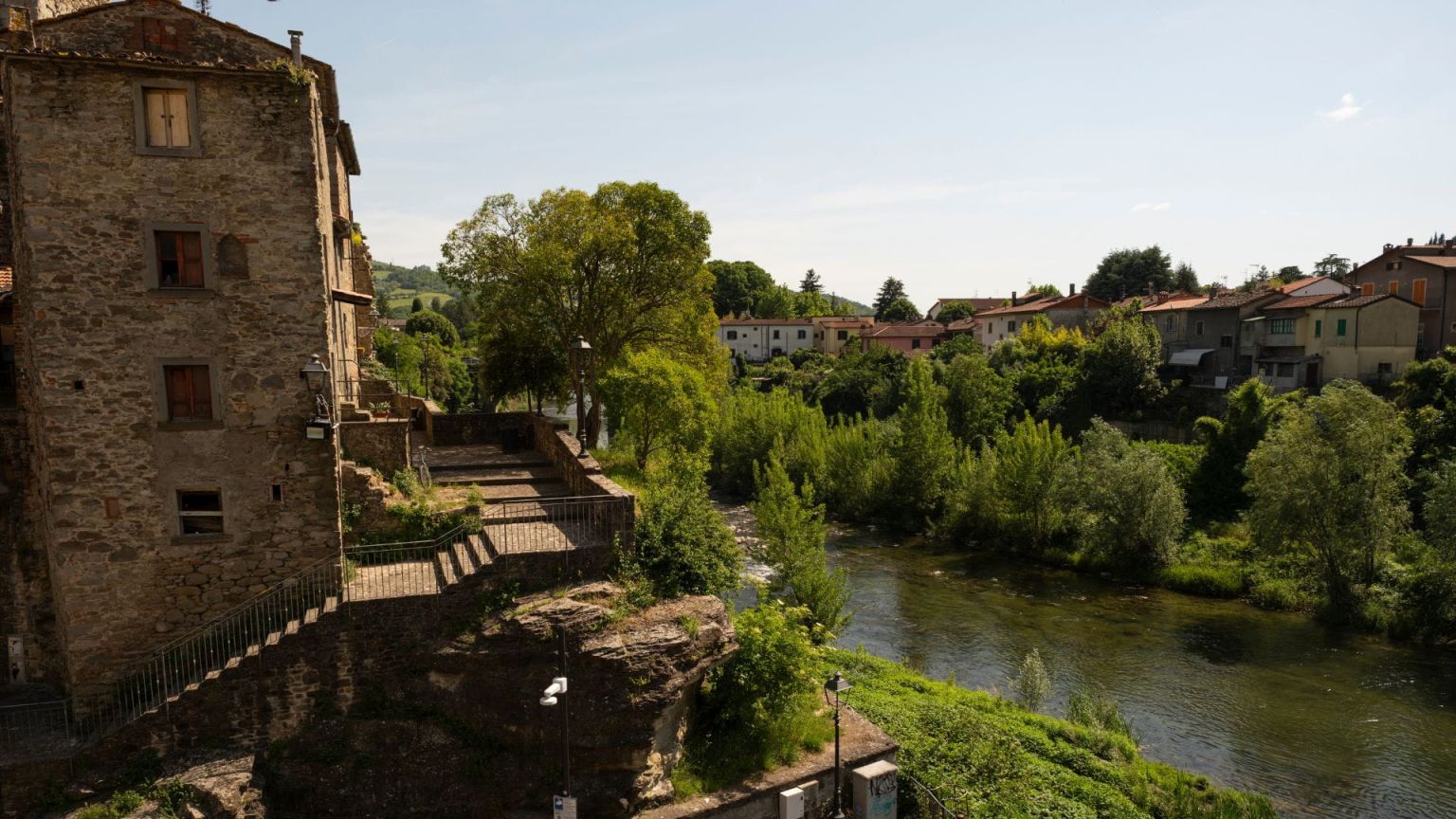
Subbiano, a long history that time cannot erase
At the entrance to Subbiano, in a green space along the regional road 71, there is a statue dedicated to the god Janus Bifrons, the same figure present in the city's coat of arms. Subbiano, as itold by the populer tradition, was founded by the Romans right under the protection of the god: we don't know if it's true, but it's indeed a suggestive hipotesis.
It is known, however, that the area had been inhabited long before the Romans. Farmers and herders lived on Alpe di Catenaia as early as the third millennium BC. Later, the Etruscans settled there, followed by the Romans that left clear evidence in the names of the many mountain villages.
From the early Middle Ages, the village first belonged to the bishops of Arezzo, then to various rich families, before eventually coming under the control of Florence.
In 1343, Subbiano managed to break away from Florence, which had become a republic by then, but only for a few decades. In 1384, with the conquest of Arezzo, Florence regained its control.
The traces of this past can be found today not only in its territory but also in the Documentation Center of the Archaeological Culture of Subbiano. The museum, temporarily closed, shows historic testimony of both the most ancient and medieval times.
Likewise, the church, the castle, and the various palaces are a charming legacy of the borough's important role through time.
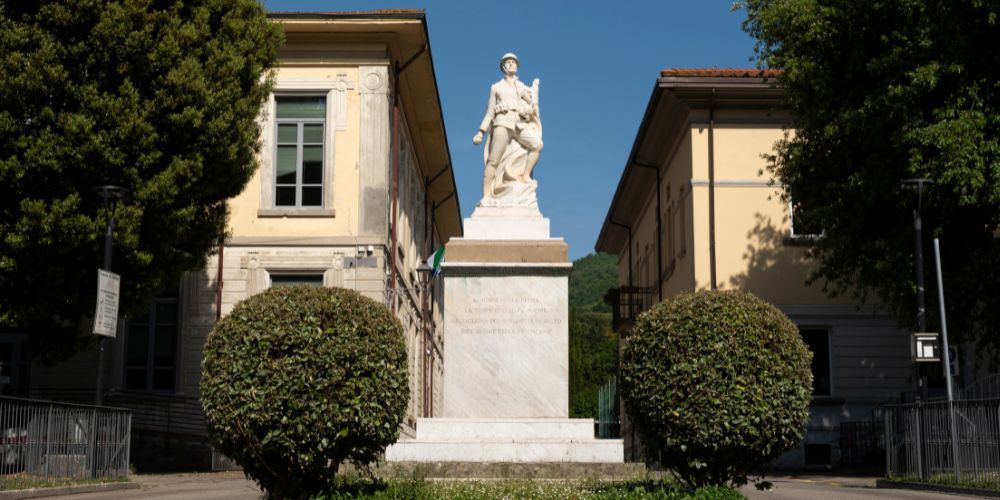
As evidence of how history has left its mark on Subbiano, the Monument to the Fallen of the First World War stands in front of the current Town Hall, at the entrance to the historic center. This marble, stone, and bronze work by Tuscan sculptor Omero Puntelli, made in 1924, was commissioned by the community in memory of their sons who lost their lives in the First World War. Recently, it was restored on the centenary of its completion.
The village and the castles
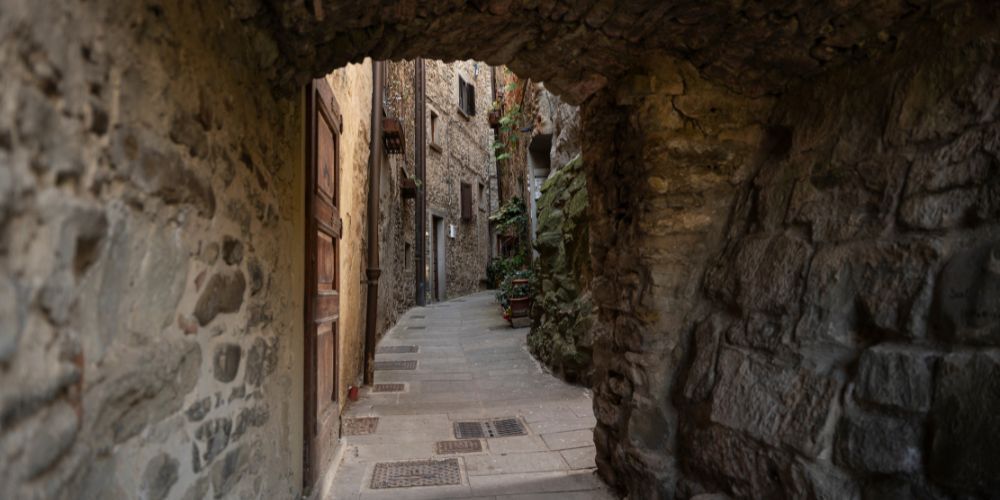
Rich as it is, in traces of its past, Subbiano has its own heart in the medieval castle. Built on a rocky spur between the Arno River and the Palbena stream, the castle of Subbiano is documented as far back as the year 1000, and in the Middle Ages, it controlled the bridge and the road between Arezzo and the Casentino. Once the property of the Canons of Arezzo Cathedral, it later came under the dominion of the Ubertini and Tarlati da Pietramala families; in 1384, it passed under Florentine control, losing much of its defensive function.
Remnants of the original structure include a three-level, 19-meter-tall crenellated tower, the pointed arch of the main gateway, sections of walls with adjoining buildings, an inner courtyard, the gate of the second defensive wall, and various defensive features (arrow slits, mountings for drawbridge chains, and an access trapdoor).
Just a few kilometers from the town center, there are two other magnificent castles: the beautiful Castello della Fioraia is located in the hamlet of Castelnuovo, with its imposing crenellated tower overlooking the village below.
Just seven kilometers from Subbiano is another magnificent manor set in the greenery, the big Castle of Valenzano, restored in a neogothic style in the 19th century. Inside, some original areas still remain, including a ballroom with a beautiful painted coffered ceiling, a magnificent fireplace, and arched windows from where you can enjoy a mgnificent view on the Casentino Valley.
If you want to travel a little further, about fifteen kilometers away from Subbiano, stands the Guidi Counts’ Castle. Located in Poppi, it is one of the most important castles in Casentino and among the best preserved.
The places of devotion: the churches of Subbiano
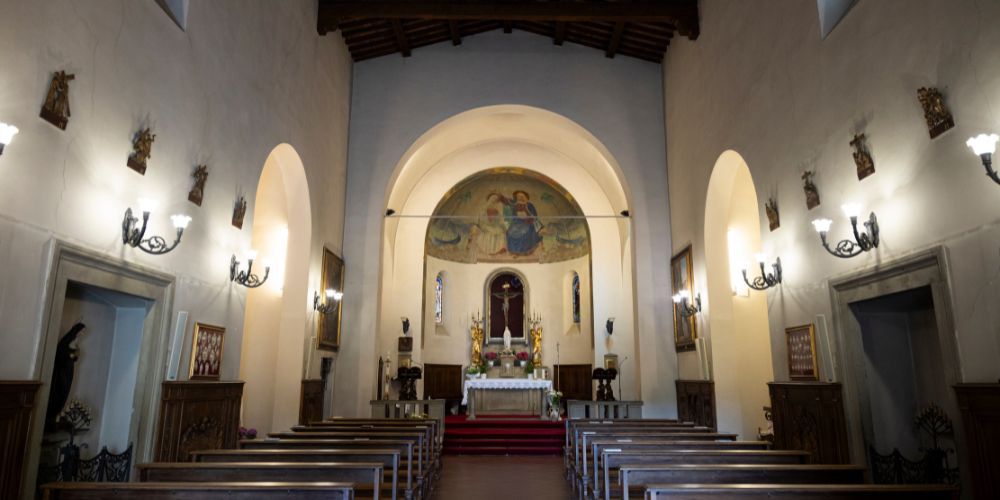
Casentino is a land rich in places that testify to the most authentic devotion of its inhabitants and pilgrims throughout history.
When you visit Subbiano you will certainly run into the village’s two churches. The modern Church of San Giovanni Battista, inspired by the model of Casentino's parishes, is located in the new residential area.
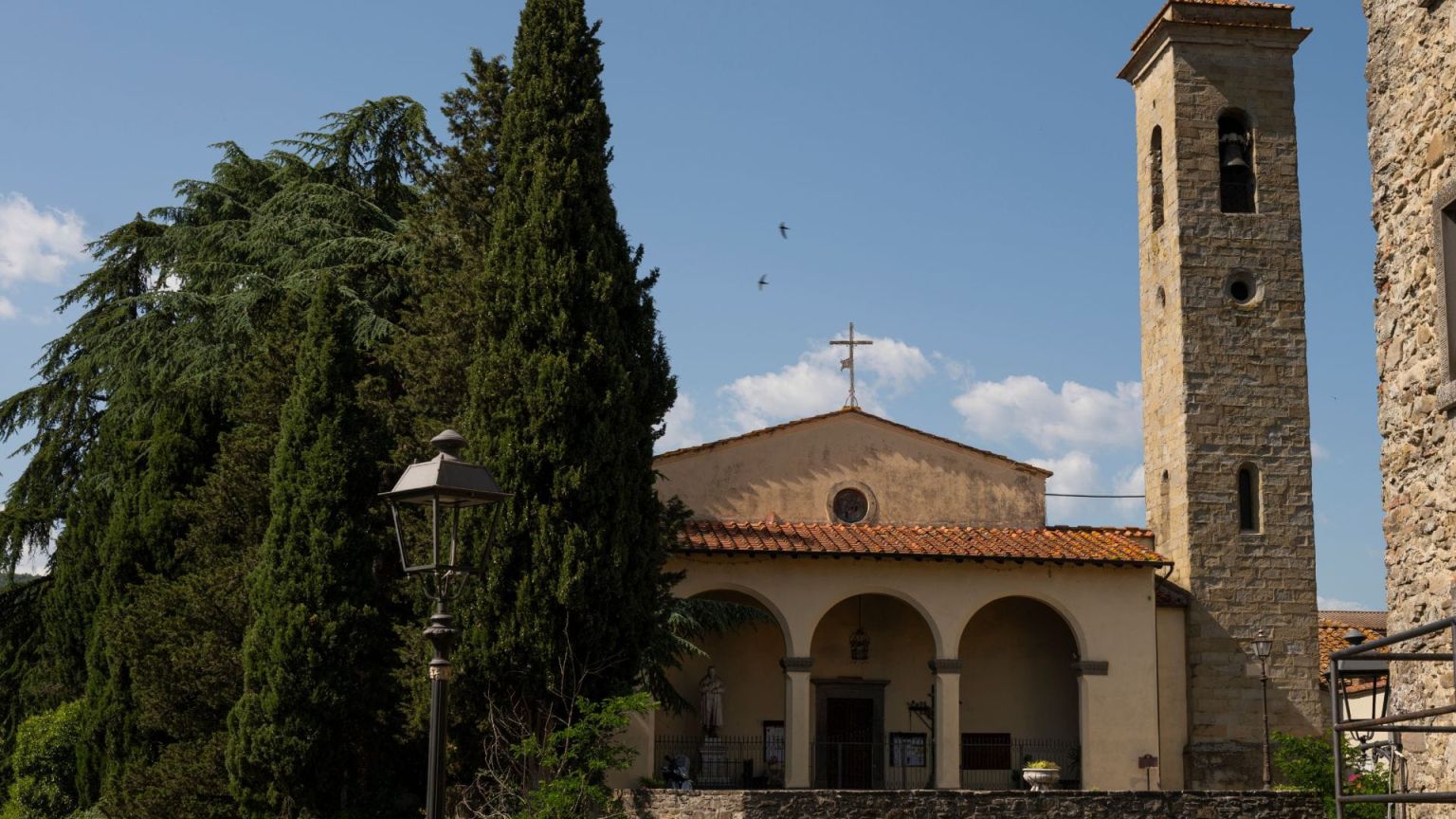
The heart of Subbiano’s spirituality, however, is the Parish of Santa Maria della Visitazione, located just in front of the medieval castle.
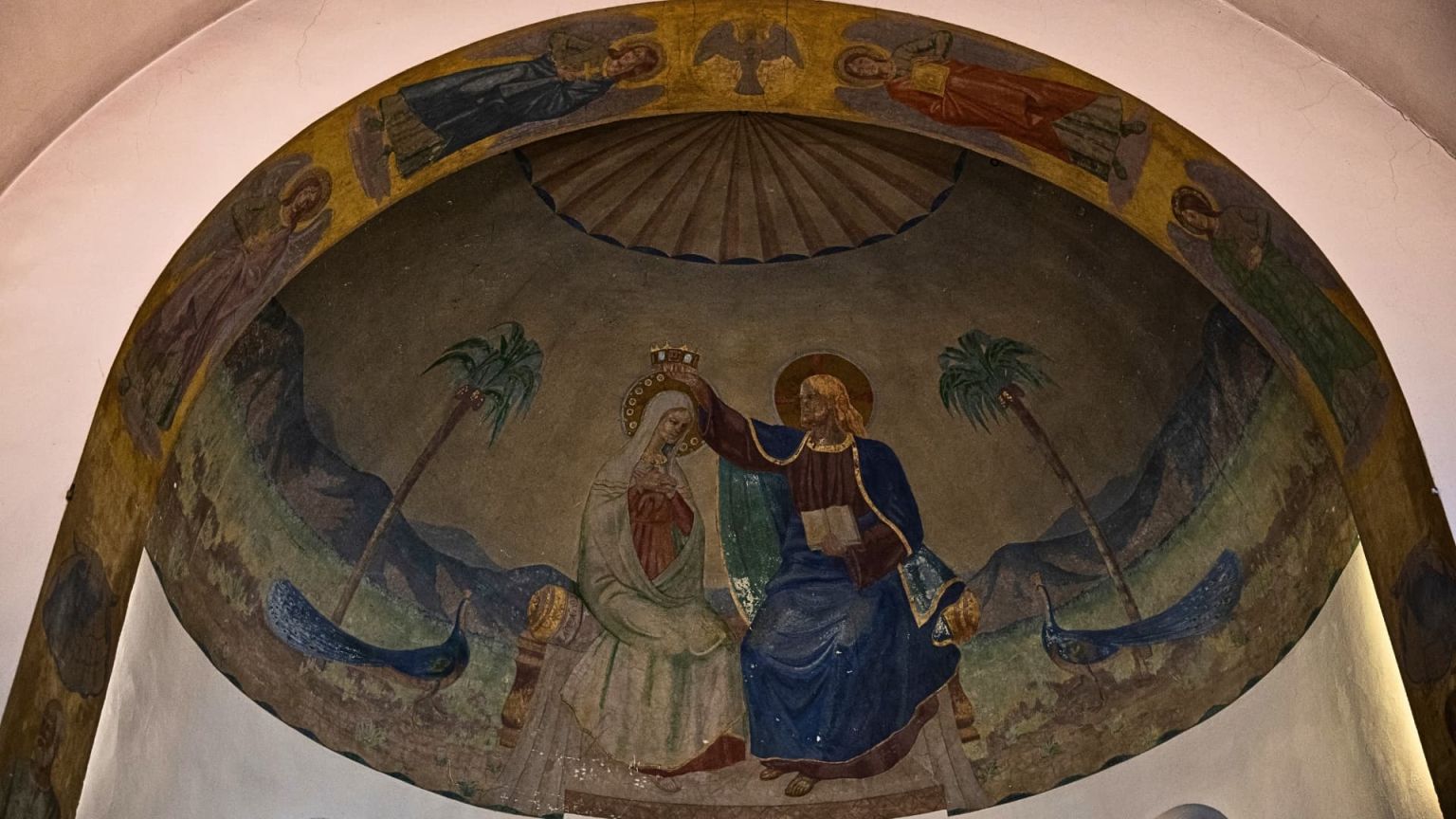
It was built in the early 13th century as an extension of the castle's old church, and was later expanded between the late 17th and early 18th centuries. The bell tower on the right side dates back to 1875, the front portico was added in the early 20th century, and in 1947 the church assumed its current appearance. In the oldest chapel (now the Chapel of Our Lady of Lourdes) are two late Gothic frescoes (Saint Roch and Saint Sebastian) attributed to Arezzo artisans influenced by Piero della Francesca. The "Coronation of Mary" in the apse and the "Deposition" above the entrance are by Giovanni Bassan (1930s-1940s). A 17th-century wooden crucifix believed to be miraculous is on display, and under the portico is a marble monument by Arnaldo Zocchi dedicated to Don Lorenzo Boschi.
A few kilometers from Subbiano, climbing toward the upper Casentino, are parish churches, hermitages, and sanctuaries that tell the story of a region where religious sentiment is an important part of the local culture. For example, we cannot fail to mention the Parish Church of Romena, the Parish Church of Sant'Antonio in Socana, built on an Etruscan site, the Hermitage of Camaldoli, and the Sanctuary of La Verna, the most famous site, closely linked to the story of Saint Francis.
A stroll through Subbiano's historic center: what to see
The church and the castle are the most important monuments to visit in Subbiano, but the historic center has more to see.
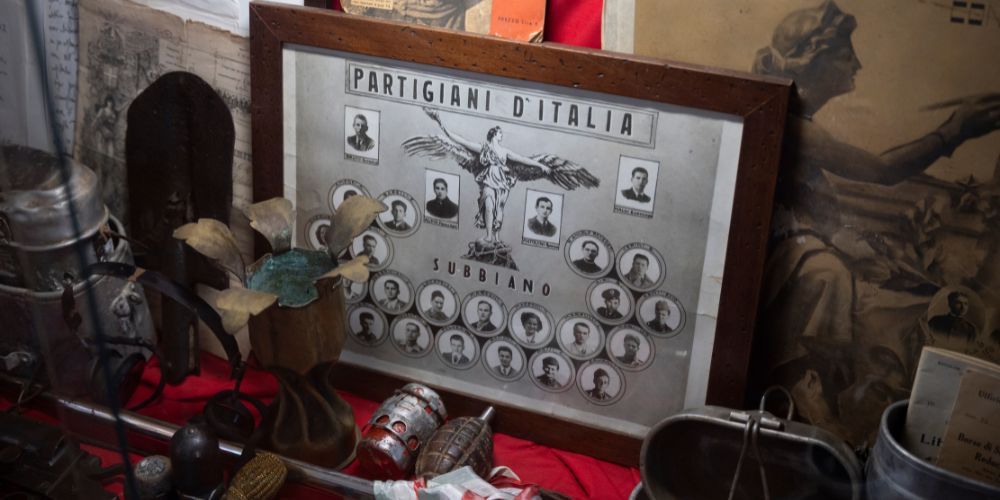
In addition to the previously mentioned archaeological museum, another important cultural site is the Museum of the Second World War "Quelli della Karin". It is located on Via Roma, the main street of the old town, and is a must-see because it preserves memories and documents related to the Second World War, a tragic event which deeply affected the area. The exhibits include a wide range of war artifacts and even a reconstruction of a true air raid shelter.
Strolling through the city center's streets, it's easy to come across ancient buildings that were once centers of power, each featuring a bilingual (Italian-English) plaque on the facade telling the story of their former occupants. Along Via Roma, for example, is the 16th-century Palazzo Subiani-Ducci. The palace, now owned by the Ducci family, retains the coat of arms of its previous owners, the Subiani family. Originally from Pigli, they settled in Subbiano and then Arezzo in the 15th century. The Subiani family rose socially thanks to figures such as Antonio, a jurist in the service of Cosimo I, who obtained Arezzo and Florentine citizenship in the 16th century. Over time, they held civil, military, and religious roles; one branch died out in 1928 with Rodolfo Subiani, who left significant bequests to local institutions.
Visit Subbiano and the natural wonders surrounding it
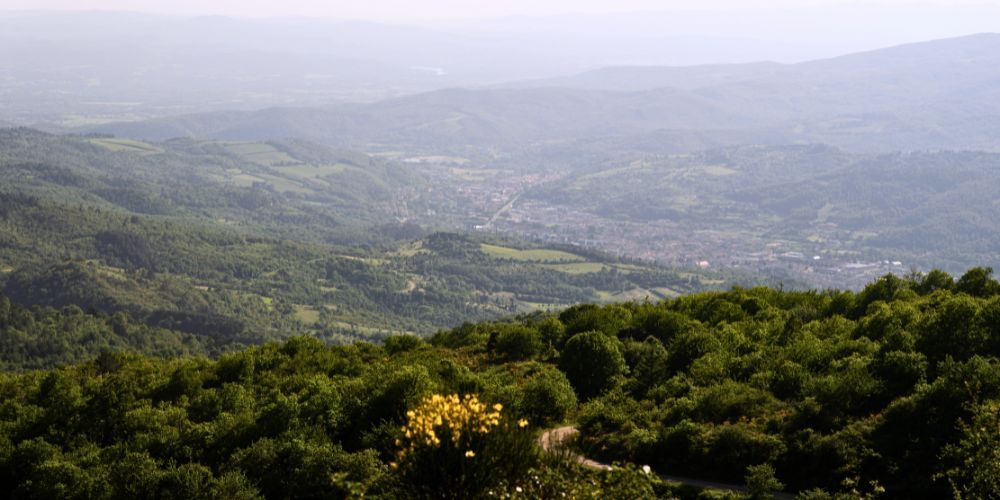
Nature lovers will love Subbiano even more because it's ideally located for exploring the stunning natural landscape. The Catenaia Alps, with their rarely explored trails, offer walks of varying difficulty levels, not to be missed.
The historic Cammino Storico di San Francesco, is an authentic journey through history, nature, and religion. Not to be confused with the more touristy Cammino di San Francesco, this recently rediscovered route connects one of the area's main pilgrimage sites, the Sanctuary of La Verna, with Montauto Castle.
In addition to crossing an area of extraordinary beauty along the southern side of Alpe di Catenaia, this path has enormous historical and spiritual value, as it is the same route Saint Francis took on his last journey to Assisi.
At a slightly lower altitude, there is another pilgrimage route with a long history and great historical importance, the Via Romea Germanica. In the Middle Ages, this road connected Scandinavia with Rome through central Europe. The stretch that passes through Casentino and Subbiano is still the same route that Abbot Alberto of Stade traveled in 1236, describing it in a guide written as a funny dialogue between pilgrims.
Less than twenty kilometers from Subbiano is the Monti Rognosi Nature Reserve, whose name refers to the rugged peaks that are home to numerous rare species of birds and are a true paradise for birdwatchers. This area is also characterised by a rich network of trails.
What to eat in Subbiano
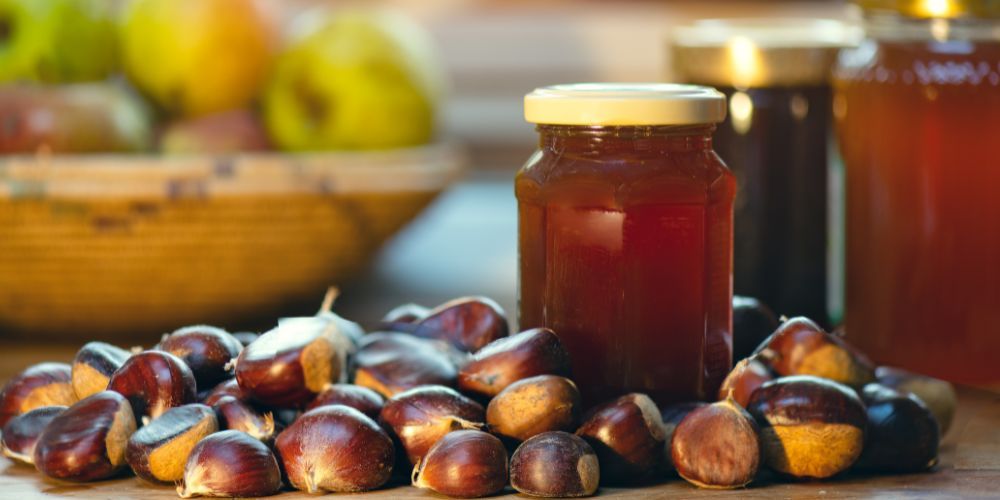
Like all Tuscan villages, Subbiano boasts food and wine traditions rooted in ancient recipies and based on the use of excellent local products.
All the flavors reflect the extraordinary regional cuisine, a mile stone of Italian cuisine. On the village's stores and restaurants, you'll find traditional cured meats such asseasoned ham, salami, soppressata and finocchiona, cow's and pecorino cheeses, beside, of course, the famous Chianina steak.
Panzanella, the typical summer bread salad, and potato gnocchi called topini, the handmade pasta with meat sauce or mushrooms, are among the most popular and delicious recipes in this area, and you should try them at least once. As for traditional desserts, try gattò aretino, zuppa inglese, or panina, a sweet bread spiced with raisins and saffron, typical of the Easter period.
From the lush Casentino woods come delicious chestnuts, while for those with a sweet tooth, honey is an absolute must.
As for wine, this is the land of Sangiovese; then there's Vin Santo, one of Tuscany's specialties. Finally, a local sweet wine with profound cultural value is worth mentioning: Moscatello di Subbiano, produced from a nearly extinct grape variety. Recently revived, this unique grape is now cultivated again and even protected.
How to get to Subbiano
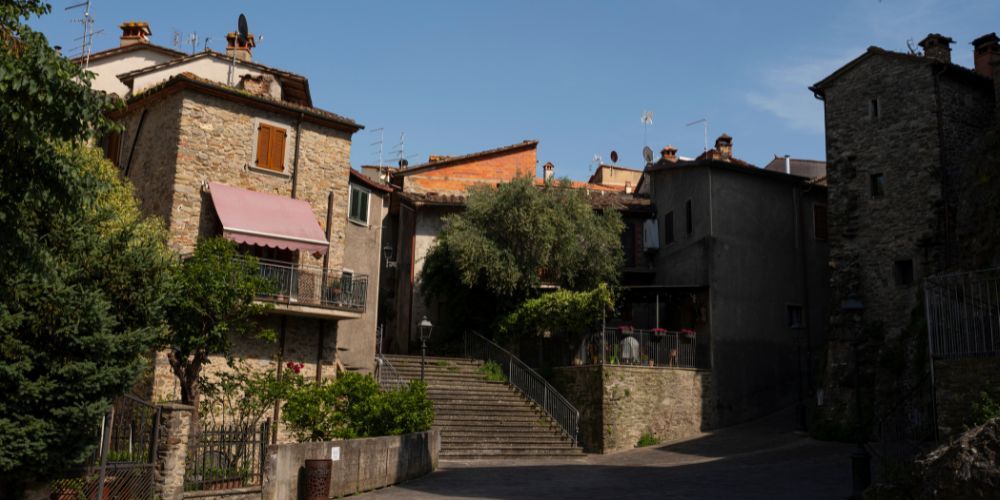
Given its proximity to Arezzo, visiting Subbiano can be reached quite easily.
The first step is reaching Arezzo, which is well connected to the rest of Italy.
By car, the Tuscan city can be reached via the A1 highway.
By train, there are direct connections to Arezzo from Rome and Milan via intercity or high-speed trains. Alternatively, you can change trains in Florence if coming from the north, or in Rome if coming from the south. From Firenze Santa Maria Novella station there are many trains to Arezzo, with a travel time of approximately thirty minutes.
By plane, the most practical option is to arrive in Florence. Florence Peretola Airport is only 60 Km from Arezzo.
Once you are in Arezzo, you can take a regional train to Pratovecchio Stia; alternatively, there are also buses available. If you prefer a taxi, the ride takes about fifteen minutes.
Events not to miss in Subbiano
Two of Subbiano’s most attended events are closely tied to its rural and wine tradition: the Festa di Fine Estate and the Grape Festival known as Festa dell'Uva. Reaching respectively their fiftieth and forty-first editions in 2026, they are organized by the Pro Loco of Subbiano in collaboration with the Municipal Administration.
The Festa di Fine Estate takes place on the last weekend of August and the first two weekends of September.
During Festa di Fine Estate, two regular events take place: the first is the Mostra Campionaria Zootecnica, a livestock show, scheduled for the first Sunday in September. Organized by the Municipality, the Pro Loco (Tourist Information Center), and the Breeders' Association, it features an exhibition of cattle, sheep, goats, and other farmyard animals, accompanied by themed conferences and various shows.
The second is the Vivere lo Sport (Experience Sport) event, held on the second Saturday in September. This annual event, organized by the Municipality in collaboration with the Italian National Olympic Committee (CONI), sports associations, and the Pro Loco (Tourist Information Center), is specifically designed to allow children and young people to freely discover and try out various sports in the same day.
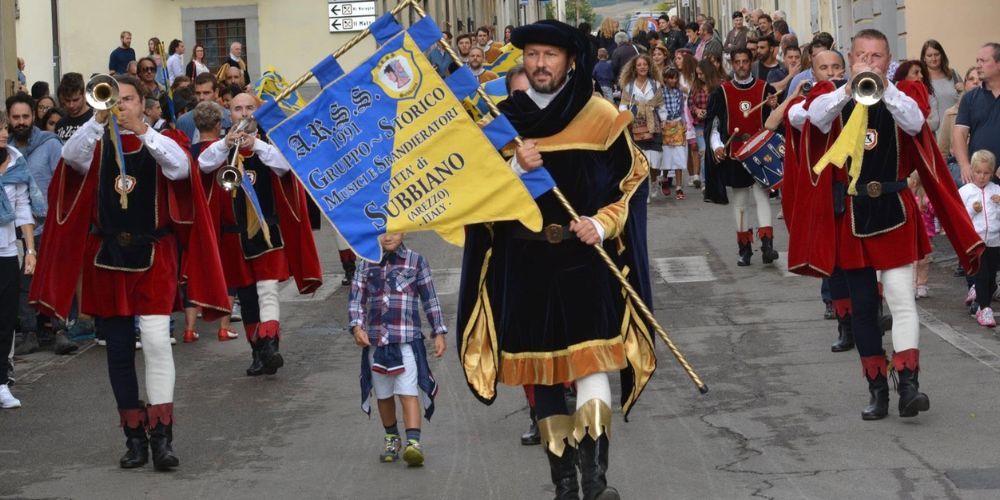
The second Sunday in September sees the historical reenactment of the Festa dell'Uva, the grape festival, which begins in the morning with the market Mercatino Del Tempo Che Fu. During the event, the town's squares and streets are filled with colors, costumes, traditional dishes, and flavors that hark back to the era when agriculture was the community's main activity. The celebration continues in the afternoon with the parade of allegorical floats, also inspired by rural life and one of the most beautiful and meaningful moments, with a large turnout from the surrounding villages.
This festival commemorates what was once one of the most important events in the rural calendar, and today represents an important moment of sharing, deeply rooted in local tradition. Many associations from the town and its villages, as well as groups from various parts of Italy, participate in both events.
Noteworthy is the presence of the Arss - Associazione Rievocazioni Storiche Subbianesi, and the remarkable choreographic show at the end of the parade performed by the Gruppo Sbandieratori di Subbiano, Subbiano Flag-Wavers Group, a local organization known internationally.
On the cultural front, the most important event is the Valenzano Simphony Music Festival, a summer festival organized by the Municipality, featuring classical, symphonic, and jazz concerts, as well as theatrical and musical performances, held in the evocative setting of Valenzano Castle.
The event celebrates its thirtieth anniversary in 2026 and usually takes place on Wednesdays in July and occasionally on the first Wednesday in August. The Festival has its own established artistic direction and features musicians of international renown.
The Estate in Famiglia program unfolds throughout the summer a series of events designed to offer opportunities for all ages to get together and fully experience the area. It is organized by the Municipality of Subbiano in collaboration with local associations, Pro Loco, and the hamlet's clubs.
By actively involving the community, the program enlivens the summer season with initiatives extending from the town center to the surrounding villages. It features musical and cultural activities such as concerts, theater performances for all ages, open-air movie nights, literary festivals, art exhibitions, meetings, and conferences on the area's historical and artistic heritage.
Finally, there are evenings dedicated to typical local products, in addition to the various patron saint festivals and fairs held in the town's hamlets.