
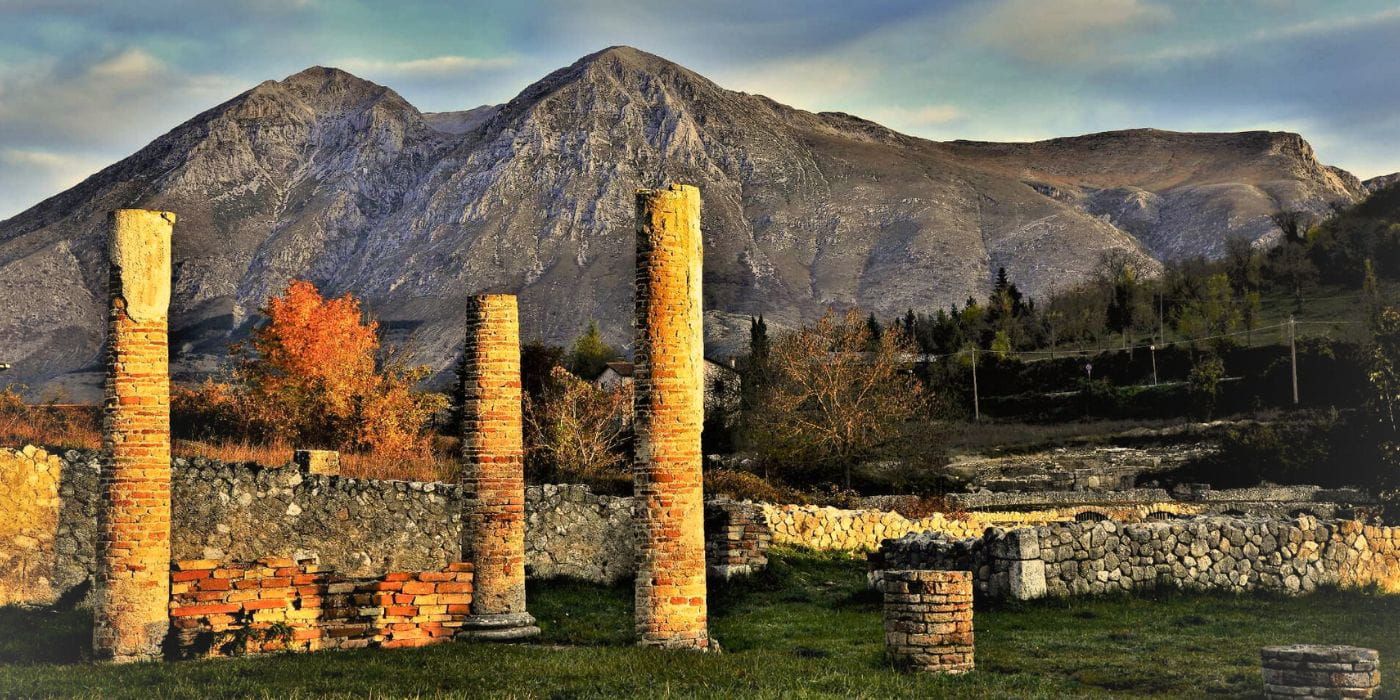

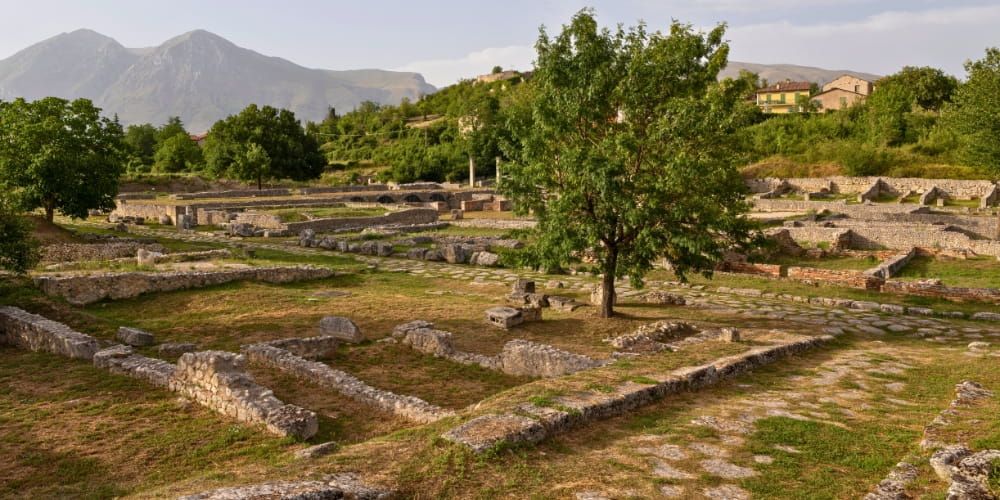
For those who love the history and culture of ancient Rome, everywhere in Italy stand fascinating testimonies to an era that profoundly influenced the development of the entire Mediterranean region. One of the most beautiful (and best-preserved) roman archaeological sites outside of Rome area is Alba Fucens, a gem of history and landscape waiting to be discovered in Abruzzo at the foot of Mount Velino.
Nestled on a hill near Massa d'Albe at over 900 meters above sea level, this extraordinary archaeological area is a monument of amazing historical, cultural and landscape value, a must-see for the most adventurous and curious travelers, interested in the joy of discovery while exploring places still profoundly off-the-beaten-tracks of mass tourism.
Get ready to visit one of the most magical attractions in the Regional Park Sirente Velino, an immersive experience of archaeology, pristine nature and tranquil sensations that will captivate you with its beauty. See you in Alba Fucens!

Archaeological site of Alba Fucens: check out its origins and history
The origins of the site of Alba Fucens , located within Sirente Velino Park, is closely related to the history of roman expansionism. Founded around 303 BC as a colony in the mountainous hinterland of the peninsula, the ancient town played a key strategic role in the territory occupied by the Aequi and Marsi peoples.
The very name of the archaeological site is evocative and poetic: Alba, a reference to the white rocks of the surrounding area and the purity of the morning light, and Fucens, clearly related to the proximity to the historic Lake Fucino, now dried up, which at the time was the third largest lake in Italy.
Alba Fucens was immediately conceived as a powerful roman stronghold, becoming one of the most populous centers of the era (about 6,000 inhabitants) and a key hub for trade and administrative connections along the Via Tiburtina Valeria (a direct connection to Tivoli and Rome itself).
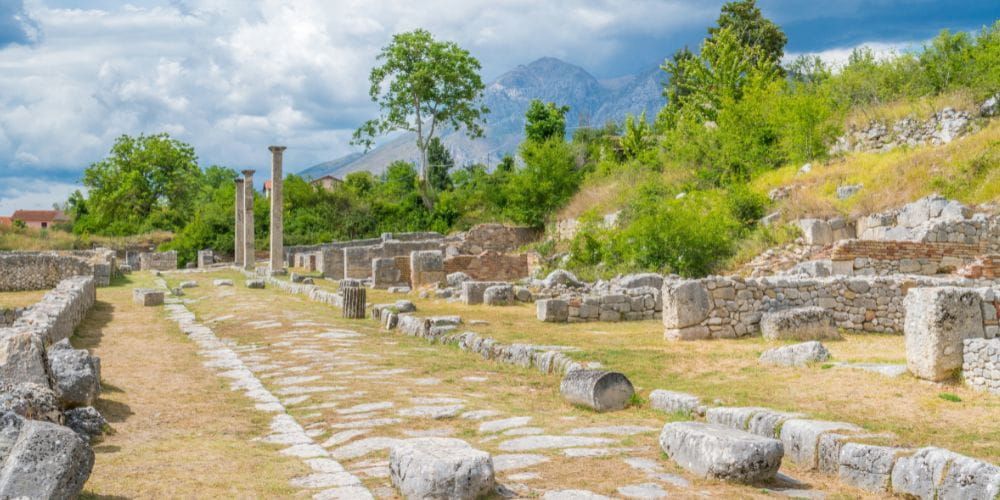
During the Imperial age Alba Fucens enjoyed its peak splendor, enriched with public buildings, arts and the best period infrastructure that mirrored the elegance of the capital; a timeless charm that can be felt today as you cross the magical Pillars Path (Via dei Pilastri), stroll among the remains of sacred temples, and of course admire the majesty of the town's amphitheater, a true icon of the archaeological site. With the fall of the Empire caused by the barbarian invasions and subsequent power struggles, the city slowly declined.
The ancient roman settlement was gradually abandoned, while the population moved to the top of the hill establishing the village of Albe, the new beating heart of the namesake county, subject for centuries to feudalism - and directly involved in the historic Battle of Tagliacozzo. A silent witness to that period is undoubtedly the Orsini Castle atop San Nicola d'Albe hill, now in ruins.
Devastated by the Marsica earthquake in 1915 and scene of battles on World War 2, the area was the subject of numerous historical-cultural studies and systematic excavation campaigns starting from 1949, led by the Belgian archaeologist Fernand De Visscher.
Amphitheater of Alba Fucens, best attraction of the archaeological site
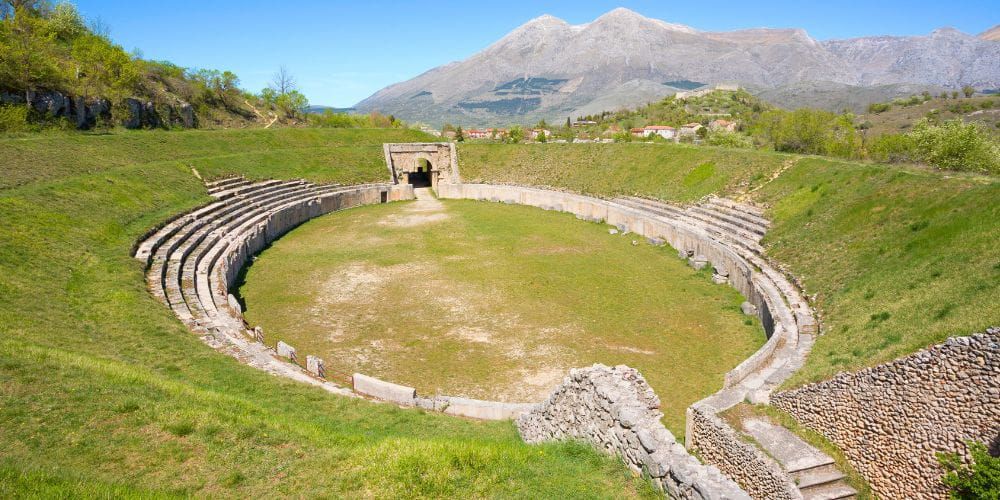
The element that most defines the archaeological landscape of Alba Fucens is its majestic amphitheater. Built in the early 1st century AD thanks to the bequest of the Praetorian Prefect Quintus Naevius Cordus Sutorius Macro, the amphitheater is a masterpiece of engineering and landscape integration, among the largest roman amphitheaters in Central Italy. Oval-shaped, measuring approximately 96 x 78 meters (length and width), the Alba Fucens amphitheater was largely excavated and built directly into the rock of San Pietro hill, an architectural choice that has ensured its exceptional preservation over millennia.
Unlike many urban amphitheaters located in flat areas, the one in Alba Fucens stands out for its scenic orientation: from the stands, which could accommodate a minimum of 5000 spectators, the gaze wandered in awe from the classic gladiatorial fights to the snowy peaks of Mount Velino, creating a stark and intense contrast between the brutality of the spectacles and the serenity of nature. Today, thousands of years later, this fascinating arena occasionally hosts high-profile events, theatre performances and concerts, where the perfect acoustics combine with a sacred and highly evocative atmosphere.
A short distance from the amphitheater there’s the Church of San Pietro, sublime example of the historical syncretism widely found in Abruzzo and other regions of Central Italy. The church, built on the ruins of an ancient temple dedicated to Apollo, preserves aesthetic elements typical of latin temples - particularly, fluted pillars topped with sculpted capitals - which find a peculiar harmony with medieval romanesque architecture, and includes precious cosmatesque elements and an extraordinarily crafted iconostasis, making the site a privileged vantage point for observing the historical, artistic and cultural evolution of the Albe area.
Alba Fucens: the medieval town of Albe beyond roman archaeology
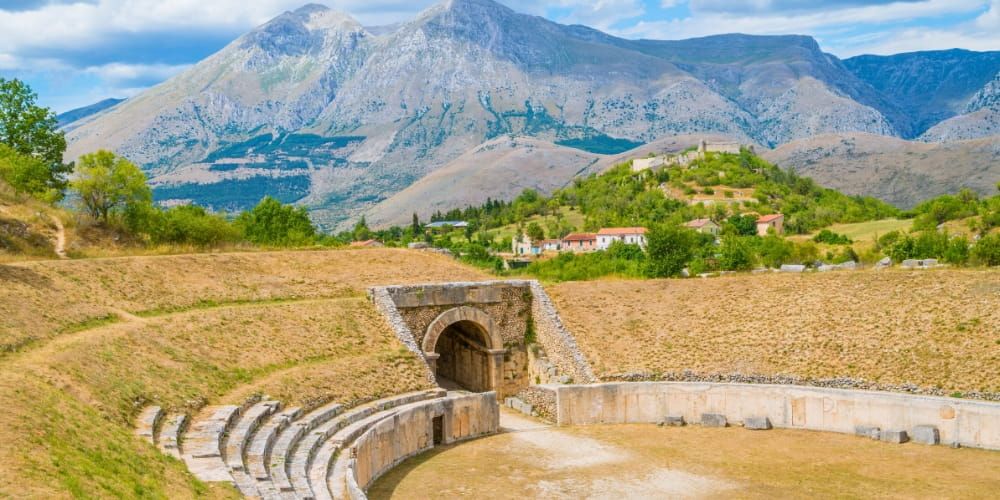
A visit to Alba Fucens wouldn't be complete without a trip to the medieval town of Albe, a historic hamlet in the municipality of Massa d'Albe dominated by the imposing ruins of the Orsini Castle. This town was a significant place of power for the control of the region, a crossroads of lordships and historical events that, if on the one hand exalted its historical origins according to roman conception, on the other then drastically marked its decline.
Today, thanks to the duality between ancient history and medieval development, the landscape of Alba Fucens presents itself as a historical setting of rare harmony. It is one of the best locations for a trekking experience through history, for real, admiring a valuable example of continuity - in other words, a place where the middle age successfully “reused” the remains of the past, recycling the ancient roman walls as foundations for new buildings while maintaining iconic elements untouched, such as the amphitheater.
In the medieval village of Albe near Alba Fucens visitors can walk along the roman paved streets of the decumanus, admire the remains of the macellum (market), the thermal baths and many other places of daily public life in an ancient roman colony, for then raising their gaze and glimpse the crenellated walls and austere profiles of the post-roman castle and town. This combination between classicism and middle age creates an almost surreal aesthetic, a sensory magic that is well worth experiencing when visiting this unique wonder in the heart of the Sirente Velino Park.
Where is Alba Fucens: here’s how to get there and how to visit the site
Alba Fucens is located in Albe, a hamlet part of Massa d'Albe in the province of L'Aquila, in a geographical location easily accessible by car yet isolated from the chaos of the city. The A24/A25 highways (Rome-L'Aquila-Pescara) are the best options for a stress-free drive for visiting this archaeological site: simply drive to the Magliano de' Marsi exit and follow the signs for Avezzano (alternatively, Massa d'Albe) and then for the archaeological site of Alba Fucens.
Alba Fucens is completely free to visit and is accessible all year-round, with opening hours from morning until late afternoon. The best times to visit the archaeological site are spring and autumn: during these seasons the climate is mild and stable, the light conditions are optimal and the surrounding landscape fills with the scents of seasonal blooms and the passionate colors of the foliage, respectively.
If you plan to visit Sirente Velino and Alba Fucens in summer, we recommend early morning or late afternoon hours, to enjoy the cool breeze that accompanies sunrise or the spectacular sunset that paints the Velino peaks in orange and pink. In winter, instead, visits to the site are generally not recommended due to the likely presence of snow, which can certainly bestow Alba Fucens a magical feel, but can also make it more difficult to access some areas and fully explore each attraction.
Before setting out and planning your visit to Alba Fucens, it's advisable to carefully consult the weather forecast and, above all, the official communication channels of the Town of Massa d'Albe and Abruzzo Region: there may be a few interesting seasonal initiatives, special events and guided activities not to be missed to make the most of your adventure and discovery experience of this historic gem!
About the author
Written on 30/10/2026
Massimiliano Antonio Primi
I love to tell emotions and stories through the magic of writing.

Massimiliano Antonio Primi
Feel the vibes of Alba Fucens and visit its impressive roman amphitheater, the historic jewel besides medieval town of Albe and Mount Velino.