
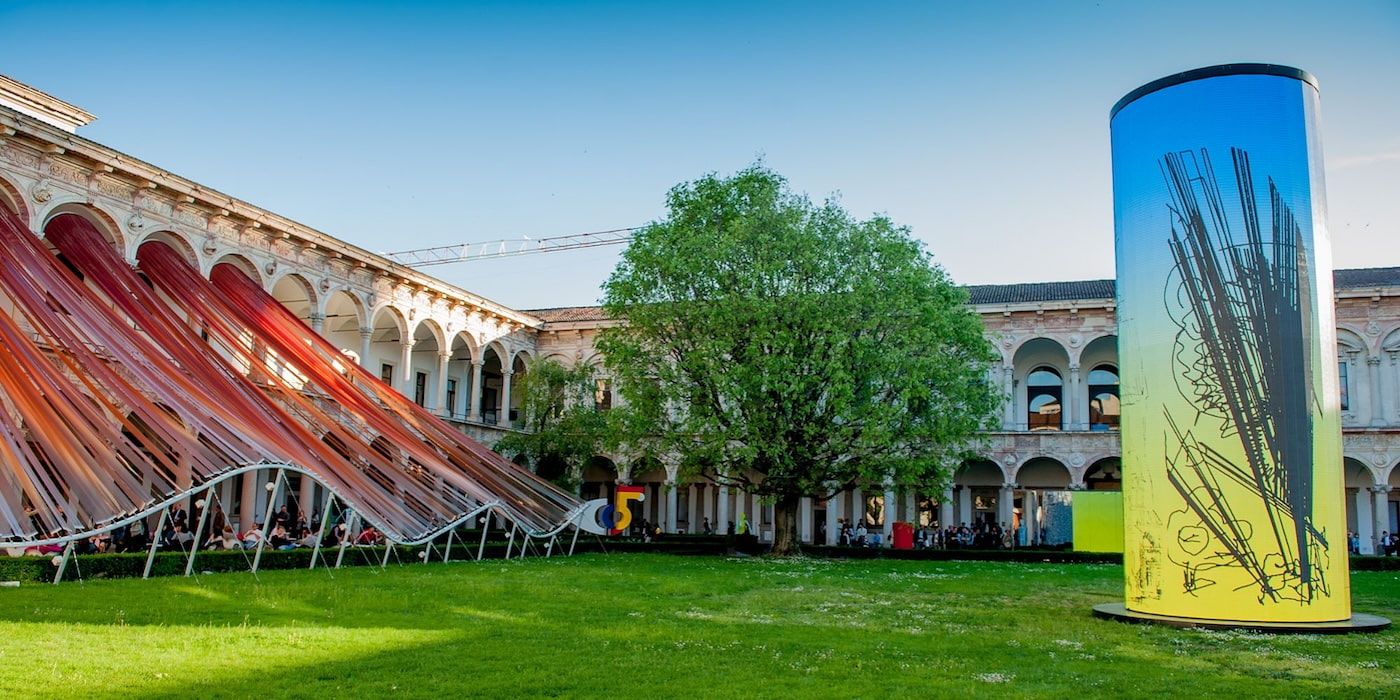

Milan, for one week, changes its face. The city opens up to be explored closely, revealing a different side, inside and outside the Salone del Mobile: showrooms open late into the evening, historic buildings accessible for just a few days, and neighborhoods transformed into stops on a special route. Design becomes part of everyday life, something to move through rather than just observe.
But behind the lights and vibrant energy of Milan Design Week lies a more authentic, less polished layer, full of unexpected discoveries and small rituals, but also difficulties and inconveniences, repeated each year. Here, it’s the locals who make all the difference.
And it’s precisely from the locals that we started, gathering tips from those who experience this week year after year. What emerged is a different Milan, made of places and ways of moving through it, choosing where to stop and what to observe. To truly understand it, the Salone del Mobile 2026 — from Tuesday 21 to Sunday 26 April — should be experienced like this.
Inside Salone del Mobile 2026, amid voices, encounters and first discoveries
The first thing that was explained to me about Salone del Mobile is that "it cannot be described as a simple fair". Even though that is how it began: as an international event dedicated to design and furnishings, from current trends to those of the future.
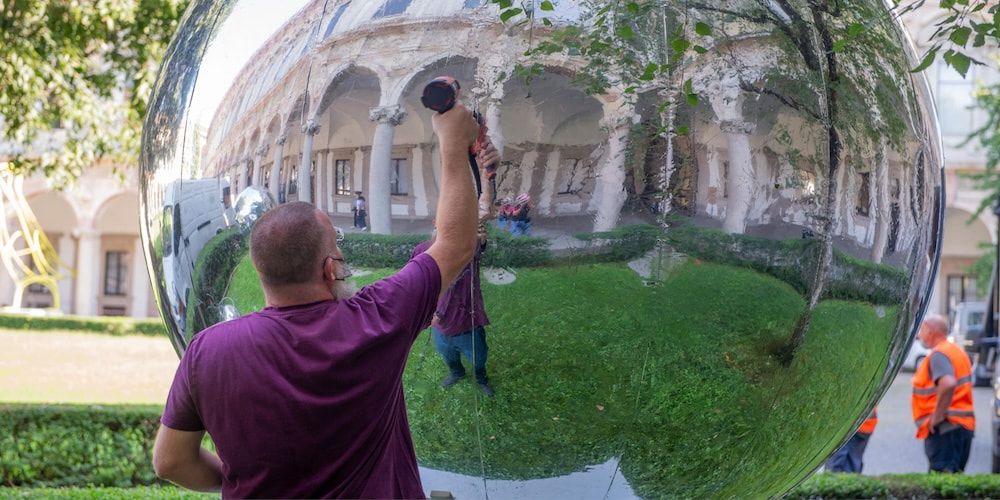
Today, however, the Salone is an ecosystem that extends beyond the Rho Fiera halls and spreads across the entire city, among brand showrooms, temporary installations, courtyards, galleries, and spaces that are not usually open to the public.
It’s much more than a yearly event. And you realise this as soon as you cross the threshold of Fiera Milano Rho, on the north-western edge of the city, easily reachable via the Red Line (M1) of the metro.
Here, inside Salone del Mobile itself, on one side there are the stands of international brands, prototypes, collections and installations, often very crowded and dominated by the most well-known names in design.
On the other, there are close-up encounters with designers and producers, the liveliness and vibrant atmosphere that emerge precisely in these more direct moments, where we can talk with industry professionals and regular visitors and pick up the details that will guide us through the city in the days ahead.
The Fuorisalone, heart and soul of the Milan Design Week
“Don’t limit yourself to the fair pavilions. Move through the city and step into the heart of Milan Design Week.”
That's what we were told both by local visitors and industry insiders. For this reason, we continue our itinerary through Milan Design Week by moving across some of the city’s most creative districts, such as Brera, Tortona, and Isola, following word of mouth and unexpected openings that make every visit different from the next.
This is the Fuorisalone, the most widespread and spontaneous side of the Design Week: a network of events, installations, brand showrooms, and special openings spread across the city, without a single location or a fixed route.
It takes place on the same days as the Salone del Mobile, and is its natural extension—the most diffused and accessible part, often seen as its true urban soul. To fully experience its appeal, there is no single “right” route, because each district reveals a different piece of it, and every detour adds something new.
Rather than following a map, we build it ourselves, piece by piece, gradually uncovering the secrets of a Milan that becomes more and more special.
The boundary between the Salone and the city, as told by the locals
There’s something that the most design-passionate locals keep repeating. The Rho Fiera halls and the city events, meaning the Salone and the Fuorisalone, are not two separate moments, but parts of the same experience.
At the fair, you find the biggest names in the design world, showcasing striking installations and well-curated, structured presentations that display projects in what we could define as their official setup.
Outside the Salone, we've found the same concepts scattered across Milan. In different spaces and forms, of course. And sometimes presented in an even more original way, even if not always easy to find or arranged in a linear way.
Brera, Tortona, Isola: the districts you shouldn’t miss during Milan Design Week
Between the Salone and the city, there are a few things that always come up in conversations with people who know Milan Design Week well. Small tips that, in the end, stay in our mind and guide us through some of the most beautiful city’s districts.
- “In Brera, you can explore showrooms and installations set inside historic buildings and courtyards that are only open for a few days. During Design Week, the Accademia (located in the same building as the Brera Art Gallery) becomes one of the most interesting spots in the area, with striking installations designed specifically for the courtyard and blending seamlessly with the historic architecture.”
- “In the Tortona area, the experience becomes even more scenographic, with former industrial spaces and even private apartments transformed into fully reimagined environments dedicated to design.”
- “If you head to Isola, expect a completely different rhythm: a more authentic side of Milan, shaped by hidden ateliers and workshops, and a daily life that continues alongside the events of Design Week.”
Plan ahead and discover young talents: ideas for experiencing the Salone del Mobile
Anyone who attends the Salone del Mobile every year is keen to point out that "seeing everything in a single day is practically impossible". The exhibition space is vast, and each pavilion deserves time to be explored with care.
Otherwise, the risk is moving from one area to another without ever managing to linger anywhere, ending up perceiving everything in a confusing way. After a few hours, fatigue also plays its part: refreshment areas are available, but during peak times it's not easy to find a free spot to sit down and take a short break.
In the first days, the fair is reserved for industry professionals, and it opens to the public on Friday, Saturday, and Sunday. The weekend is certainly more intense, but for this very reason it requires careful planning. Those who know the event well recommend "deciding in advance what to visit", in order to avoid long waiting times and experience the day in a smoother way.
Another suggestion we found particularly interesting is to "make time for SaloneSatellite", a free space within the Salone del Mobile dedicated to young designers and emerging talents. Here, up-and-coming creatives present fresh and often striking ideas, with prototypes frequently shown to the public for the very first time.
Some advices we received on what to do during Milan Design Week
One of the most useful tips is to "register in advance for Fuorisalone events". Many installations and presentations require invitations, while others rely on QR codes or fully digital entry systems. It may sound obvious, but keeping your phone charged becomes essential to move around without friction.
At the same time, it's a good idea to plan a route without making it too rigid. We choose a few key stops and then leave room for detours: more often than not, these are what make the Milan Design Week experience truly interesting.
To reach the Isola district, for example, I was suggested to start from Piazza Gae Aulenti and walk through Biblioteca degli Alberi (with a view of Bosco Verticale), which in spring is particularly striking and very Instagrammable.
Then, I was told, "continue on foot to Piazzale Lagosta": beyond the design installations, you can step into the Mercato Comunale, a small window into the most authentic everyday life of the neighborhood.
And what are the mistakes to avoid?
“Don’t arrive without registering in advance". This is a mistake that any local strongly warns against.
Many venues and events, both at the Salone del Mobile itself and across Fuorisalone, have limited capacity and scheduled entry times, especially during peak hours. Arriving without taking these aspects into account can mean missing out on highly anticipated stops or having to rethink plans at the last minute.
Another factor not to underestimate is the time needed to get around. Moving between Fiera Milano Rho and the city centre, or even just between different districts, can take longer than expected, especially on the weekend.
For this reason, avoiding car travel is often the best choice, as traffic and the difficulty of finding parking can make the day significantly more complicated. It is better to rely on public transport instead, which during Design Week is the fastest and most efficient way to move across the city, with frequent services and, in some cases, extended operating hours.
Moreover, Milan is always very crowded, but even more so during these days. Even everyday activities, such as stopping for a meal or finding a free seat in restaurants and bars, can take longer than usual.
About the author
Written on 17/04/2026
Alessandro Savino
SEO Copywriter & web editor: I love transforming my passion for writing into engaging narratives, creatively and precisely exploring the beauty and complexity of our wonderful country.

Alessandro Savino
Experience Milan Design Week from the inside, discovering stories, locals’ tips, and everything that really happens at Salone del Mobile 2026.