
When we talk about Tuscany, the first images that come to mind are the golden hills of Chianti, rows of cypress trees, medieval villages and art cities that preserve an essential part of Italy’s identity.
More rarely do we think of a long, luminous and surprisingly varied coastline, shifting from the white-pebble coves of Elba Island to the wild beaches of Maremma, from the transparent seabeds of Argentario to the golden bays of the Etruscan Coast.
And yet, in summer 2026, Tuscany’s beaches are attracting renewed attention. Beyond their clear waters, natural landscapes and small villages just minutes from the shore, they offer the chance to enjoy a complete holiday: in the morning, you swim in a bay sheltered by Mediterranean scrub; in the afternoon, you visit an archaeological site or a village perched on a promontory; in the evening, you stop at a trattoria overlooking the sea or tucked among the streets of a historic centre.
There are beaches perfect for those looking for comfort and well-equipped beach clubs, coves to reach on foot with comfortable shoes, long wild stretches of sand where the landscape takes centre stage, and corners ideal for snorkeling, kayaking and slow days far from the most predictable routes.

The 8 best beaches in Tuscany to discover in summer 2026
Choosing the best beaches in Tuscany means discovering very different territories, each with a strong identity. Along the coast, you move from the wild bays of Maremma to the scenic coves of Argentario, from the history-rich beaches of the Etruscan Coast to the transparent seabeds of Elba Island.
In this guide, you will find some of the most beautiful and interesting Tuscan beaches for summer 2026: Cala Violina, with its pale sand set within the Bandite di Scarlino Nature Reserve; Baratti, where the sea meets Etruscan memory; Sansone, Fetovaia and Cavoli, three of the most beloved beaches on Elba Island; Le Rocchette, ideal for those looking for clear water and services near Castiglione della Pescaia; Marina di Alberese, wild and protected in the heart of the Maremma Park; and Cala del Gesso, one of the most spectacular corners of Monte Argentario.
8. Cala Violina, the beach that sounds under your footsteps
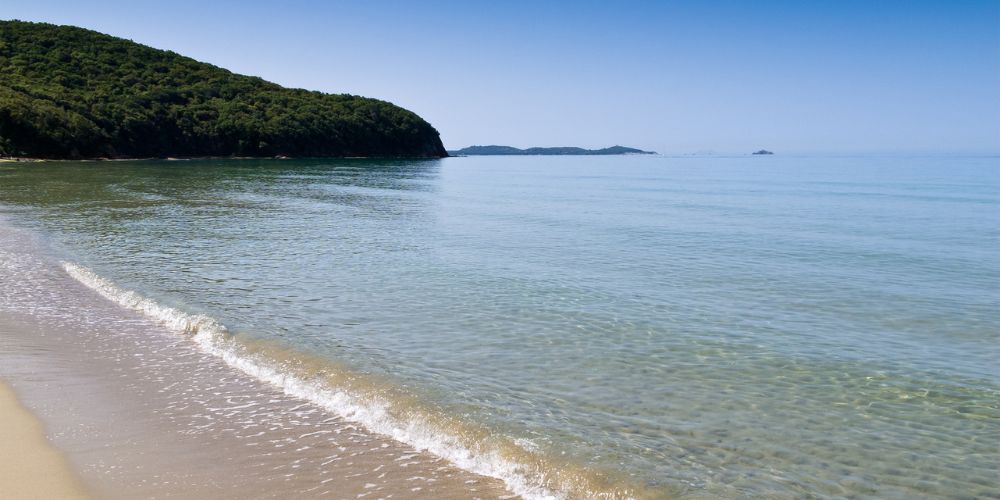
Cala Violina is one of the most sought-after beaches in Tuscany. Set within the Bandite di Scarlino Nature Reserve, between Follonica and Punta Ala, it is famous for its pale, very fine sand which, according to tradition, produces a faint sound when walked on.
The sea here has clear, brilliant shades, with gently sloping seabeds and a natural setting that is still highly protected. To preserve the environment and manage visitor numbers, access is limited and requires booking during the indicated periods.
It is the best choice for those who enjoy walking before reaching the sea, as the beach can be reached by walking (or cycling) through the colours of the Mediterranean scrub. The scent of pine trees, the sound of cicadas and the sudden opening onto the bay prepare you for the arrival in one of the most photographed corners of the Tuscan coast.
Available services: there are no beach clubs; in high season, a small refreshment point is open. It is best to arrive with water, light food and everything you need for the day.
Where to park: The most convenient parking is the Pian d'Alma parking area, along the SP 148. It must be booked in advance at the same time as the beach from June 1st to September 30th.
How to get there: from the Pian dell'Alma parking lot continue on foot along a trail of about 1.5 kilometres within the reserve. The route is easy, but in summer it is advisable to wear comfortable shoes and avoid walking during the hottest hours.
Local Tips: for summer 2026, it is best to book as early as possible, especially for weekends and August. The best time remains early morning, when the bay is quieter and the colour of the water changes with the low light.
7. Baratti, where the sea meets Etruscan history
The Gulf of Baratti is one of the most fascinating surprises on the Etruscan Coast. Just behind the beach lies the Baratti and Populonia Archaeological Park, while the promontory is home to one of the most charming villages in the area.
What makes Baratti so recognisable is its dark, shimmering sand, linked to the presence of iron residues from ancient Etruscan metalworking activity. The gulf has a soft, enveloping shape, with a long pine forest and waters that change colour depending on the light and wind.
Its proximity to Populonia makes it ideal for planning a truly rich day: sea in the morning, a walk through the village in the late afternoon, sunset on the promontory and dinner overlooking the coast.
Available services: there are beach clubs, stretches of free beach, bars and restaurants nearby. The pine forest offers natural shade in several areas, but during the busiest periods the best spots fill up quickly.
Where to park: paid car parks are available in the gulf area and along the beach access points. In high season, it is advisable to arrive early, especially at weekends.
How to get there: Baratti can be reached by car from Piombino or San Vincenzo by following the signs for the Gulf of Baratti and Populonia. The beach is easily accessible from the car parks.
Local Tips: do not stop only at the main beach. Head up to Populonia in the late afternoon: the view over the gulf at sunset is one of the most beautiful moments on the Etruscan Coast and gives the day an unexpected rhythm.
6. Sansone Beach, the Caribbean side of Elba Island
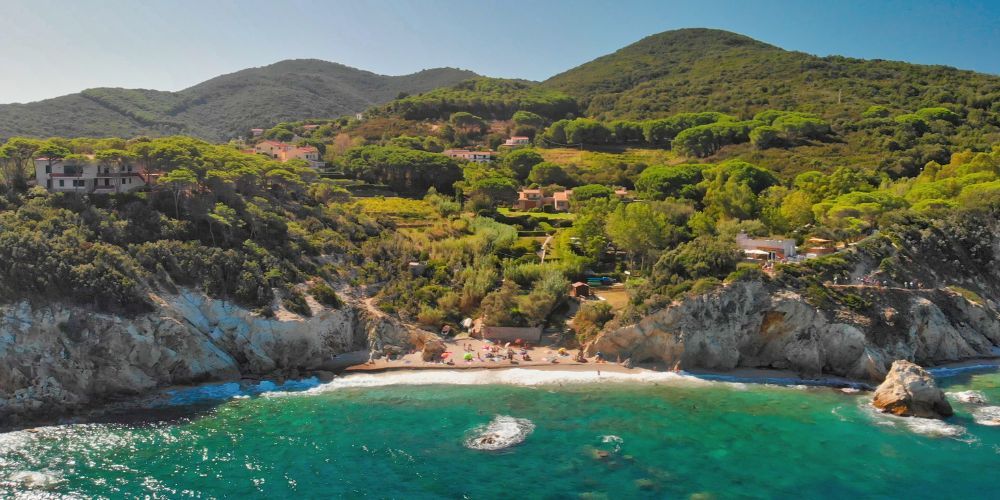
Among the beaches of Elba Island, along the coast of Portoferraio, Sansone is famous for its pale pebbles, transparent water and blue shades that recall far more distant landscapes.
The beach is not large, and this is precisely why it should be enjoyed with care, especially in high season. Its charm comes from the meeting of the rocky wall, the white pebbles and the sea, which quickly becomes clear and deep. It is excellent for snorkeling and observing the seabed, but less suitable for those looking for wide sandy spaces or an easy day out with small children.
Sansone perfectly represents the most photogenic and marine side of the Tuscan coast, capable of overturning the traditional idea of Tuscany as “only countryside and art cities”.
Available services: in season, here is a small beach establishment with umbrellas and sunbeds as well as canoe and pedal boat rental.. The beach is mostly free and should not be imagined as a large equipped seaside resort.
Where to park: parking is available along the Portoferraio-Enfola provincial road, where permitted, or in the paid car parks in the area. Spaces are limited compared to summer demand.
How to get there: from Portoferraio, take the road towards Enfola. After parking, continue on foot along a path that descends towards the beach, passing through the Sorgente area.
Local Tips: arrive before 9:30 a.m. during the busiest months. Sansone is at its best with calm sea and favourable wind; if the sea is rough, it is better to choose a more sheltered beach on the island.
5. Fetovaia, golden sand and clear water on Elba
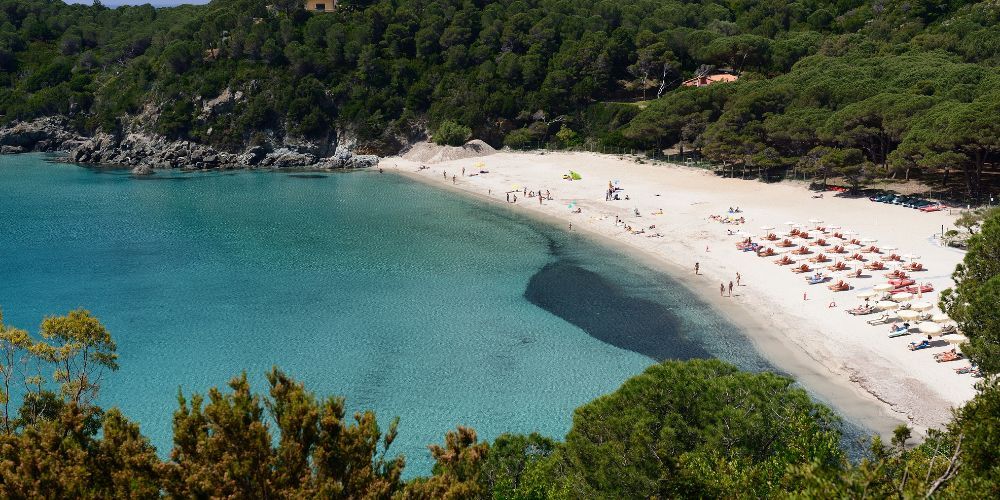
Fetovaia, in the municipality of Campo nell’Elba along the island’s south-western coast, is protected by a promontory covered in Mediterranean scrub, which often keeps the sea calm and transparent.
The beach forms a crescent of golden sand, with shallow seabeds in the first few metres and water that shifts from turquoise to deep blue. It is one of the most suitable Tuscan beaches for couples, friends or families, because it offers a highly scenic landscape without requiring long treks.
Precisely because of its beauty and easy access, Fetovaia is very popular in summer. In 2026, the advice is not to treat it as an improvised stop, but as a day to organise carefully: leave early, identify parking in advance and perhaps take a break during the central hours to avoid the busiest moment of the day.
Available services: there are beach clubs, free beach areas, bars, restaurants and seasonal rentals. It is one of the best-served beaches in western Elba.
Where to park: paid car parks are available near the beach, along with a limited number of free spaces along the road. In high season, parking fills up quickly.
How to get there: from Marina di Campo, follow the provincial road towards the island’s western coast. The beach can be reached by car and, during the season, also by local bus connections.
Local Tips: the right-hand side of the beach, towards the rocks, is often the best spot to appreciate the clarity of the water and go snorkeling. In September, Fetovaia becomes much more pleasant to experience.
4. Cavoli, the young and sunny beach
Cavoli is one of the liveliest beaches on Elba Island, famous for its pale sand, clear sea and summer atmosphere, which makes it especially popular with a younger crowd. It is located on the south-western coast, just a few kilometres from Marina di Campo, in a sheltered position that often brings pleasant temperatures even outside the height of summer.
People come here to swim, sunbathe, listen to music from the nearby venues, spend a dynamic day by the sea and stay until late afternoon, when the light begins to soften over the rocks.
Its popularity, however, also means crowds during the busiest months. In July and August, it is best to arrive very early or choose it in the late afternoon, when the atmosphere becomes more relaxed.
Available services: beach clubs, free beach areas, bars, restaurants and rentals. It is a well-served beach, but space can become limited in high season.
Where to park: paid car parks are available near the beach, with some parking also possible along the provincial road where permitted. Vehicle access to the beach area is regulated and can become congested at peak times.
How to get there: Cavoli can be reached from Marina di Campo by following the provincial road towards Seccheto and the western coast. It is also served by local connections during the season.
Local Tips: if you are looking for a quieter experience, avoid the central hours of August. Cavoli is beautiful in June and September too, when it keeps its sunny character without the pressure of peak season.
3. Le Rocchette, among the best beaches in Tuscany
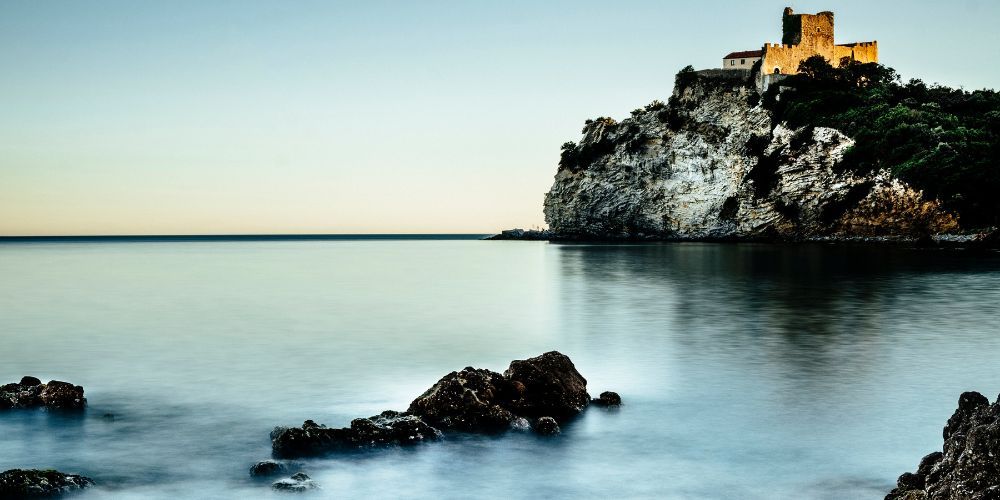
Le Rocchette is one of the most beloved beaches on the Maremma coast, north of Castiglione della Pescaia. The landscape alternates pale sand, transparent water, pine forest and rocky stretches overlooked by the profile of the Forte delle Rocchette, which watches over the bay from above.
On one hand, it offers beach clubs, services and comfort; on the other, it preserves a natural, luminous feel, especially in the sections closer to the rocks.
The sea is often clear and suitable for light snorkeling near the rocks, while the sandy shore also makes it comfortable for those looking for a more relaxed day by the sea.
Le Rocchette is perfect for those staying in Castiglione della Pescaia or in the Punta Ala area who want to discover one of the most complete Tuscan beaches along the Maremma coast.
Available services: beach clubs, free beach areas, bars, restaurants, equipment rental and accommodation facilities nearby.
Where to park: paid car parks are available in the Le Rocchette area and at some facilities near the beach. During peak periods, it is best to arrive early or consider getting around by bike if you are staying nearby.
How to get there: from Castiglione della Pescaia, it can be reached by car by following the Provincial Road 158 delle Collacchie and the signs for Le Rocchette.
Local Tips: to enjoy it at its best, choose a day with calm sea and settle in the area closest to the rocks: the water becomes more interesting and the landscape takes on its most recognisable character.
2. Marina di Alberese, the wild beach of the Maremma Park
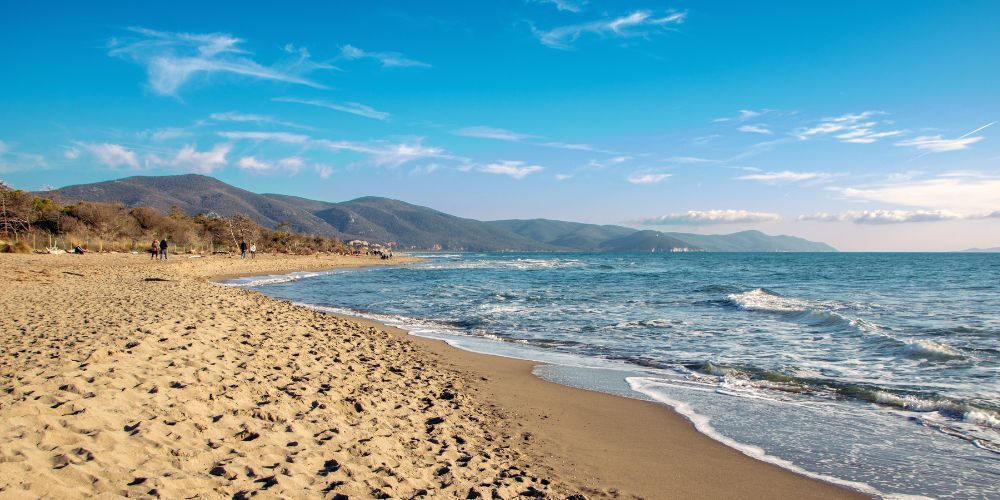
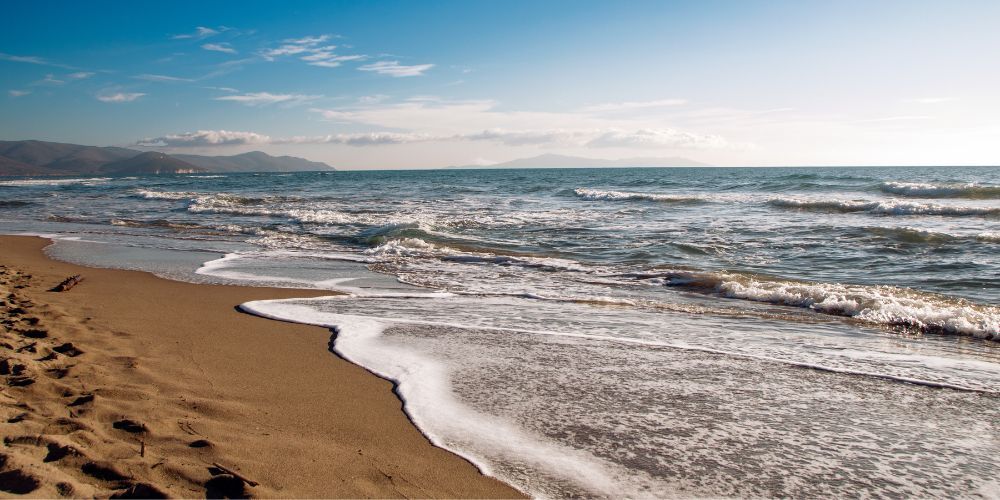
Marina di Alberese, in the Maremma Regional Park, reveals itself in a protected environment where nature remains the true protagonist: dunes, tree trunks smoothed by the sea, Mediterranean scrub, long open spaces and a rare feeling of freedom along one of Italy’s most popular coastlines.
The beach is long, wide and essential, with a landscape that changes depending on the light and the wind. It is the right choice for those who love walking, reading, swimming, relaxing and avoiding the most crowded beaches in order to experience the Tuscan coast in a more authentic way.
Available services: the beach is free and wildand only in the summer period there is a refreshment point. It is advisable to bring water, food, shade and everything you need for the day.
Where to park: car access is regulated and parking in the Marina di Alberese area is paid, with limited spaces. When the car park is full, you can use the shuttle services provided by the Park.
How to get there: start from the visitor centre or the Alberese area and follow the road towards Marina di Alberese. Alternatively, one of the most beautiful ways to arrive is by bike, along the cycle path that crosses the park landscape.
Local Tips: bring a bike if you can. Reaching Marina di Alberese by cycling through fields, pine trees and natural views makes the experience much more memorable than a simple day at the beach.
1. Cala del Gesso, the jewel of Argentario
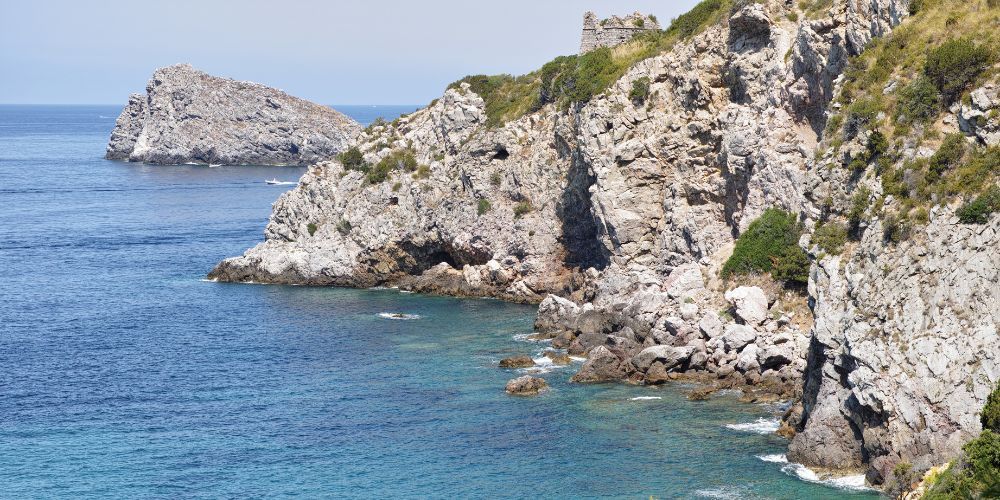
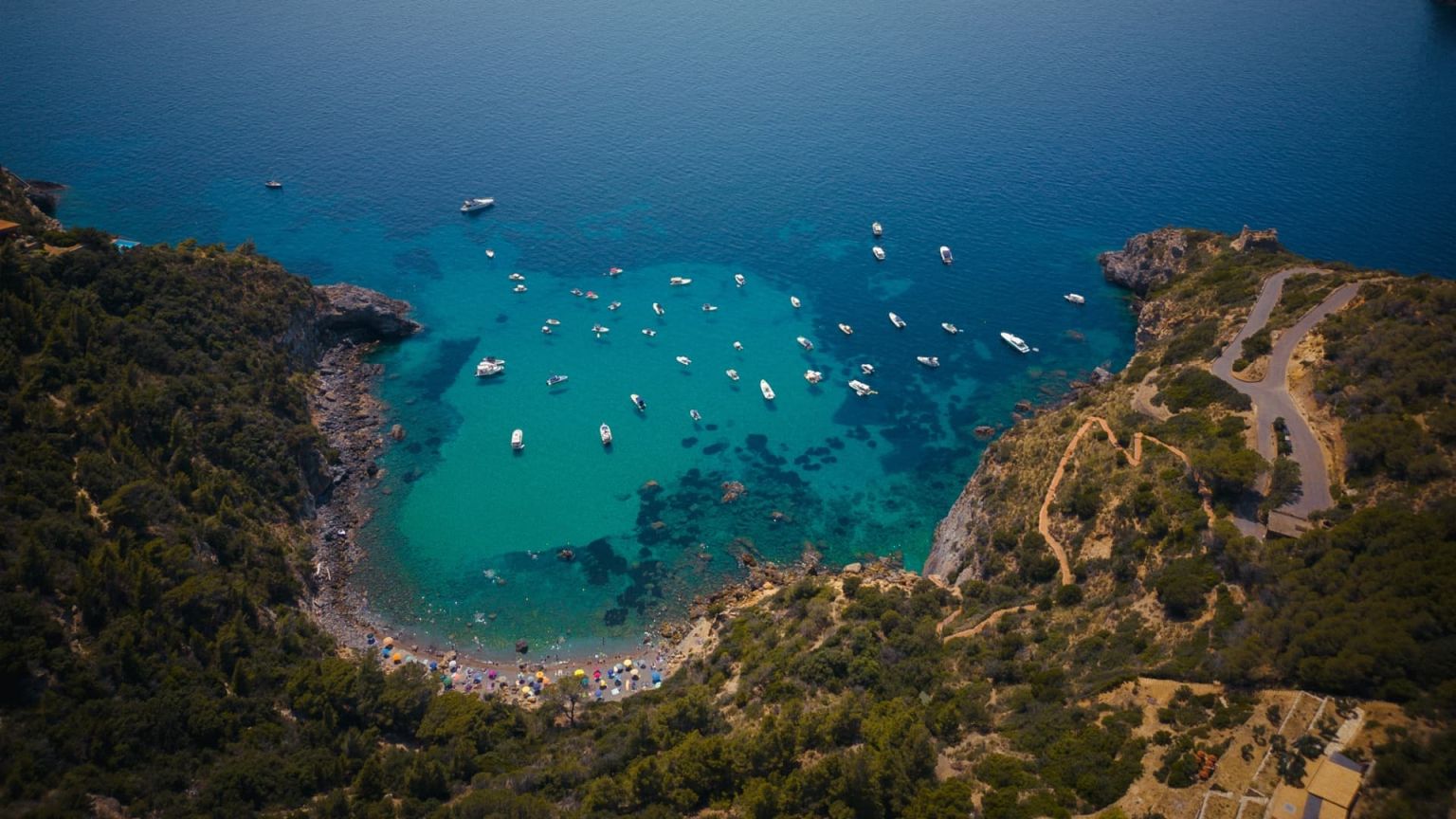
Cala del Gesso is one of the most spectacular beaches on Monte Argentario, but also one of those that requires the most planning. It lies along the western coast of the promontory, not far from Porto Santo Stefano, and appears as a small cove of pale pebbles overlooking transparent water, with views of the Argentarola islet and, on clear days, towards Giglio Island.
It is not a beach to choose if you are carrying heavy bags, travelling with pushchairs or not in the mood for walking: the downhill path is demanding, especially on the way back, when the sun and the climb make themselves felt. But if you love wild coves, Cala del Gesso is one of the most intense corners of the Tuscan coast.
There are no beach clubs, music, services or distractions: only rock, clear water and a sense of isolation that makes it one of the most desirable destinations for those looking for a more exclusive and less predictable side of Tuscany.
Available services: there are no services on the beach. It is essential to bring water, suitable shoes, sun protection, light food and water shoes.
Where to park: parking is one of the most delicate aspects: there are only a few spaces along the panoramic road and small paid car parks near the access area. In high season, it is essential to arrive early and respect parking restrictions.
How to get there: from Porto Santo Stefano, follow the panoramic road to the access area near Via dei Pionieri. From there, continue on foot along a downhill path that requires care, especially on the way back up.
Local Tips: choose it only if you are ready to walk and the sea is calm. To enjoy it at its best, leave early, travel light and also consider arriving by sea with excursions or rentals, which is often more comfortable in the warmer months.
About the author
Written on 01/07/2026
Flavia Cantini
Freelance Content Writer with over a decade of specialized experience in tourism, culture, and creative/artistic activities. I assist magazines, web agencies, and end clients in managing blogs and crafting standout articles

Flavia Cantini
Did you think of Tuscany only for its hills and wine? Its beaches might surprise you even more.