

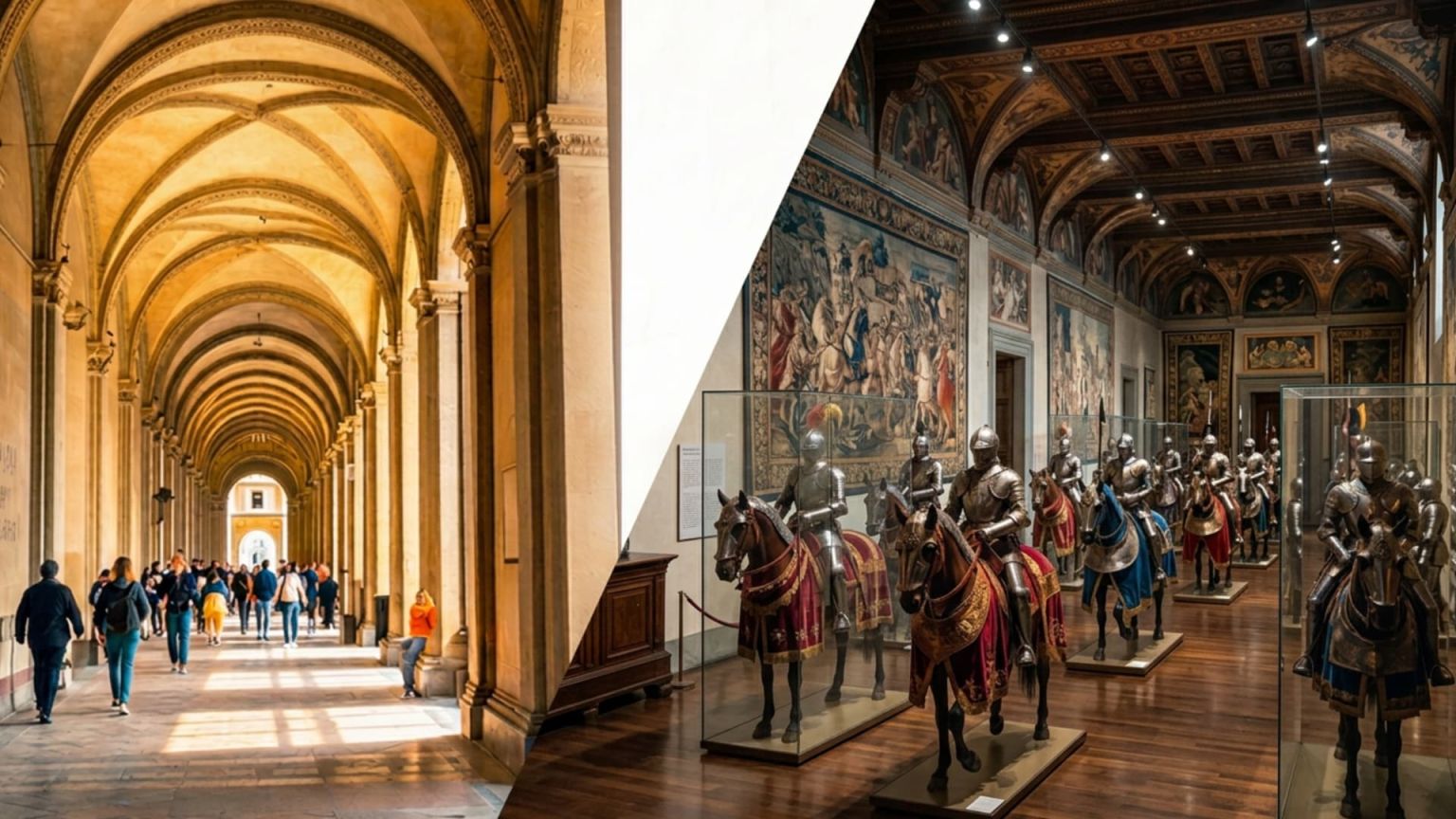

Florence is still one of Italy’s most sought-after cities, but visiting it today also means learning to see it from a different perspective. Not only the Uffizi, the Accademia, the Duomo and Palazzo Pitti: alongside the great masterpieces that tell the story of the most famous Florence, there is an equally surprising city, rich in museums, historic palaces, unusual collections and cultural sites capable of revealing its many different identities.
At a time when many travellers are looking for less predictable experiences that feel closer to the real life of a place, these museums become a precious key to discovering Florence beyond its postcard image.
These are intimate spaces, sometimes central yet not immediately visible, opening up lesser-told chapters of the city: the power of the Medici, the fascination of archaeology before the Renaissance, Leonardo’s genius, Renaissance sculpture, the taste of collectors, and private residences transformed into treasure troves of art.

Why does Florence offer museums with such different souls beyond the Uffizi?
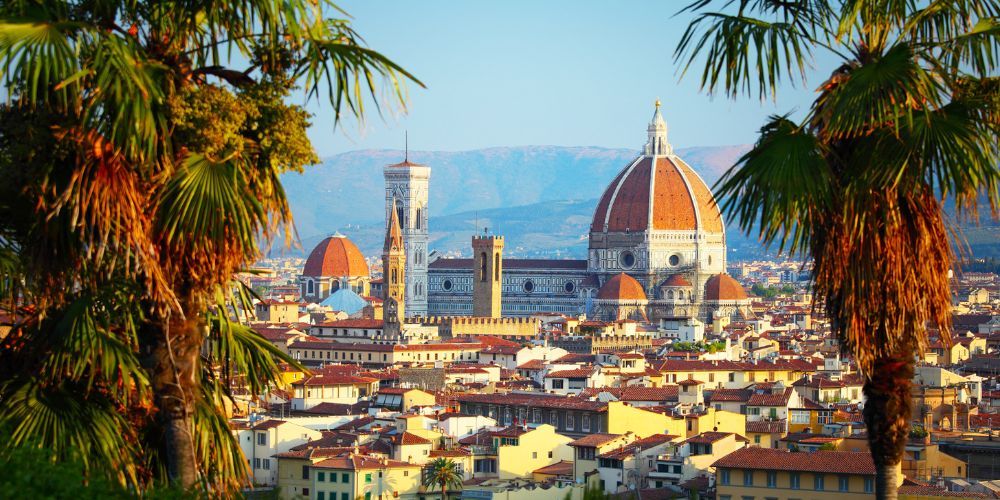
Florence does not tell its story only through the halls of the Uffizi and its most famous masterpieces. It also reveals itself as a mosaic of noble palaces, convents, workshops, private collections, cultural foundations and house-museums, each preserving an unmistakable fragment of its identity.
Art has never been separate from everyday life here. It has inhabited the rooms of the most powerful families, artists’ studios, artisan workshops, Renaissance courts and even everyday objects. This is why, alongside its most famous museums, Florence offers a network of places capable of revealing its different souls: its political and religious history, its passion for collecting, its relationship with science, decorative arts, archaeology and innovation.
Many of these museums were born from personal collections, family legacies or cultural projects created to protect a specific heritage. Some tell the story of the Florence of power, others of the city before the Renaissance; others open windows onto unexpected worlds: ancient weapons, historic residences, nineteenth-century collecting, inventions, artistic techniques and crossovers between art and technology.
The reason so many tourists miss them is that Florence is often visited in a rush, with itineraries focused on its most famous monuments. And yet, those who want to discover the city beyond its best-known story can find surprising perspectives here, complementary to those offered by the Uffizi.
We selected 6 of them:
- Museo de’ Medici
- National Archaeological Museum
- Leonardo da Vinci Interactive Museum
- Bargello National Museum
- Horne Museum
- Stibbert Museum
6. Museo de’ Medici
Just a few steps from the Cathedral of Santa Maria del Fiore, in the busiest heart of the historic centre, Florence preserves the Museo de’ Medici, a small and fascinating exhibition space housed in the evocative Rotonda del Brunelleschi, at the corner of Via degli Alfani and Via del Castellaccio.
Crossing the threshold of the Museo de’ Medici means stepping into the story of the Florence of power, alliances and political vision that helped build the myth of the Renaissance city. Here, the Medici appear almost as living presences, brought back to life through original portraits, letters, maps, personal objects and rare documents.
Room after room, the public and private faces of the family emerge: political strategies, courtly splendour, alliances, artistic passions and details of everyday life. It is a journey that helps you understand how the Medici managed to shape Florence’s identity, turning it into one of the brightest centres of the Renaissance.
This museum therefore reveals one of the city’s most decisive souls: not only that of the masterpieces themselves, but of those who made them possible, supporting artists, shaping taste and intertwining culture, prestige and government.
Address: Rotonda del Brunelleschi, at the corner of Via degli Alfani and Via del Castellaccio.
Opening hours: open every day from 10:00 am to 6:00 pm.
Visit tips: the museum is located in a perfect area to include in a walking itinerary between the Duomo, San Lorenzo and Santissima Annunziata. Visit it around midday or in the early afternoon, when many tourists are focused on the most famous museums: this way, you can enjoy the experience more calmly and better appreciate the intimate atmosphere of the rooms.
5. National Archaeological Museum
If you think Florence is only about the Renaissance, the National Archaeological Museum will change your idea. Located in Piazza Santissima Annunziata, just a few minutes from the Duomo, it often remains outside the city’s most crowded itineraries.
Founded in 1870, it is one of the oldest archaeological museums in Italy and houses a collection that takes you from Etruria to ancient Rome, all the way to Greece and Egypt. It is the ideal place to discover the oldest and most layered Florence, the one that existed before the great Renaissance masters and was already in dialogue with the Mediterranean world.
Among its most important works are the Chimera of Arezzo, an extraordinary Etruscan bronze full of strength and mystery, and The Orator, a statue that tells the story of the transition between the Etruscan and Roman worlds. The Egyptian section is another wonder not to be missed: sarcophagi, mummies, amulets, papyri and ritual objects lead into a distant universe made of symbols, deities and ancient rites.
The beauty of this museum is that it does not only show precious artefacts, but also brings closer to the everyday life of lost civilisations. Ceramics, jewellery, bronze mirrors and everyday objects tell of gestures, beliefs and habits that seem to come from a remote time, yet still feel alive.
This is the soul of Florence that predates and goes beyond its most famous story: a city that is not only Renaissance, but also archaeological, ancient, open to different cultures and connected to roots much deeper than often imagined.
Address: Piazza Santissima Annunziata 9b.
Opening hours: Monday, Wednesday, Friday, Saturday, the first Sunday of the month and public holidays from 8:30 am to 2:00 pm; Tuesday and Thursday from 8:30 am to 7:00 pm. Last admission 45 minutes before closing. Closed on the 2nd, 3rd, 4th and 5th Sunday of the month.
Visit tips: combine it with a walk through Piazza Santissima Annunziata and the San Marco area. It is a good choice in the morning, when the city centre is already busy but the museum still keeps a quieter atmosphere.
4. Leonardo da Vinci Interactive Museum
Just a few steps from the Duomo, in Via de’ Servi, the Leonardo da Vinci Interactive Museum is one of the most curious stops if you want to experience Florence in a different way: a space designed to bring you into Leonardo’s world through play, experimentation and direct contact with his inventions.
It is the museum that reveals the Florence of ingenuity, technique and scientific curiosity, where art becomes design, movement, intuition and possibility.
The machines designed by Leonardo have been reconstructed based on his original drawings, and many of them are fully functional. You can observe them, try them out, understand how their mechanisms work and discover just how far ahead of his time his genius really was.
Alongside the machines, the route also includes high-resolution digital reproductions of his paintings. Of course, you will not find the originals here, but you can get close to the details, observe features that are often impossible to see in major museums and read the works from a more intimate perspective.
The Leonardo da Vinci Interactive Museum is a good choice if you are looking for an original break between one classic visit and another, but also if you want to discover a more dynamic and inventive Florence, where the Renaissance takes shape through experiments, mechanisms and ideas.
Address: Via de’ Servi 66/r.
Opening hours: open Monday to Friday from 10:00 am to 7:00 pm; Saturday from 9:30 am to 7:30 pm; Sunday from 9:30 am to 7:00 pm. Last admission one hour before closing.
Visit tips: include it in an itinerary between the Duomo and the Accademia Gallery. The visit takes about an hour, so it is perfect even if you have little time or want to alternate the major museums with a lighter, more interactive experience.
3. Museo Nazionale del Bargello
The National Museum of the Bargello is not really “secret”, but it is one of those places many visitors leave behind, drawn instead to Florence’s more famous names. And yet, if you love sculpture, here you will find one of the most extraordinary collections in the city.
The museum is housed in the ancient Palazzo del Podestà and, in 1865, became the first Italian National Museum dedicated to the arts of the Middle Ages and the Renaissance. The building alone is worth the visit: austere, medieval, with a courtyard that immediately takes you into a more severe Florence, far from the usual postcard image.
It is the museum that reveals the Florence of sculpture, matter and form, where the Renaissance also unfolds through marble, bronze, relief and the physical power of the works.
Inside, the route unfolds over three floors and tells the story of the Renaissance through masterpieces by Donatello, Michelangelo, Verrocchio, Luca della Robbia, Benvenuto Cellini and Giambologna. Among the most important rooms are the Michelangelo Room on the ground floor and the great Donatello Room, where you can admire works such as the David, Saint George, Attis and the Marzocco.
The Bargello also houses majolica, small bronzes, medals, ivories, enamels, textiles, weapons and decorative art objects, many of them from the Medici collections, suppressed convents and private collections.
Less crowded than Florence’s most iconic museums, it allows you to encounter some of the greatest figures of the Renaissance in a more intimate and enjoyable atmosphere.
Address: Via del Proconsolo 4.
Opening hours: open Tuesday to Sunday from 8:15 am to 6:50 pm. Closed on Monday. The ticket office closes 50 minutes earlier.
Visit tips: visit it in the morning and combine it with a walk between Piazza della Signoria, the Badia Fiorentina and Santa Croce. It is perfect if you want to avoid the most crowded routes and dedicate at least an hour to the Florence of sculpture.
2. Museo Horne
The Horne Museum is a house-museum in the heart of Florence, in Via de’ Benci, just a few steps from Santa Croce. It was born from the passion of Herbert Percy Horne, an English collector and art historian who chose Florence as his adopted home. His idea was to recreate a Renaissance setting, where painting, sculpture, furniture and everyday objects could speak to one another.
It is the museum that reveals the Florence of private residences, refined collecting and art experienced in everyday life.
In its rooms, you will find works ranging from the 13th to the 17th century, with important names such as Giotto, Simone Martini, Masaccio, Filippino Lippi, Domenico Beccafumi and Giambologna. Among the most precious pieces is Giotto’s Saint Stephen, created between 1330 and 1335, but the real charm of the Horne Museum lies above all in its atmosphere: each room reveals a way of living, collecting and experiencing art.
It is one of the best hidden museums in Florence if you are looking for an intimate experience, far from the busiest routes, where you can calmly observe details, furniture, paintings and objects that reveal a more domestic and refined side of Florence.
Address: Via de’ Benci 6.
Opening hours: open Monday to Sunday from 10:00 am to 2:00 pm. Closed on Wednesday and on public holidays.
Visit tips: the museum does not have information panels in the rooms, so it is worth using the digital guide provided during the visit. Combine it with a walk around Santa Croce, Borgo dei Greci and the Lungarno: it is a short stop, but perfect for discovering a quieter and more cultured side of Florence.
1. Museo Stibbert
The Stibbert Museum reveals itself away from the most beaten paths, on the hills north of Florence, inside Villa Montughi, once the home of Frederick Stibbert, a collector born in Florence in 1838 to a Tuscan mother and an English father. Over the course of his life, he collected weapons, armour, paintings, furniture and art objects, transforming his home into one of the most original museums in the city.
It is the museum that reveals Florence at its most eccentric and cosmopolitan, the Florence of great collectors capable of bringing together distant eras, cultures and imaginations.
The most spectacular part is the armoury: in its rooms, you will find Italian and German knights with armour from the 16th and 17th centuries, 16th-century Ottoman horsemen, pieces from the Indian collection and one of the most important Japanese sections outside Japan, with katana and armour that once belonged to the last samurai.
The museum, however, also houses paintings attributed or linked to great names such as Botticelli, Carlo Crivelli, Domenico Beccafumi, Luca Giordano, Alessandro Allori, Pieter Brueghel the Younger, Neri di Bicci and Pietro Lorenzetti.
Antique furniture, 15th-century cassoni, leather wall hangings and rooms full of details make the experience even more fascinating.
Address: Via Federico Stibbert 26.
Opening hours: open Monday, Tuesday and Wednesday from 10:00 am to 2:00 pm; Friday, Saturday and Sunday from 10:00 am to 6:00 pm. Closed on Thursday.
Visit tips: go there with enough time, because it deserves a slower visit than the museums in the city centre. After exploring the rooms, stop in the villa’s park as well: it is one of the most pleasant parts of the experience and strengthens the feeling of having stepped out of Florence’s more predictable side.
About the author
Flavia Cantini
Freelance Content Writer with over a decade of specialized experience in tourism, culture, and creative/artistic activities. I assist magazines, web agencies, and end clients in managing blogs and crafting standout articles

Flavia Cantini
Florence beyond the Uffizi: hidden museums to discover in 2026 for a local's view of the city.