
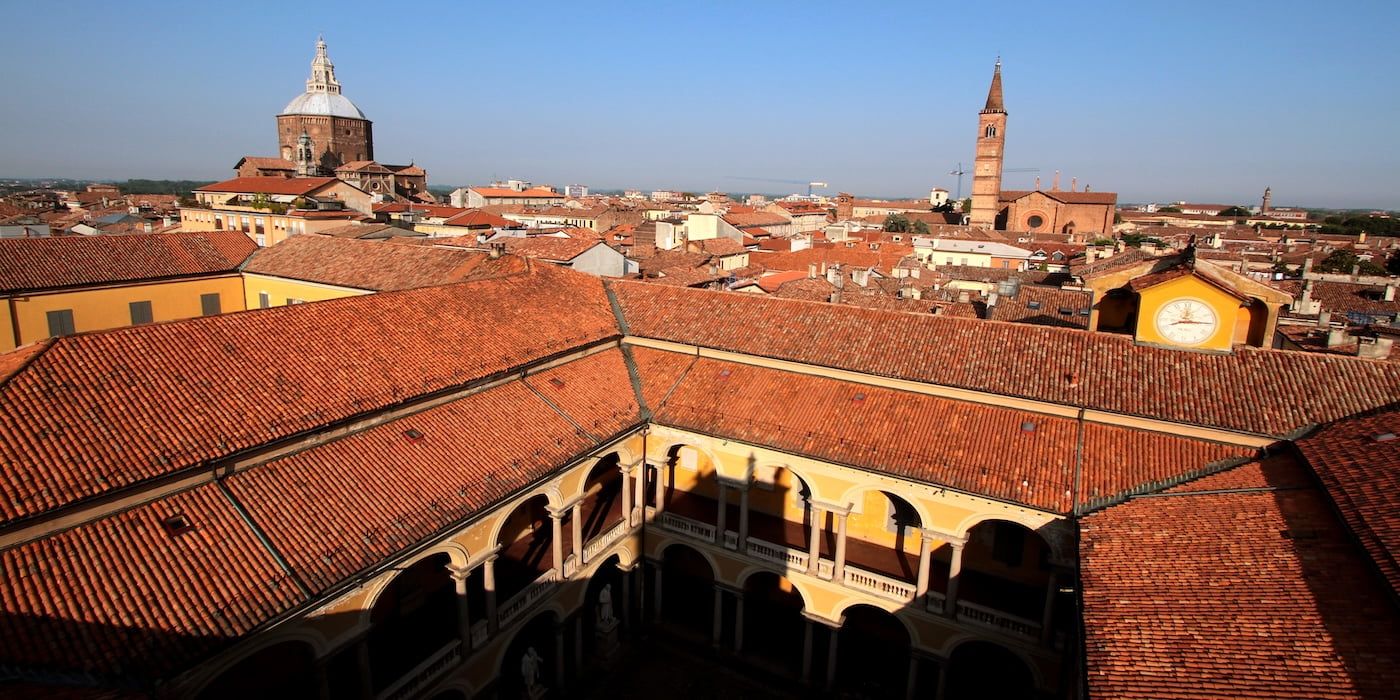

When planning a journey in Lombardy, you’ll probably think first of Milan, Lake Como or the region’s best-known art cities. Yet less than an hour from the Lombard capital, we can find a historic and enchanting city, home to a remarkable spiritual heritage and an atmosphere that feels both authentic and unique.
It’s Pavia, the “City of 100 Towers”, one of those places that knows how to surprise you because it lies outside the most travelled tourist routes, while still preserving an ancient and extraordinary cultural heritage.
Spending a weekend in Pavia means stepping into a city that tells its story through monuments, squares and enchanting views that have remained remarkably faithful to its identity.
Pavia: the unexpected weekend a stone’s throw from Milan
🥇 Visit Italy’s brand partnership
In the ancient capital of the Lombard Kingdom, home to one of Europe's oldest universities, we'll discover a heritage that goes far beyond what you might expect from a simple getaway. In Pavia, the legacy of the Lombard kings, one of Europe's most important connections to Saint Augustine, and a lively, distinctive character that remains untouched by mass tourism all coexist.
In recent years, the city—small, compact and very easy to explore on foot—has also gained increasing cultural and spiritual significance.
The papal visit in June 2026 serves as a further acknowledgment of the important role Pavia continues to play within Europe's religious landscape, strengthening the connection between its extraordinary historical heritage and its enduring cultural relevance.
Over the course of three days, we will explore its medieval towers, stroll through historic squares and palaces, visit basilicas that preserve centuries of faith and spirituality, and discover the remarkable Certosa di Pavia, one of Italy's most important monastic complexes.
Here's how to plan the perfect weekend in the city.
- Friday: a first introduction to the historic center, a walk through the city's ancient streets and sunset along the Ticino River.
- Saturday: an immersion into Pavia's historical and spiritual heart, visiting the Basilica of San Pietro in Ciel d'Oro, the Cathedral, San Michele Maggiore and the Visconti Castle.
- Sunday: a visit to the Certosa di Pavia and a final stroll through the city's center.
Discover more about PaviaWeekend in Pavia, Friday morning: entering the historic center
Pavia is one of the easiest destinations to reach for a weekend in the heart of Lombardy. From Milan, it takes just around 30 minutes by train to arrive directly at the railway station, the ideal gateway into the city.
From the station, we follow the short route leading to Piazza della Minerva, dominated by the famous statue of the Roman goddess that has welcomed students, travelers and visitors to the entrance of the historic centre for decades. From here, we head into Corso Cavour, a charming pedestrian street lined with shops, cafés and local venues that reflect Pavia’s more contemporary side.
Walking past historic buildings, we reach Piazza della Vittoria, the beating heart of the city. Surrounded by elegant arcaded buildings and lively at all hours with university students and locals, the square is the perfect place to pause at one of the outdoor cafés and enjoy a light bite while observing daily life unfold.
Friday afternoon and evening: the University and sunset on the river
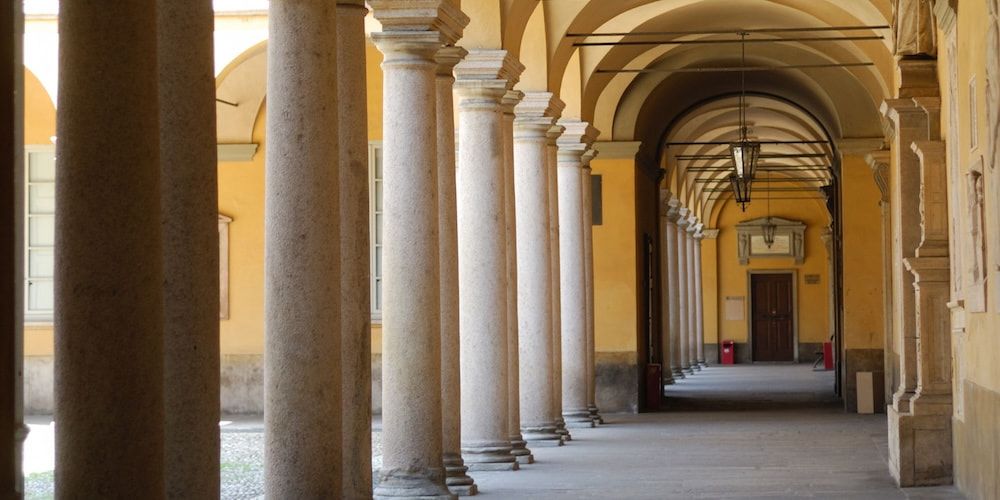
Let’s continue our walk through the historic center, reaching Strada Nuova, another important street that runs perpendicular to Corso Cavour. We cross it shortly after Piazza della Vittoria, then turn left and, after just a few steps, arrive at the main entrance of the University of Pavia.
It’s one of the oldest universities in Europe, founded in 1361, and it has been attended by some of the most important figures in Italian scientific and humanistic culture, from Alessandro Volta to Camillo Golgi, as well as generations of scholars who have helped build the university’s international reputation.
Walking through its historic courtyards is an experience not to be missed, as it instantly transports you into a timeless atmosphere. And if we exit through the rear side, into the Cortile Teresiano, we suddenly find ourselves beneath some of Pavia’s wonderful towers, the remnants of the medieval skyline that once defined the city and created its striking vertical profile.
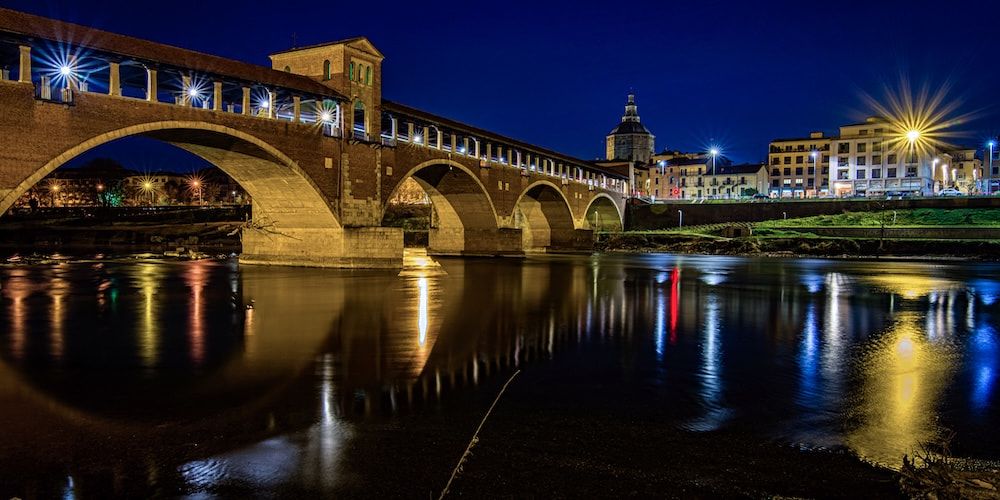
Now, we return to Strada Nuova and follow it in the opposite direction, heading down toward the banks of the Ticino River, where at sunset we are rewarded with one of Pavia’s most magical views: the silhouette of the legendary Covered Bridge reflected in the calm waters below. It’s the perfect way to end the first day of our weekend in Pavia.
Friday highlights:
- Arrival at Pavia railway station;
- Walk along Corso Cavour and stop in Piazza della Vittoria;
- University of Pavia and Medieval towers;
- Covered Bridge and sunset on the Ticino River.
Saturday morning: in the footsteps of Saint Augustine
The second day of our weekend in Pavia begins by following in the footsteps of one of the most influential figures in the history of Christianity. A philosopher, theologian, and author of the celebrated Confessions, Saint Augustine had an enormous impact on Western religious and philosophical thought, and is widely regarded as one of the most influential figures in Christian history.
And it’s here in Pavia that we'll find one of the sites most closely connected to his legacy. After a short walk through the historic center, let’s reach the Basilica of San Pietro in Ciel d’Oro, an elegant Romanesque church that houses the Ark of Saint Augustine, the monumental marble tomb that preserves the saint’s relics.
When the relics arrived in Pavia during the Middle Ages, they transformed the basilica into a major pilgrimage destination. It’s worth remembering that for centuries the city has been an important stop along the historic Via Francigena, the ancient pilgrimage route that runs through Italy and was traveled throughout the Middle Ages by pilgrims from across Europe on their way to Rome.
Saturday afternoon and evening: castles, domes and Lombard kings
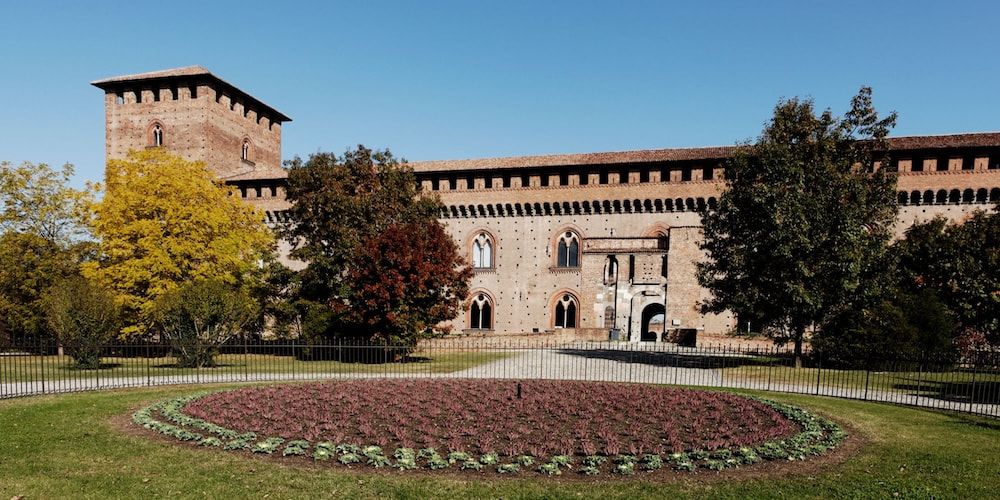
After San Pietro in Ciel d’Oro, we head to the nearby Castello Visconteo. Built in the 14th century at the request of Galeazzo II Visconti, it now preserves only part of its original structure, but its courtyards and Renaissance architecture house the Civic Museums, where you can trace the history of Pavia from the Roman era to modern times.
Once the visit is over, we cross Piazza Castello and continue along Strada Nuova, passing the famous Fraschini Theater and retracing the places we explored yesterday, walking past the University and, after a few hundred meters, turning right to reach Piazza Duomo.
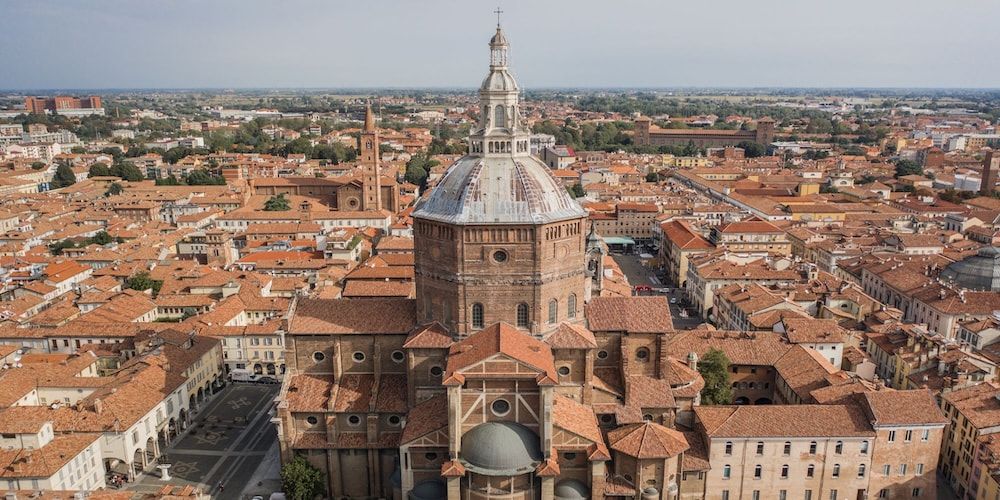
The Duomo stands out for its impressive size and its dome, one of the largest in Italy. The interior is equally fascinating and, through frescoes and works of art, tells the story of a city that has always sought to assert its place within Lombardy and Italy.
Our final stop is just off Strada Nuova, almost hidden among the surrounding streets: the remarkable Basilica of San Michele Maggiore, where Lombard kings were once crowned. The building still retains a unique charm thanks to its striking façade and the blend of architectural styles.
Let’s call it a day with an apericena in Piazza della Vittoria, where locals, students and visitors come together to light up Pavia’s lively nightlife.
Saturday highlights:
- Basilica of San Pietro in Ciel d’Oro;
- Castello Visconteo;
- Duomo of Pavia;
- Basilica of San Michele Maggiore and apericena in the city center.
Sunday morning: Certosa di Pavia, a place out of time
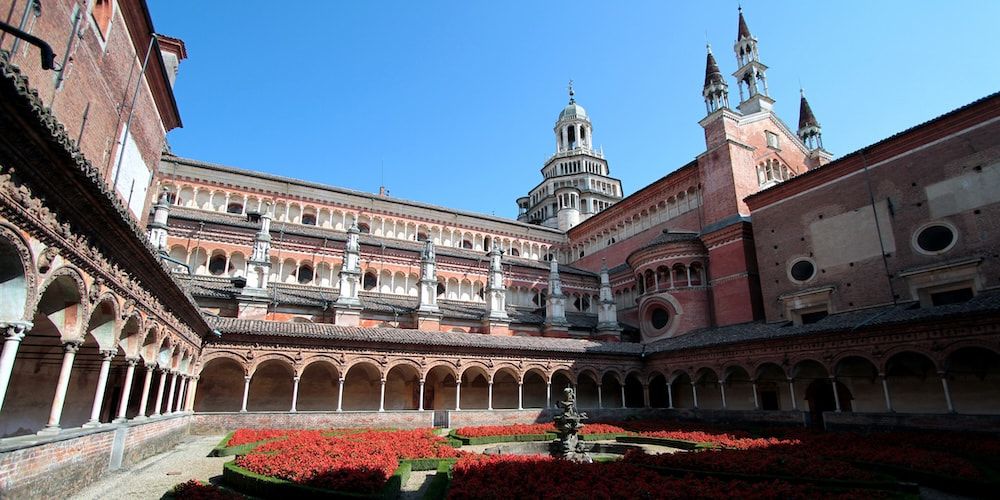
For the final morning of our weekend, we head just a few kilometers outside the city to the Certosa of Pavia, one of the most scenographic monastic complexes in Italy. Easily reachable from the historic center by car, bike, or public transport (train and local connections), it’s a stop that perfectly completes our journey through the region’s history, art, and spirituality.
Immersed in the quiet of the Lombard countryside, we find ourselves in front of the Certosa di Pavia, a place of rare beauty. The Gothic-Renaissance façade of the church leaves us speechless with its extraordinary richness of detail, a finely woven pattern of decorations that looks almost like lace carved into stone.
Inside, we can admire the frescoes, sculptures, and play of light before exploring the rest of the complex through its evocative cloisters, where silence and stillness set the rhythm of monastic life. We can also glimpse some of the monks’ cells, simple and restrained, in striking contrast with the lavish beauty of the main spaces.
Sunday afternoon and evening: last sunset over Borgo Ticino
🥇 Visit Italy’s brand partnership
We return to Pavia for lunch, stopping at one of the restaurants in the historic center, where we can enjoy some of the most flavorful local dishes.
Pavia’s cuisine reflects a borderland of influences, where the flavors of the Po Valley blend with those of the nearby Oltrepò Pavese: aged cured meats, rich risottos, and rustic dishes that find their true strength in simplicity.
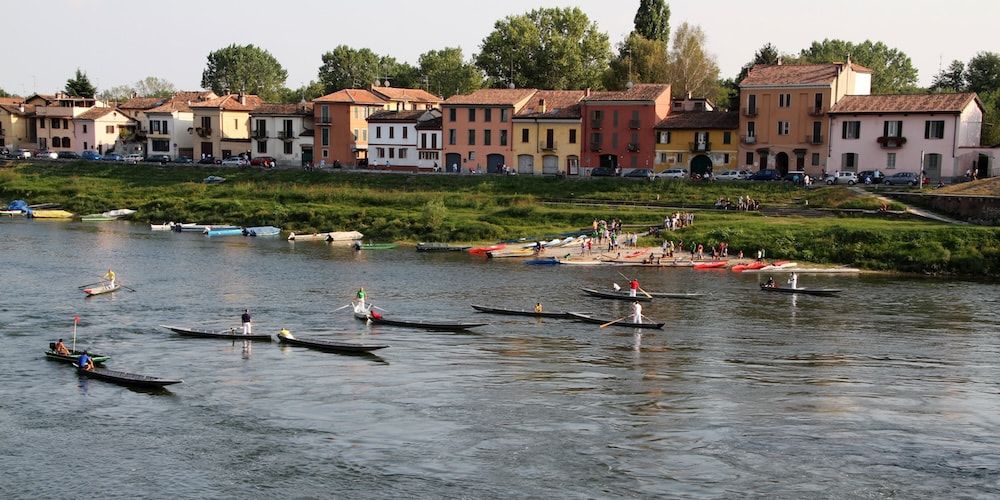
After a well-earned meal, we take a slow and relaxing walk along the Lungoticino, one of the most fitting places to bring our weekend to a close.
Looking across the river, directly in front of us, we see the district of Borgo Ticino, with its colorful and picturesque façades reflected on the water in the soft late-afternoon light, offering an unexpectedly poetic image of the city.
It’s our final, romantic glimpse of Pavia, which, before saying goodbye, once again reveals its most authentic and magical side.
Sunday highlights:
- Certosa of Pavia;
- Traditional lunch in the historic center;
- Riverside walk and Borgo Ticino.
About the author
Written on 17/06/2026
Alessandro Savino
SEO Copywriter & web editor: I love transforming my passion for writing into engaging narratives, creatively and precisely exploring the beauty and complexity of our wonderful country.

Alessandro Savino
Medieval towers, a historic university and a magic atmosphere: a weekend in Pavia takes you to the heart of Lombardy at its most authentic and unique.