
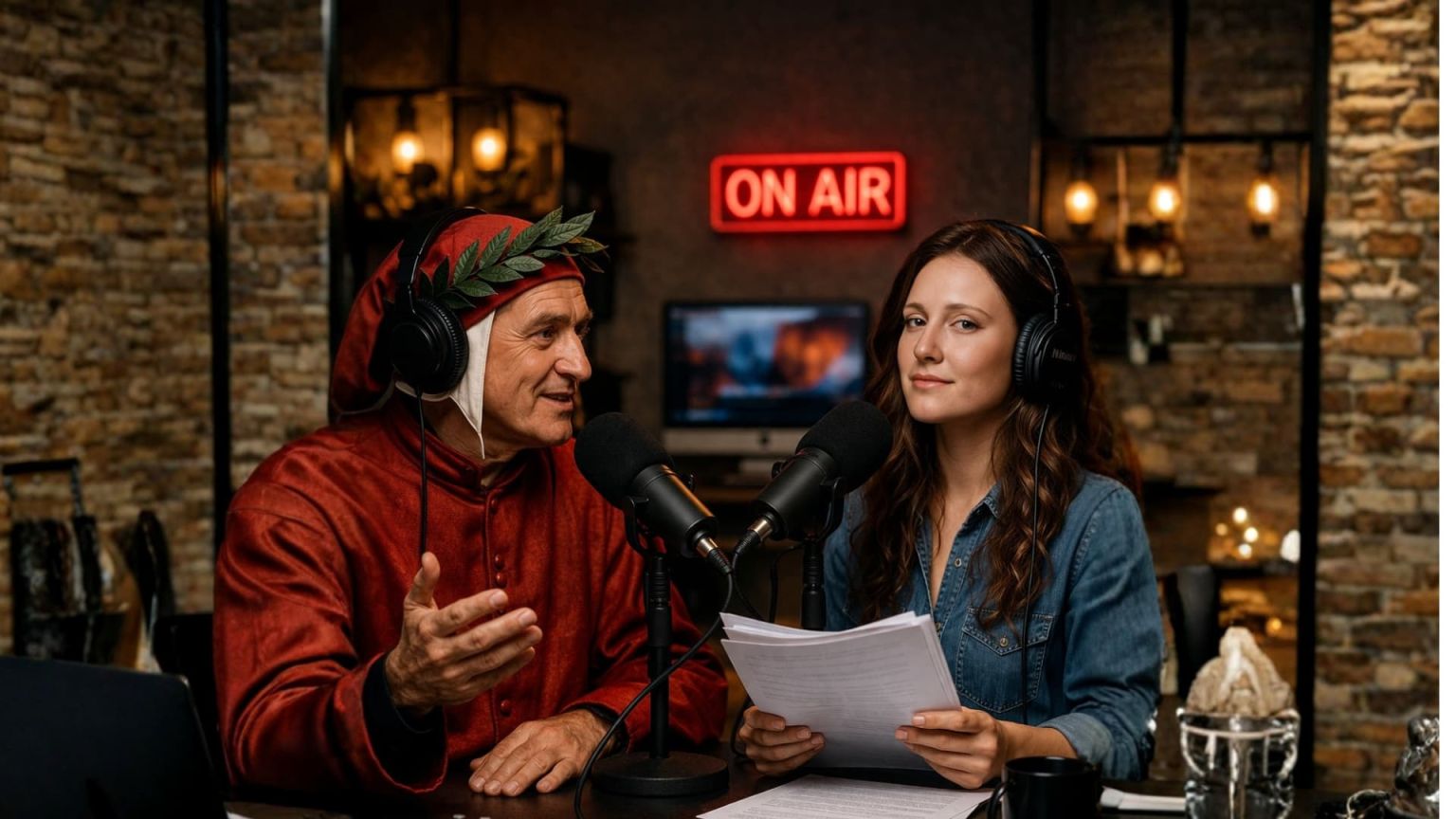
Every year on March 25, Italy celebrates Dantedì, the day dedicated to the most famous poet of the Italian language—and one of the earliest literary travelers in history: Dante Alighieri. Seven centuries after his death, his voice still echoes through the verses of the Divine Comedy, a journey into the human soul and the Italian language that has inspired writers, musicians, and travelers across time.
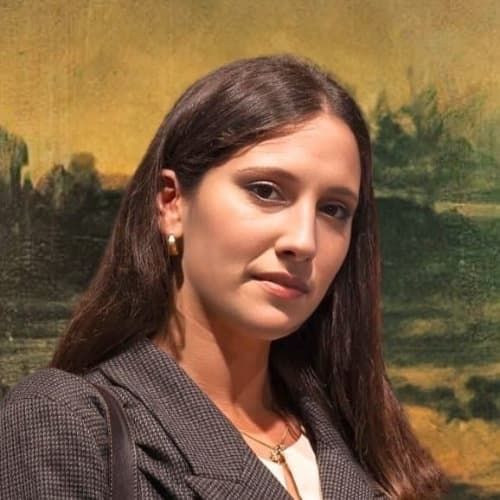
I’m the one writing, Monna Lisa. For over a year now, I’ve been telling you about Italy every single day on the podcast Visit Italy with Monna Lisa. As a proud Tuscan, I couldn’t miss the chance for a tête-à-tête with the man who turned Florence into the linguistic center of the world. And yes, Dante is still very much… alive.
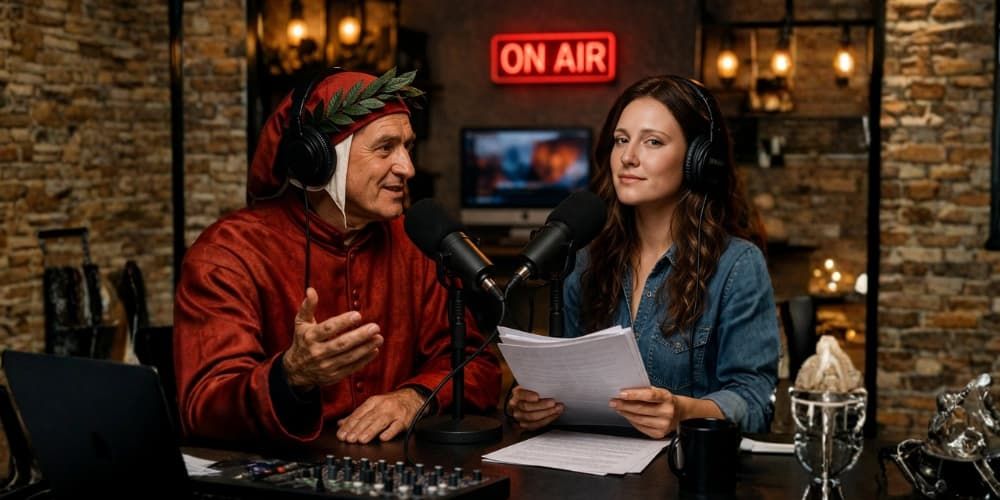
So I decided to invite him for an impossible interview, ironic and thoughtful at the same time. Here’s how it went.
Monna Lisa: Good morning, Maestro! First of all… what an honor to have you here. Or should I say: what kind of hell was it getting you back online for this interview?
Dante: Madonna Lisa, the pleasure is mine. After seven centuries of silence, I couldn’t resist the call of a woman who has captivated travelers, writers, and artists alike. You’re an icon, Monna Lisa!
M: Maestro, you’re making me blush. Let’s start with the myth. Everyone says you’re the symbol of the Italian language. What does that feel like?
D: Curious, I’d say. I simply wanted to speak in a way everyone could understand. Back then, writing in Latin meant being read by only a few. I chose the vernacular, the language of the people. Today, you’d call that “democratizing culture.”
M: So we can say you were the first pop linguist?
D: (laughs) Maybe the first literary influencer. I just gave voice to a homeland that didn’t exist yet, but was already speaking inside me.
M: What do you think people still love so much about you today?
D: Maybe my profile. (laughs).
No, I think people love those who tell the truth, even when it burns. I wrote about love, sin, hope, and I did it as if I were speaking to each one of you. I’m eternal because I’m human.
M: Speaking of sin… why does everyone love Inferno so much? You don’t hear nearly as much about Paradiso.
D: It’s simple, my dear: Inferno has the best characters. Everyone makes mistakes, loves too much—or too little—and sees themselves in my damned souls. Paradiso is light, but Inferno… has more plot. Let’s be honest: evil has always had a great marketing department.
M: So “Hell sells”?
D: Exactly, Ma'm. Hollywood knows it well.
M: Provocative question. Why should people still read the Divine Comedy in 2026? Do you think it’s still relevant?
D: You see, the Comedy survives because it’s not a book about the Middle Ages, it’s a book about being human. I put into verse the same things that still keep people awake at night: the fear of making mistakes, the desire to be loved, the need to make sense of what happens. Inferno, Purgatorio, and Paradiso aren’t just places in the afterlife, they’re states of mind.
And let’s admit it: in the Divine Comedy you’ll find everything you’d now call “successful content”: impossible love stories, questionable moral choices, dramatic downfalls, unexpected redemption, celestial special effects. It’s a three-season series.
Is it still worth reading? Yes. But not as a cold academic obligation. Think of it as a map. When you get lost, at work, in love, in life, it helps to have a voice guiding you out of the dark forest. The centuries change, but that forest, believe me, is always crowded.
No, I think people love those who tell the truth, even when it burns. I wrote about love, sin, hope, and I did it as if I were speaking to each one of you. I’m eternal because I’m human.
Monnalisa: What’s your favorite work by Dante Alighieri?
Dante: A tricky question, Madonna Lisa: it’s like asking a parent to pick a favorite child. If I must choose one besides the Comedy, I’d say the Vita Nova.
There, I tell the story of my love for Beatrice, not as a courtly dream, but as a force that elevates the soul. I blend poetry and prose to show how true love transforms a person. It’s my first workshop in the vernacular, the heartbeat before the great journey.
M: The Visit Italy community comes from all over the world, especially the United States. Many people love Italian but find it “difficult.” What would you say to them?
Dante: I’d say every language is a key, and Italian opens the heart. Learning my words is like traveling inside a melody. You don’t need to understand everything, just let it flow.
M: So reading Dante could help improve their Italian?
D: More or less like listening to a song in its original language: you don’t catch every word, but it still moves you. Love for a language begins with sound. I’d start with the most famous passages, like Inferno. You can use parallel translations, listen to audiobooks… Italian is music, even on the page.
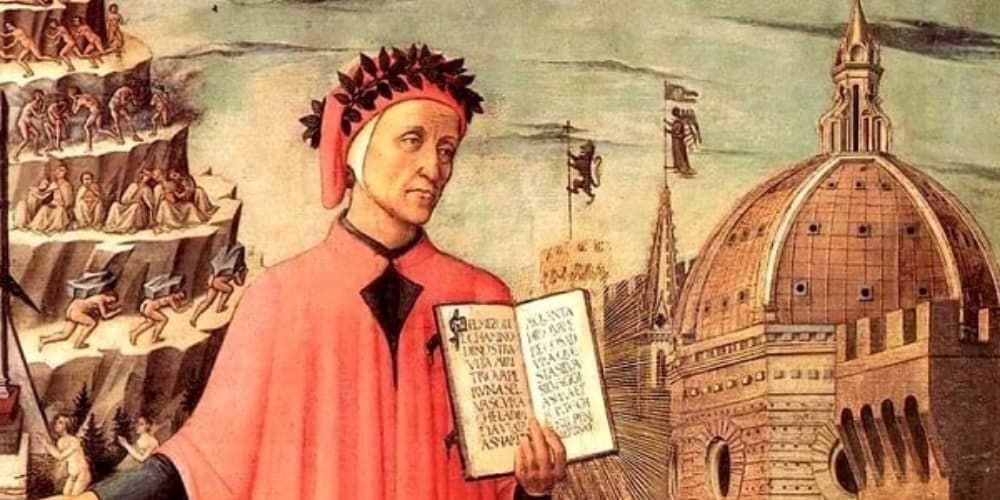
M: Maestro, today you’re speaking to a global audience, far beyond the Pillars of Hercules and the limits of the world you knew. Which verses would you recite to the world?
D: Well, to all of you who come from beyond the Pillars of Hercules, I dedicate the final four lines that close Inferno:
salimmo sù, el primo e io secondo,
tanto ch’i’ vidi de le cose belle
che porta ’l ciel, per un pertugio tondo.
E quindi uscimmo a riveder le stelle.
These verses capture the joy of those who, after the deepest darkness, glimpse light and stars again. A message for everyone: there is always a way out.
M: Thank you, Maestro. Now I’d love to talk about your homeland. What did Italy look like through your eyes back then?
D: A mosaic of cities, each proud and fiercely protective of its towers. There was no “Italy”, but you could already feel an invisible bond, made of art, language, and landscapes.
The Comedy survives because it’s not a book about the Middle Ages, it’s a book about being human. I put into verse the same things that still keep people awake at night: the fear of making mistakes, the desire to be loved, the need to make sense of what happens.
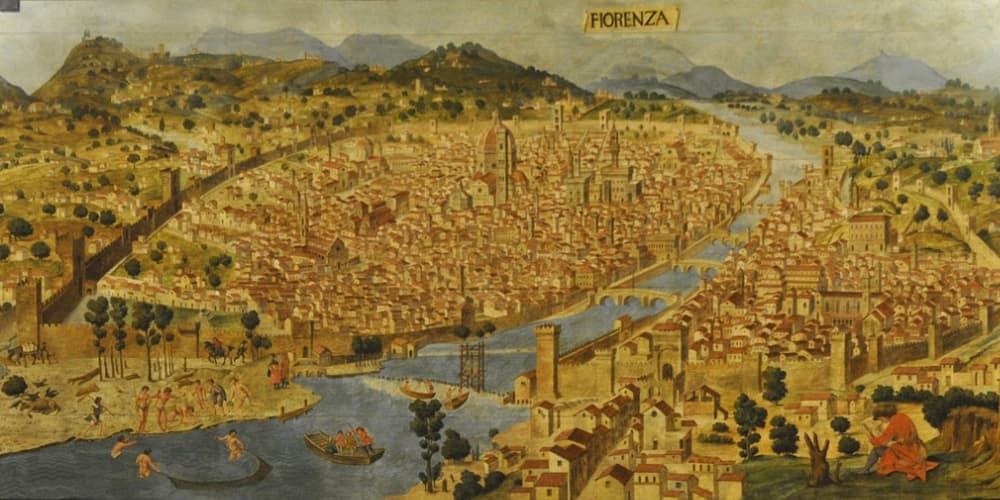
M: And your beloved Florence? Tell us something about it back then that we can’t see anymore today.
D: It truly was a “city of towers”: over a hundred towers from rival families pierced the sky, like medieval skyscrapers. Many were lowered or disappeared; today only traces remain. In my time, the skyline wasn’t the dome, but a forest of stone telling stories of pride and power.
M: And what was your favorite place in Florence back then?
D: I’d say the Baptistery of San Giovanni: “my beautiful San Giovanni”, where I was baptized. It was the religious and civic heart of the city, where every new life began.
M: And now?
D: Today, if I could choose, I’d linger between Santa Maria Novella and the streets of the historic center. There, the ancient and the modern shake hands, and I could hear every language in the world spoken, without ever losing the sound of Italian.
M: Is there a place in Italy you never saw but would love to visit?
D: I never truly knew the South or the Islands as you do. I’d be curious about Sicily, with its real volcanoes, not just allegorical ones, and Sardinia, a wild land rich in spirituality, where the rocks seem carved from an ancient song. I’m sure I would have found many Infernos and Paradisos there, too.
M: Your exile is legendary. What’s the coolest place you stayed?
D: My exile is a bittersweet memory. Still, I discovered enchanting places, and above all, I loved Verona. Cangrande della Scala hosted me there for seven years, and the city was a perfect refuge: bridges, rivers, generous lords. If you go there walk around the Arena and enjoy a glass of Amarone in my honor. A tip? Climb the Torre dei Lamberti for a view that once inspired my skies.
M: And today’s Italy, have you seen what it’s become?
D: I have. And I must say: you’re still great at arguing about everything, from soccer to coffee, but you’re more united than you think. Today’s Italy has found what I was searching for: language has become a bridge, art has become a journey. And when an American studies Italian to understand the Comedy, I think: “Mission accomplished.”
M: Last, personal question. What would you visit again if you could return to Italy for a weekend?
D: I’d return to Florence, of course (sighs). But I’d also stop to see how far my “country of the soul” has come. Rome, Naples, Venice, Matera… each city is a new canto. And perhaps even you, Madonna Lisa, might find it nice to smile a little more walking those streets.
M: Maybe we’ll try it together, Maestro.
About the author
Written on 25/03/2026
Monna Lisa
I escaped the Louvre to return to my true home: Italy. Today, I travel across the country’s most beautiful places, sharing their stories with the world through a curious eye and a modern voice. Follow my adventures on Instagram @monnalisaofficial and on my podcast Visit Italy with Monnalisa.

Monna Lisa
Monna Lisa meets Dante. A conversation between history and language, past and present, with a touch of irony and poetry.