

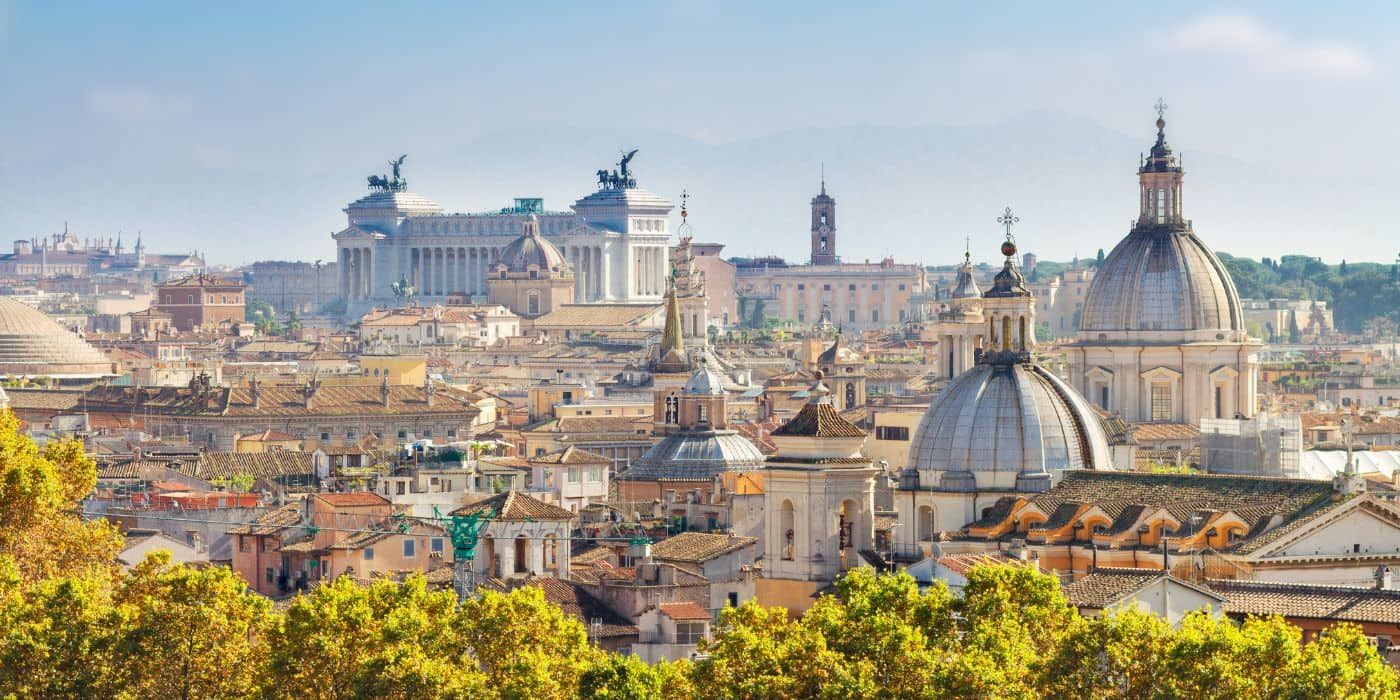

When we think of a holiday in Rome, the first image that comes to mind is often one of long lines outside the Colosseum and crowded halls inside the Vatican Museums. And yet, there is another Eternal City, quieter, more surprising, that reveals itself only to those who know where to look.
It’s the Rome of hidden museums loved by locals, places that rarely make it into the most popular guidebooks but are now returning to the spotlight among those who experience the city every day.
And it’s precisely within these spaces that one of the most compelling travel trends is taking shape: a new way of experiencing museums, away from the crowds and closer to something truly authentic.

Why Rome is filled with lesser-known museums
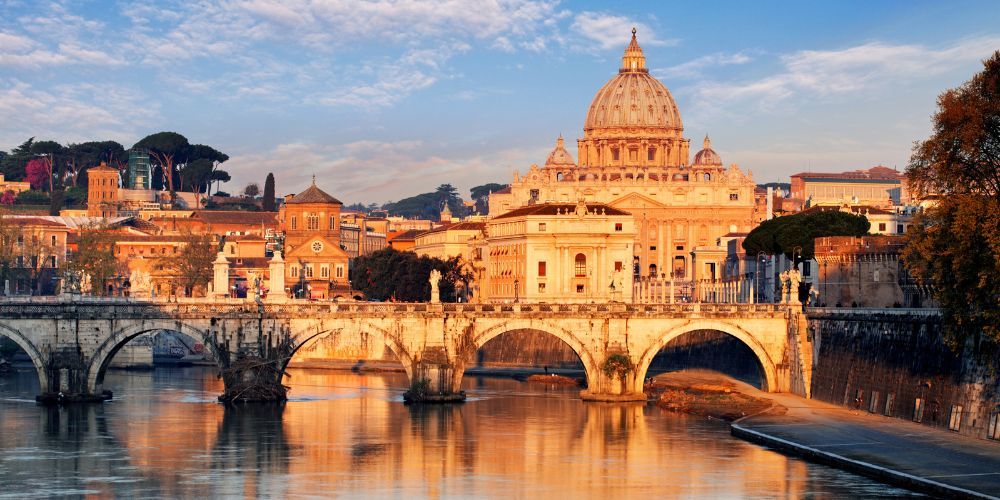
Rome is not a city like any other, it is a continuous layering of eras, visions, private collections turned public, and spaces reinvented over time.
What’s fascinating is that many of Rome’s lesser-known museums were born precisely from this process: donations, noble residences, former industrial sites transformed into cultural spaces. They were never designed for mass tourism, but to preserve stories and identities.
Today, as more and more travelers seek meaningful, place-based experiences, far from the logic of quick, surface-level visits, Rome’s hidden museums have become the perfect choice. Not just to avoid the crowds, but to truly connect with the city and experience it like a local.
Centrale Montemartini, a dialogue between archaeology and industry
Originally built as Rome’s first public power plant along Via Ostiense, Centrale Montemartini is one of the most striking examples of industrial conversion into a cultural space, and you feel it the moment you step inside.
In the vast Machine Hall, among turbines, diesel engines, and a monumental steam boiler, ancient Roman statues suddenly appear. Their refined white marble seems almost heightened by such an unexpected setting, creating a powerful visual contrast.
The exhibition traces the development of the city from the Republican age to the late Imperial period, through artifacts uncovered during excavations between the late 19th and early 20th centuries. But this is more than a historical journey, it’s the way these elements coexist that makes the experience truly unique.
Among the most remarkable works are the large hunting mosaic from Santa Bibiana, the sculptural group from the Temple of Apollo Sosianus, and the colossal acrolith of the goddess Fortuna from Largo Argentina.
It’s one of those hidden museums in Rome that stays with you, precisely because it defies expectations.
You’ll find it at Via Ostiense 106. It’s open from Tuesday to Sunday until 7 PM (last entry one hour before closing; on December 24 and 31, it closes at 2 PM). The best time to visit is in the morning, when natural light filters into the industrial spaces, enhancing the contrast between metal and marble.
5. Museo Barracco, a journey through civilizations in an intimate setting
In the very heart of Rome, just steps from Campo de’ Fiori, lies a place that feels completely detached from the city’s rhythm.
The Barracco Museum was born from the passion of a single man, Giovanni Barracco, who devoted his life to collecting works from different civilizations. The result is a collection that spans millennia and geographies, from Egypt to Mesopotamia, from Greece to Rome.
Today, this remarkable collection is housed in the Farnesina ai Baullari, an elegant 16th-century building designed by Antonio da Sangallo the Younger. It’s precisely this intimate scale that makes the museum so special.
Forget the crowds: here, you move slowly, almost instinctively, from one civilization to another. From Assyrian reliefs once adorning the palaces of Nineveh, to Cypriot artifacts (rare in Italian museums) such as the polychrome votive chariot or the head of Heracles.
Greek art is represented through works linked to the school of Polykleitos, while Roman art emerges in more personal details, like the delicate portrait of a young member of the Julio-Claudian family. The journey concludes with a polychrome mosaic from the first Basilica of St. Peter.
Perfect for a quiet pause in the heart of the Eternal City, the museum is located at Corso Vittorio Emanuele II 166/A and is open from Tuesday to Sunday until 6 PM (last entry 45 minutes before closing; on December 24 and 31, it closes at 2 PM).
4. Palazzo Altemps, when a collection becomes a story
Palazzo Altemps is not just an archaeological museum, it’s a layered narrative of noble families, private collections, and artworks once dispersed and later rediscovered.
Built in the 15th century and later owned by the Altemps family, the palace now hosts a key section of the National Roman Museum. What makes it truly distinctive is the way the works are displayed: not as isolated pieces, but within a setting that reflects the taste and vision of the collectors themselves.
Among the most important groups is the Boncompagni Ludovisi collection, featuring renowned sculptures such as the Dying Gaul, Orestes and Electra, and the so-called Ludovisi Throne. Once part of a villa that no longer exists, these works find a new narrative within these rooms.
Alongside them, the Altemps, Mattei, and Del Drago collections evoke a time when art was an integral part of lived spaces. Visiting Palazzo Altemps means stepping into a less obvious Rome, one that reveals multiple layers at once.
The museum is located on Via di Sant’Apollinare and is open from Tuesday to Sunday, from 9:30 AM to 7 PM (last entry at 6 PM).
3. Hendrik Andersen House Museum, the utopia of an artist
The Hendrik Andersen House Museum, built between 1922 and 1925 as both the home and studio of the Norwegian-born, American-naturalized artist, was conceived from the very beginning as a total work of art.
On the ground floor, the studio and gallery host monumental sculptures and ambitious projects tied to Andersen’s most visionary dream: the World Center of Communication, an ideal city dedicated to art and culture.
Upstairs, the atmosphere shifts. Here, the former living quarters have been transformed into an exhibition space, where permanent works alternate with temporary exhibitions exploring the dialogue between Italian and international artists.
It is one of Rome’s most unusual hidden museums, offering not only access to an artist’s work, but also a glimpse into his mind and creative vision.
Located at Via Pasquale Stanislao Mancini 20, the museum is open until 6:45 PM (closed on Mondays and December 25, except for special openings promoted by the Italian Ministry of Culture; open on Easter and Easter Monday). It’s a must-visit for those looking for something truly different.
2. Galleria Spada, the space that deceives the tye
Galleria Spada houses a refined collection of Baroque paintings, featuring works by Guido Reni, Guercino, and Artemisia Gentileschi. Intimate in scale and elegantly arranged, it still preserves the atmosphere of a 17th-century picture gallery.
And yet, it is in the garden that something truly unexpected happens. Borromini’s famous Perspective, created in 1653, is a perfect illusion: a colonnade that appears to stretch for dozens of meters, but is in fact much shorter. A masterful play of proportions and mathematical calculation that continues to astonish visitors to this day.
It is one of Rome’s hidden museums that preserves one of the most spectacular Baroque illusions in the city.
Located in Piazza Capo di Ferro, it can be visited almost every day (closed on Tuesdays, December 25, and January 1, except for special openings promoted by the Italian Ministry of Culture).
1. Leonardo da Vinci Museum, the genius takes shape
Just a few steps from Piazza del Popolo, Leonardo da Vinci’s genius moves beyond theory and becomes a tangible experience. His ideas no longer remain on paper, but take shape as machines, structures, and mechanisms that can be observed up close, understood, and imagined in motion.
The museum was created precisely with this goal: to tell the story of Leonardo as an inventor and engineer through models that faithfully interpret his original drawings. This approach makes the visit engaging, allowing visitors to step into his thought process as much as into his creations.
The machines on display span a wide range of fields, from flying devices to war machines, from mechanical systems to civil engineering solutions. More than 50 interactive models, built either to scale or at full size, bring Leonardo’s complexity and vision to life.
But that’s not all. The exhibition is enriched by faithfully reproduced Leonardo codices, anatomical tables, life-size drawings and paintings, as well as explanatory panels and multimedia stations that guide visitors through a comprehensive journey.
Audioguides available in multiple languages and video rooms featuring educational documentaries make the experience both accessible and immersive.
Located at Piazza del Popolo 12/a, the museum is open daily from 10:00 AM to 8:00 PM (last entry at 7:15 PM). A must-visit destination for discovering Leonardo’s genius in a direct and surprising way.
About the author
Written on 29/04/2026
Flavia Cantini
Freelance Content Writer with over a decade of specialized experience in tourism, culture, and creative/artistic activities. I assist magazines, web agencies, and end clients in managing blogs and crafting standout articles

Flavia Cantini
Rome beyond the usual routes: hidden museums, unique atmospheres, and places locals choose every day. Do you really know them?