
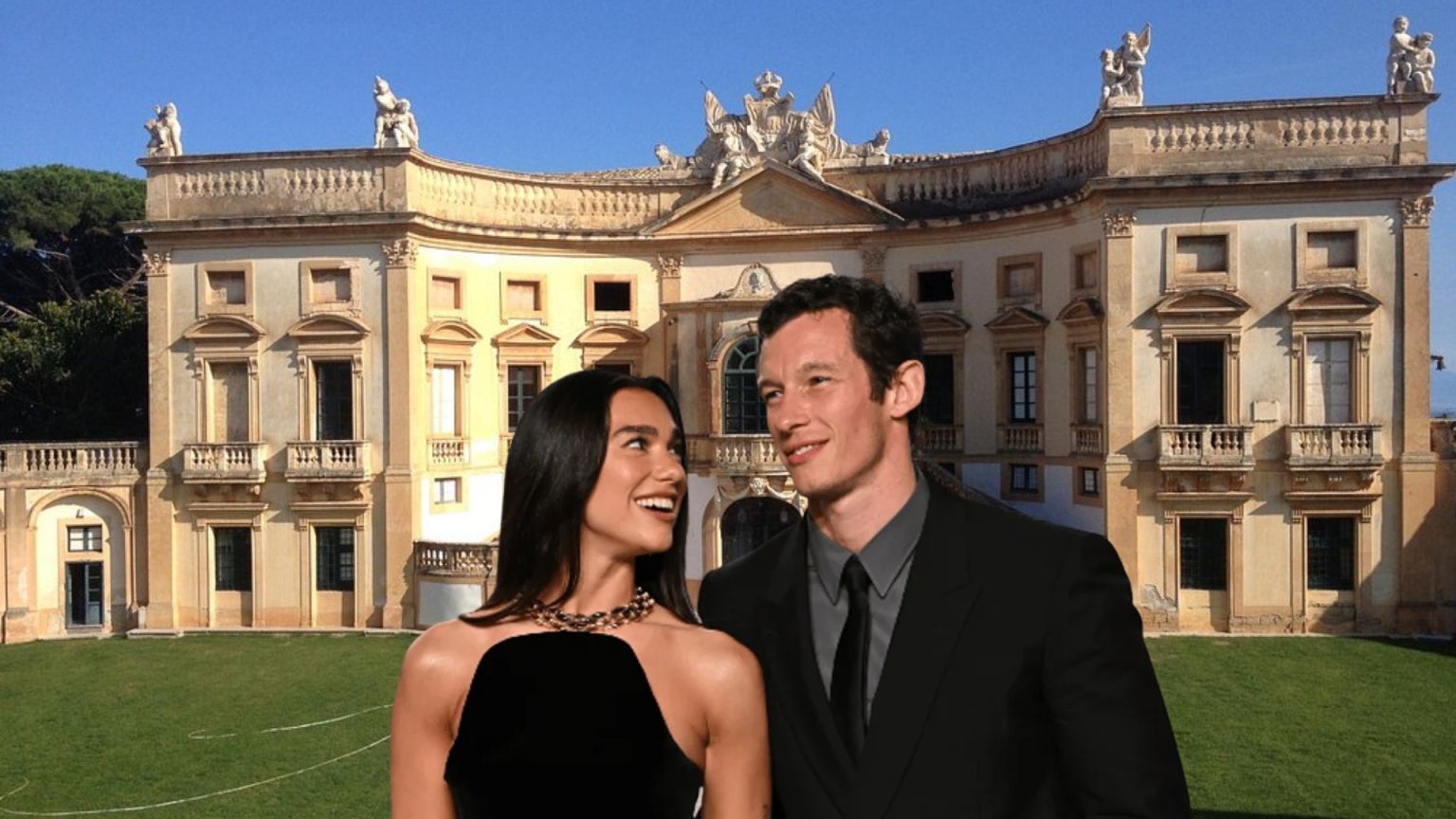

Dua Lipa and Callum Turner are tying the knot in Sicily, and among the locations chosen for their wedding weekend (5-7 June) is Bagheria, the storied town of aristocratic villas just outside Palermo.
News of the nuptials offers the perfect excuse to (re)discover a place that has long enchanted writers, filmmakers, photographers and designers. From fairy-tale mansions to the most picturesque corners, here’s how to make the most of Bagheria – even if your invitation hasn’t arrived.

What to see in Bagheria, the town that stole Dua Lipa’s heart
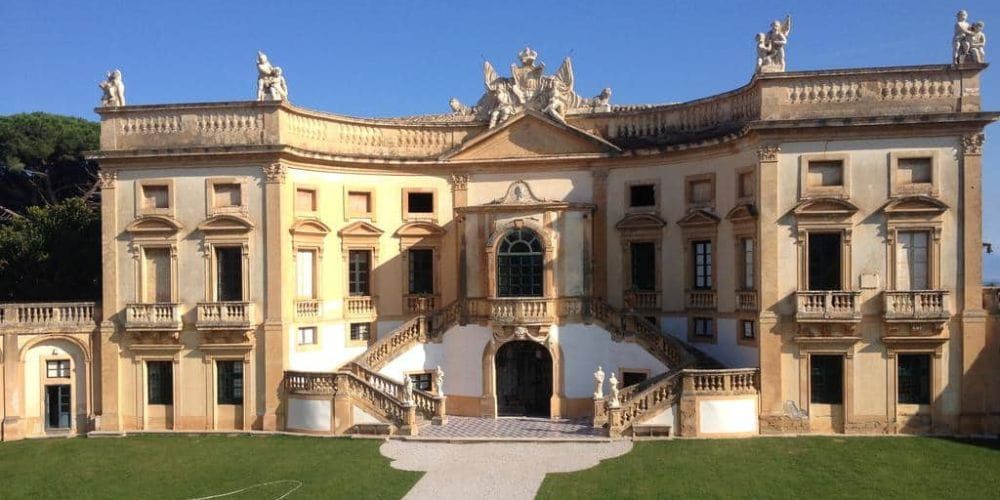
Dua Lipa is just the latest in a long line of artists to fall for Bagheria – known locally as Baarìa – Sicily’s baroque gem just 13km from Palermo.
Immortalised in films, novels and fashion campaigns, this once-aristocratic holiday retreat has shaped a vivid image of Sicilian identity in the collective imagination.
Bagheria’s allure has attracted generations of travellers, writers, artists and designers, from Goethe to Dolce & Gabbana.
But it is the silver screen that has truly sealed its status as a cinematic icon. Countless films have been shot here, most notably Giuseppe Tornatore’s Oscar-nominated Baarìa (2009), a sincere love letter to the director’s hometown.
Bagheria’s most iconic sights are its extraordinary villas: the surreal statuary of Villa Palagonia; Villa Cattolica and its contemporary art collection dedicated to painter Renato Guttuso; and Villa Valguarnera, Dua Lipa’s own choice for her Sicilian celebration.
Stroll along Corso Umberto I, the main street, for aperitivi and arancine (stuffed rice balls) “accarne” (with ragù) or “abburro” (with béchamel). And don’t miss the coastline: Capo Zafferano and the Spiaggia dei Francesi are favourite escapes for locals.
What to see in Bagheria:
– Villa Valguarnera
– Villa Palagonia
– Villa Cattolica
– Palazzo Butera
– Chiesa Madrice
– Chiesa del Santo Sepolcro
– Corso Umberto I
– Capo Zafferano
– Spiaggia dei Francesi
Where is Dua Lipa Getting Married? More on Villa Valguarnera
@artemest Celebrating a desire for beauty in our everyday lives with the fascinating Villa Valguarnera, owned by one of the most important aristocratic families in Sicily. With its voluptuously curved wings, concave facades, and circular forecourt it is one of the most splendid villas in Italy, lying a short distance from Palermo in the tiny town of Bagheria. The villa was designed in 1712 by the architect Tommaso Napoli. @Giacomo Vespo #Artemest #YesArtMatters #VillaValguarnera #Bagheria #Sicilia #Sicily #Italy #ItalianBeauty #VisitItaly #Architecture #Villa #LuxuryVilla original sound - Artemest
For her Sicilian wedding, British pop star Dua Lipa has chosen Villa Valguarnera, a neoclassical masterpiece completed in 1783, perched on the so-called montagnola, a hill that offers sweeping views over Bagheria.
The villa’s architecture, with its ascending forms, is said to evoke a journey towards the heavens.
Villa Valguarnera is no stranger to the spotlight: it starred in a Dolce & Gabbana advert directed by Giuseppe Tornatore, scored by Ennio Morricone, and featuring none other than Sophia Loren.
Its grand halls and gardens have also served as the backdrop for a host of film and television productions, including Netflix’s recent adaptation of The Leopard (2025), Niccolò Ammaniti’s post-apocalyptic series Anna (2021), and Valeria Golino’s The Art of Joy (2024).
Of all Bagheria’s historic residences, it is perhaps the one that best captures the city’s grand, theatrical spirit.
Encircled by monumental gardens, the villa was once a summer retreat for Palermo’s aristocracy and has welcomed royalty, artists and illustrious travellers over the centuries, including Maria Carolina of Austria, Queen of Naples and Sicily.
Related story – 4 hidden gems in Sicily locals love
What to See in Bagheria: The Historic Centre
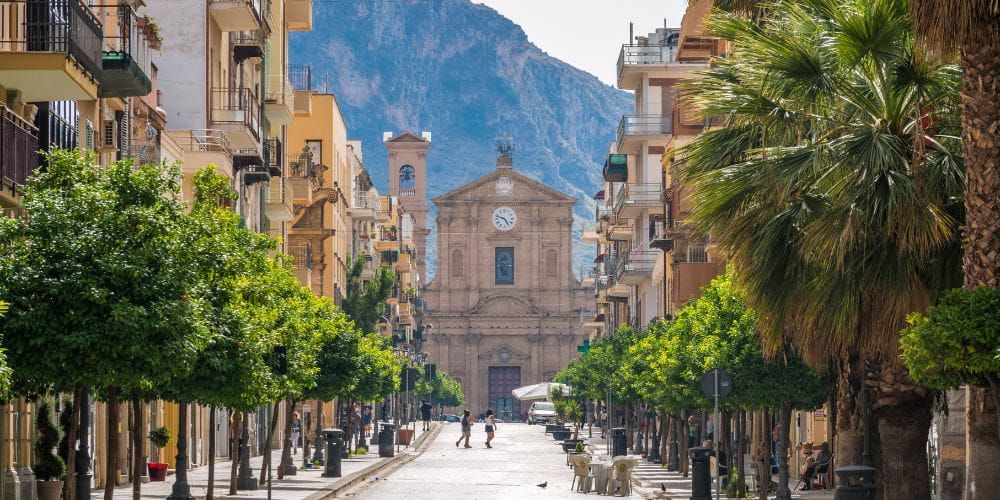
Bagheria’s historic centre is a maze of streets, churches and noble palazzi, where religious, civic and aristocratic life still intertwine within the same urban fabric.
At its heart lies Piazza Vittorio Emanuele III, dominated by the Chiesa della Natività di Maria, an 18th-century landmark commissioned by the influential Branciforte family. With its neoclassical façade, the church is one of Bagheria’s most recognisable sights, a majestic backdrop to everyday life in the piazza.
Nearby, you’ll find the neo-Gothic Chiesa del Santo Sepolcro and the grand Palazzo Butera, an aristocratic residence that stands as one of the cornerstones of the town’s architectural heritage.
Villa Palagonia, The "Villa of the Monsters" in Bagheria
Villa Palagonia is a landmark of Sicilian Baroque suburban architecture and an almost dreamlike setting.
Eccentric, strange, superb, it was built in 1715 by Prince Don Ferdinando Gravina and Bonanni in Palagonia, and throughout the 1970s it was one of the favourite destinations of travellers on the Grand Tour.
The characteristic that makes the villa so strange but fascinating is the numerous statues scattered on the walls: in hard stone, they represent figures of all kinds, dragons, snakes and scary animals, knights, dames, musicians, and caricatures.
The villa’s bizarre menagerie was the idea of Francesco Ferdinando, the prince’s grandson, who, famously uncomely, took revenge on fate by immortalising his friends as comic figures.
The villa is accessed through an arch flanked by statues of warriors.
The Hall of Mirrors, with its coloured marble sections, houses the ancestors of the family and the kings of all Europe. The entrance to the hall is lined with mirrors, adorned with paintings of fantastic birds, fruit, and flowers. The remaining rooms contain frescoes on mythological subjects.
Butera Palace
.jpg "Cosa vedere a Bagheria: Palazzo Butera")
Palazzo Butera is Bagheria’s oldest grand residence.
In 1658, Giuseppe Branciforti – Prince of Pietraperzia and Leonforte and a Knight of the Golden Fleece – retreated here in self-imposed exile after abandoning hopes of claiming the Sicilian throne. The palace’s entrance still bears an inscription commemorating this chapter: “O Corte a Dio”.
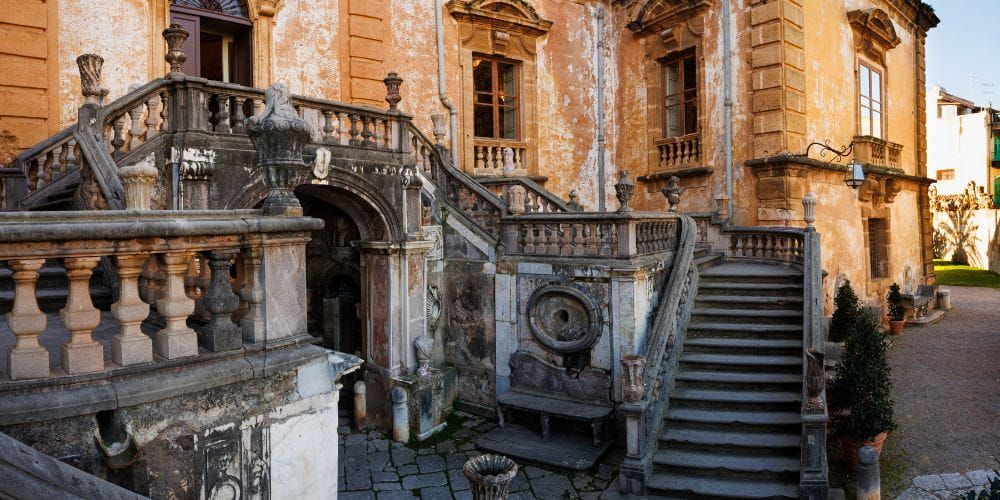
Inside, opulent salons decorated with frescoes and glittering crystal chandeliers recall a vanished era of aristocratic balls, with ladies and gentlemen gliding in rustling taffeta – scenes reminiscent of Visconti’s iconic ballroom sequence in The Leopard (1963).
The villa’s terraces, lined with wrought-iron railings and antique majolica tiles, are all well preserved. Each 14th of July, they offer the perfect vantage point for the spectacular fireworks of the Festino di Santa Rosalia.
Related story – 3 days in Palermo
Villa Cattolica and Bagheria’s Contemporary Art Connection
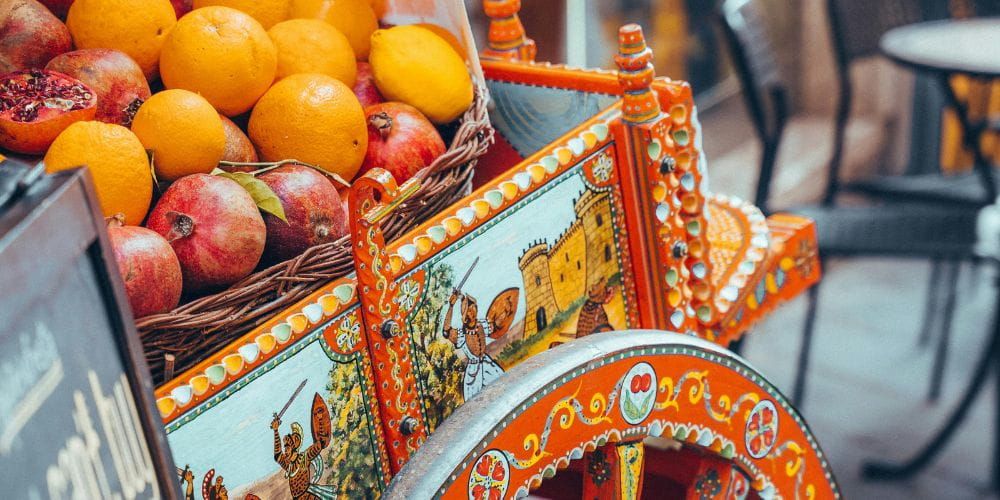
Villa Cattolica is home to one of Bagheria’s most significant cultural sites: the Museo Renato Guttuso.
Housed in this elegant 18th-century estate, the gallery tells the story of Bagheria’s relationship with contemporary art and honours one of its most celebrated sons, Renato Guttuso, whose monumental tomb lies in the villa’s gardens.
Inside, you’ll find works by Guttuso and artists like Calì and Quattrociocchi, permanent collections, rotating exhibitions, and a museum dedicated to the iconic Sicilian carts.
Above all, Villa Cattolica captures the inventive spirit that has always run through Bagheria, a provincial town whose cinematic, artistic and literary heritage has shaped the image of Sicily in people's minds.
The Best Beaches near Bagheria, Sicily
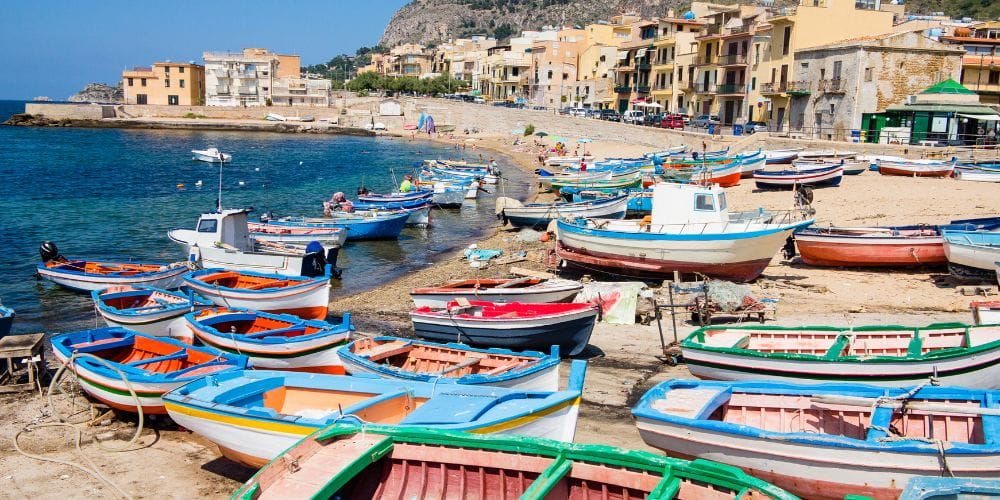
Just minutes from Bagheria, the coastline stretching towards Santa Flavia and Aspra is a medley of tiny harbours, colourful seafront houses and seafood restaurants. The contrast between grand architecture, local folklore and the azure Mediterranean becomes increasingly clear.
Capo Zafferano and Baia dei Francesi are among the most stunning spots for a swim. The first is a scenic promontory halfway to Palermo, famed for its caves and postcard-perfect corners, such as Arco Azzurro and Cala delle Tre Piscine. The latter is a wild, unspoilt beach ringed by lush vegetation, where sunsets are nothing less than spectacular.
Bagheria’s best beaches and nearby escapes:
– Capo Zafferano
– Tre Piscine
– Spiaggia dei Francesi
– Spiaggia di Santa Flavia
– Caletta di Sant’Elia
– Spiaggia del Sarello
– Spiaggia di Ponente
– Spiaggia di Mongerbino
Related story – The Sicilian filming locations of Christopher Nolan’s The Odyssey
How to Get to Bagheria from Palermo
Bagheria is easily reached from Palermo in about half an hour via the A20 Palermo–Messina motorway, or by regular trains from Palermo’s central station.
The “Falcone e Borsellino” airport is also well connected with transfers and shuttle services.
Once in town, the historic centre is best explored on foot, but a car is the most convenient option for venturing further afield and reaching the area’s beaches.
Related story – How to visit Palermo with public transport
Book Palermo Guided TourWhat to do in Bagheria – FAQs
@glanzetta_ La Città delle Ville Bagheria, PA 1. Villa Palagonia 2. Villa Valguarnera 3. Villa Trabia 4. Villa Cattolica 5. Palazzo Butera 6. Villa Rammacca 7. Palazzo Villarosa 8. Palazzo Cutò #bagheria #palermo #sicilia #drone Love Theme (From "Cinema Paradiso") - Ennio Morricone
Is Bagheria, Sicily, worth visiting?
Yes, Bagheria is well worth a visit, especially for those interested in Sicilian history, architecture, and culture. Famed for its extraordinary Baroque and neoclassical villas, the town near Palermo also boasts a lively historic centre, contemporary art at the Museo Guttuso, and easy access to some of the region’s most beautiful beaches.
What to do in Bagheria?
Visit the town’s famous villas, including Villa Palagonia, Villa Valguarnera and Villa Cattolica, home to the Guttuso Museum. Stroll through the historic centre, try Sfincione Bagherese, the local focaccia, and head to nearby coastal spots such as Capo Zafferano and Mongerbino for swimming and sea views.
Was The Godfather filmed in Bagheria?
No, The Godfather was not filmed in Bagheria. The actual filming locations were primarily in Savoca and Forza d’Agrò, two villages in the province of Messina, as well as in Palermo and other areas of Sicily and the United States. Bagheria, however, has appeared in other notable films, such as Giuseppe Tornatore’s Baarìa and Netflix's The Leopard.
About the author
Eleonora Monaco
Eleonora Monaco, web editor. I come from Sicily, I love art, culture and walk around cities like a tourist. One of the most beautiful things in life is to be always curious. I speak English, French and Spanish ( and of course Sicilian)

Eleonora Monaco
Dua Lipa is getting married in Bagheria, Sicily. The wedding of the year is the perfect excuse to discover this gem near Palermo. Here’s what to know.