
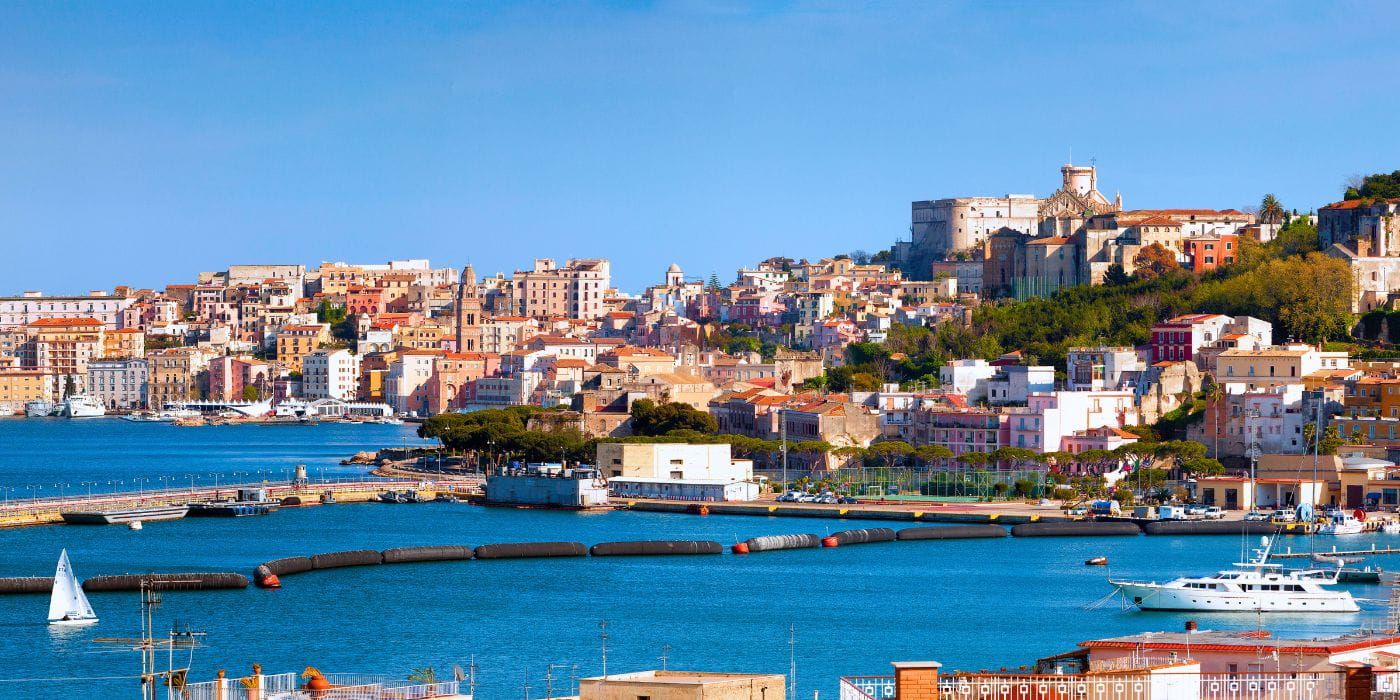

In Italy there's a special vibe in the air when June comes, one that smells just like holidays: the smell of sea shimmering under the first warm sunshine, the blooming Mediterranean greenery, and that irrepressible wish to escape from the routine and indulge in a regenerating getaway.
June is the month when Italy dresses in its most beautiful colors, offering travelers long, sun-drenched days, warm temperatures without too much heat, breathtaking landscapes, villages and cities bustling with events and so many fantastic things to do and to discover. Above all, without the overcrowding of July and August.
Whether you're dreaming of diving in the sea and dream beaches, a hiking vacation in the green mountains, or a trip that combines food and wine, art, and culture amidst historic squares and towns, June 2026 is the time to visit the world’s most extraordinary country.
You don't have to look far to join an unforgettable experience: in this guide we've chosen 10 unmissable destinations for June that will make you fall in love with Italy. Are you packing your bags yet? Get inspired and find your best destination!
10 Italian destinations for your holidays in June 2026

June 2, 2026 marks an important milestone for Italy, both historically and culturally: exactly 80 years have passed since the official establishment of the Republic! An event to remember for everyone, Italians and non-Italians alike, because this date embodies the key value of freedom.
And this is precisely the feeling this month conveys as we approach summer: freedom, lightheartedness, a desire for new beginnings yet without any stress. What better way to celebrate all this than a vacation?
We'd like to suggest 10 Italian destinations for holidays in June, for a journey through nature, history, traditions, and flavors, enriched with useful tips to make the most of each destination.
Discover the best travel destinations in Italy in June with us. In this guide:
- we'll visit incredible regions rich in beauty (Molise, Apulia);
- we'll visit spectacular cities of art and culture (Parma, Cremona, Venice);
- we'll visit the wonders of the coast (Gaeta, Cilento, Pesaro);
- we’ll visit gems between mountains and hills (Lake Garda, Passignano sul Trasimeno).
10. Gaeta: a charming coastal pearl of Lazio
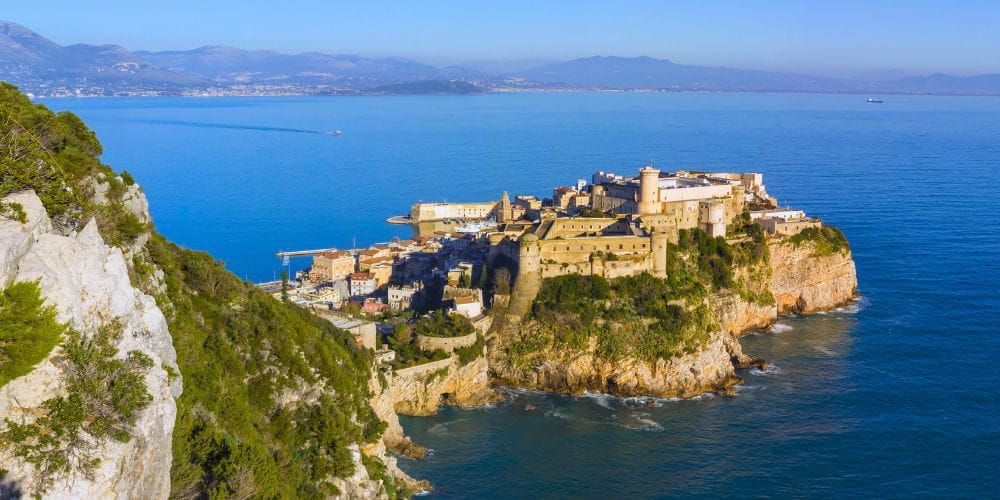
Risen over the imposing profile of Monte Orlando overlooking the sea, Gaeta is one of the most fascinating destinations on the Lazio coast, combining millennia of history and natural landscapes of rare beauty in one single setting. And June is the perfect month to discover it.
This ancient seaside city, once a beloved residence of the Roman emperors, today offers a complete travel experience that satisfies both lovers of cultural tourism and those seeking seaside relaxation.
The beating heart of this destination is the medieval district of Gaeta Vecchia. Strolling through its picturesque alleys and centuries-old arches, you will get before the majestic Angevin-Aragonese Castle. Not far away, sacred art reveals the masterpieces it has bestowed on these lands, among which stands out the Golden Chapel of the Sanctuary of the SS. Annunziata, a gem of the Renaissance. We also recommend visiting the Temple of San Francesco and the Cathedral of Saints Erasmo, Marciano and Santa Maria Assunta.
For those seeking touch with nature, the Sanctuary of Montagna Spaccata and Grotta del Turco are essential stops: these wonders can be found by exploring the Monte Orlando nature reserve, where the rock opens up into spectacular fissures that plunge into the Tyrrhenian Sea, offering evocative trails of faith and legend. The coastline boasts numerous beaches, including the famous Serapo.
A Gaeta experience is not complete without immersing yourself in the local flavors. The signature dish of the local cuisine is Tiella, a perfect blend of sea and land, a savory pie made with octopus and vegetables.
9. Parma: here’s the authentic Italian Ville Lumière
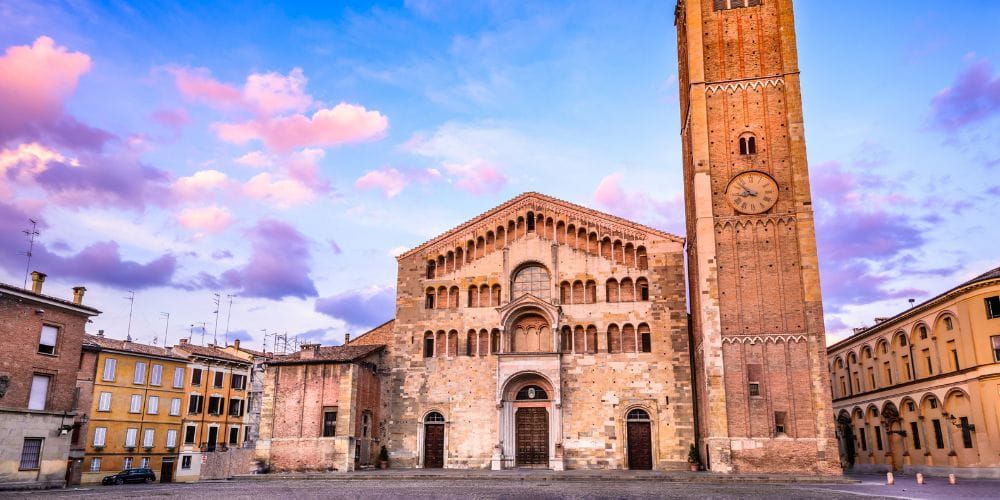
In the heart of Emilia-Romagna's famous Food Valley, lies an elegant and authentic Italian Ville Lumière. We are in Parma, birthplace of Giuseppe Verdi and a city where aristocratic sophistication has always blended harmoniously with a love for the arts and culture.
Visiting Parma, perhaps throughout a weekend, is an invitation to follow an itinerary that intertwines monumental art, excellent musical traditions, and a unique food and wine heritage, qualities that have earned it the title of UNESCO Creative City.
The journey to discover Parma's historic centre begins in Piazza Duomo, a majestic architectural complex housing the Cathedral of Santa Maria Assunta and the pink marble’s Baptistery. Don't miss the dome frescoed by Correggio, which offers a celestial view of the city's artistic wonders. Another major attraction is the beautiful Teatro Regio, one of the main opera houses in Italy.
An iconic stop for exploring Parma's beauty is the Pilotta Monumental Complex. Inside this imposing palace, the Farnese Theatre built entirely of wood, a masterpiece of theatrical engineering that takes visitors to the Baroque atmosphere of the Farnese courts.
Among Parma's other museum attractions, we recommend checking out the Sant'Andrea Art Gallery, the Giordano Ferrari Puppet Museum, the Opera Museum, the House of Music and the House of Sound, and the ancient pharmacy of San Filippo Neri.
To experience the town with the awareness of a local, it's essential to also treat yourself to a regenerating break along the paths of the Parco Ducale, the city's “green space”, before delving into the Oltretorrente.
Parma is also, however, an Italian capital of taste: a complete experience requires a guided tasting of its typical products, from Prosciutto di Parma to Parmigiano Reggiano, excellences that can be appreciated both in the historic delicatessens in the centre and by attending dedicated festivals.
8. Molise: a bucolic land overlooking the sea
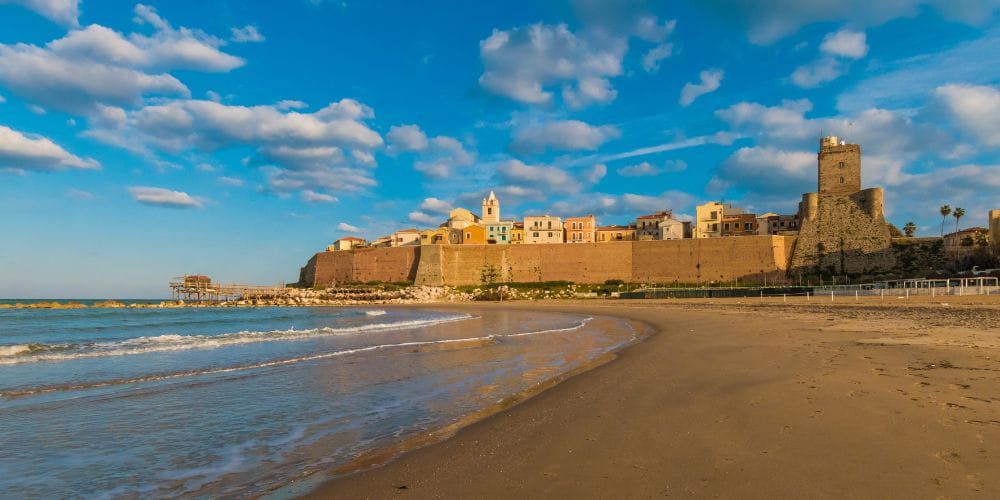
For travelers, Molise is perhaps one of the last secrets of the Bel Paese, a region where the bucolic countryside and the Apennine hills meet the lively Adriatic coast.
Characterized by a slow pace and landscapes in harmony between man and nature, this land offers an authentic and varied travel experience. An excellent starting point for discovering it is the coastal town of Termoli: its old town, enclosed by ancient walls that stand out against the blue sea, is a maze of alleys dominated by the Cathedral of Santa Maria della Purificazione and the majestic Swabian Castle.
To experience Termoli (and Molise) like a local, we suggest strolling along the trabocchi, the ancient fishing boats that dot the shore, before embarking on an adventure to the Tremiti Islands.
In June, this destination is particularly attractive for spending a few days by the seaside, enjoying the tranquility of a region still untouched by mass tourism and free from the excessive heat of late summer.
Moving inland, Alto Molise solemnly accompanies visitors on a discovery of its ancient traditions. Agnone, famous for the Pontifical Marinelli Foundry, allows visitors to witness the birth of bells using techniques that have remained unchanged for centuries. Other attractions await nearby, including Montedimezzo nature reserve and the Pietrabbondante archaeological site, a true immersion in Samnite history in a natural setting of rare beauty.
Among the most charming villages, yet Oratino stands out, one of the towns that participated in Luminous Destinations 2026, where stone carved by stonemasons adorns doorways and balconies like a testimony to timeless artisan excellence.
A trip through Molise is also a journey of sensations and pleasure, winding along the sheep tracks, ancient transhumance routes now perfect for trekking and cycling. The cuisine is also certainly worthy of tourists interest: regional specialties include white truffles, the prized cheeses of Capracotta, and the excellent extra virgin olive oil.
7. Cilento: the land that inspired Hemingway
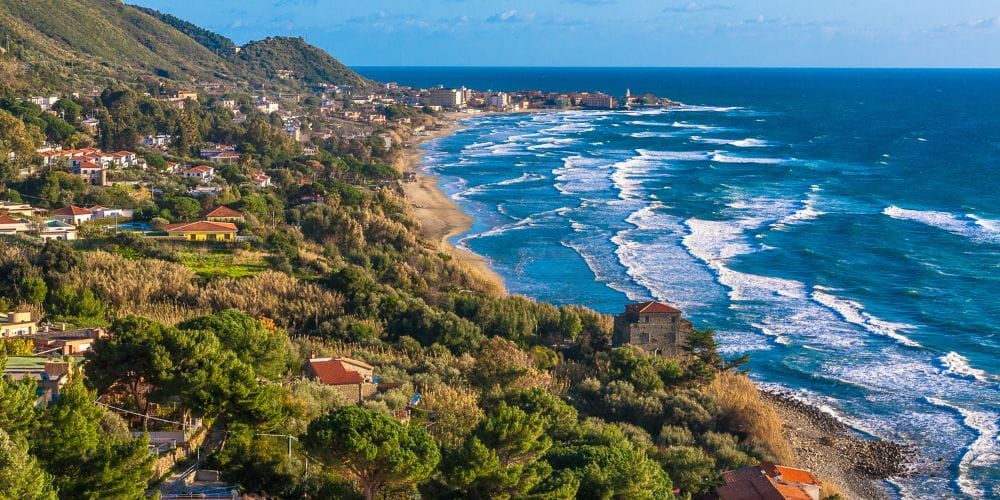
For travelers, Cilento is a mosaic of experiences, sensations, and breathtakingly beautiful landscapes, a surprising destination for those seeking a regenerating journey and willing to discover the most traditional and authentic side of Campania.
An interesting fact about Cilento concerns the deep connection with Ernest Hemingway, who spent long periods here in the early 1950s among the coastal fishing towns, finding inspiration for his masterpiece, The Old Man and the Sea.
But if literature enchants, conjuring up wonderful images into words, the reality is even better: here, the traveler can enjoy a varied and intense experience, from the region's characteristic rugged coastline to the bucolic glimpses of the hinterland.
Among the unmissable destinations on a Cilento itinerary there are seaside towns such as Castellabate, where you can visit the Castello degli Abati with the Belvedere San Costabile and the Sanctuary of Santa Maria a Mare, and Agropoli, with its Angevin-Aragonese Castle and the idyllic Bay of Trentova. Equally wonderful is Acciaroli, with its long sandy beaches and charming little harbor.
These enchanting seaside spots make a prelude to a visit to the majestic Paestum Archaeological Park, located in the Capaccio area, considered by many to be the "gateway" to this enchanting territory.
A trip to Cilento, however, also deserves a more intimate side, which you can find by exploring the hinterland: Orria, San Mango Cilento, Cuccaro Vetere, Ceraso, Laurino, and Teggiano, for many these are beloved places, but for curious tourists they are picturesque destinations found nowhere else.
We recommend including on your Cilento itinerary also Piano Vetrale, the village of murals where every wall becomes an open-air canvas, and Prignano Cilento, where you can discover the gastronomic excellence of drying white figs.
Cilento also boasts many locations perfect for outdoor activities, trekking, and camping. The most popular are the Alento River Oasis and the Calore Torrent Gorges.
6. Cremona: a monumental capital city of music
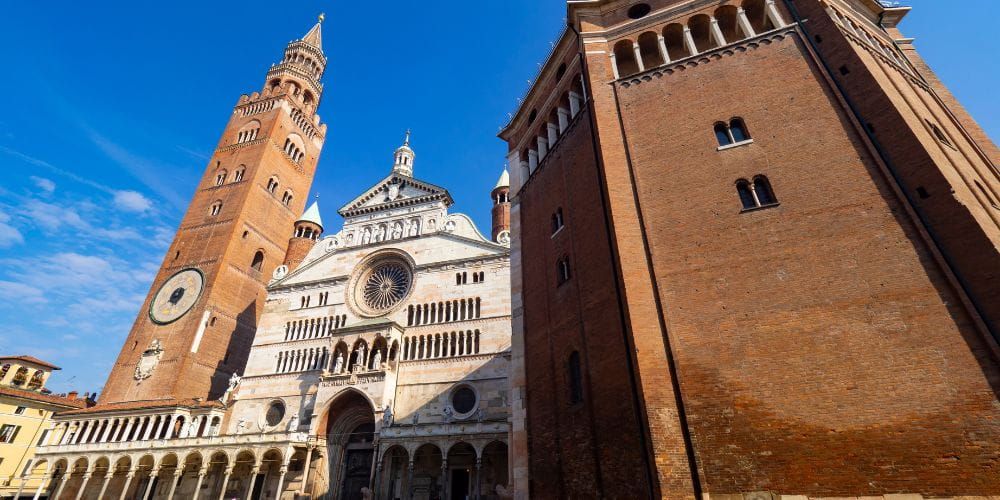
Nestled elegantly on the banks of the Po River, the city of Cremona is one of those destinations that captivates visitors with its innate elegance and true beauty. These are essential qualities for a monumental capital of music, the birthplace of the world's most famous and important violin.
Cremona is indeed famous for being the birthplace of Antonio Stradivari, one of history's most influential and iconic violin makers, and preserves a heritage of artisan know-how recognized by UNESCO. Exploring the city, you can still visit many violin-making workshops (there are over one hundred), small spaces of work, passion, and culture where time seems to pass at a different pace.
The beating heart of Cremona's city centre is the awesome Piazza del Comune, an architectural showcase of rare beauty where you can admire the Cathedral of Santa Maria Assunta and its Baptistery, the eighteenth-century loggia, the town hall, and the evocative Torrazzo, the iconic tallest brick bell tower in Europe (112 meters).
In addition to the magnificence of its monuments spanning the centuries from the middle ages to the modern era, Cremona offers a deep immersion in its musical culture with the Violin Museum, where you can admire priceless masterpieces. Also not to be missed are the Ponchielli Theatre, Piazza della Pace, Ala Ponzone Civic Museum and Natural History Civic Museum, and the San Lorenzo Archaeological Museum.
For travelers drawn to places of worship and seeking a tourism that combines culture, art, and faith, we also recommend a visit to the Church of San Michele Vetere and, above all, the Church of San Pietro al Po. Visiting this one feels like walking through an impressive gallery of sacred art, amidst prestigious baroque decorations on walls and ceilings, frescoes and paintings of great artistic value, and a marvelous monumental organ.
Exploring the alleys and squares of Cremona means discovering a city of refined art, which combines historical grandeur with a renowned gastronomic tradition. Among the typical products of the area here are two icons: torrone (nougat) and mustard.
5. Lake Garda: between nature and culture when spring blooms
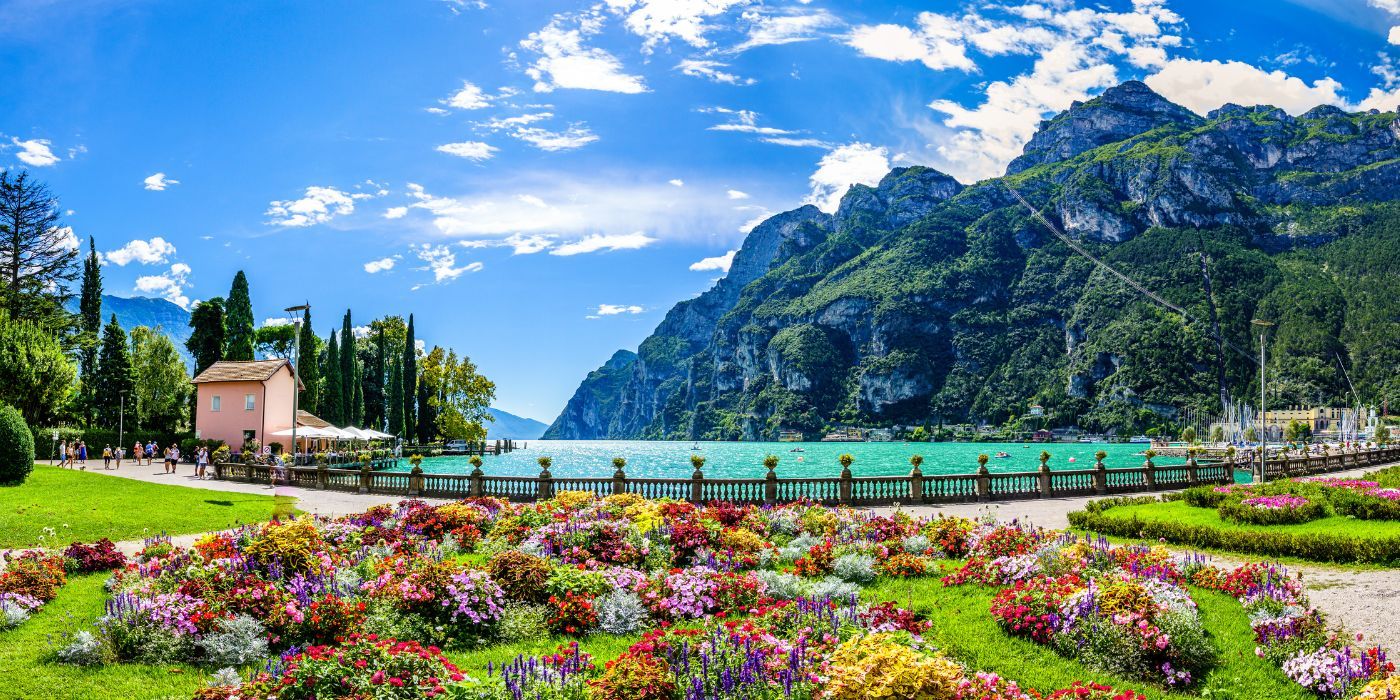
Lake Garda is one of the most versatile and spectacular places in Italy, an ideal destination for a June vacation filled with relaxation, nature, and culture. With its clear waters, historic villages, scenic trails, and mild climate, this lake captivates every kind of traveler.
In the south, Sirmione is one of the most enchanting towns: a peninsula suspended over the water, dominated by the Scaligero Castle and famous for its natural thermal baths. Strolling through its ancient alleys and stopping at one of the artisanal gelaterias is one of the most delightful experiences of the trip.
In the north, Riva del Garda offers breathtaking mountain views and a wide range of outdoor activities: climbing, windsurfing, hiking, or biking along the Ponale Trail. June is the perfect month for sports, with sunny days that aren’t yet too hot.
For culture lovers, the area abounds in museums, historic villas like Villa Feltrinelli, and the ancient lemon houses of Limone sul Garda, unique examples of lemon cultivation in an alpine environment, now transformed into open-air museums that tell the story of rural life in times past.
4. Pesaro: experience the coast like few others tell
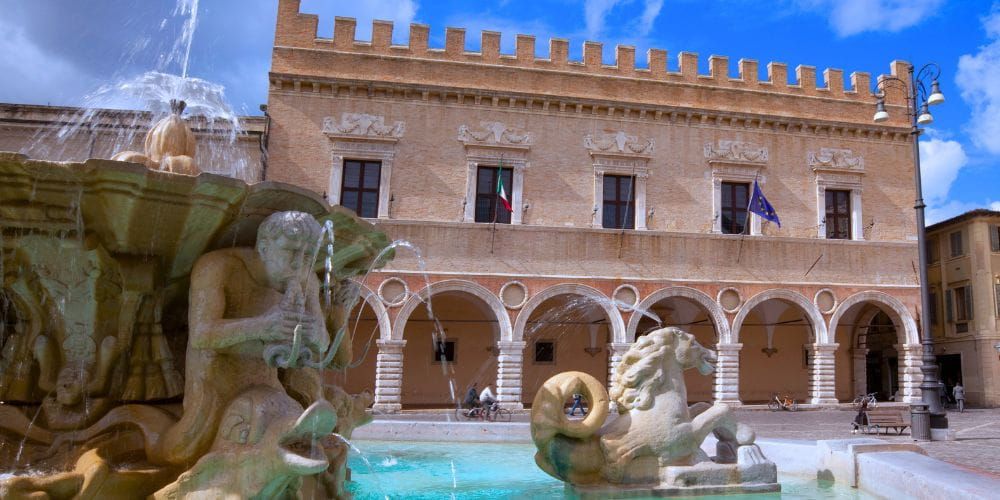
A refined former Italian Capital of Culture, on the northern coast of the Marche region lies a city capable of offering travelers the perfect balance between Adriatic liveliness and an extraordinarily prestigious historical heritage. This is Pesaro: for many, simply the seaside side of Urbino, but for others (including us) a place with its own authentic soul.
Pesaro is more than just a seaside destination, but a true ecosystem where art and nature constantly interact in the spirit of sustainability. The most notable example is the famous Bicipolitana, a fascinating initiative aimed at promoting sustainable mobility by bicycle, allowing you to experience the city from a unique perspective, especially close to the sea.
One of the first attractions that come to mind when thinking of Pesaro is Arnaldo Pomodoro's Sfera Grande, an iconic spherical bronze sculpture that romantically stares at the horizon from Piazzale Libertà. Entering the Renaissance heart of Piazza del Popolo, you can admire the majestic Palazzo Ducale and Palazzo della Paggeria, with its picturesque monumental fountain. Don't miss also Rocca Costanza, the imposing city fortress.
A must-see in the city: Villino Ruggeri in Piazzale Libertà, Pesaro's most photogenic attraction with its Art Nouveau aesthetic.
Pesaro's most intimate and captivating identity is also related to the genius of Gioachino Rossini. Here in the city, you can visit his Birthplace and the dedicated National Museum, attractions that allow you to understand all the aspects of his artistic and musical production and experience the emotions that have elected Pesaro as a UNESCO Creative Cities of Music.
Pesaro's cultural and historical side is complemented by the scenic wonders of the coast, particularly the Monte San Bartolo Natural Park. From this cliff overlooking the sea, where travelers can explore panoramic trails, the view opens up across medieval villages like Fiorenzuola di Focara and pristine coves. The area is highly appreciated for its camping opportunities, especially along the coastal stretch from Fiorenzuola to Casteldimezzo.
3. Passignano sul Trasimeno: the evocative sea-like side of Umbria
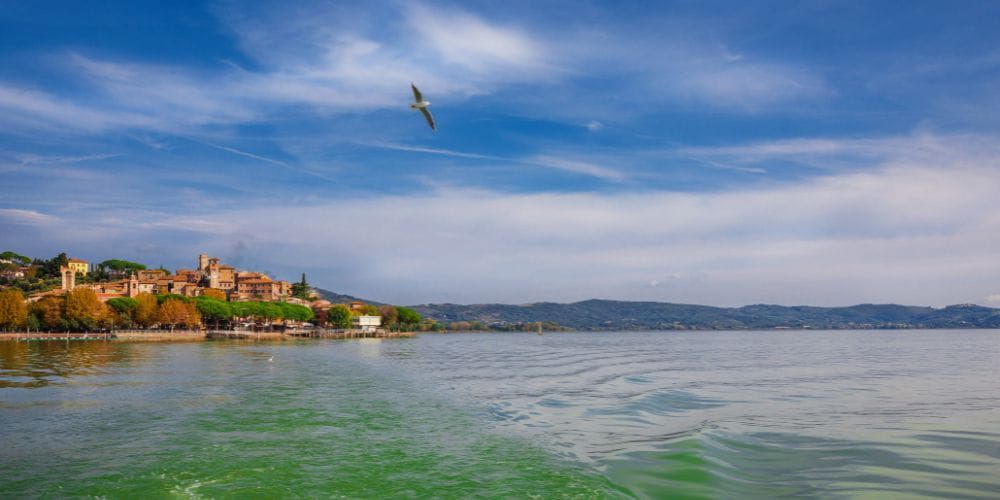
Imagine a village hanging between the blue sky and the silvery reflections of the lake’s water: we are in Passignano sul Trasimeno, a pearl nestled on the northern shores of one of Italy's most beloved lakes, considered in a way the "sea" of Umbria.
This ancient fishing village on Lake Trasimeno welcomes visitors with a magical atmosphere, blending history and natural beauty. One of the village's most iconic attractions is the Medieval Fortress, which proudly stands over the town. The evocative atmosphere of the towers and terraces of the Passignano fortress, more than 30 meters high, allows tourists to enjoy a spectacular view of Trasimeno and the hills around the lake.
Inside the ancient bastion you can visit the Boat Museum, the perfect place to discover the secrets of traditional navigation on Lake Trasimeno and admire examples of the boats typically used by those who have always lived in this area. As you stroll through its narrow streets, don't miss some of Passignano's most iconic landmarks, such as the curious Triangular Tower, the ancient Church of San Cristoforo, founded on the ruins of a pagan temple, and the panoramic viewpoint beneath the Clock Tower.
But your adventures on Lake Trasimeno don't end in Passignano. We recommend a tour of the lake by visiting the area's other beautiful gems, such as Castiglione, San Feliciano, and Tuoro, perhaps riding along the Trasimeno Cycle Route if you enjoy cycling.
Also not to be missed is a trip to the Trasimeno islands: from San Feliciano, you can reach Isola Polvese by boat and visit a picturesque castle and the monastery of San Secondo, while from Tuoro you can sail to Isola Maggiore and visit the castle, the places of worship dedicated to Saint Francis (ideal for hiking), and the evocative Lace Museum.
After the tranquility of the lake, before leaving Umbria, you should dedicate at least one day to exploring Perugia. Just a few kilometers from Lake Trasimeno, the regional capital awaits you with its Etruscan treasures, its stairways, and the undisputed charm of a vibrant and cosmopolitan art city, a promised land for chocolate lovers.
2. Apulia: seaside, slow life and traditions before summer peak
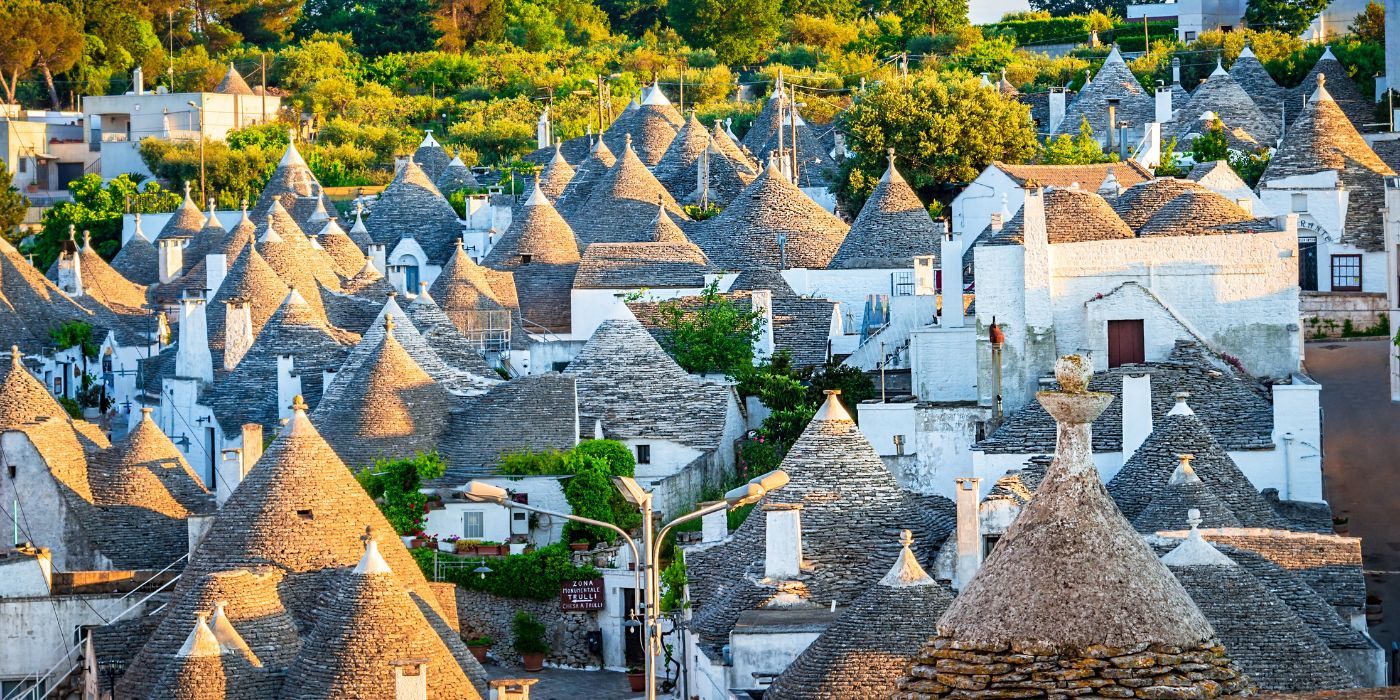
Apulia (or Puglia), with its radiant landscapes, crystal-clear sea, and a cuisine that speaks of sun and soil, is one of the most captivating destinations to experience in June. It’s the month when villages slowly come back to life with artisanal markets and local festivals. The beaches are still quiet, the historic centers breathe the calm of late spring, and the light has that golden southern glow.
Begin your journey in the northern part of the region, exploring the Gargano—a wild promontory overlooking the Adriatic. Here you'll find hidden beaches nestled among cliffs, like Baia delle Zagare, and authentic seaside towns like Vieste and Peschici, where you can enjoy the freshest seafood right at the harbor. Inland, powerful emotions await: don’t miss the Umbra Forest, a fairy-tale-like place perfect for hiking among beeches, oaks, and wild animals.
And if you really want to embark on an adventure, you absolutely must also visit the stunning Tremiti Islands (ferries departing from Rodi Garganico).
As you move toward the heart of the region, immerse yourself in the Itria Valley, land of trulli and ancient olive groves. Alberobello is the most iconic postcard image, but villages like Locorotondo, Martina Franca, and Cisternino are equally enchanting, with whitewashed historic centers and cozy squares perfect for sipping a glass of local white wine.
Continue south and reach the Salento, a land of deep-rooted traditions and Caribbean-like seas. Lecce, with its flamboyant Baroque architecture, will charm you with its elegance. Then head to the coast to discover the beaches of Porto Cesareo, Torre Lapillo, Gallipoli, or Pescoluse, also known as the Maldives of Salento for the clarity of its waters.
And for those who love combining culture and spirituality, a stop in Otranto is a must: its cathedral houses one of the largest floor mosaics in Europe, and the seafront offers sunsets that seem to come straight out of a dream.
1. Venice: magic on the water and art under the June sky
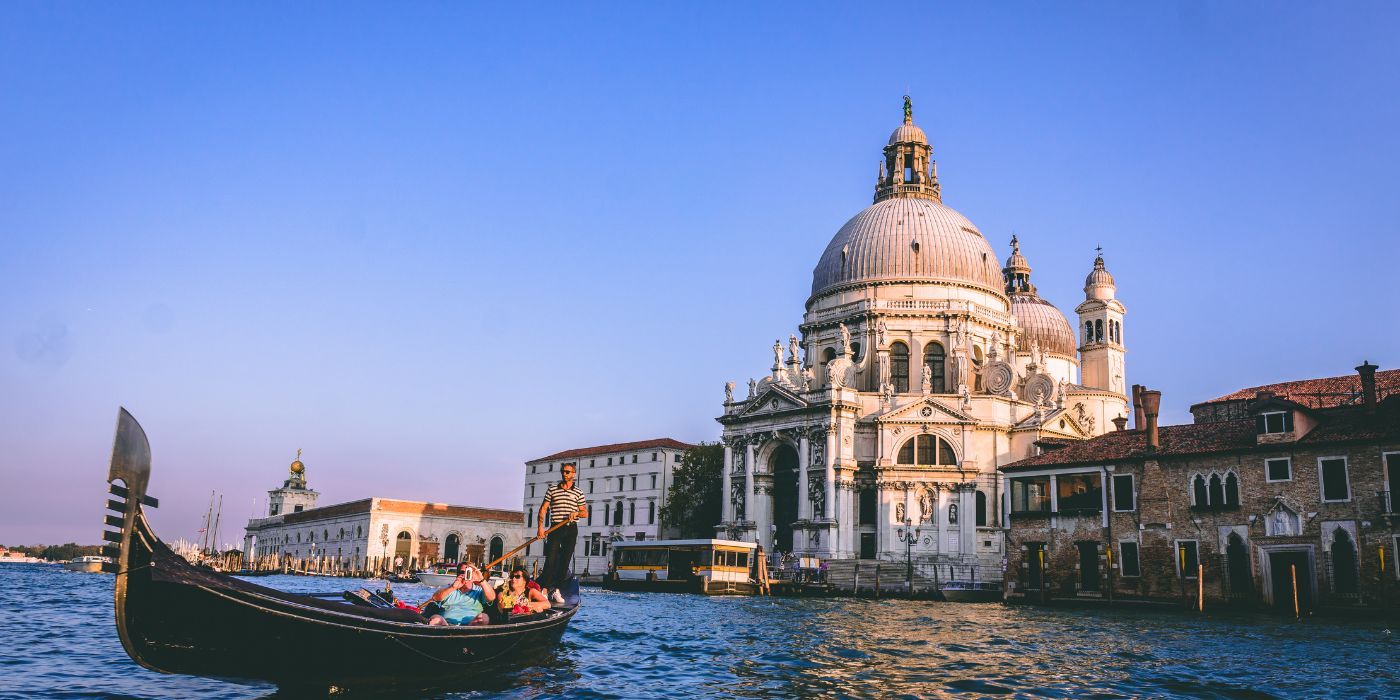
In June, Venice becomes a symphony of light and reflections. Long, bright days wrap the canals in a dreamlike atmosphere, the calli echo with voices and music, and the city reveals its full beauty before the peak tourist season arrives. It’s the perfect time to experience it slowly, uncovering its most authentic, romantic, and lesser-known sides.
Start your itinerary at St. Mark’s Square, the beating heart of Venice, where the golden Basilica and the Bell Tower reflect in the shimmering water. Climbing to the top of the bell tower in the early morning, while the city still sleeps, offers a breathtaking view of the lagoon, red rooftops, and distant islands.
Wander aimlessly through the calli, cross smaller bridges, and follow your instincts: every corner has a story to tell, every wall breathes centuries of art and mystery. Don’t miss Dorsoduro, the artists’ district, where you'll find the Peggy Guggenheim Collection and the Gallerie dell’Accademia, ideal spots to dive into Venetian culture that bridges tradition and modernity.
The weeks leading to deep summer are perfect for a trip to the lagoon's islands, enjoying magical landscapes and more accessible ferries: Burano with its colorful houses and lace, Murano with its blown glass, and Torcello with its mystical peace are ideal day trips.
If you want to explore the city from a unique perspective, then a private gondola tour is a must. This experience is ideal at sunset, to see the city change with the last light of day and discover a more intimate, almost secret Venice. You can end on a high note with dinner in a bacaro (a typical Venetian tavern) or on a terrace: experience the tradition of cicchetto, small fish bites, polenta, creamed cod, and ombre di vino (glass of wine) in historic restaurants hidden among the alleys, or reserve a table overlooking the Grand Canal for an unforgettable evening.
This year, June in Venice also offers an extra opportunity to admire the most beautiful and interesting contemporary art exhibitions with the 2026 Venice Art Biennale, one of the most prestigious international cultural events. This month (the full calendar runs from May 9th to November 22nd), the Biennale finally lights up, with the pavilions in the Giardini and the Arsenale ready to host installations, performances, and avant-garde works that transform Venice into a sprawling art gallery.
Visit Venice with Venice PassAbout the author
Marika Camposano
Linguist and cultural divulger. I live immersed in the pages of the books I read, which are always by my side, while I gaze with curious eyes at the world's beauties.

Marika Camposano
Find out where to go on holiday in June in Italy. Here are 10 unmissable destinations including sea, mountains, villages and culture.