


Soaking in hot springs beneath a sweep of stars, steam wreathing the air, and just beyond, one of Europe’s most exquisite medieval towns.
That’s Viterbo, an off-the-radar spa destination where the steam of ancient springs meets modern wellness rituals. And where Italians have tended to their aches and spirits for millennia. Does it really work? Now it’s your turn to see why locals love Viterbo thermal baths so much.

Viterbo thermal baths: a millennial history of healing waters
Viterbo is a top destination for wellness travel in Italy. This lovely medieval town north of Rome was valued for leisure and therapeutic cures long before the concept of spa tourism existed.
Thermal bathing around Viterbo predates Rome’s imperial splendour. The Bullicame spring, whose very name comes from Latin for “bubbling”, was used in Etruscan and Roman times and crops up repeatedly in medieval accounts and Italian literature and art.
Centuries later, when Viterbo briefly hosted the papacy in the 13th century, its waters became associated with clerical rest and recovery, a pedigree that survives in the modern name Terme dei Papi (Baths of the Popes).
Here is everything you need to know about Viterbo thermal baths and why you should stop by.
Also discover Viterbo’s spectacular UNESCO-listed event.
Viterbo thermal baths: from resorts to free pools
Viterbo hot springs are strewn across a wide area of countryside, where well-kept resorts sit next to open-air pools.
Comfortable thermal hotels with full services stand next to the more rustic terme libere, which are simple basins where you can bathe for little or no cost.
The springs here are very warm, with water temperatures between 35 °C and 60 °C. People have been coming for centuries to soak for their skin, joints and lungs, just as they did in Roman times.
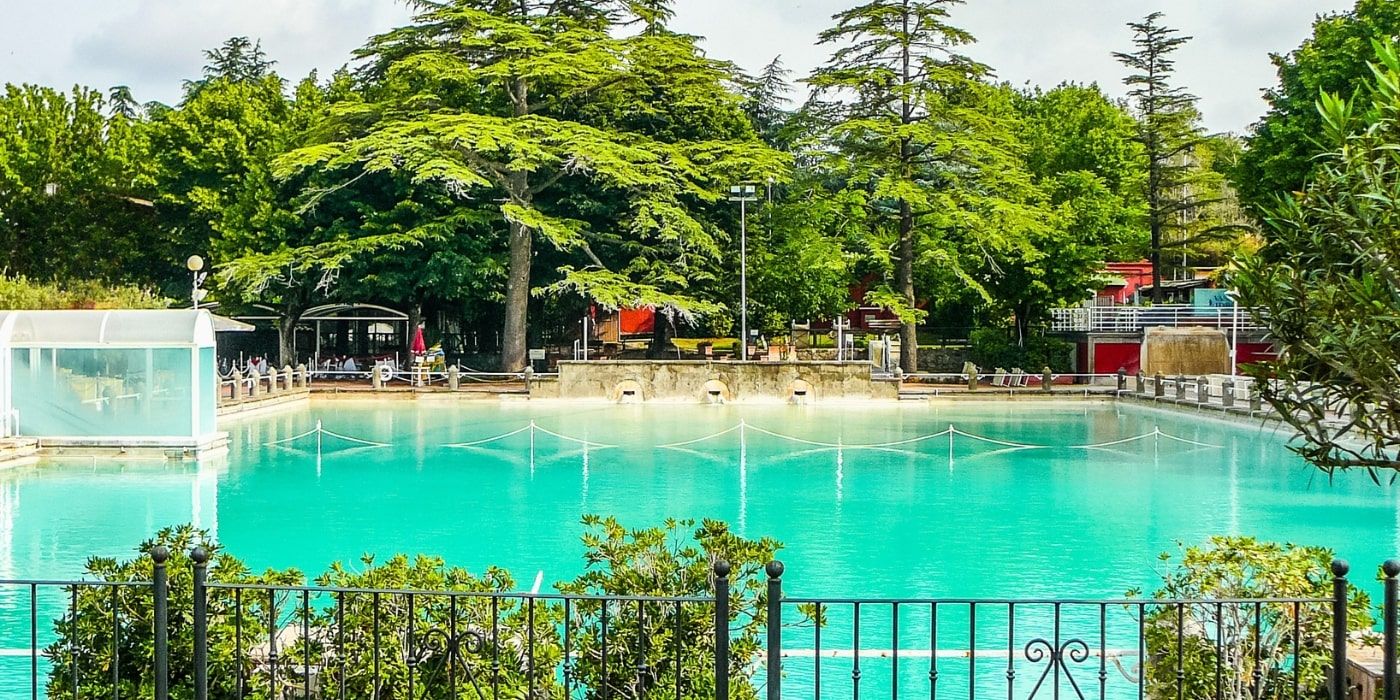
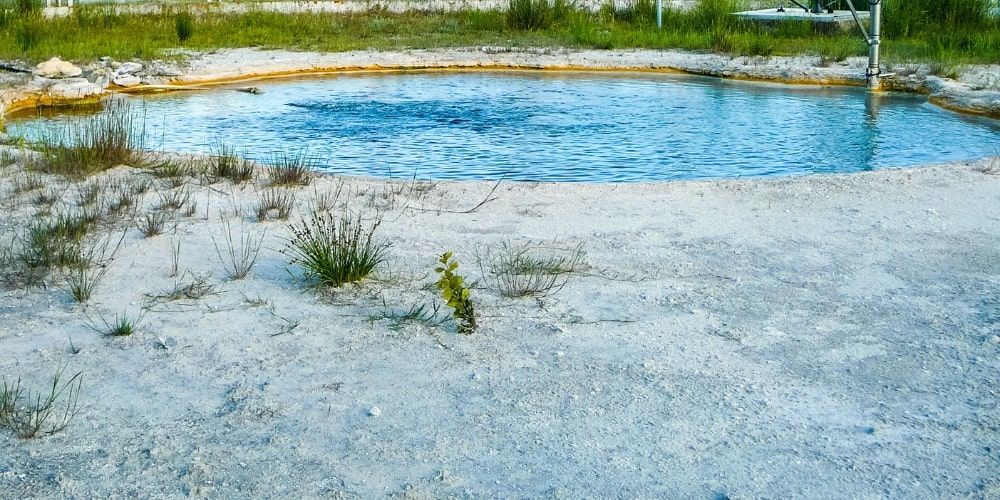
The so-called “city of the popes” (Città dei Papi) stands out among Italy’s spa towns for a surprisingly varied thermal landscape. There is the grand, papal-scale pool of Terme dei Papi and then secluded rural ponds surrounded by wild grasses. Together, they form one of Italy’s most diverse and atmospheric spa networks.
How can you find your bearings in such a scenario? Here are some ideas for a wellness trip in Viterbo.
Find more on Viterbo and its thermal bathsTerme dei Papi Viterbo, a storied spa
Viterbo’s flagship spa has a name that evokes history and prestige: Terme dei Papi. But why exactly “of the Popes”? In 1450, Pope Nicholas V commissioned the construction of a sumptuous crenellated palace so that he could stay there whenever he needed the waters and muds of Viterbo’s thermal springs. Pius II later refined the complex, securing its legend as the spa of popes.
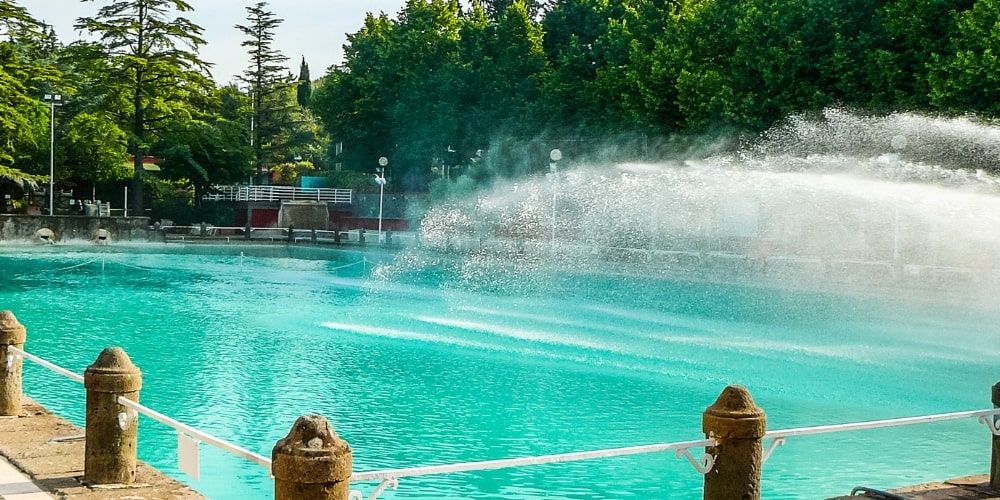
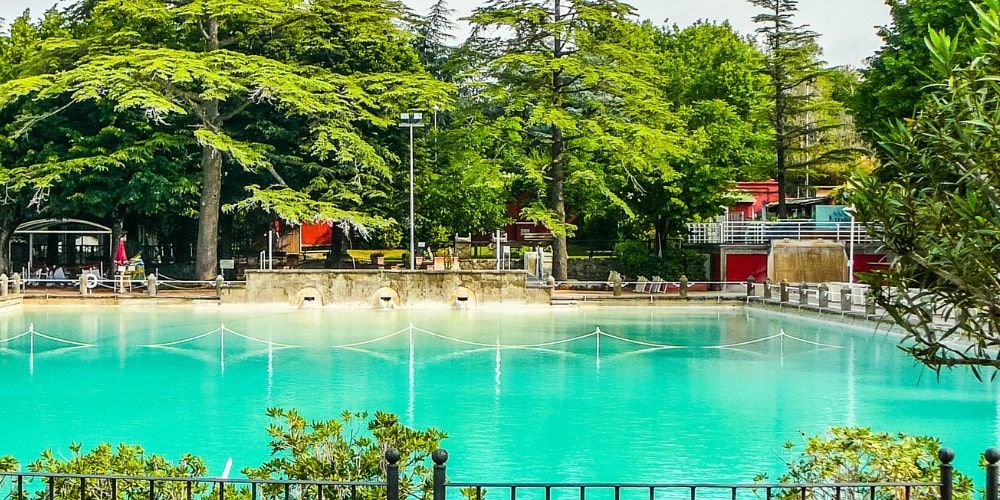
Following extensive renovation, the modern Terme dei Papi spa opened in 1993 and has been one of Italy's most advanced facilities since then. The jewels in the crown? A vast 2,000 m² thermal pool and a grotto naturally filled with steam.
But the heart of the experience lies in the therapeutic treatments, officially recognized by the Italian National Health Service and all supervised by specialized medical staff: mud therapy, balneotherapy, inhalation treatments, and targeted therapies for circulation, skin, and joint health.
- Visiting Terme dei Papi: the complex is in L.go Socrate Sensi, 101100 VITERBO VT. The thermal centre is open all year round from 9 a.m. to 7 p.m. The monumental pool is closed on Tuesdays for maintenance. On Saturdays, it is open for night swimming from 9 p.m. to 1 a.m.
Viterbo’s free hot springs
Besides up-to-date spa and wellness hotels, Viterbo is home to several free hot springs and natural pools that capture the essence of the ancient Roman spas in Italy.
The most famous are known as Terme del Bullicame, which discharge water at roughly 58 °C into two open-air pools, one naturally hot, the other cooler. Entry is free, with parking but no facilities. The site stays open until early evening.
- Fun fact: Dante mentioned the Bullicame spring in Canto XIV of the Inferno. A stone stele bearing the verses from the Divine Comedy stands today inside the thermal park.
Another beloved spot for a wellness detour is Piscine Carletti, a basin around 2 km from Viterbo that remains open year-round, 24 hours a day, so it’s available for relaxing baths under the stars. Entry is free.
Night bathing is also possible at Terme del Bagnaccio, a six-pool thermal area situated near a botanical garden that preserves the local flora and fauna. There are wooden cabins for changing, and picnic tables.
Night bathing under the stars in Viterbo
If you have ever dreamed of gliding through warm water under a sky full of stars, Viterbo is the place to try it. Evening bathing is one of the special features of the city’s spas. It’s a romantic and special way to experience the thermal springs.
The monumental pool at Terme dei Papi stays open late on Saturdays, from 21:00 to 01:00. On other days, the pool closes at 19:00.
Bagnaccio welcomes visitors until late at night as well, since summer opening hours stretch to 10:00 on weekdays (last entry at 21:00) and 23.30 at weekends (last entry at 22:00).
You can also visit Piscine Carletti after dark, even in the colder months. Its pools are open for night bathing all year round.
Italy’s spa towns: Viterbo, a destination for connoisseurs
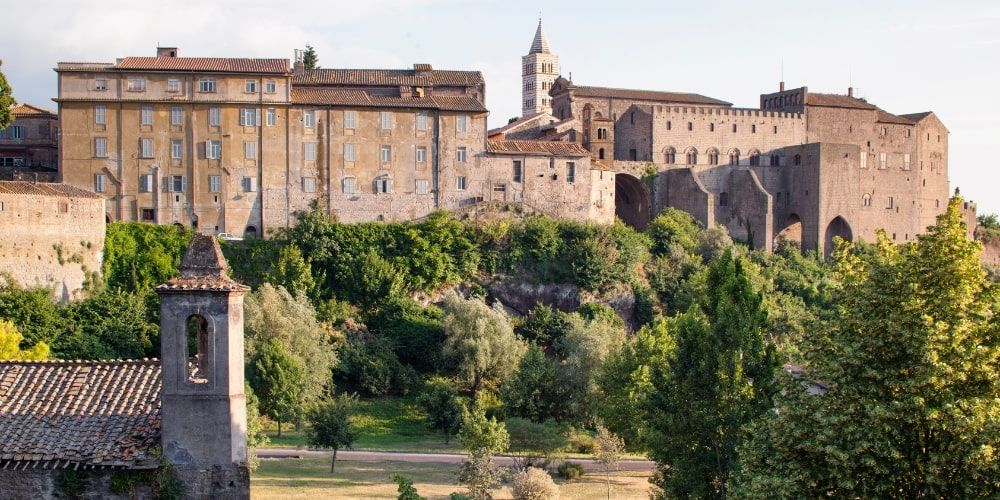
Set in one of Italy’s most generous thermal landscapes, Viterbo has long been a wellness refuge for true connoisseurs. Its hot springs are a cherished pleasure for locals and visitors from across the Lazio region, and international interest is clearly on the rise.
In the first half of 2025, overnight stays increased by 12% compared with the same period in 2024, proof that the city is gaining popularity, especially among travellers from abroad, and confirming a steady upswing in international tourism.
At weekends, many facilities are now fully booked even in summer, a season that has never been considered high for spa travel here. It’s the result of coordinated efforts between local authorities and hospitality operators, focusing on quality, service, and the promotion of Viterbo’s thermal and cultural heritage.
Travellers find an atmosphere that’s calm and authentic, still largely untold by travel influencers and famous magazines. That’s part of the quiet charm that makes Viterbo such a relaxed, welcoming, and increasingly sought-after corner of Italy.
Practical tips for visiting Viterbo thermal baths
- Getting there: regional trains depart from Roma Termini several times a day, and the journey takes approximately two hours. If you’d rather drive, plan for roughly an hour and a half. Take the A1 motorway to the Orte exit, then follow the SS675 and SS2 roads.
- When to visit: The Viterbo thermal baths are open year-round, and even the outdoor pools can be enjoyed in winter thanks to the naturally hot water. The choice is between free hot springs and structured spas. The area also includes hotels with spa access or partnered with thermal establishments. Spring and early autumn are particularly pleasant if you intend to explore the surrounding countryside, too.
- Prices: A weekday pass to Terme dei Papi Viterbo costs €18, with additional charges for spa treatments or wellness packages. Bullicame and Piscine Carletti are open-air pools that are free to enter, but keep in mind that the facilities there are basic. Bagnaccio, which has recently reopened after renovations, asks for a small entrance fee of €10 on weekends and €8 during the week.
Viterbo is a thermal paradise in Italy
Historical depth and a menu of bathing experiences that stretches from lavish resort pools to unvarnished free springs are what makes Videtbo one of Italy’s best spa towns.
In the most representative city of the historic Tuscia region, spa culture is an extremely old and undoubtedly much alive tradition. Just like other destinations with a stronger headline appeal, Viterbo has long made wellbeing a defining element of its way of life.
The thermal springs are woven into the very landscape of Tuscia, a living network where history and public life flow together. To visit Viterbo’s baths today is to experience a way of embracing water that has always been part of the city’s character.
Viterbo thermal baths – FAQs
Where are the thermal baths in Viterbo?
The Viterbo thermal baths are located just outside the city, within a few kilometers of the historic centre. Terme dei Papi Viterbo lies about 4 km west of town, while the main free hot springs around Viterbo (Bullicame, Piscine Carletti, and Bagnaccio) are all within a 2–8 km radius, surrounded by open countryside and easily reachable by car or taxi.
Are the Viterbo thermal baths free?
Some sites, such as Bullicame and Piscine Carletti, are free or low-cost, while established resorts like Terme dei Papi charge for entrance, treatments, and specialized services.
What is the history of the Viterbo hot springs?
The springs have been used since Etruscan and Roman times. Starting in the Middle Ages, when Viterbo was the papal seat, the thermal baths were highly appreciated by the popes, who took advantage of their therapeutic properties. Over centuries, the area became a cornerstone among Italy's spa towns, known for its healing waters and enduring bathing culture.
Are the Viterbo thermal baths open at night?
Piscine Carletti is open all day and night. Terme del Bagnaccio closes at 11:30 p.m. on weekends. If you want a late swim at Terme dei Papi, the big pool is open on Saturday nights from 9 p.m. to 1 a.m. and costs €20 per person.
Which is better: Terme dei Papi or the free springs?
At Terme dei Papi, visitors can access therapeutic programs and a wide range of spa treatments, from mud applications and inhalation treatments to vascular circuits, in a well-organised, medical-supervised setting. Viterbo’s free hot springs guarantee a more simple, spontaneous experience in nature. Entry is free or very low-cost, and facilities are minimal, just the essentials for those who prefer the unfiltered pleasure of bathing in open-air pools.
About the author
Written on 10/12/2025
Lorena Calise
I'm a content writer for magazines and websites. I also explore Italy through my writing for Visit Italy and Visit Naples.

Lorena Calise
The ultimate slow-travel retreat in Italy comes with a centuries-old healing tradition. Viterbo’s thermal baths are Italy’s next wellness discovery.