
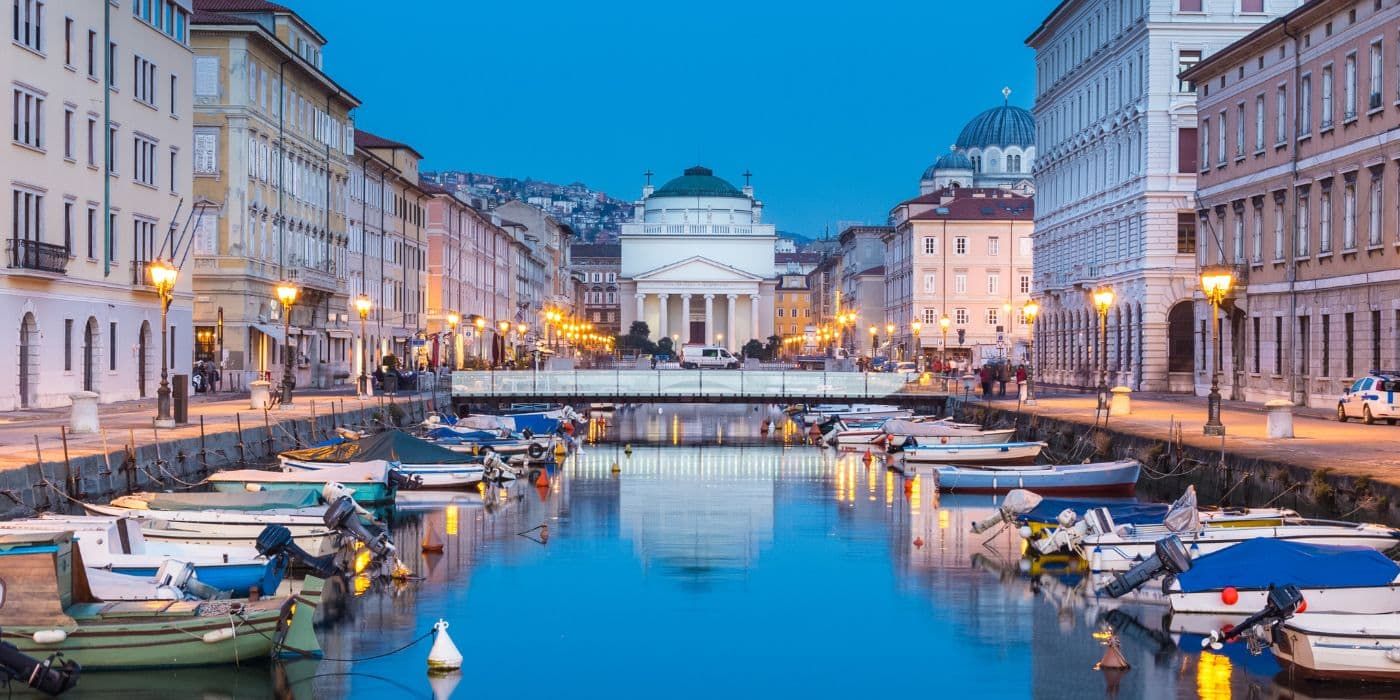
January in Italy isn’t just a month of crisp skies and snow-covered mountains. It’s a surprising, vibrant time filled with stories, ancient rituals and fresh energy that lights up squares, villages and cities across the country.
As soon as the Christmas lights fade, Italy comes alive again with folk celebrations, historical reenactments, deep-rooted traditions and cultural events that warm even the coldest winter days.
If you’re wondering what to do in Italy in January, know that every region offers something special. From winter-flavoured food festivals to exhibitions dedicated to contemporary art, and from age-old rituals to authentic local traditions, the month is full of experiences that reveal the country’s most intimate and fascinating side.

The Most Fascinating Events in Italy in January 2026

The start of the year is the perfect moment to experience Italy away from the summer crowds, when places reveal a quieter, more authentic charm.
January 2026 brings a wide array of events that blend magical atmospheres, deep-rooted traditions and contemporary curiosities, each with its own character and the power to turn a simple trip into an unforgettable memory.
Get ready to travel from North to South, to dive into centuries-old festivals, evocative reenactments and celebrations that reveal a country capable of inspiring wonder in every season.
10. Helmut Newton at the Filatoio di Caraglio
The Filatoio di Caraglio, one of the most striking seventeenth-century complexes in Europe, opens its historic halls to the exhibition “Helmut Newton. Intrecci.” More than one hundred photographs (many of them never shown before) enter into dialogue with the vast spaces of this remarkable Piedmontese filature.
The exhibition traces Newton’s most celebrated collaborations with major international brands such as Yves Saint Laurent, Blumarine, Wolford, Ca’ del Bosco, Lavazza and Absolut Vodka. Each image reveals his effortless ability to move between editorial and commercial photography, crafting a visual language that is bold, distinctive and instantly recognisable.
Iconic faces such as Monica Bellucci, Kate Moss, Carla Bruni, Nadja Auermann and Eva Herzigová appear throughout the exhibition. Their presence reflects the deep trust the fashion world placed in Newton, captivated by his aesthetic suspended between theatricality, irony and formal perfection.
Visiting “Intrecci” means witnessing the evolution of an artist who transformed the way we look at the body and seduction. His images (always poised between reality and artifice) turn each pose into a small scene, each photograph into a compelling and magnetic story.
Where: Filatoio di Caraglio
Via Matteotti 40, Caraglio (Cuneo), Piedmont
When: Thursday and Friday from 3 p.m. to 7 p.m.
Saturday, Sunday and public holidays from 10 a.m. to 7 p.m.
9. Dolomiti Balloonfestival

In January, the skies over Dobbiaco explode with colour during the Dolomiti Balloonfestival, one of the most spectacular winter events in the Alta Pusteria. It’s the perfect moment to admire the Dolomites from above, as dozens of hot-air balloons rise into the sky between fresh snow and the quiet of the peaks.
Throughout the festival, balloons of every shape and shade float over the valley, creating a truly unforgettable sight. The days alternate between scenic flights open to visitors, competitions between crews, children’s activities and evening events that turn the mountains into a glowing stage.
The 2026 edition begins on 6 January, when children can enjoy a tethered balloon ride between 10 a.m. and noon.
On 7 January at 5 p.m., the village hosts the enchanting Nightglow of radio-controlled balloons. Around the parish church, near the Christmas market below the Tre Cime, illuminated silhouettes pulse to the rhythm of music, creating an intimate, cinematic atmosphere. Admission is free.
The festival continues on 9 January at the Nordic Arena, where the radio-controlled balloons light up again around 5 p.m. as part of the “Puschtra Minis” event. This, too, is free and offers another chance to experience the mountain’s magic at dusk.
Where: Dobbiaco (Bolzano), Trentino-Alto Adige
When: 6–11 January 2026
8. Cardo Gobbo Festival in Cervia
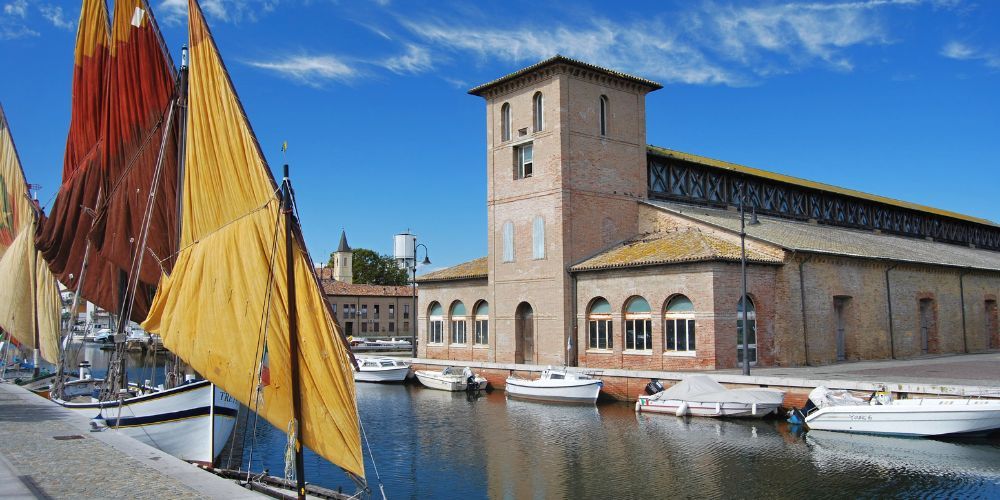
In the heart of winter, Cervia celebrates one of its rarest and most precious products: the Cardo Gobbo, grown in small quantities and available only during the coldest months of the year. This unique vegetable, known for its remarkable detoxifying and antioxidant properties, is a true symbol of local excellence and a favourite among those who appreciate authentic, earthy flavours.
The festival brings the historic centre to life with a dedicated market where producers showcase specialties made with Cardo Gobbo and share stories and curiosities about this extraordinary plant. Wandering among the stalls, visitors can explore agricultural traditions, seasonal anecdotes and culinary interpretations that highlight the vegetable in all its nuances.
Gastronomic stands invite guests to taste dishes where Cardo Gobbo takes centre stage. It’s a delicacy for true enthusiasts, and the variety grown in the sandy soils of Pinarella is considered among the sweetest and most refined, thanks to its delicate flavour, perfect for both traditional recipes and creative reinterpretations.
Where: Cervia (Ravenna), Emilia-Romagna
When: Saturday 24 and Sunday 25 January 2026
7. The Festa delle Farchie
Every 16 January, Fara Filiorum Petri lights up with flames and centuries-old devotion during the Festa delle Farchie, a celebration dedicated to Saint Anthony the Abbot that transforms the village into a place suspended between the sacred and the spectacular. The stars of the event are the farchie: enormous bundles of reeds, tied by hand with red willow branches, carried in procession by each contrada to the square in front of the church.
At sunset, the bundles are set alight all at once, creating an immense wall of fire that brightens the winter night. It’s an intense moment that brings the community together and revives an ancient rural tradition connected to the symbolic power of light.
The festival is rooted in a legendary episode. According to tradition, in 1799 Saint Anthony protected the village from French troops by setting fire to the oaks surrounding the settlement. The sudden blaze is said to have frightened the invaders, forcing them to retreat.
Fara Filiorum Petri is a small gem in the province of Chieti, nestled among gentle hills and watched over by the imposing silhouette of the Gran Sasso. Its cobbled streets, stone houses and atmosphere suspended between spirituality and tradition make it the perfect setting for one of Abruzzo’s most evocative winter celebrations.
Where: Fara Filiorum Petri (Chieti), Abruzzo
When: Friday 16 January 2026
6. The Palio of Buti
In the village of Buti, nestled among the hills of Pisa, the Palio delle Contrade is one of Tuscany’s most cherished folk traditions. The first official edition dates back to 1961, but its roots go much further, to the seventeenth century, when on 17 January (Saint Anthony the Abbot’s feast day) the stables of the village were blessed. From this simple ritual grew a celebration that today blends devotion and a deep passion for horses.
The day begins with the Holy Mass for the Horses, a moment that brings jockeys and residents together. Afterwards, the village comes alive with the traditional breakfast of tripe and wine, a custom that marks the start of the festivities and draws both locals and visitors into the heart of the event.
By mid-morning, the contrade parade through the historic centre with banners and costumes, making their way to the Duomo’s churchyard for the blessing of the horses.
The races begin in the early afternoon along a seven-hundred-metre uphill track. The Palio unfolds over three heats, with the contrade divided into groups; only the winners advance to the final, the most anticipated moment of the day.
Throughout the festival, the streets fill with the unmistakable aroma of trippa alla butese, the local dish traditionally prepared for the Palio, adding flavour and warmth to this deeply rooted celebration.
Where: Buti (Pisa), Tuscany
When: Sunday 18 January 2026
5. The Olympic Flame in Friuli Venezia Giulia
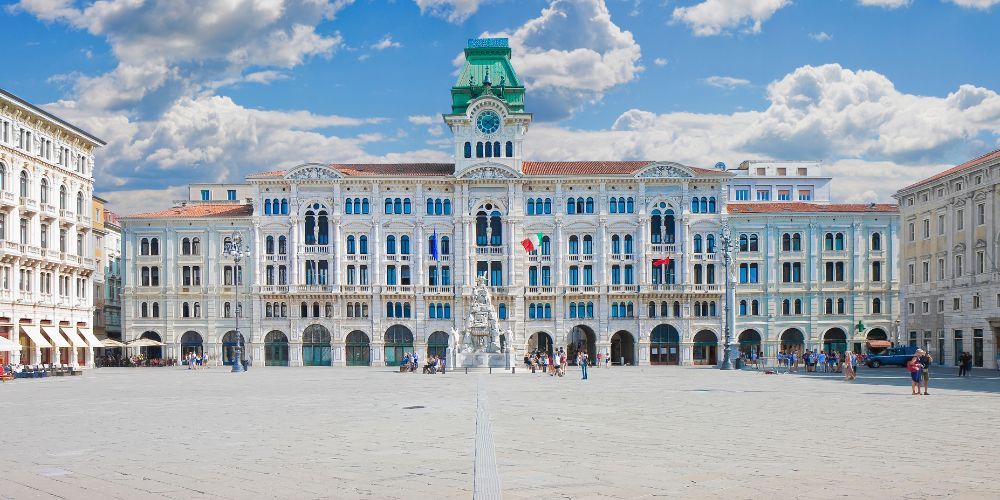
On 23 January, the Olympic Flame will enter Friuli Venezia Giulia, carrying with it the energy and universal spirit of the Olympic message. After travelling along the Venetian coast, the Torch will stop in Aquileia, a UNESCO World Heritage Site, before continuing on to Ronchi dei Legionari and Monfalcone. The day will end in Piazza Unità d’Italia in Trieste, where the city celebration will welcome the cauldron with performances and live entertainment.
The journey will resume on 24 January from Trieste, passing through Gorizia, Gradisca d’Isonzo, Sagrado and Fogliano Redipuglia. The Torch will then reach Palmanova (Italy’s famous star-shaped, UNESCO-listed city) before making its way to Cividale del Friuli and finishing the day in Udine. Here, the cauldron will be officially welcomed, followed by an evening full of special events.
The final day in the region, 25 January, will start in Udine and continue to the UNESCO prehistoric pile-dwelling site of Palù di Livenza. From there, the Flame will move on to Pordenone before leaving Friuli Venezia Giulia and re-entering Veneto, with its next scheduled stop in Belluno.
Where: Aquileia, Ronchi dei Legionari, Monfalcone, Trieste, Gorizia, Gradisca d’Isonzo, Sagrado, Fogliano Redipuglia, Palmanova, Cividale del Friuli, Udine, Palù di Livenza, Pordenone
When: 23, 24, 25 January 2026
4. Candlelight: tribute to Queen & The Beatles
Candlelight concerts transform music into an immersive experience filled with atmosphere, emotion and intimacy. In historic halls and exceptional venues, hundreds of candles surround the audience in a soft, warm glow, creating the perfect setting to rediscover legendary artists in a completely new light.
The tribute to Queen and The Beatles in Rome brings their timeless melodies to the stage through string ensemble arrangements that highlight every harmony with elegance. For about 65 minutes, the notes of “Bohemian Rhapsody,” “Let It Be,” “Here Comes the Sun,” “We Are the Champions,” and many others fill the room, inviting listeners to experience the music more deeply and attentively.
The result is an emotional journey: candlelight enhances every resonance, the music blends with the space, and the songs take on an almost cinematic aura.
Where: Salone Bernini, Palazzo Ripetta, Via di Ripetta 231, Rome
When: 9 and 31 January 2026
3. A journey through the photographs of McCurry
An exhibition that brings forward all the humanity captured in Steve McCurry’s images. The layout is designed to guide visitors through a journey made of faces, pauses, silences and distant places, marked by the narrative intensity that has always defined the American photographer’s work.
The most iconic images are all present, starting with the unforgettable portrait of the Afghan Girl, one of the most recognisable faces in contemporary photography. Around it unfolds more than forty years of reportage: scenes from Southeast Asia, China, South America and many other regions of the world that McCurry has documented with a careful, respectful eye.
In the expressions he captures, you can read courage, fragility, wonder, suffering and a beauty that emerges even in the hardest contexts. This is the true heart of the exhibition: a journey into the complexity of human existence, seen through the lens of a master capable of turning every moment into a universal story.
Where: Palazzo Pigorini, Str. della Repubblica 29A, Parma
When: Wednesday, Thursday and Friday: 10 a.m.–1 p.m. and 2 p.m.–7 p.m.
Saturday, Sunday and public holidays: 10 a.m.–7 p.m.
2. Kandinsky and Italy
The exhibition dedicated to Kandinsky brings together 130 works to explore, in a broad and insightful way, the connection between the master of abstraction and the Italian art scene. It’s a journey that begins in the 1920s and 1930s, when the artist taught at the Bauhaus and exchanged ideas with figures such as Paul Klee, Calder and Miró. In that climate of cultural ferment, a new visual language emerged, one capable of transcending visible reality to reach pure forms, essential signs and inner rhythms.
It’s fascinating to see how this European context nurtured an abstract vision that eventually reached Italy, influencing schools, movements and generations of young artists. Kandinsky’s ideas crossed borders, altered the way art was perceived and contributed to redefining colour, composition and the very role of painting.
The exhibition then moves into the post-war years, when the painter’s legacy remained particularly strong thanks to pivotal shows such as Arte astratta e concreta in Milan and Arte Astratta in Italia in Rome.
Where: MA*GA Museum, Gallarate (Milan)
When: 10 a.m.–6 p.m. (Closed on Mondays. Saturdays and Sundays open from 11 a.m. to 7 p.m.)
1. Vini Migranti
Vini Migranti returns to Florence with a two-day event dedicated to cultural exchange and dialogue between winemakers from all over the world. More than ninety producers take part, each bringing their own story, their land and a unique approach to wine.
The fair was created with a clear goal: to broaden the view of the global wine landscape by giving space to small producers who carry an original and inclusive message. Here, wine is not just a product, it’s a narrative shaped by migrations, courageous choices and identities in motion.
Making the experience even richer are the themed tastings, led by industry experts. These sessions are designed to let visitors “step inside” the wine itself, understand its philosophy, hear the stories behind each bottle and discover rare or hard-to-find labels.
Where: Manifattura Tabacchi, Via delle Cascine, Florence
When: Sunday 25 January, 11 a.m.–7 p.m. / Monday 26 January, 10 a.m.–6 p.m.
About the author
Written on 15/12/2025
Flavia Cantini
Freelance Content Writer with over a decade of specialized experience in tourism, culture, and creative/artistic activities. I assist magazines, web agencies, and end clients in managing blogs and crafting standout articles

Flavia Cantini
Top events in Italy January 2026: art, traditions and unique experiences for an inspiring start to the new year.