
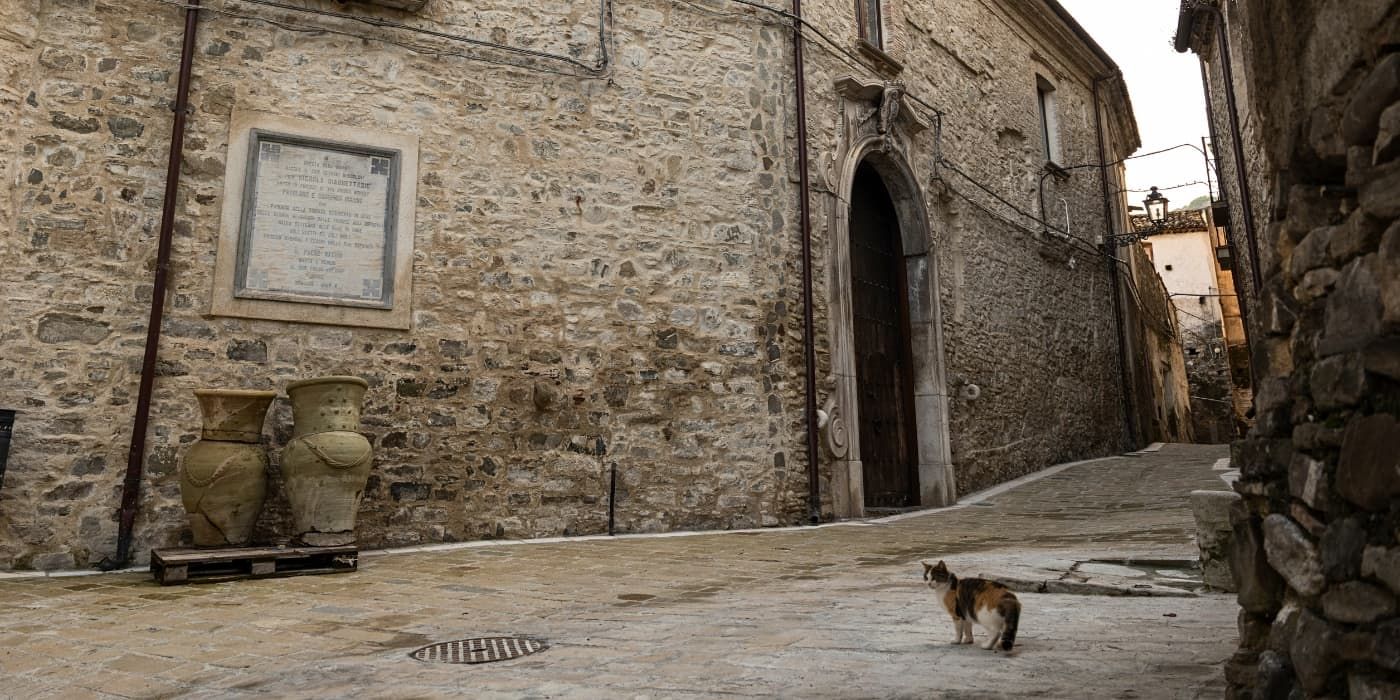

Winding stone alleys, the proud silhouette of a massive medieval castle, and the calm rhythm of a small-town. Arriving here feels like the opening scene of a costume drama. In Oriolo, Calabria, the village's rural past is now celebrated as cultural heritage.
In the heart of the old town, Palazzo Giannettasio stands as the grand reminder of the local past. Now, it is home to the Museo della Civiltà Contadina, a museum dedicated to rural traditions. Along with the castle and artisan workshops, it is part of a network that highlights the many ways art and culture shape this place. Italian tourists are discovering Palazzo Giannettasio in Oriolo, and you should too. Here is what makes it worth a visit.

Palazzo Giannettasio, Oriolo: a piece of Italian hidden history
Take your curiosity with you, and let’s begin this journey. You’ll see how something once born of necessity now shines as cultural wealth.
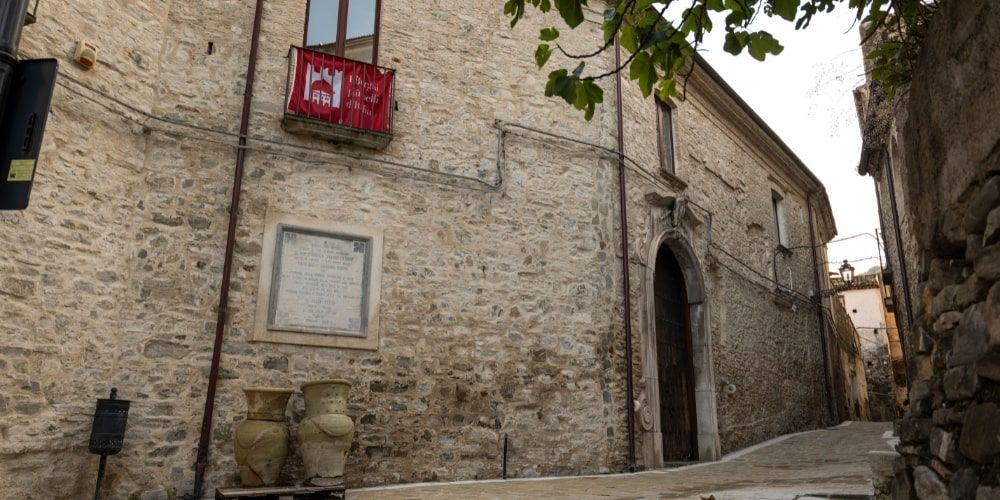
Your destination is a late 18th-century palace, Palazzo Giannettasio. Commissioned by the Giannettasio family, originally from Naples, it was designed as an elegant, noble residence overlooking the valley around Oriolo.
The stone portal bears the family’s coat of arms. An armoured arm holding a golden dart aimed at a dragon, a symbol of strength and virtue, greets visitors as they enter.
Outside, on the façade, a plaque dated 1927 honours Nicola Giannettasio, the town’s distinguished surgeon.
Inside the gate is a small brick-paved courtyard surrounded by high walls. Two staircases lead from this area: one goes down to a vaulted olive press, and the other leads up to the former family living quarters. Together, they seem to reflect the connection between noble life and the working landscape in 18th- and 19th-century Calabria.
More info on OrioloArt and life inside Palazzo Giannettasio, Oriolo
It’s time to visit Palazzo Giannettasio, so step inside and begin to move back in time.
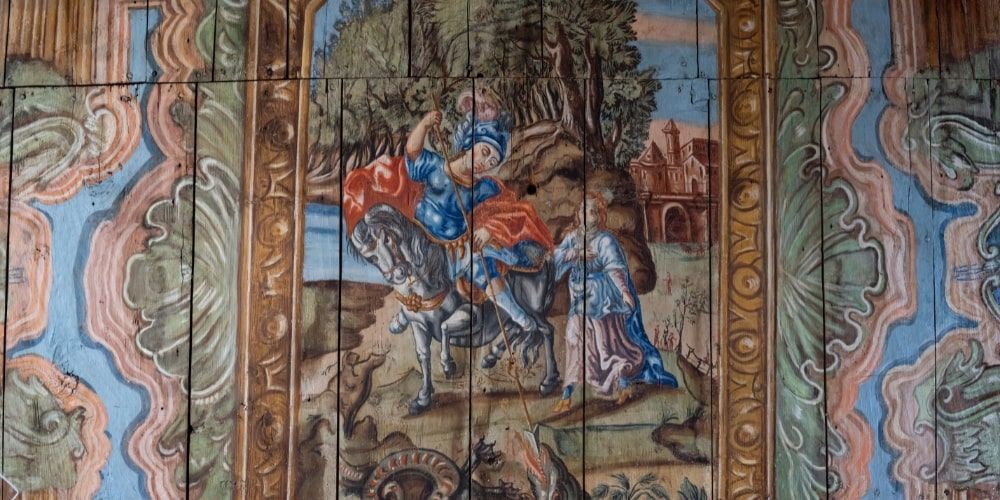
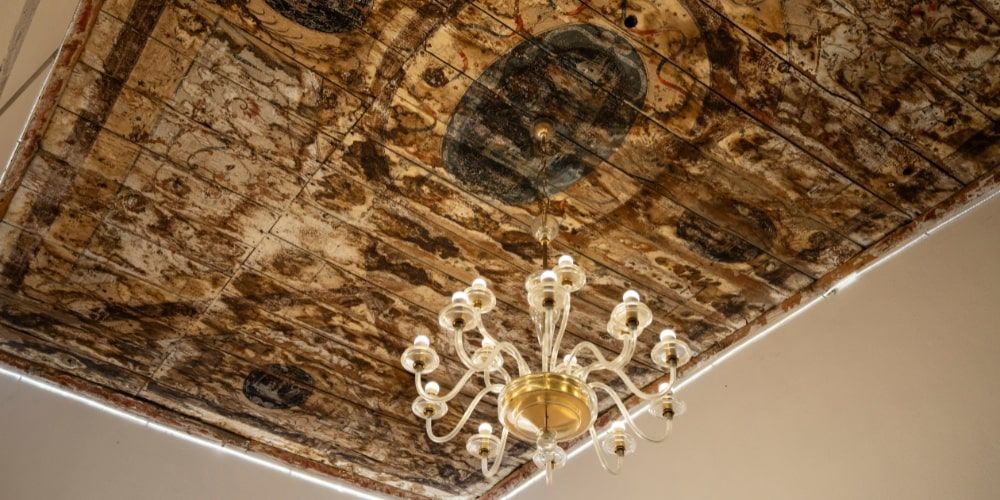
The first room you enter is the grand reception hall, still crowned by an 18th-century decorated ceiling. Just beyond, a fresco of Saint George slaying the dragon appears above you, the colours softened by age yet still alive with movement.
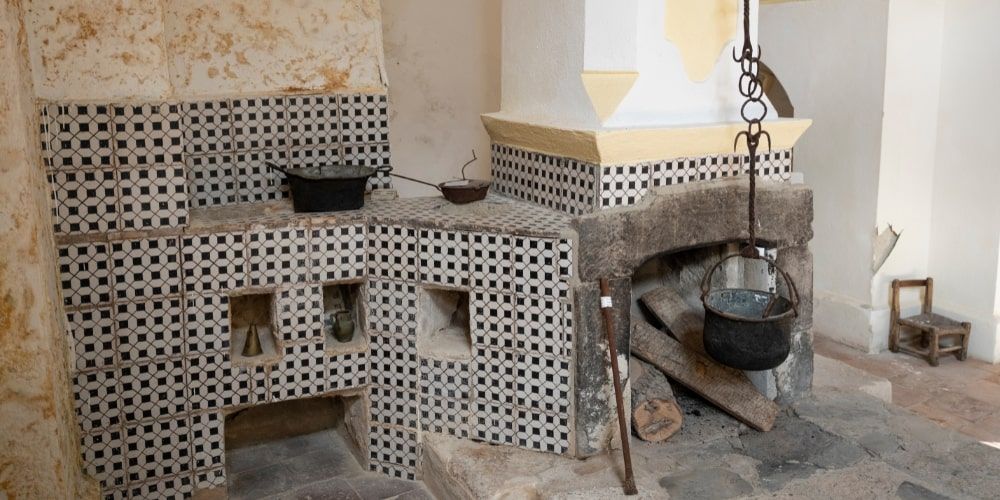
A few steps are enough to change the atmosphere. You then find yourself in an authentic 18th-century Neapolitan kitchen, a reminder of the family’s origins. Clay pots sit by the hearth, iron utensils hang from the walls, and the brick floor, worn by time, evokes fragments of everyday life with touching simplicity and truth.
The Museum of Rural Life
Since 2008, Palazzo Giannettasio has been home to the Museum of Rural Life, a project created to preserve the memory of Oriolo’s popular culture.
The exhibition and the building engage in a silent dialogue. Frescoed walls, original floors, and antique furniture coexist with the objects in natural harmony, and visitors sense a continuity between place and display.
The visit unfolds through four thematic rooms dedicated to different aspects of rural life up to the mid-twentieth century. Along the way, you catch a glimpse of how families in Oriolo once lived and worked.
Agricultural tools, terracotta containers, wooden utensils, and period clothing come from a world — not so distant — where everything was made by hand. Every piece on display is original.
Without lapsing into nostalgia, the museum restores the sense of ingenuity and discipline that defined the daily life of the past.
A window onto a lost world
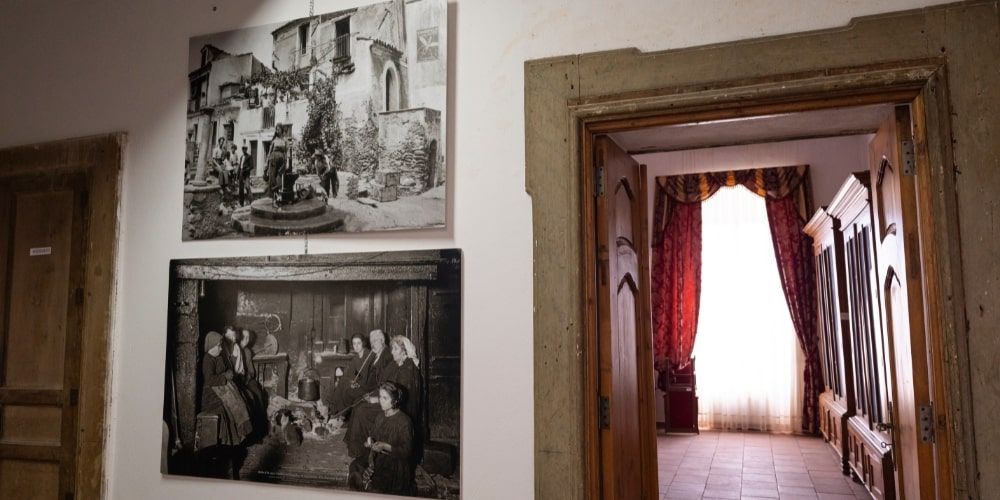
As you might have guessed, Palazzo Giannettasio is a window onto a world that no longer exists, yet one that has shaped the intangible heritage of this land.
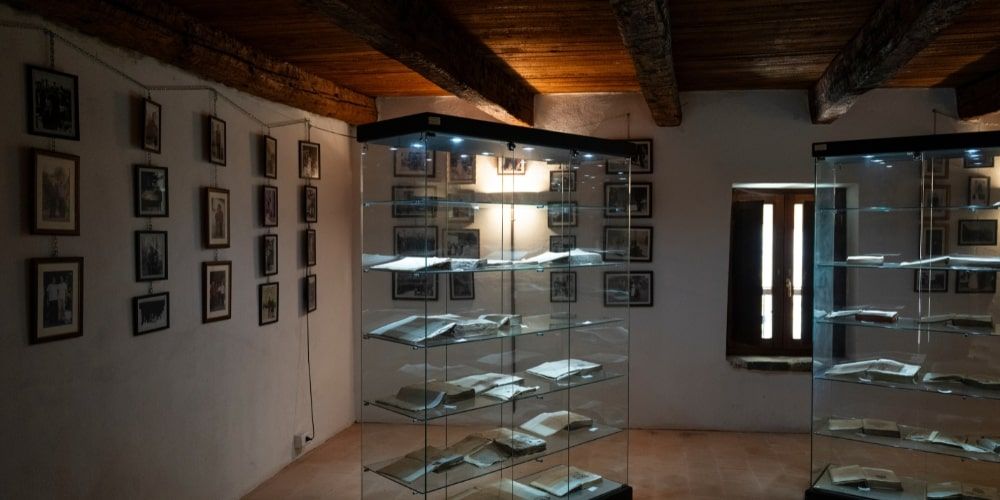
The museum is arranged across rooms dedicated to different aspects of Oriolo’s peasant past. Farming equipment, handcrafted objects, and household utensils illustrate how people once worked and organised their daily lives, while other items recall the crafts and rituals that shaped community life.
The collection also includes a wealth of photographs and written documents, like exercise books and local records.
You can see tools from all kinds of trades, like blacksmiths’ hammers and shoeing tools, wooden presses and vats used for wine-making, instruments for carpentry and shoemaking.
Everything in Palazzo Giannettasio comes from Oriolo and the surrounding area, donated by families who wanted to keep the memory of their parents and grandparents alive.
The result is a museum that reconstructs history through real-life stories, and that’s what makes it special.
Oriolo, a distributed musem
The MuDAM – Museo Diffuso di Oriolo extends this idea of living heritage beyond the palace walls. Rather than gathering everything under one roof, it lets the whole village become a museum in motion, connecting places that retrace Oriolo’s story.
Palazzo Giannettasio is one of the central pillars, joined by the castle and the artisan workshops scattered through the old streets.
As you wander through the lanes, the route reveals itself naturally. Signs guide you from one site to the next, but it’s up to you to decide how to follow the itinerary.
The castle speaks of defence and power, the palace reflects daily life and tradition, and the workshops preserve the skills that still survive in the hands of local artisans.
Oriolo has become a model of small-town preservation where heritage, far from being frozen, is always in plain sight.
Visiting Palazzo Giannettasio in Oriolo
Palazzo Giannettasio stands along the outer edge of Oriolo’s historic core, overlooking the valley and the olive groves that surround the town. It can be reached easily from the Porta San Giacomo gate or from the nearby castle.
The palace is open daily from 10:00 a.m. to 12:30 p.m. and from 4:00 p.m. to 7:30 p.m. Entry is free, and visitors are welcome without prior booking.
Exploring the Museum of Rural Life and its exhibition rooms doesn’t require much, but it’s worth allowing extra time to enjoy a walk in Oriolo, one of the most beautiful villages in Italy, and the other MuDAM sites.
Spring and summer are ideal times to visit Oriolo, especially if you take the chance to join one of its local festivals.
You might catch the celebrations for San Giorgio, the town’s patron saint (April), enjoy the summer events of the Oriolo Cult Festival (July–August), attend a performance of the Portella theatre season, or taste local wines and dishes during Vincanta, Oriolo’s wine festival (August).
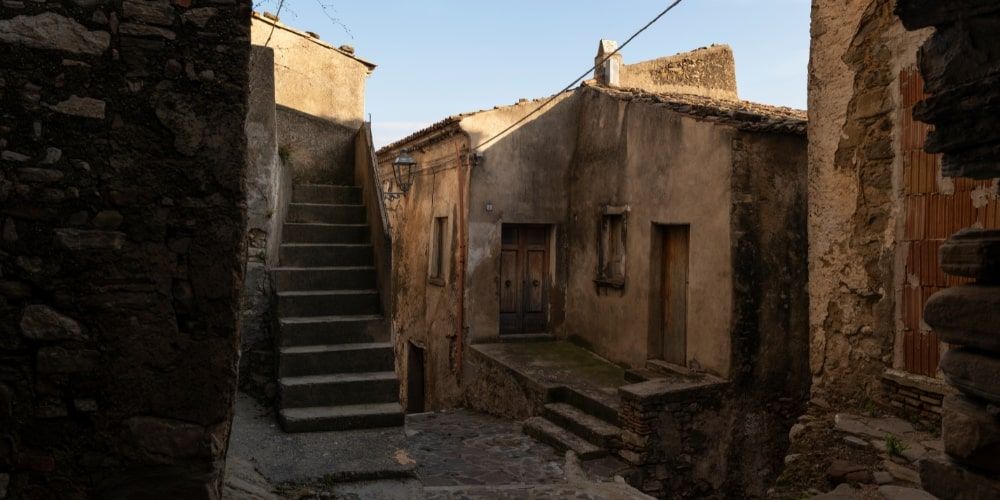
Comfortable shoes are recommended, as the streets are paved with old stone.
So, should you visit Palazzo Giannettasio?
Palazzo Giannettasio exposes the roots of Oriolo, a small town that has turned a humble heritage into a treasure worth discovering.
Within walking distance of the palace lie the medieval fortress, the Church of San Giorgio, and workshops where the art of woodcarving and violin-making stands out as a source of local pride.
Oriolo is ideal for slow travel and authentic experiences. It sits between the Pollino National Park and the best coasts in Calabria, close enough to combine mountain trails and seaside views in a single trip.
Staying overnight in one of the restored houses within the old centre will make you live village life at its natural pace and support the local community directly.
You can meet the artisans who keep old trades alive, share a meal cooked with products from nearby farms, taste local specialties like wine and oil, and even see how they are made.
The people of Oriolo have decided to hold on to what makes this place what it is. Step into this little world, and you’ll be enchanted.
FAQ – Palazzo Giannettasio & the Museum of Rural Life in Oriolo
Where is Palazzo Giannettasio located?
Palazzo Giannettasio is located in the historic center of Oriolo, a town in the province of Cosenza, Calabria region. The address is Via Vittorio Emanuele II, 6, 87073 Oriolo CS
How to get to Palazzo Giannettasio?
You can get to Oriolo by SAJ Bus or SIMET coach from the main Calabria towns. Once you arrive, enter the old village through Porta San Giacomo, the nearest gate to Palazzo Giannettasio. The museum is a few minutes’ walk.
What can visitors see inside Palazzo Giannettasio?
Palazzo Giannettasio is home to the Museum of Rural Life, which displays everyday objects from the past, including farming implements, craft tools, old photographs, and documents. The palace features a decorated reception hall, a fresco of Saint George, and an 18th-century Neapolitan kitchen.
About the author
Written on 31/10/2025
Lorena Calise
I'm a content writer for magazines and websites. I also explore Italy through my writing for Visit Italy and Visit Naples.

Lorena Calise
An 18th-century palace has become a museum celebrating the beauty and dignity of rural life. Here is what to know about Palazzo Giannettasio in Oriolo