
.jpeg)
When exploring a new place, what’s one of the best ways to experience it like the locals? Food, of course!
Part of the magic of a trip to Sardinia lies in discovering a cuisine that, while part of Italy’s rich culinary tradition, has its own distinctive flavors, ingredients, and recipes. From the sea to the mountains, across plains and woodlands, Sardinian food traditions tell a story shaped by diverse influences, local products, and specialties that delight and surprise you at the same time.
Fall in love with this wonderful island and join us to discover what to eat in Sardinia in 2027, with this delicious guide to the island’s traditional dishes, created especially for you. Ready to go?
What to eat in Sardinia: a fascinating story discovering traditional food
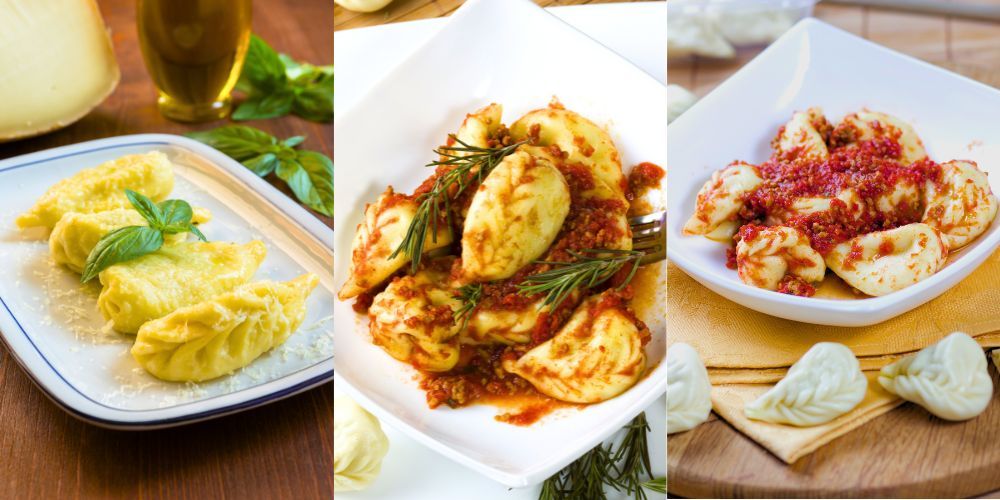
Different versions of culurgiones, traditional sardinian ravioli
From coastal fish specialities made from the day's catch, mussels, clams and prawns, to the queen of crustaceans, the lobster. From ancient recipes from the poor cuisine to bread in various forms seasoned just as grandmothers did. From the typical sweets of special occasions to wine and above all the olive oil that gives its unmistakable flavor to many dishes.
The flavors of the traditional food of Sardinian cuisine preserve traditions passed down through generations. Tasting them means discovering a culinary heritage with deep roots, still capable of surprising visitors today with authentic flavors and unique specialties.
Sardinia 2027 through its flavors: a 10-stop culinary journey
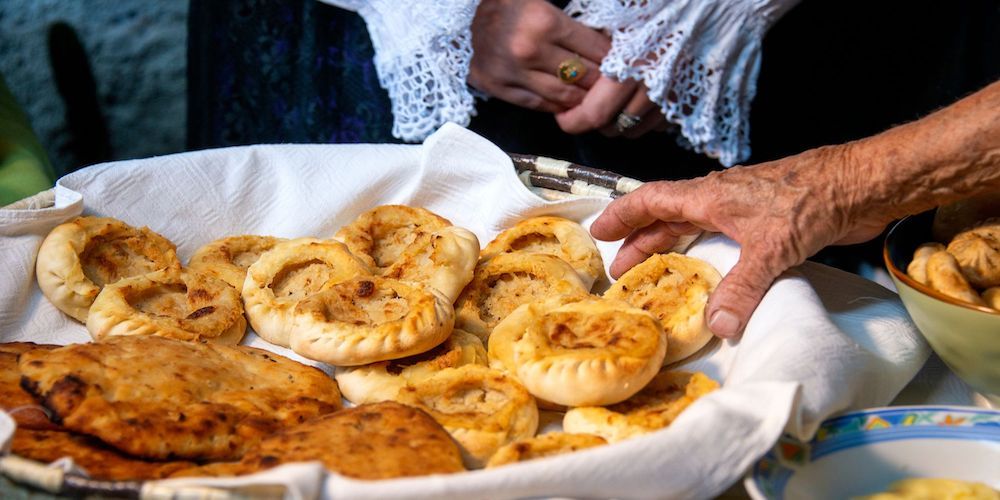
Sardinian cuisine offers unique experiences that combine taste and history. Aromas, local ingredients, and recipes passed down through generations tell the story of life and culture on the island, reflecting a culinary identity rich in nuances and distinctive characteristics.
Here is our proposal for an incredible 10-stop journey (plus one!) to discover what to eat in Sardinia in 2027, a true tour of the region’s typical dishes that reveal fascinating stories about this land and its culture.
Before we start, here’s a brief recap of the dishes and flavors you shouldn’t miss:
- The black gold of Olbia.
- The surprising soup of Luras.
- The sweet delight of Ozieri.
- Sa Cassola of Castelsardo.
- The snack of Sennori.
- The snails of Sassari.
- The lobster of Alghero.
- Sa Panada of Cuglieri.
- The pasta of Nuoro.
- The culurgiones of Tortolì.
Listen to the podcast version of the article with the voice of Monna Lisa & Leonardo
1st stop. Olbia, in search of the black gold
We have just started our journey through the traditional food of Sardinia. Have you landed in Olbia and feel peckish but do not know what to taste?
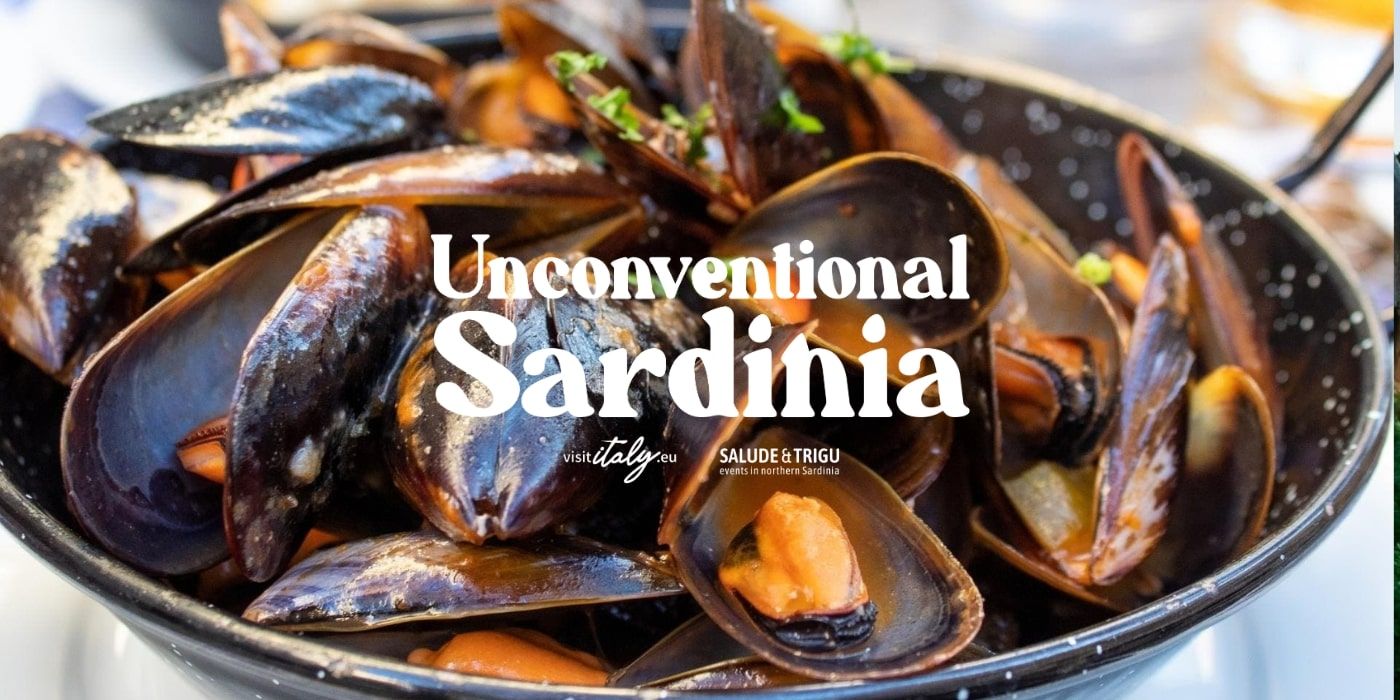
We found the best mussels in the Olbia area, one the best cities in North Sardinia, which is today one of the largest producers in Italy and in the Mediterranean.
Thanks to the perfect climatic and environmental conditions of the Gulf, rich in plankton, the mussels of Olbia are an excellence of fish farming in Sardinia and have been a fundamental pillar of the economy of the Gallura city for over a century.
If you missed the Mussel Festival in honor of Saint Simplicio, don't despair! The delicious mussels will last on Sardinian tables all summer and beyond.
Also recommended raw, mussels in Olbia can be tasted in many variations, one more delicious than the other, but certainly worthy of note is the mussel soup in red, with that nice spicy touch of the chili pepper and tomato.
2nd stop. Luras: the dish you don't expect
Our journey through Sardinian gastronomy continues to Luras, a village of Alta Gallura famous for its dolmens and millenary olive trees. If you think it's crazy to enjoy a nice meat and melted cheese broth, even with summer's hot record temperatures, wait until you get to know the zuppa lurese!
This is the kind of dish that you cannot find easily in tourist restaurants, because it is prepared with love and wisdom, handed down through generations of Sardinian agro-pastoral tradition.
A simple recipe of poor cuisine, zero waste and with a strong flavor. It is a traditional food to taste in Sardinia that you can't help but try.
It starts with stale sliced bread, laid in layers (a bit like lasagna) in a rich meat broth and interspersed with lots of cheese, salt and pepper, enriching the dish with hand-chopped parsley and mint at last. Rich and fragrant, let it cool the broth and tell us if it's not the most delicious thing you never imagined to taste!
3rd stop. Ozieri: a sweet delight
At this point in the journey, you cannot miss some desserts among the things to eat in Sardinia. Take a break and stop for a coffee in Ozieri.
The town gave birth to the very famous sospiri (sighs), the sugary balls of almond paste and honey, which with their colored papers cannot miss among the sweets of the holidays all over the island. Almonds are an absolute cult in the confectionery preparations of this town of Logudoro.
But the most requested, both by tourists and by locals, are the sublime copuletta ozierese! A soft sweet based on sponge cake and almond flour, with a smooth sugar coating that makes it look like a pretty lace.
They are so renowned that they're even prepared as typical sweets for weddings, so that both spouses give them as a gift to in-laws parents, parents, best men and maids of honor at the end of the ceremony.
4th stop. In Castelsardo to try some fish delicacies
It is almost evening and before dinner we stop in Castelsardo. Perched on a promontory overlooking the splendid Gulf of Asinara, Castelsardo offers a special view and an ideal night panorama for a romantic dinner.
The perfect occasion to book Sa Cassola, the characteristic Castellanese-style fish soup, a true delight.
To a mince of onion, garlic, parsley and chili, you add shrimp, mussels, clams and chunks of the daily fish, from the largest to the smallest fish. The smaller fish end up melting in the hot broth, giving the soup that unique richness and sea aroma.
The broth is left abundant, to be enjoyed with toasted garlic bread. Absolutely to try by candlelight, accompanied by a good chilled glass of Vermentino.
Also, in the second half of August and early September, Castelsardo hosts the Musica sulle Bocche Festival: the perfect combination of good music and evocative locations, from the Doria Castle to the seaside!
5th stop. Sennori: a snack that smells like summer
Our next stop is a charming hill town overlooking the sea: we're in Sennori, where you'll be able to try Su Fossu, the snack that for a Sennorese smells like childhood, summer and grandmother's houses.
It is a very simple dish, starring pane tundu (round loaf), the typical tall and crusty bread of Romangia, whose top is cut. It is then emptied to make room for a filling of fresh cherry tomatoes and extra virgin olive oil, the renowned local production, of course.
Also known as Lu Cuggoni in the nearby Sorso, you can make it even more delicious by enriching the filling with grated garlic, basil and anchovies. A traditional food of Sardinia, absolutely delicious, fresh, perfect for summertime.
6th stop. Sassari: ready for some finger-licking feasts
In the middle of summertime in North Sardinia, the Ciogghitta d'Oro Festival brings back one of the most long awaited and folkloric events of the city of Sassari: the collective tasting of the much loved gastropods. Ciogghitta means snail and the fastest snail-eater wins.
Collecting and cooking snails is a convivial moment in the Sassari tradition. For the lovers of succiadura (snail sucking), the snails with their garlic and parsley sauce are an absolute delicacy.
However, do not forget baked aubergines, a delicacy that is even the protagonist of the most important popular song here in the city. Also flavored with garlic and parsley, this popular seasonal vegetable forms a winning combination with ciogghitta.
7th stop. Alghero: shellfish specialties
🥇 Visit Italy’s brand partnership
Who says Alghero says lobster, and what better location than this to taste the delicious crustacean?
In the town of Catalan extraction, famous for its coral and for the great variety of naturalistic beauties, there is no shortage of nightlife and great events, like the magical concerts of Jazz Alguer and Musica e Natura.
But don't forget about the good food! The lobster here is the queen of the table, in its version known precisely as catalan style lobster. You start the day before by putting some finely chopped onions in water, to sweeten them. The crustacean is instead boiled in water with the aromas.
Separately, prepare a dressing of cherry tomatoes and extra virgin olive oil, emulsified with lemon juice, salt and pepper. Finally, add the onions without the resting water, and at last the lobster, shredded into coarse pieces left to rest for up to half a day.
Served fresh, not cold, it is a rare delight to be savored with dedication, one of the traditional food not to be missed on your trip in Sardinia before getting back on the plane and leaving the island.
If you still want to know (and taste) even more, please check out the complete program of Salude & Trigu, a lot of events dedicated to the most authentic traditions from Sardinia.
Discover the unique events of Salute & Trigu8th stop. Cuglieri: the authentic Sardinian savory pie
After visiting the Little Barcelona of Sardinia, our next stop takes us further south to discover panada, or sa panada, the authentic savory pie of the Sardinian food tradition. We are in Cuglieri, in the province of Oristano, one of the three capitals of this delicious baked product (along with Assemini and Oschiri).
The traditional sa panada cuglieritana is a cylindrical chest made of semolina pasta, closed along the upper edge with a braided cornice, enclosing a yummy filling of meat (traditionally lamb, but there are also variations with pork or chicken), vegetables and legumes typical of the territory (especially artichokes, potatoes, dried tomatoes, broad beans and peas) and with the addition of special condiments such as saffron.
The best time to taste these delicacies and visit the village is in the summer, precisely in the first half of August, on the occasion of the annual panadas festival: an unmissable opportunity for those who love street food and are constantly looking for the most local flavors while traveling!
9th stop. Nuoro: a truly one-of-a-kind pasta
Our itinerary now takes us to the other side of the island, precisely to Nuoro, to see (and taste) something so unique that you can’t find it anywhere else, neither in Sardinia nor elsewhere. We’re talking about filindeu, an exceptional type of pasta!
It’s a kind of pasta designed for soup, prepared exclusively handmade from a dough of durum wheat semolina, forming sort of square shaped blocks by intertwining very thin strands of pasta overlapping in three crossed layers - a processing technique so complex and ancient that today only very few people are capable of practicing it.
Once filindeu are ready the pasta get cooked directly in the sheep meat broth, finally seasoning the dish with fresh pecorino cheese.
Originally prepared as a dish served to pilgrims traveling to the many country sanctuaries scattered around Sardinia (the name filindeu means “threads/hairs of God”), today this one of a kind pasta is an icon of belonging to the territory and to the deepest cultural roots of the Sardinian hinterland.
10 stop. Tortolì: an unmissable (but always surprising) Sardinian delicacy
Descending along the Tyrrhenian coastline of Sardinia, we prepare for the last, delicious stop on this traditional food tour, ready to savor one of the most famous Sardinian delicacies in their most traditional version. Our destination is Tortolì, a colorful seaside town in Ogliastra.
What good food can we eat here? Simple: of course the legendary culurgiones, one of the most delicious and traditional Italian Christmas recipes! Also known as sardinian ravioli, this type of stuffed pasta is very famous for its particular appearance, with the characteristic closure on the side edge that recalls the shape of an ear of wheat, but above all (obviously!) for its deliciousness.
The traditional culurgiones ogliastrini, acknowledged as an IGP product, are prepared with fresh durum wheat semolina pasta and a filling made of Sardinian pecorino cheese, potatoes and mint.
Their flavor is truly exceptional, so good that you will no longer be able to do without them; and if that’s not enough, also remember that sa spighitta, the typical closing technique that symbolizes wheat, is an important symbol of prosperity and good luck!
Throughout Ogliastra, culurgiones are not only considered a traditional food, but a truly precious gift, a sign of esteem, respect and friendship.
According to tradition, they were prepared especially for special occasions between the beginning of autumn and winter, such as thanksgiving at the end of the annual wheat harvest, the day of commemoration of the dead (in Ulassai until the 1960s they were exclusively consumed on this day) and carnival.
What to eat in Sardinia: the must-have traditional food in the south
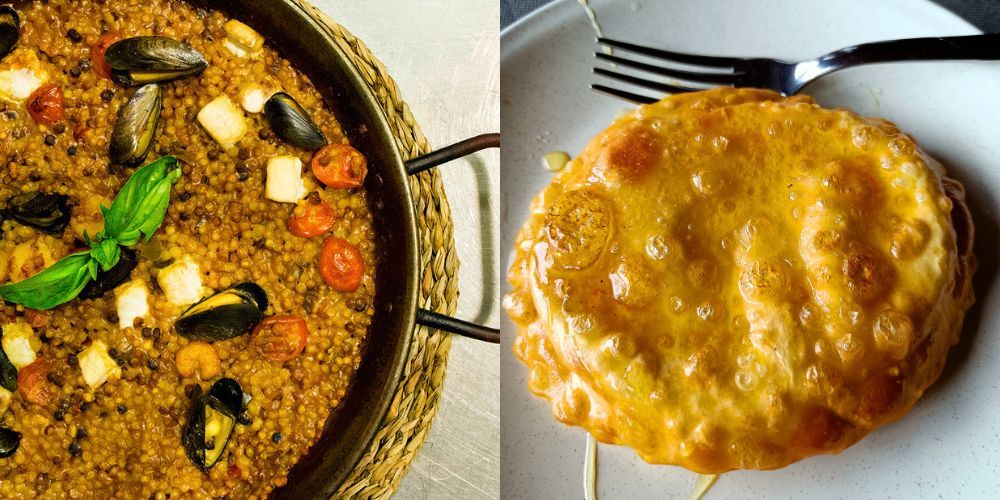
On the left fregula, on the right seada
If you want to continue your journey through the flavors and food culture of the island, we recommend traveling on to south to immerse yourself in the wonders of South Sardinia and the area of Cagliari, discovering traditional food as delicious as famous.
Which dishes are a must-try?
- Malloreddus (Sardinian gnocchetti): small semolina gnocchetti shaped like ridged shells, typical of the Medio Campidano area. The most famous version is malloreddus alla campidanese, served with sausage ragù, tomato, pecorino cheese, and saffron.
- Fregula (fregola): a true Sardinian couscous made by rolling semolina grains in a large terracotta basin, then toasted in the oven until they form small, irregular balls just a few millimeters thick. Once boiled in salted water, fregula can be served with various ingredients; in the Cagliari area, the most famous preparation is frègula cun còcciulas, fregula with clams.
- Seadas: fried semolina pastries filled with pecorino cheese and drizzled with honey, offering a perfect balance of savory and sweet. A symbol of Sardinian dessert tradition.
About the author
Valentina Veronica Peana
Never knew what to do when I grew up, in the end I went back to what I already did as a kid: telling stories, contemplating sunsets, eating a lot, sleeping everywhere. Travel & Food Editor, flaneuse, trend-setter, spare time ceramist.

Valentina Veronica Peana
A gastronomic journey to discover what to eat in Sardinia, with authentic flavors and traditional dishes that reflect the island’s culinary heritage!