
The first month of the year is a busy one for those who want to enjoy exhibitions, museums, cinema, dance, theater, and events of all kinds in the Capital: so what to do in Rome in January 2026? The agenda is really packed. But spending an afternoon or evening visiting galleries, theaters, and clubs, from the center to the suburbs, is the best way to keep the cultural resolutions made on New Year's Eve.
A symbol of life and energy, Rome remains one of Italy's most important cities when it comes to events and entertainment. There are many events scheduled, and here we have tried to select everything worth seeing, depending on your tastes, of course. A guide to activities to enjoy to extend your Christmas holidays with evenings of music, art, theater, and dance.
What to do in Rome in January 2026
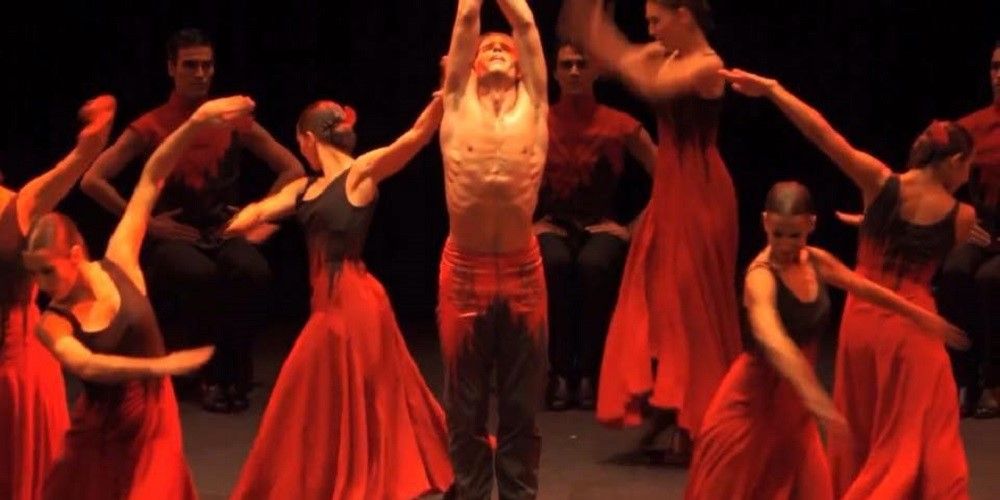
Sergio Bernal Dance Company
Deciding to spend January in Rome in the name of culture gives you the chance to ease back into your routine and enjoy concerts that aren't too crowded and visit exhibitions that are normally packed with people. After all, post-holiday depression is a nasty beast, and prevention is better than cure. That's where we come in, with a list of the best events in the city waiting for you when you return.
A Top 10 list of events to make your return to your desk or school desk less painful. Because you don't have to limit yourself to just living in the morning and afternoon: Rome shines at night with experiences to be had in the corners that come alive after dinner. It is at these moments that the capital reveals itself to be more intriguing and welcoming than ever. Enough talk, let's get started.
Discover every corner of Rome with the Rome Pass10. Las Estrellas: the grand gala of Spanish dances and music
The New Year celebrations continue with the third edition of the fiesta dedicated to lovers of flamenco and gypsy songs. The event, curated by Daniele Cipriani, is advised by dancer Sergio Bernal: the Madrid star is accompanied by his company, the Sergio Bernal Dance Company, with which he performs a stirring version of Maurice Ravel's Boléro, choreographed by Rafael Aguilar. Other artists include singer Sandra Carrasco and dancers Jesús Carmona, Eva Yerbabuena, and José Maya, all accompanied by guitarists, percussionists, and tocaores.
“This edition of Las Estrellas is extraordinary because we wanted to bring together very special artists who, while respecting the strong tradition in which we were all born and trained, share a contemporary vision of Iberian dance,” explains Bernal. “Each of us has our own particular accent, our own absolutely personal style, but this vision unites us. The gala we are presenting will be a revelation for the audience because we will show that the flamenco of the future is already here!” Tickets start at €38.
January 3 and 4, Auditorium Parco della Musica - Sala Santa Cecilia
9. Ops! 2026, the festival of contemporary circus
The Fondazione Musica per Roma, Sic – Stabile di Innovazione Circense, and Circo El Grito bring the vibrant and poetic language of contemporary circus to the capital. Under the artistic direction of Fabiana Ruiz Díaz, the festival offers the public “an open and transversal vision where body, theater, dance, and music intertwine in a continuous dialogue.” The program includes performances by national and international companies, “protagonists of a journey that recounts the vitality and poetry of the new circus through languages that speak to the heart and senses.”
Beginning on December 27, Ops! continues until January 6 with Bello! (a choral show combining acrobatics, dance, and words by Cordata For and Fabbrica C in collaboration with Flic Scuola di Circo, under the direction of Francesco Sgrò), Un pianoforte come cielo (a participatory concert with Daniele Longo for children aged 0 to 36 months), Jazzole (a show by Longo and Debora Mancini for families and children aged 5 and up), 2984 (a reflection on the fragility of civilization by and with Alessandro Maida), Okidok - In petto (a Beckettian show with clowns Benoît Devos and Xavier Bouvier) and Theseus by Collettivo Flaan, a mix of contemporary circus, physical theater, and acrobatics directed and written by Anton de Guglielmo. Tickets start at €12.
Until January 6, Auditorium Parco della Musica - Sala Santa Cecilia
8. The Seagull by Chekhov is back on stage
Written in 1895, The Seagull is a classic of modern theater: the first of four masterpieces that Anton Chekhov wrote for the stage went, by the author's own admission, “against theatrical conventions in a terrible way.” From January 7, the Teatro Argentina will stage the production by Tsv - Teatro Nazionale, translated by Danilo Macrì, with dramaturgy by Carlo Orlando and directed by Filippo Dini, starring Giuliana De Sio, Giovanni Drago, Valerio Mazzucato, Virginia Campolucci, Gennaro Di Biase, Angelica Leo, Enrica Cortese, Fulvio Pepe, and Edoardo Sorgente.
The characters of the young writer Kostya, the aspiring actress Nina, and her mother Irina, a famous actress engaged to Trigorin, an important writer much younger than her, are a snapshot of the absurdity of human destiny and the complexity of modern existence. “All of Chekhov's dramaturgy tells of an imminent end,” explains Dini in his director's notes. “His characters are a people of shadows who try to resist melancholy, sadness, and the torpor of the soul. They struggle, clash, and hurt each other—and themselves—in order not to succumb. The similarities with our own era are extraordinary and disheartening. It is as if our Anton were watching us from afar, with his ironic smile, waiting for our society, our world, our crazy way of life, to reach the point of explosion. Just like Dr. Dorn's bottle of ether.” Tickets from €22 to €36.
January 7 to 18, Teatro Argentina
7. UnaRoma: visual arts, music, films and performances
Luca Lo Pinto and Cristiana Perrella are the curators of this major collective exhibition, which opened on December 11 and will run until April 6 at the Macro Museum. Designed by the Parasite 2.0 studio, UnaRoma recounts the Roman art scene through an intergenerational lens and a variety of languages: visual arts, cinema, music, and performance. There are numerous events scheduled for January. For UnaRoma Live, on January 8, there will be a screening of the documentary Elegy of the Enemy by Federico Lodoli and Carlo Gabriele Tribbioli and a DJ set by Hugo Sanchez; on January 15, there will be a concert with the duo Canzonieri, presenting their debut album All Creature, and Mai Mai Mai (aka Toni Cutrone), who will lead us on a sonic journey through Mediterranean Hauntology.
The program continues on January 22 with the footage collection The Peripatetic Film & Video Archive - Immagini in movimento come bene comune by Carola Spadoni and the performance Calca 2 by Vittoria Totale. On January 29, there will be Mut, a short film made by artist and director Giulio Squillacciotti as part of the Pensare come una montagna (Thinking Like a Mountain) program, and the performance Differ Like Syllables from Sound by Vanshika Agrawal, curated by Sunaina Talreja. For UnaRoma Off, on January 17, there is Playtime by Spaziomensa at Grotta Mariotti, on January 24, Kene mette radici by Studio Kene in Via Giusti, and on January 31, Membranes, Entanglements, and Traces: Readings by Tabea Marschall and Laura McLean-Ferris by Lateral Roma in Via Ferdinando Ughelli.
Various dates, Macro Museum
6. La Chunga from Mario Vargas Llosa
The Green House is the second novel by Peruvian writer Mario Vargas Llosa, who passed away on April 15 at the age of 89. An autobiographical book that spans forty years of history, starting from a brothel in the desert town of Piura: this is where director, actor, and translator Carlo Sciaccaluga began, ready to conclude the trilogy dedicated to the 2010 Nobel Prize winner for literature, which began with The Plague Tales and continued with Appointment in London. The play is set in an old bar and features four men and two women: at the center of the story are Josefino, his beautiful lover Meche, and La Chunga, the owner of the bar.
“La Chunga focuses on another of Vargas Llosa's major themes: the relationship between men and women, the representation of women in male desire, and the violence that ensues,” reads the production notes. “Eros is the driving force, but it is the conflict between the two sexual and social imaginaries, male and female, that is the beating heart of the work.” The cast includes Debora Bernardi, Francesco Foti, Francesca Osso, Giovanni Arezzo, Liborio Natali, and Franz Cantalupo. The production is by Teatro Stabile di Catania and Teatro di Roma - Teatro Nazionale: tickets cost €20.
January 14 to 18, Teatro India
5. La bohème by Giacomo Puccini
Teatro dell'Opera di Roma
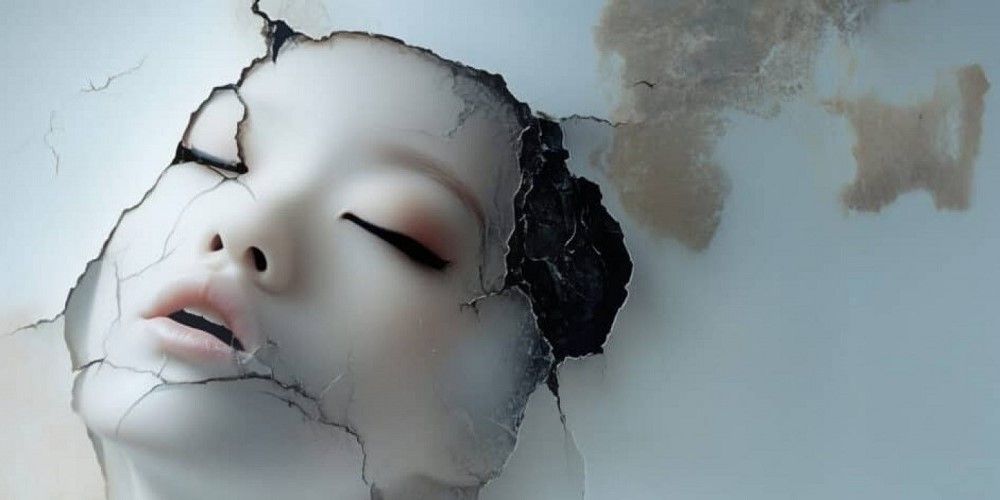
The 2025-26 season of the Teatro dell'Opera di Roma is called Doppio sogno and includes twelve new productions, fourteen operas, eight ballets at the theater, three tours by the ballet company, one tour by the orchestra, and four concerts. The new year opens with one of the most poignant love stories of all time in a production directed by Jader Bignamini and Alessandro Palumbo, with direction, sets, costumes, and lighting by Davide Livermore. Carolina López Moreno, Maria Agresta, and Yaritza Véli will play Mimì on various dates of the opera, accompanied by great international voices and an evocative set.
The production is the result of a collaboration between the Teatro dell'Opera di Roma and the Palau de les Arts Reina Sofía in Valencia, which includes French Impressionist paintings that envelop the protagonists in intense light and color. “Roméo et Juliette, Tancredi, The Marriage of Figaro, La bohème... all operas that, in different ways, traverse the dual tracks of vision and loss, aspiration and limitation,” explains Francesco Giambrone, superintendent of the Teatro dell'Opera, in the production notes. “A tension that also informs the work of the great directors involved in this season.” Tickets start at €20.
January 14 to 25, Teatro dell'Opera di Roma
4. Amore by Pippo Delbono
Author, actor, and director, Pippo Delbono wrote this show inspired by his encounter and friendship with Renzo Barsotti, an Italian theater producer who has been active in Portugal for many years. Their shared desire to create a show together gave rise to a musical and lyrical journey through Portugal, Angola, and Cape Verde that explores love as “a feeling, a state of mind, a mechanism in the human organism that selects, shifts, shatters, and recomposes everything we see, everything we feel, everything we desire.” The words are those of Carlos Drummond de Andrade, Eugénio De Andrade, Daniel Damásio Ascensão Filipe, Sophia de Mello Breyner Andresen, Jacques Prévert, Rainer Maria Rilke, and Florbela Espanca. The original music is by Pedro Jóia and various authors.
“This show presents a dual vision of love,” says Delbono in the director's notes. “On the one hand, and it is the texts that give voice to this, we all set out in search of that love, trying to escape the fear that assails us. On this journey, we try to avoid this love, even though we constantly recognize its urgency; I seek it, but I also want it, and that is precisely what is frightening. But the journey, made up of music, voices, and images, perhaps manages to lead us towards reconciliation, a moment of peace in which that love can manifest itself beyond every single fear.” The cast with Delbono includes Dolly Albertin, Margherita Clemente, Ilaria Distante, Mario Intruglio, Pedro Jóia, Nelson Lariccia, Gianni Parenti, Miguel Ramos, Pepe Robledo, Grazia Spinella, and Selma Uamusse. Ticket costs €26.
January 20 to 25, Teatro Vascello
3. The odd couple Massimo Silverio and Dumbo Gets Mad
Two must-see Italian indie music acts are coming to the stage at Monk in Portonaccio. Massimo Silverio is a singer-songwriter from Friuli who made his debut in 2023 with Hrudja and has recently returned with Sùrtum, his second album released by Okum Produzioni and produced by Manuel Volpe of the Rhabdomantic Orchestra with contributions from Nicholas Remondino, Martin Mayes, Mirko Cisilino, Benedetta Fabbri, and Flavia Massimo. Silverio writes and sings in the Carnic language, using songwriting, folk, trip hop, and rock to describe the marsh (sùrtum in Friulian) as a source of life and death. Fans of Daniela Pes, Iosonouncane, and Davide Ambrogio should not miss this.
Accompanying Massimo Silverio are Dumbo Gets Mad, the solo project of Emilian singer-songwriter, producer, and sound designer Luca Bergomi, back on track with the album Five Eggs. Psychedelic pop, vintage electronica, and funk are the ingredients of an album released by Carosello Records and ready to “observe life through the behavioral and relational dynamics we encounter on a daily basis.” “Values, important things and more frivolous ones are examined without judgement, but simply by asking questions, without providing any real answers for now, which I believe are fundamental in a process of curiosity and growth,” explains Bergomi. “It is therefore a psychedelic album in its aesthetics, structures and sound imagery, but very realistic in the themes it addresses.” Ticket price: €15.
January 22, Monk Club
2. The psychedelic sound of The Dream Syndicate
Special event at Largo Venue: the Californian cult band and pioneers of Paisley Underground arrive for the third of their four Italian dates. Led by Steve Wynn, the band celebrates 40 years of Medicine Show, their second album, which was reissued last year in a deluxe box set after reviving their old label Down There and recovering the rights to their recordings from Universal. For the occasion, the band will perform the 1984 album, the peak of Paisley Underground, in its entirety for the first time ever.
Born in the first half of the 1980s in the Los Angeles underground scene, the Paisley Underground music movement reinterpreted the folk and country roots of American tradition through new wave, post-punk, and psychedelia. Medicine Show is one of the most representative works of that history, the result of a long process that led Wynn to experience contrasts, collapses, and implosions, compounded by commercial failure and the termination of his contract with the A&M label. The music, however, has remained timeless, as demonstrated 40 years later. Ticket price: €25.
January 23, Largo Venue
1. The Paul Gauguin and Pablo Picasso exhibitions
Last days at the Museo Storico della Fanteria to visit the exhibitions dedicated to two giants of modern art. Gauguin. The Diary of Noa Noa and Other Adventures is inspired by the diary that the French artist wrote after his first stay in Tahiti: a text accompanied by woodcuts depicting daily life, myths, and ancient beliefs of the Polynesian islands. Among the works on display are the monotype drawing Study of Arms, Hands, and Feet, a series of lithographs from the book Avant et Après, and the painter's personal notebook, where you can admire sketches, studies of figures and animals, and a curious account of paintings sold, exchanged, or donated to friends and collaborators.
Produced by Navigare and curated by Joan Abelló and Stefano Oliviero, Picasso. The Language of Ideas explores the different media through which the master of Cubism and engraving conveyed his vision of the world and art. Divided into six thematic sections, the exhibition offers visitors the chance to view lithographs and etchings, ceramics, original drawings for costumes and sets for Russian ballets, sketchbooks of early drawings, and experiments in minor arts. Full-price tickets for both Gauguin and Picasso are €15 on weekends and holidays and €13 on weekdays.
Until January 25, Museo Storico della Fanteria
About the author
Written on 01/12/2025
Alessandro Zoppo
He has been listening to music and watching movies since he was 6. Proudly Samnite but Roman by adoption, he writes about culture, travel, economics, finance, politics and sports and curates film festivals.

Alessandro Zoppo
The new year brings concerts, shows, and much more to the Capital: discover 10-point list of what to do in Rome in January 2026.