
In partnership with

At the southern gateway to the Amalfi Coast lies a gem set between sea and mountains: Vietri sul Mare, a quiet heaven of beautiful views and colors. Ceramica Francesco De Maio, representing generations of excellent Italian family craft, an heritage of art and culture, was born right where the mountain meet the sea, between some of the most beautiful landcapes in the world.
The workshop and museum of ceramics Francesco De Maio, set in Nocera Superiore, are a true milestone in the long history of Vietri ceramic heritage. The essence of tradition and the spirit of innovation coexist in authentic and precious artworks that bring with them the colors of the Amalfi Coast, of the classic ceramics, and of the creativity of modern artisans. A fortunate combination, capable of being the ambassador of Made in Italy around the world.

Ceramiche Francesco De Maio and the Italian family craft: the italian ceramic heritage
🥇 Visit Italy’s brand partnership
It all began among the houses and narrow streets perched on the slopes of Mount San Liberatore, beneath a sun that makes the azure sea of the Amalfi Coast sparkle. It was here that two families with long artisanal traditions came together, those of Vincenza Cassetta and Francesco De Maio, both custodians of important names that have contributed to creating the immense heritage of artistic ceramics since the 15th century.
Through time, nothing has been lost of this very long and prestigious tradition, because Ceramica Francesco De Maio is still produced using artisanal techniques and each piece is decorated by skilled hands, with time and patience, as it has always been done.
As a result, every work is unique in itself, not only because it is capable of telling a whole story with just colors and shapes, but also because it's the guardian of an important legacy to cherish.
Find out more about Ceramica Francesco De MaioAn ancient art between memory and innovation

When strolling through the cobblestone streets of the Amalfi Coast villages, you find yourself surrounded by the bright white of the houses and the clear blue of the sky and sea; these are the traditional colors most cherished by local ceramists, but that doesn't mean there's no room for immagination.
It's indeed the ability to renew tradition that sets Francesco De Maio apart, but tradition is also one of the most important values here, which is why, from the most classic to the most innovative pieces, all production goes through the same creative process.
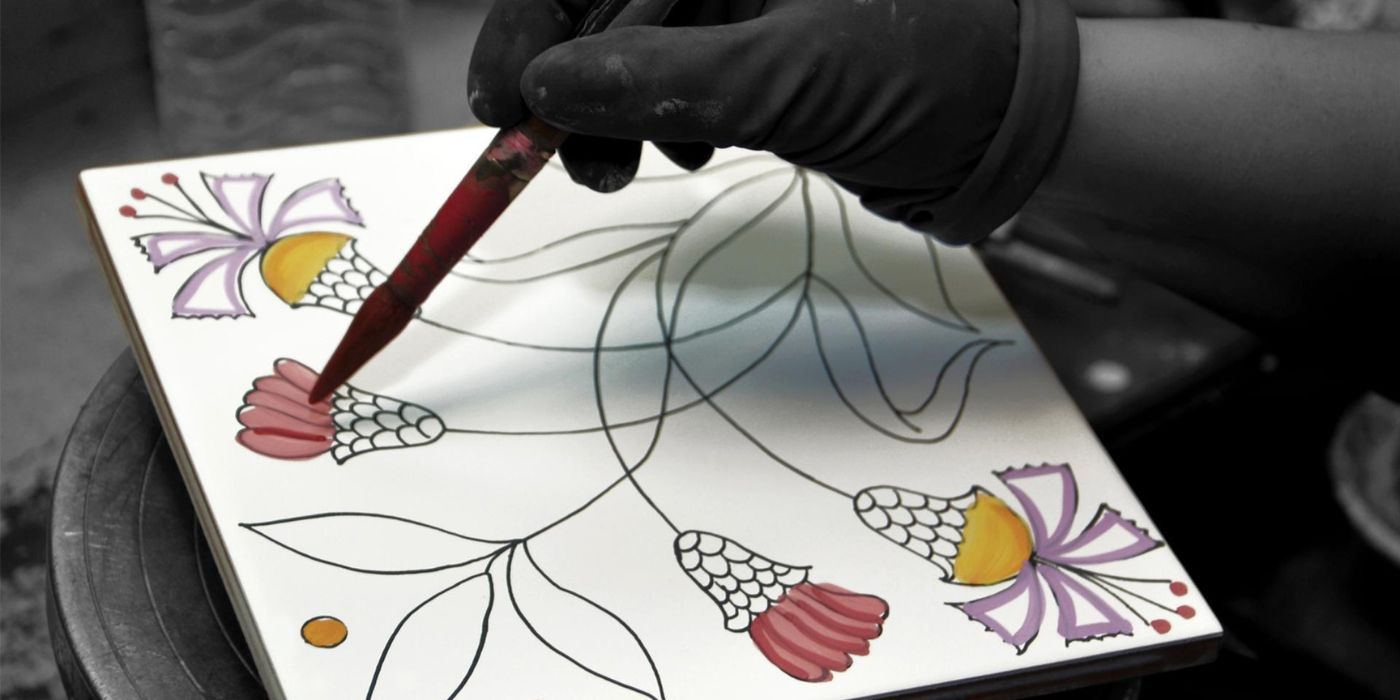
This is a small yet profound family ritual that has remained unchanged over time and includes several steps, from the careful selection of clays, to the white glazing according to local custom, to decoration carried out strictly by hand using marten-hair brushes. This is followed by long hours of firing in dedicated kilns.
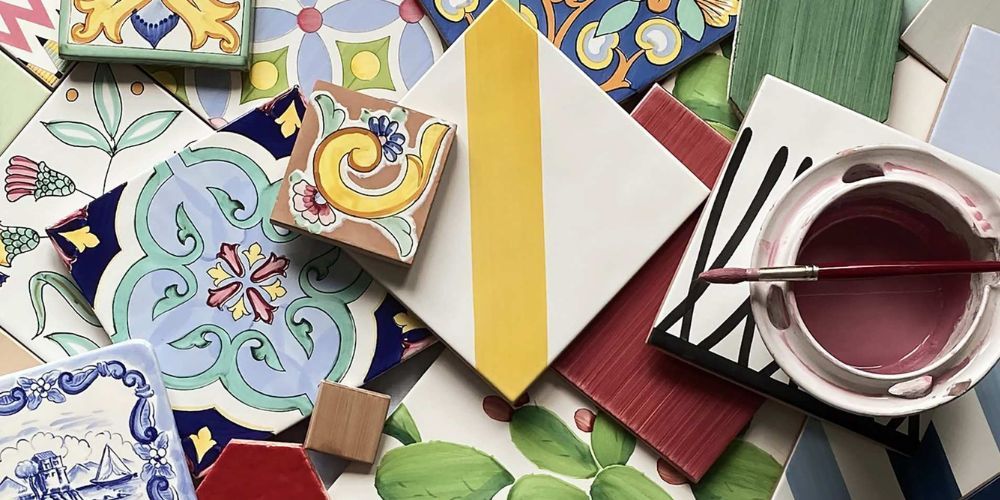
Decorative motifs range from traditional Vietri patterns, a holdover from a very long past that embraces Latin and Byzantine styles, Arab influences, and the aesthetics of the Renaissance and the Baroque, while also including entirely innovative creations.
The charm of this way of working lies not only in its complexity or in the skill required of the artisans, but also in the awareness that no industrial process, however advanced, will ever be able to replace it or even truly imitate it.
Seeing Ceramica Francesco De Maio up close, therefore, means in some way becoming part of a family story and at the same time, of the culture of a place with a strong identity, expressed through the beauty of handcrafted work.
Ceramiche Francesco De Maio, the excellence of the Made in Italy around the world
If the Amalfi Coast is the home of Ceramica Francesco De Maio, the excellence of this family’s artistic production has long since crossed the borders of this enchanting village. Iconic colors such as Vietri blue and the most classic decorative motifs are now appreciated and known worldwide, as are the quality and elegance of the ceramics, a true hallmark of the brand.
Beyond this, there are also tangible recognitions of the creative genius of its ceramic artists, that made Ceramica Francesco De Maio a true Italian culture ambassador.
The brand has quite literally traveled the world, reaching the MoMA in New York and the Italian Pavilion at Osaka 2025, earning important results over time. Among these is the exclusive license to reproduce the blue and white decorations designed by Gio Ponti in 1960 for the prestigious Hotel Parco dei Principi in Sorrento. The majolica pieces from this collection, after winning the prize "Compasso d’Oro alla Carriera al Prodotto" in 2024, have also made their way to Japan, to Tokyo.
Equally remarkable is the collaboration with the Van Gogh Museum in Amsterdam for the creation of majolica pieces inspired by the masterpieces of the celebrated painter, of course all made by hand, after a long and meticulous study of drawings and colors.
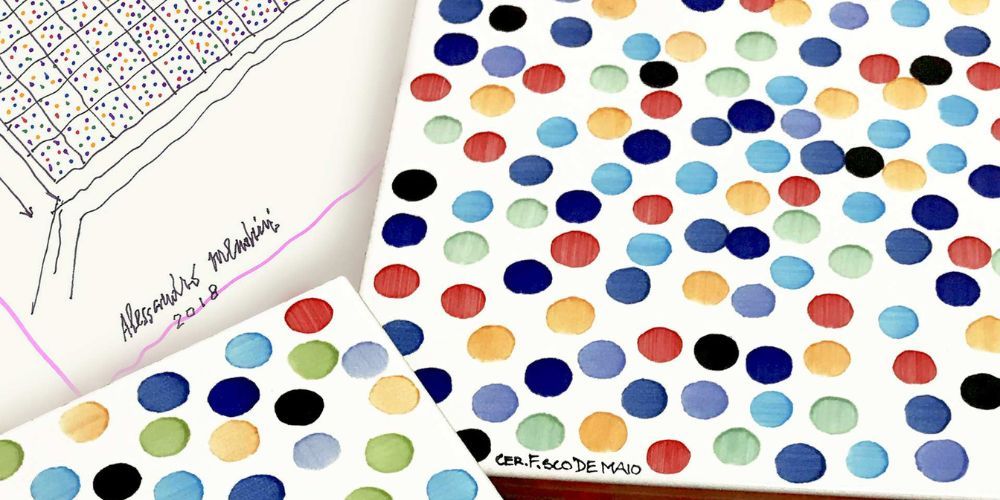
Once again, art and artisanal tradition came together when Ceramica Francesco De Maio met the creativity of Italian architect Alessandro Mendini. The result was a vibrant collection, both classic and contemporary, inspired by the artistic movement of pointillism, now at the MADRE Museum in Naples.
A museum to preserve a family tradition
Those who visit the Amalfi Coast will undoubtedly be captivated by the shimmer of the majolica-tiled dome of many of its churches. Praiano, Positano, Cetara, there are many villages where they can be admired, and Vietri sul Mare is certainly one of them. Stepping back in time, you'll find out that the Vietri's cathedral's dome too, is connected to the De Maio family. The union of Francesco De Maio and Vincenza Cassetta, founders of the family, gave rise to an unparalleled creative synergy, also because among the ancestors of the Cassetta family there was a ceramic artist who worked on this amazing church.
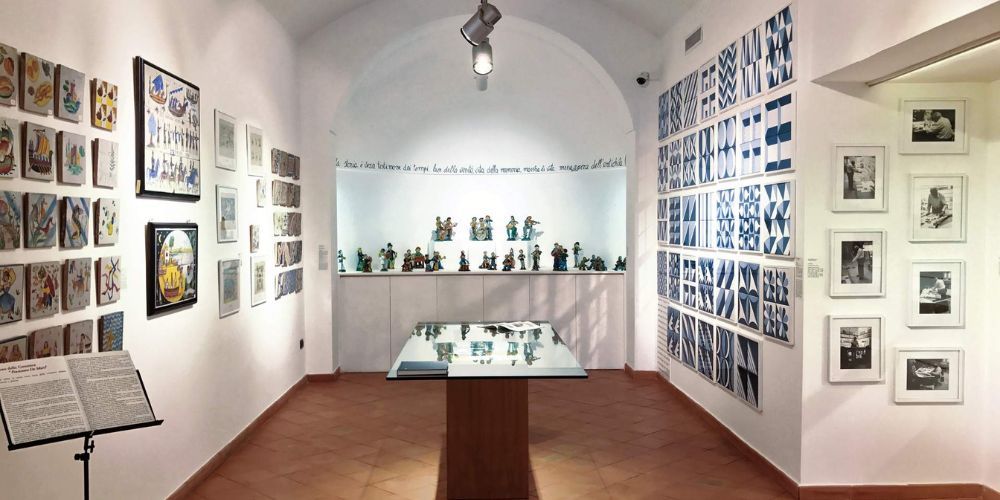
Perhaps it's no surprise, then, that true works of art have been created in Francesco De Maio's workshop. For this reason an entire museum is dedicated to them, located close to the workshop in Nocera Superiore, just a few kilometers from the center of Vietri sul Mare.
The museum can be visited on appointment, and it takes the visitors on an exciting journey to the distant year 1494, when it all began with the sale of fifty langelle, the traditional oil jars. The documents relating to this sale are in the museum, but they are not simple relics. They are, in fact, important and tangible testimonies of this long history, together with unique artifacts ranging from everyday objects to furnishings for churches and noble residences.
The Francesco De Maio Ceramic Museum thus becomes an important destination for cultural tourism in Italy, home to the most authentic craftsmanship.
About the author
Written on 29/12/2025
Paola Cirino
A content writer who can't help but travel. I'm also a food lover and very passionate about cinema.

Paola Cirino
Artistic ceramics, an heritage that the Francesco De Maio family has kept alive in the Amalfi Coast, with the excellence of its craftsmanship