
In partnership with


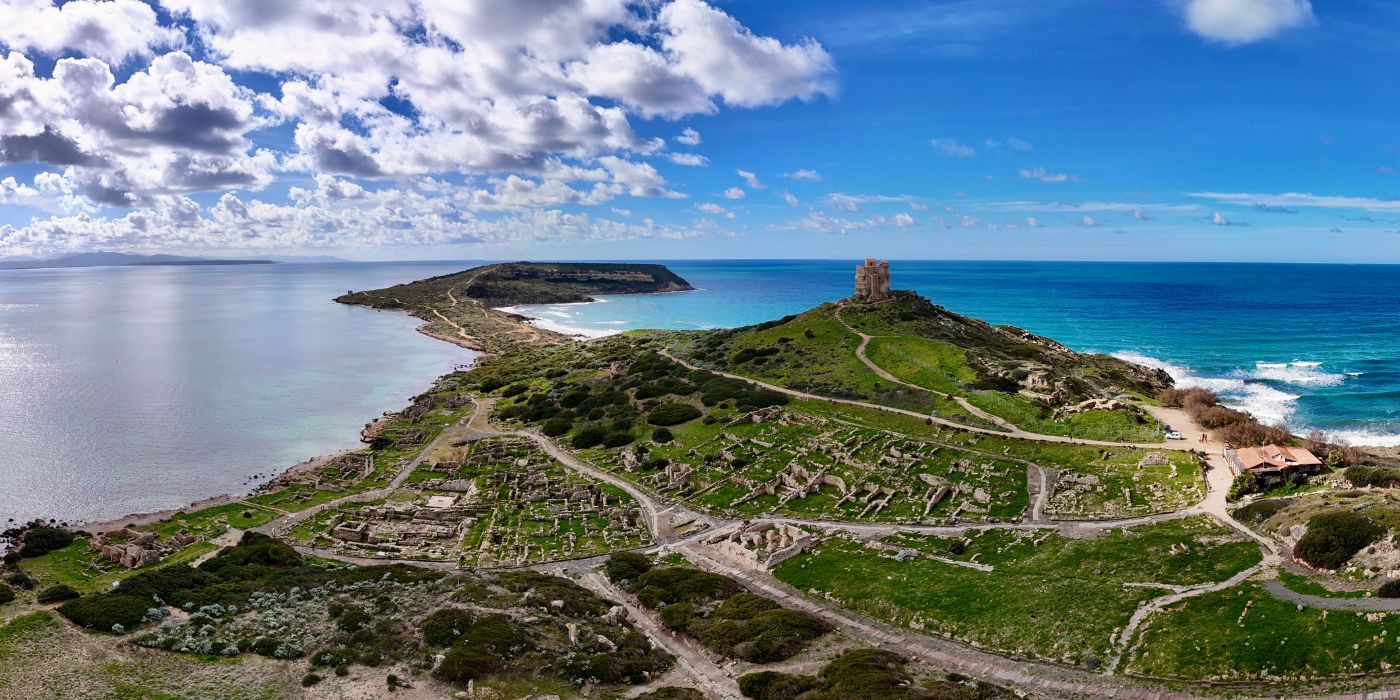
In Sardinia, along the west coastline gently caressed by the waves of the sea, lies a place steeped in charm and mystery, where seven thousand years of history unfold each day before the eyes of visitors. Here, since 2021, the Mont’e Prama Foundation has been caring for the Sinis Natural Archaeological Park with its incredible landscape, the excavations and the museums, in the municipality of Cabras, province of Oristano.
Italy still has many secrets to reveal, and it is in this place that you can witness extraordinary discoveries. Amid excavations that are constantly underway, expert archaeologists reveal day after day, the passage of millennia, the stories of ancient cultures and seafarers that sailed the Mediterranean sea. Now it's time to set off on an unprecedented journey, through the pages of a book that begins in the depths of time.

Sinis Natural Archaeological Park, an invaluable heritage of art and nature
The Sinis Natural Archaeological Park is set in a region of extraordinary natural value, where the beauty of the landscape and the importance of cultural heritage come together in a truly unique place. The protected marine area boasts gleaming white beaches alternating with towering cliffs, while pink flamingos nest in the wetlands. It is within this paradise of light and color that abundant traces remain of very ancient Nuragic settlements.
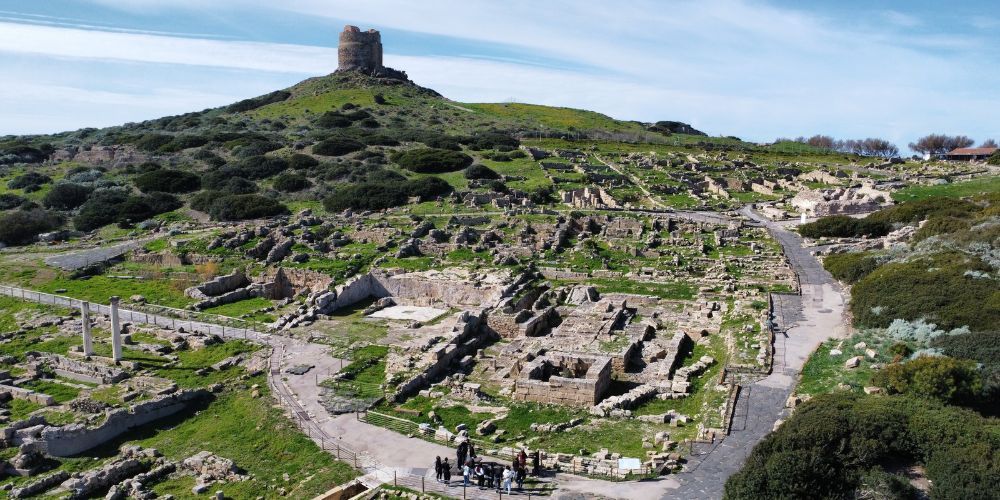
It was the Phoenician people the ones who founded the city of Tharros, whose remains, nestled between the San Marco hill and the small San Giovanni village, form the heart of the Sinis Natural Archaeological Park.
Anyone wishing to plunge into history, even before diving into Sardinia’s dreamlike sea, should not miss any of the four main sites that make up the extraordinary mosaic managed by the Mont’e Prama Foundation.
In addition to the archaeological area itself and the adjacent Spanish Tower of San Giovanni, the park also includes the Giovanni Marongiu Civic Museum, home to the Giants of Mont’e Prama, and the Mont’e Prama archaeological site itself from which they originate. Not to be overlooked is one of the oldest early Christian churches in Italy, San Giovanni.
Find out more about Sinis Natural Archaeological ParkListen to the podcast version of the article with the voice of Monna Lisa & Leonardo
The home of the Giants of Mont’e Prama
Our journey begins in the coastal town of Cabras, with a visit to the Giovanni Marongiu Civic Museum. Its galleries offer a wealth of evidence attesting to the long history of the Sinis, from finds related to the Neolithic site of Su Cuccur’e is Arrius, to those that tell the story of the fascinating Nuragic civilization of Su Murru Mannu and Sa Osa, all the way through to the late ancient age.
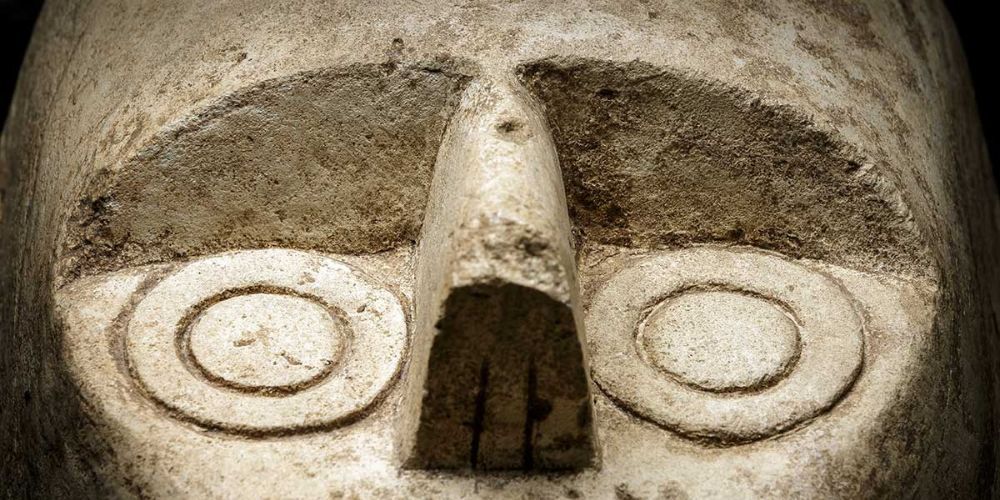
Without a doubt, however, the most illustrious heirs of the remote past of this corner of Italy are the Giants of Mont’e Prama. The valiant guardians of the ancient necropolis of Mont’e Prama, just over 10 kilometers from Cabras, are warriors, boxers and archers who came back to light almost accidentally in the 1970s.
Found by chance by some farmers, these perfectly finished, huge statues inspired the logo of the Foundation that bears their name. Standing face to face with these statues depictin men who lived during the Nuragic period nearly three thousand years ago is certainly a deeply moving experience, but more than anything, the Giants are a historical testimony of inestimable value, as they are the oldest antropomorphic statues in the west of the Mediterranean sea.
The buried treasures of the Church of San Salvatore
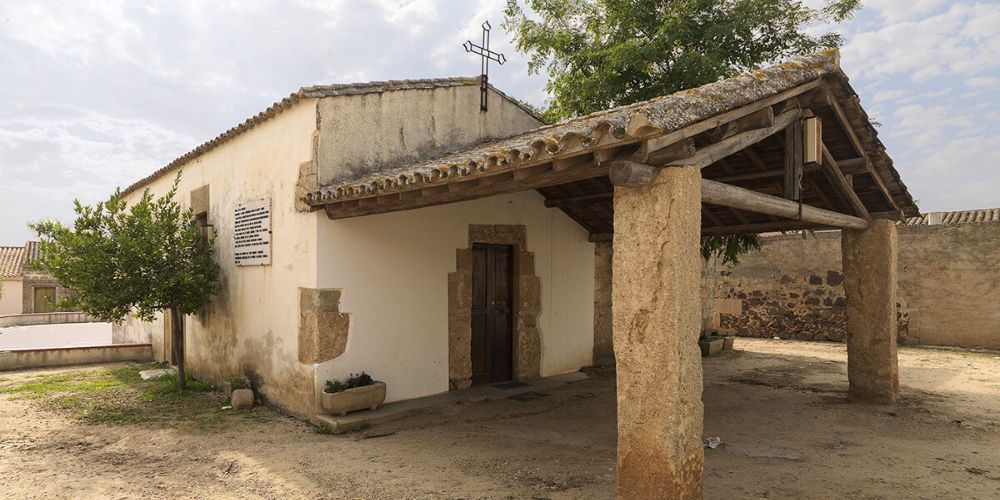
Between Cabras and the necropolis of Mont’e Prama lies another gem of the Sinis Archaeological Park, the village of San Salvatore, which comes to life once a year, every summer, during novena preceding the feast dedicated to the saint.
At the heart of this small settlement stands the Church of San Salvatore, built around the 16th century, and expanded at the end of the 18th century. Adding to the church's value is its hypogeum, made up of corridors and chambers partially carved into the rock, surrounding a well whose waters have always been considered sacred. Water is a vital element, which is why the well has always been considered an object of veneration.
The charcoal drawings on the walls recount centuries of stories involving both men and pagan deities, from the Roman era to the 16th century, while the inscriptions in Greek, Latin, and Arabic language tell the story of the passage of people over the centuries.
In the wake of the ancient civilizations, a past still waiting to be discovered
Let us now move south, toward Capo San Marco, to stroll through the streets of the ancient Punic city of Tharros, the crown jewel of the Sinis Natural Archaeological Park.
This town in the heart of the Mediterranean is the legacy left to us by the ancient civilizations that established new centers of culture and trade upon the remains of even older Nuragic settlements.
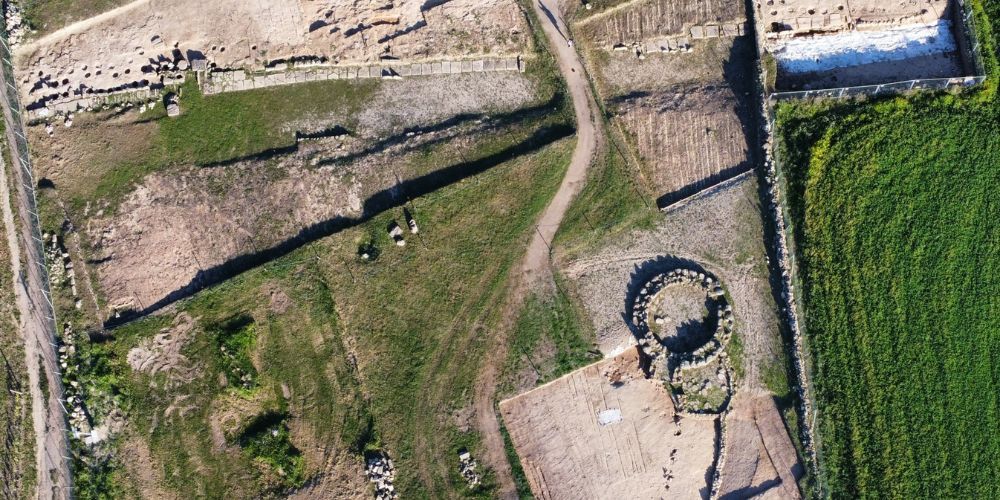
At this extraordinary site, archaeologists continue their work, bringing to light the traces of an unparalleled layering of history and art, which amazes and poses ever new questions. Here is possible to see how the Punic tofet, a sacred funerary area, was built over the Nuragic village. How, among Carthaginian walls and sanctuaries, the Romans later constructed aqueducts, roads, and temples, and how, later still, Byzantine-era Christian buildings were superimposed upon them.
The city was abandoned in 1070, but today it has returned to shine under Sardinia's bright sky, with still so many stories to tell.
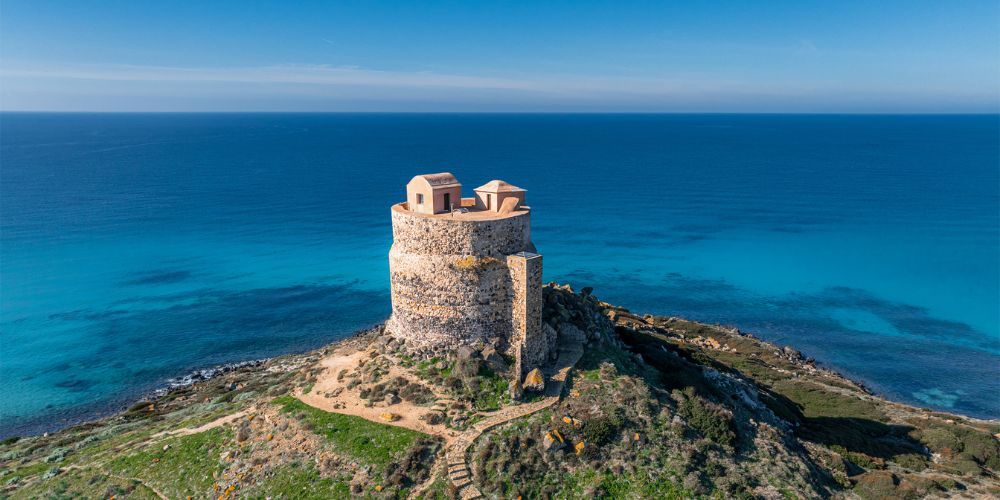
Finally, just a short walk from the ancient city, stands the Spanish Tower of San Giovanni, which, like the other monuments in the area, encapsulates centuries of history. Built in the 16th century with reused stones from nearby Tharros, it also offers an extraordinary panoramic view over the vast natural and historical heritage safeguarded by the Mont’e Prama Foundation.
The heart of the Sinis: The Mont'e Prama Foundation
Holding together the pages of the long history of the Sinis Natural Archaeological Park is the Mont'e Prama Foundation, the beating heart of a territory endowed with unparalleled richness.
Since 2021, the Foundation has been committed not only to the simple preservation of the Sinis' cultural beauties, but also to their promotion through events, exhibitions, and various initiatives, to keep an illustrious past alive but not still in time.
The archaeological areas preserved here are a constant source of discovery. Those who travel to this corner of Sardinia will never be mere tourists. Visiting these places means experience the thrill of witnessing with your own eyes the archaeologists working to bring back to the light a buried legacy, becoming a living part of an unfinished tale, played out daily on a thousand-year-old stage.
How to reach the Sinis Archaeological Park
The Sinis Archaeological Park may seem like a remote place, distant in both time and space, but it is in fact very easy to reach. The city of Oristano is just 15 kilometers away from Tharros, and serves as the main gateway.
By plane, the most convenient airport is Cagliari–Elmas, about an hour from Oristano. The Alghero–Fertilia airport, though slightly farther away, is also a good option.
By train, Oristano can be easily reached from Cagliari and several other cities in Sardinia. From there, you can continue toward the Sinis Peninsula by bus or car, crossing the lagoons and beginning to immerse yourself in the dreamlike landscape that defines this area.
By car, the archaeological park can be reached via Oristano by taking the SS131, one of the island’s main north–south routes.
About the author
Written on 23/12/2025
Paola Cirino
A content writer who can't help but travel. I'm also a food lover and very passionate about cinema.

Paola Cirino
Discover Italy's unveiled secrets: the Sinis Natural Archaeological Park, where history is revealed, in Sardinia's pristine nature