
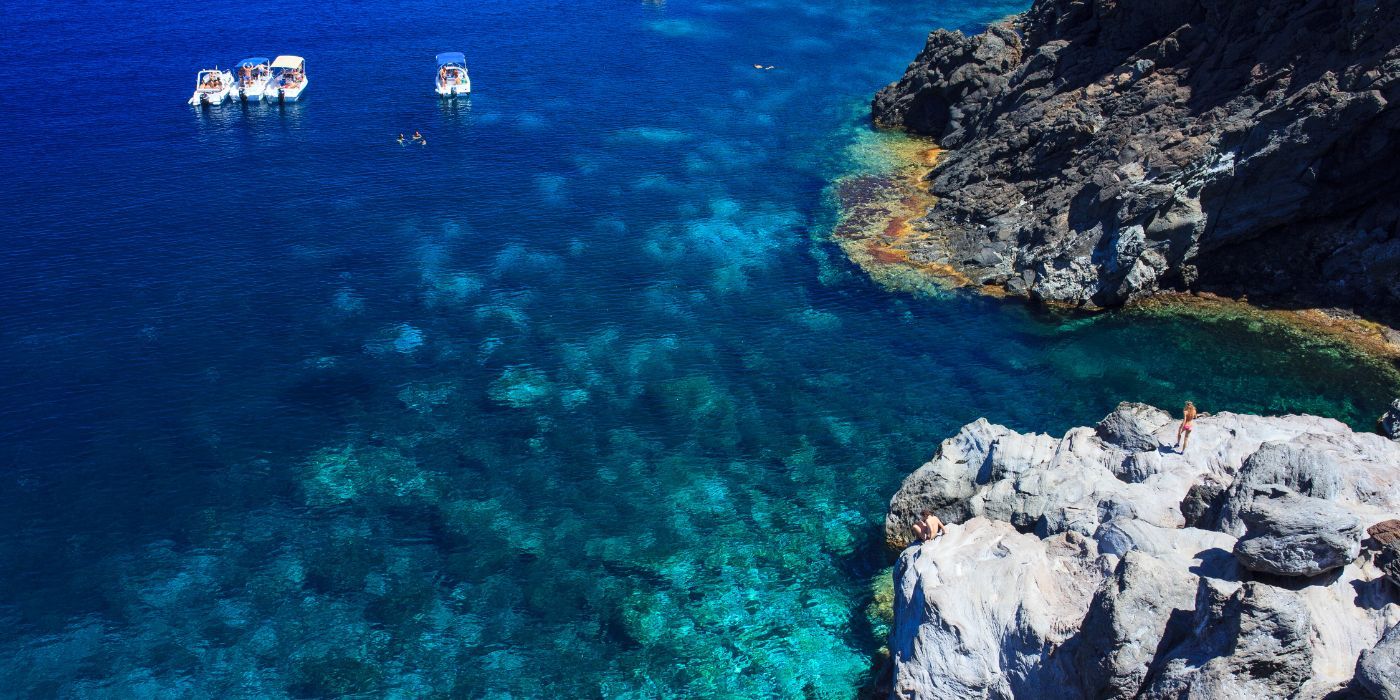

Rising from the deep blue waters of the Mediterranean, much closer to the coast of Tunisia than to mainland Italy, Pantelleria is a land formed by fire, wind, and sea. Known historically as the Black Pearl of the Mediterranean due to its dark volcanic soil, this off-the-beaten-path paradise remains one of Europe’s most enigmatic destinations in 2026.
Stepping foot on Pantelleria instantly recalibrates your senses. Here, standard sandy beaches give way to sculpted obsidian cliffs, natural thermal saunas built into mountain caves, and emerald volcanic crater lakes. Arabic architectural influences blend seamlessly with traditional Sicilian heritage, giving the island an alluring, timeless atmosphere that feels entirely distinct from the rest of the continent. For travelers seeking an authentic escape far removed from mass tourism, Pantelleria represents the ultimate Mediterranean sanctuary.

Where is Pantelleria located? Italy's outpost in the heart of the Mediterranean
Pantelleria is located in the Strait of Sicily, it occupys a unique strategic and geographical position in the heart of the Mediterranean Sea. Situated roughly 100 kilometers southwest of mainland Sicily and only 60 kilometers east of the Tunisian coast, this remote island is actually closer to Africa than to Italy.
Administratively part of the Province of Trapani, Sicily, Pantelleria has a characteristic dry, wind-swept climate, intense Mediterranean sunlight, and fascinating cultural mix of Italian, North African, and ancient Phoenician influences.
How to get to Pantelleria in 2026: flights, ferries and local stays
Reaching Pantelleria is easier than ever in 2026, thanks to expanded seasonal travel connections while maintaining the island's secluded charm.
By air: Pantelleria Airport (PNL) offers direct direct domestic flights from major Italian hubs such as Palermo, Trapani, Milan, and Rome during peak season.
By sea: Year-round ferries and high-speed hydrofoils connect the island to the western Sicilian ports of Trapani and Mazara del Vallo.
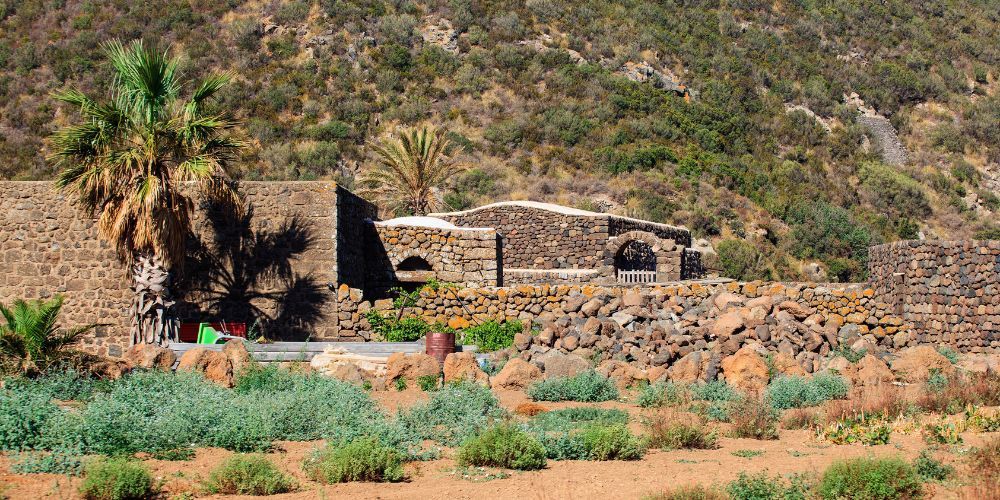
To truly experience Pantelleria like a local, skip standard accommodation and stay in a traditional dammuso. These unique lava-stone dwellings feature thick whitewashed walls and domed roofs designed centuries ago to capture rainwater and keep interiors naturally cool during Mediterranean summers. Today, many dammusi have been converted into eco-luxury villas complete with private infinity pools, lush Mediterranean gardens, and panoramic sea views.
Top things to see in Pantelleria: must visit landmarks in 2026
Pantelleria’s landscape is filled with extraordinary natural wonders and historical sites. The Sicilian island offers several must-visit locations, here are the essential attractions to include on your 2026 itinerary:
Lago Specchio di Venere
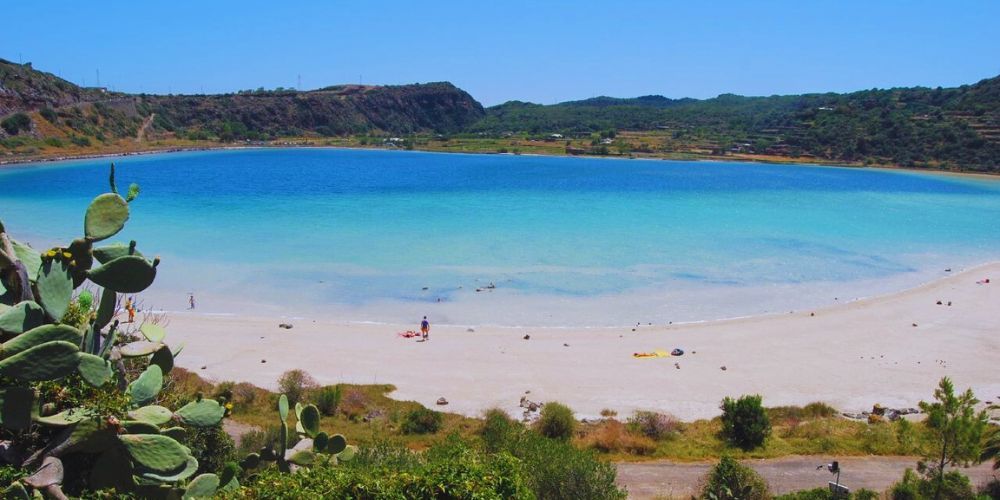
Among the natural wonders of the island of Pantelleria that you will find in this guide, il Lago Specchio di Venere (Lake Mirror of Venus) is one of the most fascinating. It is a basin of volcanic origin, fed by underground springs and surrounded by an evocative landscape. Its name comes from an ancient legend that the lake was the favorite mirror of the goddess of love, Venus, who was reflected in it before meeting her beloved Bacchus.
The lake has an emerald green color that changes shades according to sunlight and the presence of algae on the bottom. Its waters are warm and salty, with a temperature ranging between 40 and 50 degrees Celsius. Hot springs that contain sulfur and other health-beneficial minerals gush out on the southern edge of the lake. In fact, the mud that covers the bottom has skin-healing properties and is used for aesthetic and therapeutic treatments.
Lake Venus Mirror is easily accessible from Bugeber, either by car or bicycle.
Barbacane Castle
Barbacane Castle is an ancient fortress overlooking the old harbor and owes its name to an outer fortification, called Barbacane, which served to defend access to the harbor from enemy attacks. However, due to an error by a 19th-century official, the name Barbacane was given to the castle itself.
The castle has very ancient origins: it was built by the Byzantines between the sixth and seventh centuries, but was modified and enlarged by the Normans in the twelfth century, who added a round tower with a cross engraved on the top. This cross represented the symbol of the Christian reconquest of the island, which had been under Arab rule for three centuries.
Visiting the castle, one can discover the various rooms that housed different functions: the dungeons, where prisoners were locked up; the governor's house, where political affairs were conducted; the troop quarters, where soldiers stayed; and the tower of St. Barnabas, where ammunition was stored. A clock with two bells, one of which dates back to 1750, can be seen on the circular tower.
Giardini Panteschi (or Pantelleria Gardens)
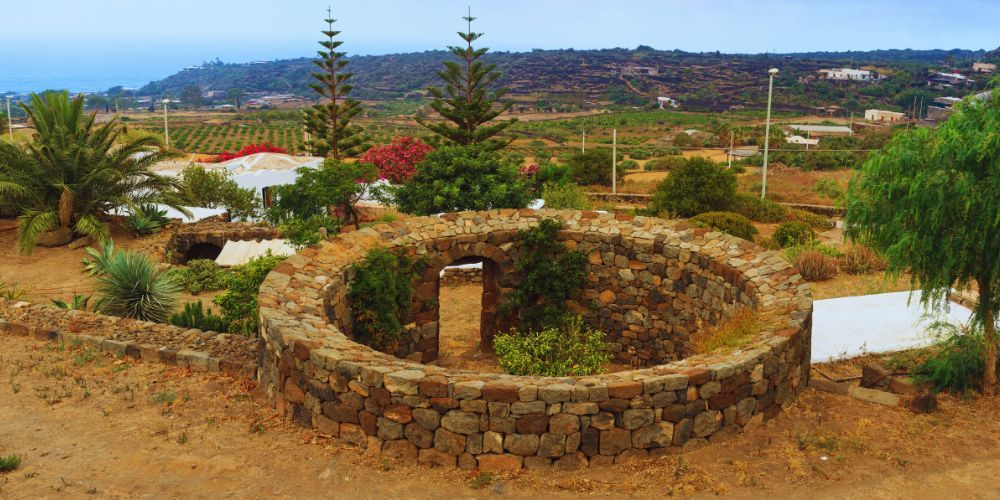
Pantelleria Gardens are circular dry-stone structures that protect plants from weather and drought. These works are lampane examples of the wisdom and hard work of Pantelleria's farmers, who were able to create an ideal microclimate for crops, taking advantage of the island's scarce water resources.
Their origin is very ancient, perhaps linked to the presence of the Arabs on the island, and they represent an invaluable cultural and landscape value. For this reason, the FAI (The National Trust for Italy) helped to have them recognized as a Unesco heritage site, thus safeguarding a unique tradition in the world.
Montagna Grande
The Montagna Grande (The Great Mountain), at 836 meters above sea level, is the highest point in Pantelleria. It is a peak that dominates the island with its imposing bulk and offers striking scenery to those who visit it. The Montagna Grande is part of the Riserva Naturale Orientata di Pantelleria, a protected area that preserves a rich biodiversity of plants and animals typical of the Mediterranean maquis.
To reach the summit, one can take a paved road that starts from the contrada Sibà. Along the way, you can follow paths that lead to various viewpoints. From here one can enjoy spectacular views of the crater of Mount Gibele, the districts of Khamma and Tracino, and, on clear days, the Sicilian coast.
Another attraction of the Montagna Grande are the favare, natural fumaroles that testify to the volcanic activity still present on the island. The Montagna Grande is a must-see destination for those who love nature and trekking.
What to do in Pantelleria: unforgettable 2026 experiences
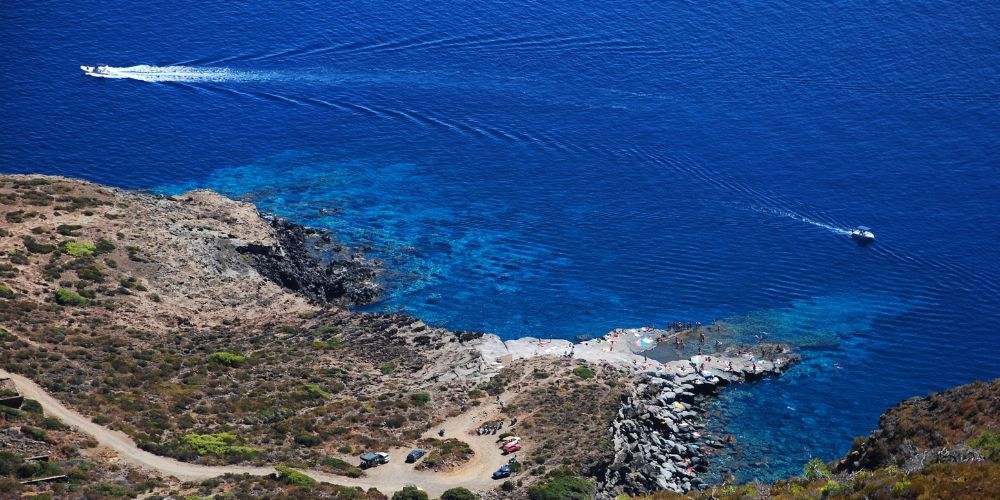
As we have seen in this definitive guide, Pantelleria offers numerous activities to have fun and discover the island in an alternative way. Among the most popular are:
- Tour the island by boat to admire its rugged coastline, sea caves, hidden coves, and crystal clear waters. You can rent a motor or sail boat or join an organized mini-cruise.
- Scuba diving, to explore the seabed rich in marine life, submerged wrecks, and underwater volcanic phenomena. You can rely on one of the many diving centers on the island that offer courses and equipment for all levels.
- The tasting of typical Sicilian products, to savor the authentic flavors of the island. Dishes not to be missed include fish couscous, zighinì (a spicy meat stew), sweet ravioli stuffed with ricotta and cinnamon, and Passito di Pantelleria, a fortified wine made from zibibbo grapes.
About the author
Marco Brunasso
Rock'n'roll guy made in Pompei

Marco Brunasso
Amid beaches, breathtaking cliffs and Arab-derived structures, we set out to discover Pantelleria, the Black Pearl of the Mediterranean Sea.