
The town of Putignano is located in the metropolitan city of Bari, in Apulia, and is among the most interesting places to visit in the Murge area, especially in winter. In particular, the Carnival of Putignano is the most important and prestigious event of this Apulian village. No wonder that Putignano is known among the oldest Carnival celebrations in the world and the most important ones in Europe with a history built over 632 through magic and fun.
Don't want to miss the Carnival of Putignano 2026 during your trip to Apulia? Then you're in the right place! Read this article to find out in detail the full schedule and the dates and how to get to the event. Furthermore, some interesting historical and cultural notes on the celebration of Carnival in Apulia are there for the most curious readers.
Carnival of Putignano 2026, the joyful folly yet to be discovered
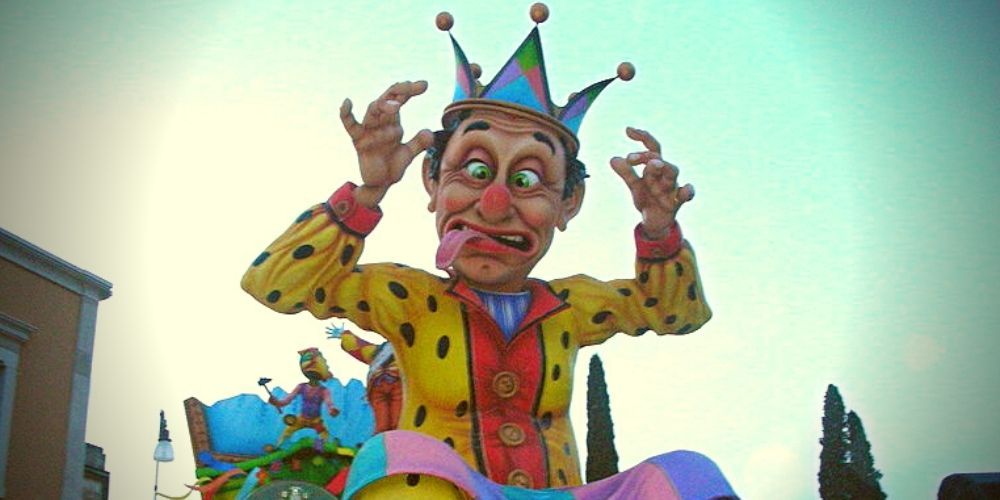
The Carnival of Putignano is the third oldest in Italy, after the Carnival of Venice and the one in Fano.
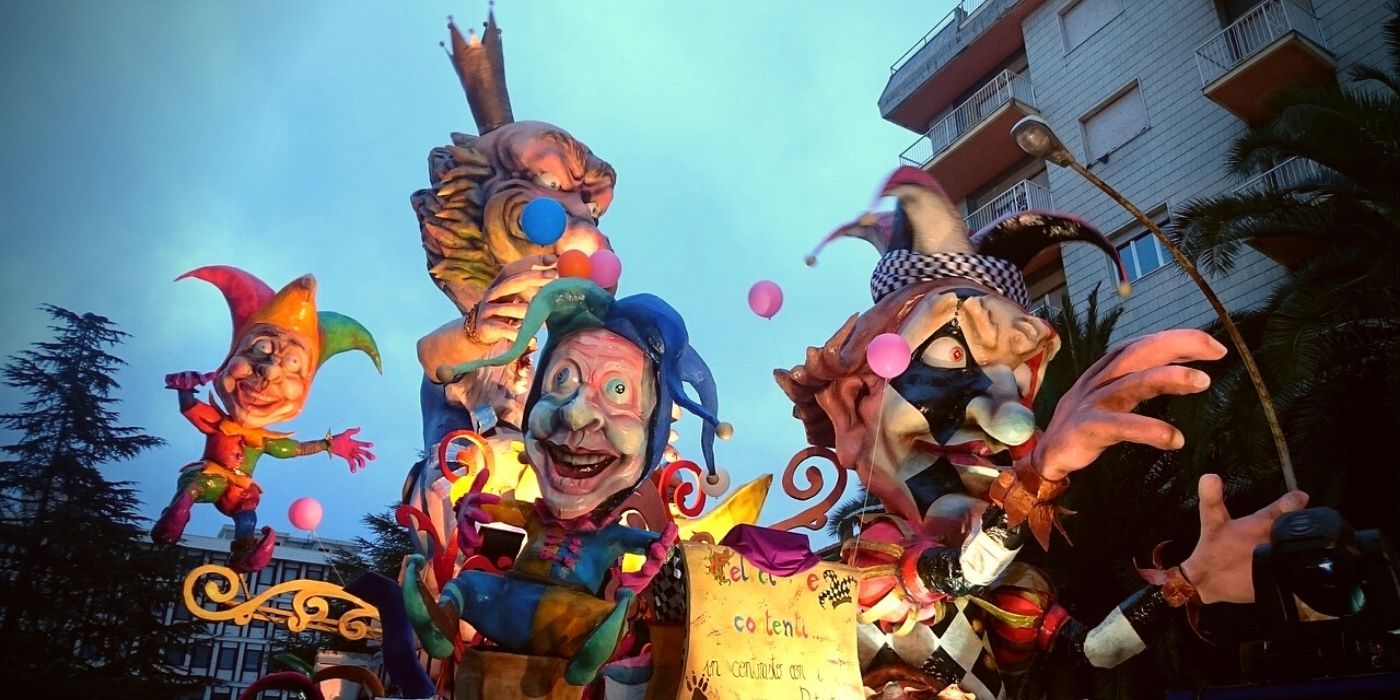
Needless to say, Carnival in Italy is an important celebration. There are many ancient traditions spread throughout the country, particularly that of the allegorical floats, which showcase the skill and creativity of true papier-mâché Maestros.
The Carnival of Putignano 2026 is ready to amaze with these stunning artworks that are a little magical, a little crazy, always colorful and fun, but sometimes also carrying important social messages.
Let’s get to know this great fest with:
•The schedule of the main dates
•Tips on how to get to Putignano by car stress free
•Information and curiosities about the history of the event
•Which are the other unmissable Carnivals in Apulia
Carnival of Putignano: 2026 schedule and dates
The Carnival of Putignano 2026 officially begins on January 17th and ends on Shrove Tuesday, February 17th. Throughout the month, events, parades, and performances follow one another, blending folklore, ancient traditions, and a touch of madness.
Here are the main events not to be missed to fully experience the magic of the festival.
January 29, from 8:00 PM, unmarried young people celebrate the carefreeness of their age during the Thursday of the Mad.
February 1, from 3:00 PM, there is the first of the four grand parades of allegorical floats, the work of extraordinary papier-mâché artisans.
February 2, from 7:00 PM, is the Bear Festival. Two giant papier-mâché bears are the stars of a colorful procession with dozens of participants, rooted in ancient peasant rituals.
February 5, at 8:00 PM, it is the turn of the Thursday of Married Women, a grand celebration that involves the entire historic center.
February 7, from 7:00 PM, the second grand parade of the floats takes place.
February 12 is dedicated to celebrating the “cuckolds”. With various events from early morning until evening, this day celebrates what elsewhere is an embarrassing secret.
February 15, at 11:00 AM, is the third parade of the floats through the streets of Putignano.
February 16, at 9:00 PM, the Carnival receives its last rites. A procession of participants dressed as priests bids farewell to the dying Carnival, a symbol of the community’s vices.
February 17, from 7:00 PM, the grand finale begins with a series of events: the final parade of allegorical floats and the award for the most beautiful float, 365 tolls of the giant papier-mâché bell, and the procession for the “funeral of the Carnival” featuring the papier-mâché pig, symbol of excesses.
Not all events are free to attend. For full details, check the official site.
Carnival of Putignano in Apulia: how to go and where to park
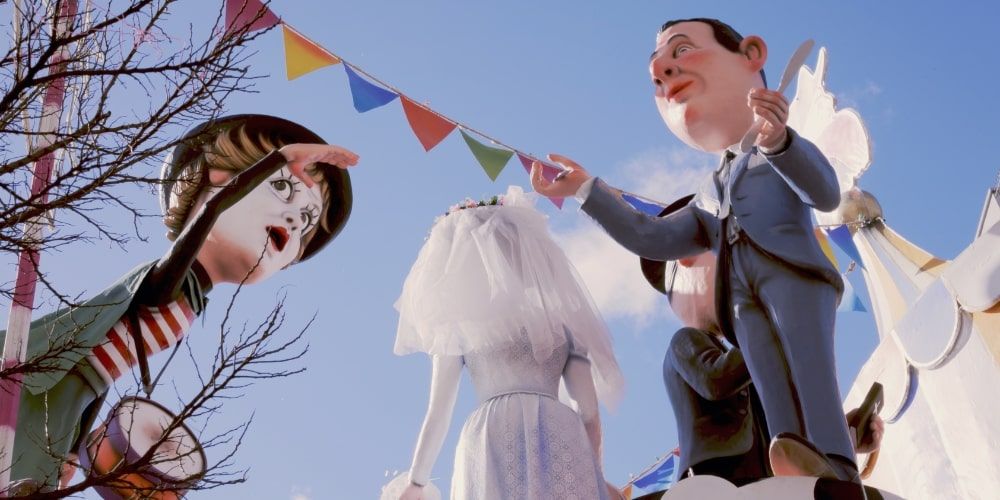
During the Carnival, one of the main problems concerns the city road system, modified to make it possible for the parades of floats and masks to pass and entertain people.
Travelling Apulia by car, on the other hand, is surely the best way to move around the region and discover its countless beauties, such as the stunning baroque churches of Lecce or the Abby of Santa Maria di Cerrate.
Putignano has its own train station but it can be reached quite easily by car, by the SS16 from Lecce and Foggia, and in less than 40 minutes by the SD172 from Bari.
Here are some suggestions for you about where to park in Putignano during the Carnival:
Parcheggio di Viale Cristoforo Colombo, 70017 Putignano BA
Parcheggio di Via Castellana-Putignano, 70017 Putignano BA
Parcheggio Mercato Boario, 70017 Putignano BA
Parcheggio SP237, 70017 Putignano BA
Parcheggio di Viale Cristoforo Colombo, 70017 Putignano BA
Parcheggio di Via Castellana-Putignano, 70017 Putignano BA
Parcheggio Mercato Boario, 70017 Putignano BA
Parcheggio SP237, 70017 Putignano BA
History of the Carnival of Putignano: origins, symbols and Farinella
The Carnival of Putignano is one of the oldest in the world and its origins are rooted in the heart of the Middle Ages, in 1394. An era that was certainly dark and full of dangers, in particular due to the fear of famine and pestilence or of assaults and looting by the Saracens, the terror of the Mediterranean in that period. This is in this scenario where the cult of this celebration was born.
According to history, by order of the Knights of Malta the relics of St. Stephen had to be secured in a place far from the coast, therefore exposed to attacks from the sea. The chosen location was the village of Putignano, located high up on the hills of the Apulian hinterland and much easier to defend than any other coastal city.
The chronicles of the time tell about the moving of the relics which turned into a real parade with songs and dances, which was joined along the way by the local farmers, engaged in that period of the year in the cultivation of vines using the technique of offshoot. Here comes the reference to the Festa delle Propaggini (offshoot festival), a long period that marks the beginning of the Carnival of Putignano and in Apulia at Christmas time (December 26th) and ending on Shrove Tuesday.
The tradition of the procession of offshoots, matching the sacred and the profane in an atmosphere of joy, still today makes the spirit of the Carnival and of the colorful and amusing masked parades. In particular, the Carnival of Putignano is among the best known for the parade of Carnival floats, giants made of papier-mâché by some of the best Apulia's craftsmen, who master the art of this material and which turn of the festival every year, merging tradition, culture and satire in a show no one should miss to experience!
To mark the end of the Carnival period it comes the Campana dei Maccheroni: a real papier-mâché bell which, thanks to an audio amplification system, rings 365 times in the last hour of the Carnival and reminds to all the fun loving ones to enjoy a last dance or a last exaggeration of good food and excellent wine.
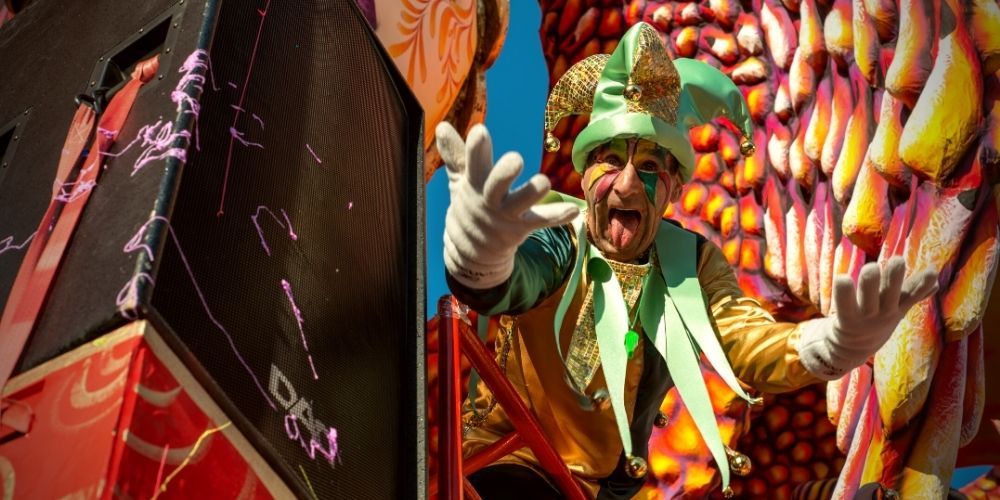
One of the symbols of the Carnival of Putignano is the hometown mask: Farinella. Its name comes from a local speciality, a dish of popular cuisine based on chickpeas and barley. Farinella is represented as a fusion between the famous Harlequin and a classic Joker of cards, dressed in bright colors and wearing a hat with bells, and his mask looks like an old man with a red nose. He is a symbol of joy, excess and light-heartedness, of a Carnival spirit which knows no limits. According to local folklore, Farinella shall also be a city hero, the savior of Putignano from a Saracen attack thanks to his ingenious idea of staging a plague epidemic in the village to frighten the invaders: a real Carnival joke!
Carnival in Apulia: not only Putignano
Carnival is certainly one of the most important celebrations in Apulia, a southern Italy’s region rich in culture, ancient traditions and with a cosmopolitan soul.
Celebrating the Carnival in Apulia in 2026 means diving into a joyful atmosphere, made even better by the good Apulian cuisine, especially the typical sweets, such as chiacchiere (‘small talks’) or dita degli apostoli (‘apostle’s fingers’).
So, if you plan to spend Carnival in Apulia in 2026, consider also other events.
Carnival of Manfredonia: in the Province of Foggia, a beautiful celebration where it is possible to admire the classic papier-mâché floats and the amazing masked parades during the Parade of Wonders and the Great Parades, in particular of the Golden Night where the pinata plays a key role; the typical mask refers to a lively old man called Zè Pèppe.
Carnival of Massafra: included in the list of historic Carnivals in Italy, is famous above all for the absence of barriers during the parades of floats and masks, thus making everyone share in the joy of the party; the representative masks are the bizarre clown Gibergallo and the farmer Lu Pagghiuse.
Carnivals of Gallipoli and Mesagne: these events embody the most authentic Apulian spirit, relating to its roots; the symbolic masks are, respectively, Lu Titoru and Grappolino.
Carnival of Palo del Colle: near Bari, this is a real medieval-style carousel that lights up the party on Shrove Tuesday. This Carnival includes also the Palio del Viccio, a real historic joust.
Take a tour in Bari's centerAbout the author
Massimiliano Antonio Primi
I write by profession, but first of all by passion. I love to tell emotions and stories through the magic of writing. With my articles I want to accompany you on a journey to discover Italy, the most amazing country in the world.

Massimiliano Antonio Primi
From January 17th to February17th, discover the magic of the Carnival of Putignano in Apulia. Here are the schedule and the dates not to be missed!