
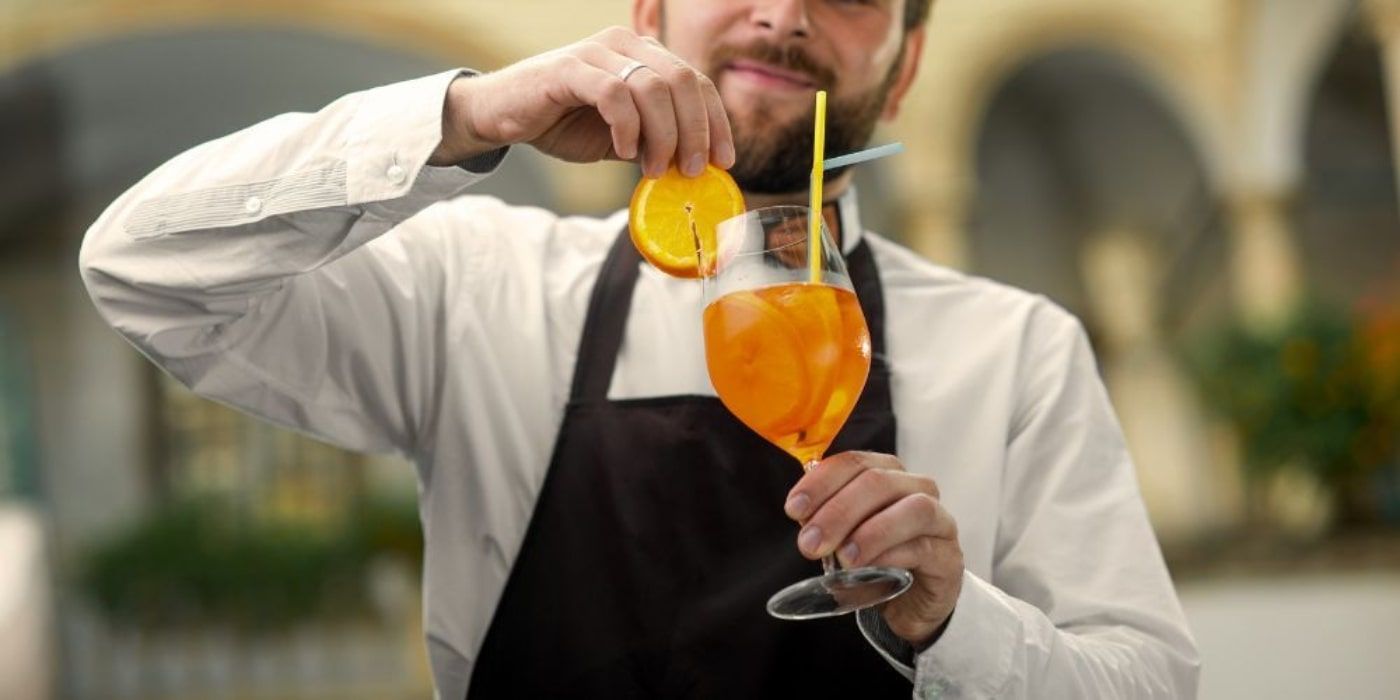

At sunset, as the sun dips and Italian piazzas glow with a soft orange light, the glasses of both locals and international visitors fill with delicious cocktails. These drinks have shaped the country’s history, becoming iconic and unmissable.
Italian cocktails are a timeless symbol of relaxation and refined taste, long accompanying the desire to savor and preserve every memory—especially through flavor.
In this article we will learn about every feature: from history to curiosities, from traditional recipes to known variations.

Italian cocktails, between celebrations and traditions
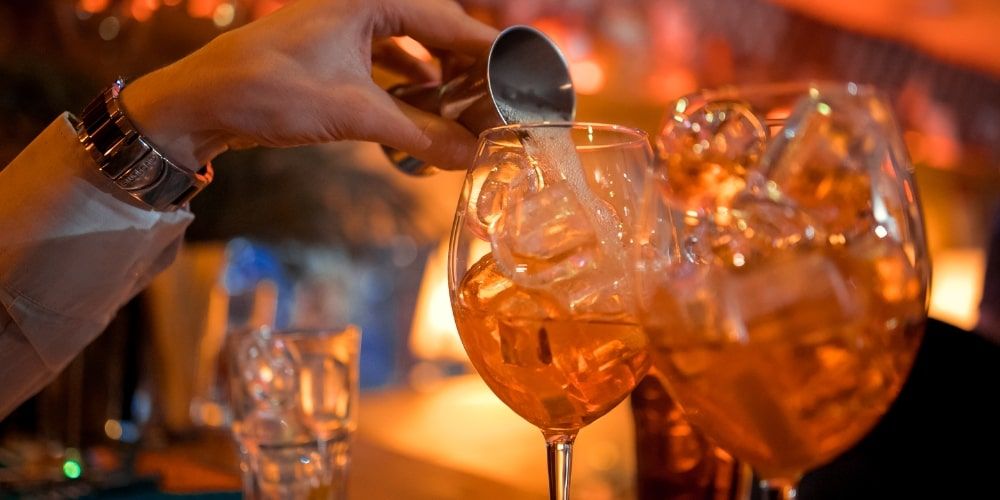
Between unique celebrations and pure moments of leisure meeting or tranquility, Italian cocktails captivate the palates of those who, while passing by or strolling, find themselves drawn to tasting them, in a sweet escape made of unique experiences and sensations.
The history of Italian cocktails is long and deeply rooted in the early 20th century, in a country marked by a vibrant cultural and creative effervescence, where social life was beginning to take on a central role.
It’s around this convivial dimension that the ritual of the aperitif takes shape. Glasses filled with harmonious flavors become an excuse to meet, talk, and spend time together.
This is how cocktails were born, as both a frame and a symbol of social and cultural moments. Among the most beloved—and now requested in bars around the world—are:
- Negroni;
- Bellini and Rossini;
- Spritz;
- Hugo;
- Americano.
Listen to the podcast version of the article with Monna Lisa's & Leonardo's voices
5. The Negroni, a classic yet timeless Italian cocktail
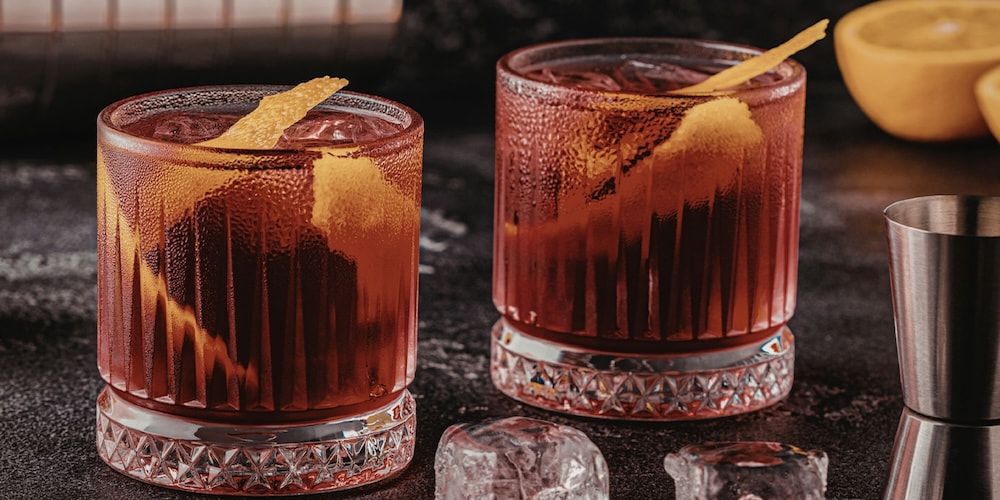
Created in Florence in 1919, the Negroni is the quintessential Italian cocktail, a piece of history born from an idea by Count Camillo Negroni. It was he who asked his bartender, Fosco Scarselli, to prepare an “Americano” strengthened with gin.
The cocktail quickly gained popularity, becoming a symbol of Florence and of the Italian aperitif. In the following years, it crossed national borders, achieving international fame and inspiring numerous variations.
Its preparation ritual, simple but precise, has become a real art, celebrated by bartenders all over the world. Smooth and flavorful, it is made from the perfect blend of gin, Campari, and sweet red vermouth. Its bold and refined taste captivates anyone who tries it, making it one of the most sought-after alcoholic aperitifs in Italian piazzas.
Negroni recipe:
- 3 cl of gin;
- 3 cl of Campari;
- 3 cl of red vermouth;
- Ice;
- Orange zest (for garnish).
4. The Bellini and the Rossini, two exquisite and special Italian cocktails
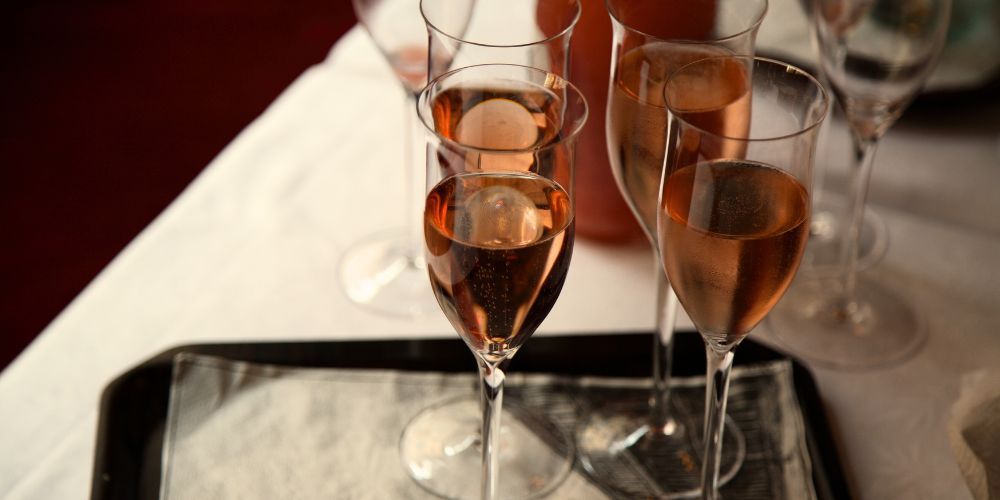
These two Italian cocktails, both served in a flute glass, represent the essence of Venice. Their simplicity and refinement make them ambassadors of Italian taste around the world.
The Bellini is an Italian cocktail born in Venice in the 1940s. Elegant and refined, its original recipe requires only two ingredients: white peach purée and Prosecco. Created by Giuseppe Cipriani, founder of Harry’s Bar, it takes its name from its pink hue, which reminded Cipriani of the tones found in the works of painter Giovanni Bellini.
The simple yet harmonious combination of Prosecco and white peach celebrates Italy’s seasonal flavors. In a short time, the Bellini spread internationally, becoming one of the most famous Italian cocktails in the world, perfect for sweet toasts often paired with desserts.
Bellini recipe:
- 6 cl of prosecco;
- 3 cl of white peach puree;
- Ice.
The Rossini is a variation of the Bellini, where peach purée is replaced with strawberry purée.
It was created in the 1950s in honor of composer Gioachino Rossini, and, as in the original, its sweet and fruity taste makes it perfect for special celebrations.
Rossini recipe:
- 5 cl of prosecco;
- 10 cl of strawberry puree;
- A few drops of lemon (optional);
- Fresh strawberry for garnish.
3. The Spritz, the seductive Italian cocktail with lively bubbles

The Spritz, born in the Veneto region, is now one of the most recognizable symbols of the Italian aperitif.
Its origins date back to the 19th century, when Austrian troops stationed in northern Italy began diluting local wine with water or seltzer to make it less alcoholic. The name “Spritz” comes from the German spritzen, meaning “to spray.”
Over time, the recipe evolved and spread, particularly in Venice and Padua, eventually becoming a national and international phenomenon by the late 20th century and beyond.
In its most classic version, a glass is filled with ice, followed by wine; Aperol (or Campari) is then added, along with Prosecco and a splash of soda. Finally, it is stirred and garnished with an orange slice.
The original recipe calls for Aperol, Prosecco, and seltzer, though many variations exist using Campari, Select, or Cynar.
It's one of the cocktails not to be missed in Italy, and you will often hear the question: “Fancy a Spritz later?”
Spritz recipe:
- 6 cl of Aperol (or Bitter Campari)
- 9 cl of prosecco
- 3 cl of soda
- Ice
- Orange zest (for garnish).
2. Hugo, the Italian cocktail born in the mountains of Trentino
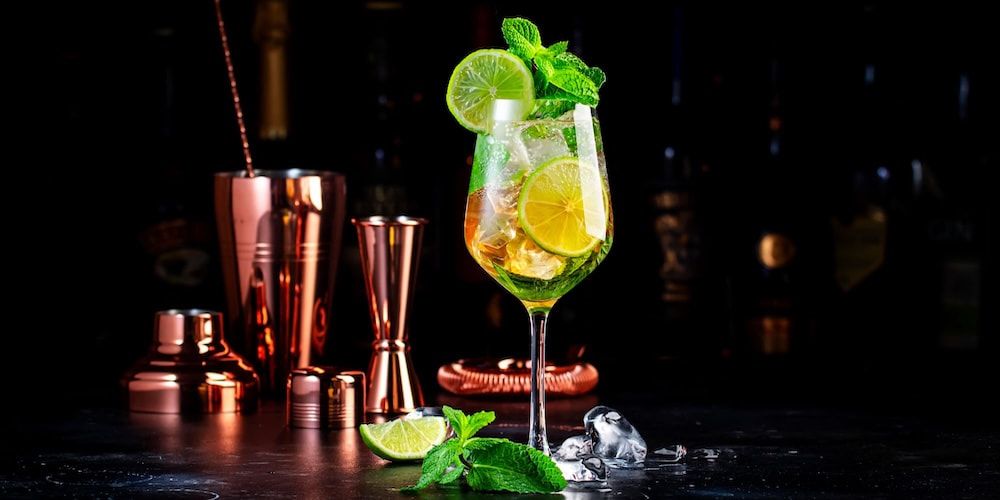
Hugo is a much-loved Italian cocktail. Born in Trentino Alto Adige, in the 1980s, it stands out for its fresh and decisive tones, rich in contrasts. It was born precisely in Kaltern from an idea of bartenders who wanted to create a fresh cocktail suitable for hot summer days.
The Hugo, a fresh and floral Italian cocktail, is named after Hugo Kuntner, a local herbalist who popularized elderflower syrup, a key ingredient in the cocktail.
The success of this iconic and simple Italian cocktail was immediate; it quickly became a symbol of South Tyrol. A single sip captures local aromas and flavors, evoking an atmosphere of relaxation and carefree enjoyment.
Made with Prosecco, elderflower syrup, soda, and mint, it’s a fresh and aromatic cocktail. First, a large wine glass is filled with ice; then the elderflower syrup and Prosecco are added, followed by a splash of soda, and garnished with lime and mint. There are also several variations, such as the grapefruit Hugo, the non-alcoholic Hugo, and the spiced Hugo.
Hugo recipe:
- 3 cl of elderflower syrup;
- 6 cl of prosecco;
- 6 cl of soda;
- Fresh mint;
- Lime slice (for garnish).
1. The Americano, the bitter and refreshing Italian cocktail

The Americano is an Italian cocktail with uncertain origins, often traced back to the late 19th or early 20th century, most likely in Milan.
According to one of the most widely accepted theories, it evolved from the Milano-Torino, made with Campari and sweet vermouth: American tourists began asking for the addition of soda and ice, thus creating the new version. Another hypothesis links the name to a marketing strategy by Martini & Rossi aimed at the U.S. market.
Made with Campari, sweet vermouth, and soda, it’s a fresh and well-balanced cocktail, characterized by a pleasant bitter note. It’s prepared by pouring the ingredients into an old fashioned glass filled with ice, topping with soda, and stirring gently.
Still popular today, the Americano has inspired several variations, including the White Americano, the Bitter Americano, and other contemporary interpretations.
Americano recipe:
- 3 cl of Campari;
- 3 cl of red vermouth;
- Soda;
- Ice;
- Orange slice (for garnish).
Italian cocktails and their full flavor
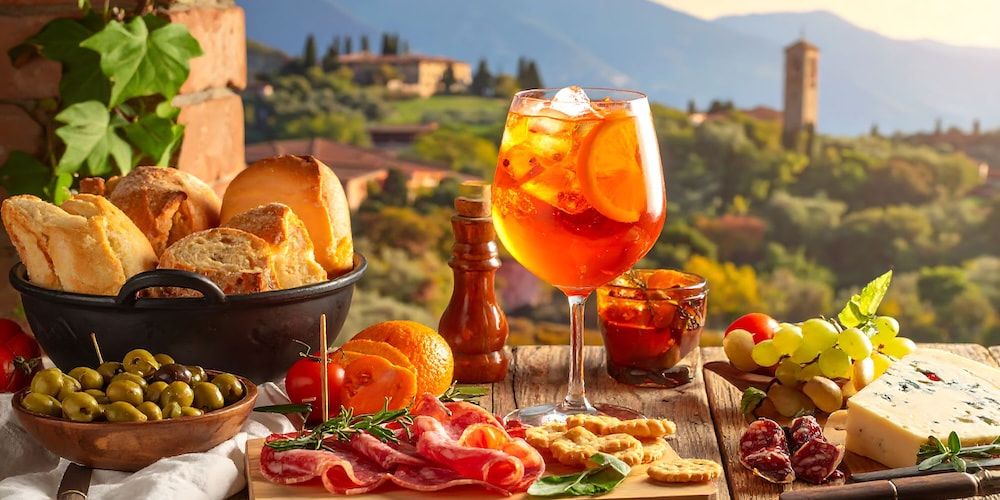
Italy boasts a very long tradition in the art of cocktail creation. In fact, we find a lot of them, almost irreducible, whose recipes date back to the first decades of the 19th century.
History and flavor come together in the definition of unique flavors, each characterizing certain unrepeatable stories, which are still expressed in the notes of the cocktails themselves. For this reason, choosing among the numerous proposals of Italian cities and regions is a difficult task.
Each location on the peninsula tells its own stories and traditions, unfolding with every sip through simple ingredients deeply rooted in the local territory. It’s precisely these stories that have made Italian cocktails famous far beyond national borders.
Today, among the most requested and widely replicated, those listed represent only a part of the great classics that have become timeless. Through these cocktails—and the ingredients that define them—we can discover a fresh, vibrant, and surprising side of Italy.
About the author
Teresa Borriello
Journalist, sustainability writer, storyteller

Teresa Borriello
The aperitif is a symbol of authentic Italian lifestyle: let’s find out secrets, curiosities, and recipes behind Italy’s most famous cocktails.